 Source
Animal Life on the Astral Plane
Leadbeater’s account of a short animal afterlife and gradual individualization.
Theosophical astral cosmologyBrowse by subject
SourceLeadbeater’s account of a short animal afterlife and gradual individualization.
Theosophical astral cosmology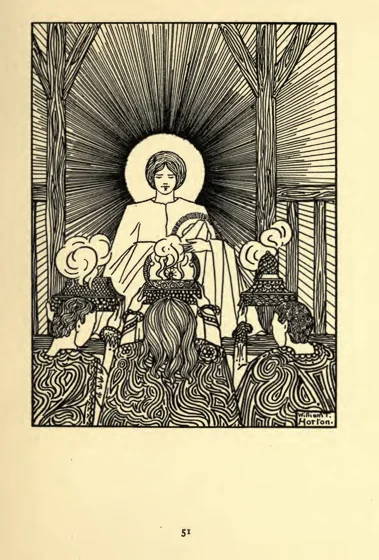
The comparison between symbolic art and a talisman in Yeats’s introduction to A Book of Images.
W. B. Yeats’s introduction to W. T. Horton, A Book of Images (1898) Source
The subtle desire-body through which the authors explain emotional forms and habits.
Theosophy, Besant and Leadbeater Source
The image-bearing medium through which Lévi explains visions and magical influence.
Éliphas Lévi, Transcendental MagicSourceClaimed perception that sees an object’s interior and several sides at once.
Theosophical astral cosmologySourceThe layered luminous field described around living beings in Theosophy.
Theosophical astral cosmology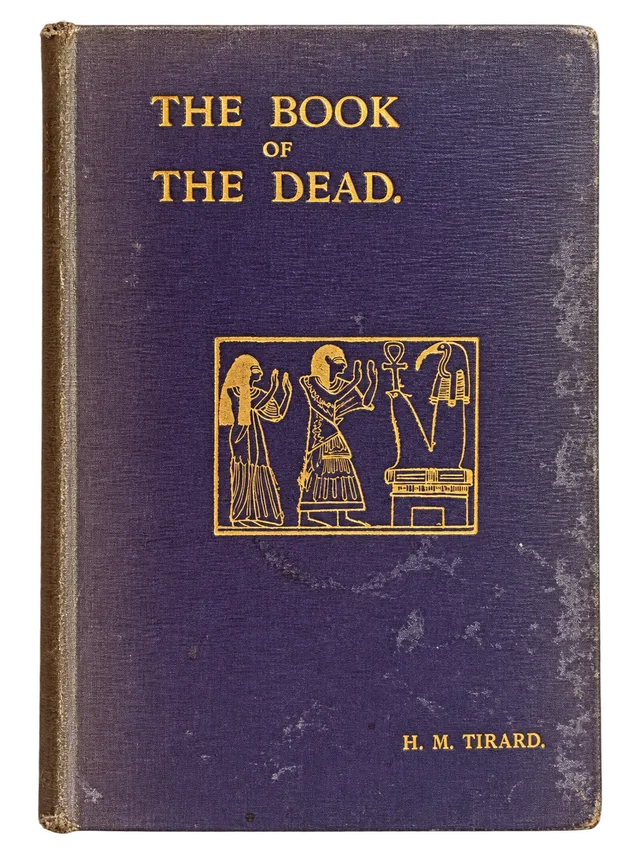 Source
The mobile aspect of the soul in Tirard’s account, pictured as a human-faced bird able to leave and return to the mummy.
Egyptian funerary religionSourceActive Intelligence in Lévi’s symbolic scale, balanced by Wisdom and associated with the four Tarot threes.
Éliphas Lévi, Transcendental Magic Source
The Buddha-elect whose long preparation joins sacrifice to the power to enlighten others.
Buddhist traditions, Nivedita and CoomaraswamySourceVehicle of the higher self that persists across births in the Theosophical account.
Theosophical astral cosmology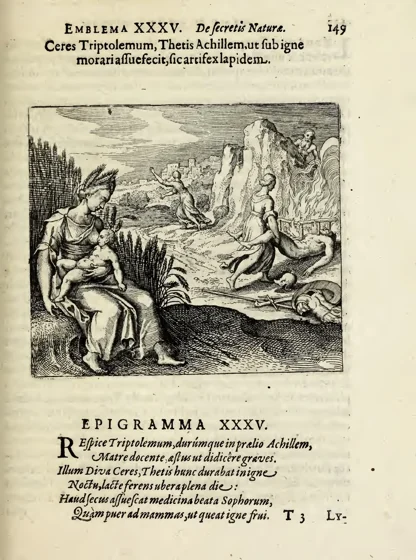
Maier pairs the nurture of Triptolemus and Achilles with the gradual strengthening of his philosophical stone.
Michael Maier, Atalanta Fugiens (1618)SourceMercy in Lévi’s symbolic scale: benevolent strength expressed through the benefactions of the four Tarot fours.
Éliphas Lévi, Transcendental MagicSourceThe patterned sound-plate and pendulum examples used as analogies in Besant and Leadbeater's account of thought-forms.
Theosophy, Besant and LeadbeaterSourceWisdom in Lévi’s symbolic scale, represented by four rivers and associated with the Tarot’s numbered twos.
Éliphas Lévi, Transcendental Magic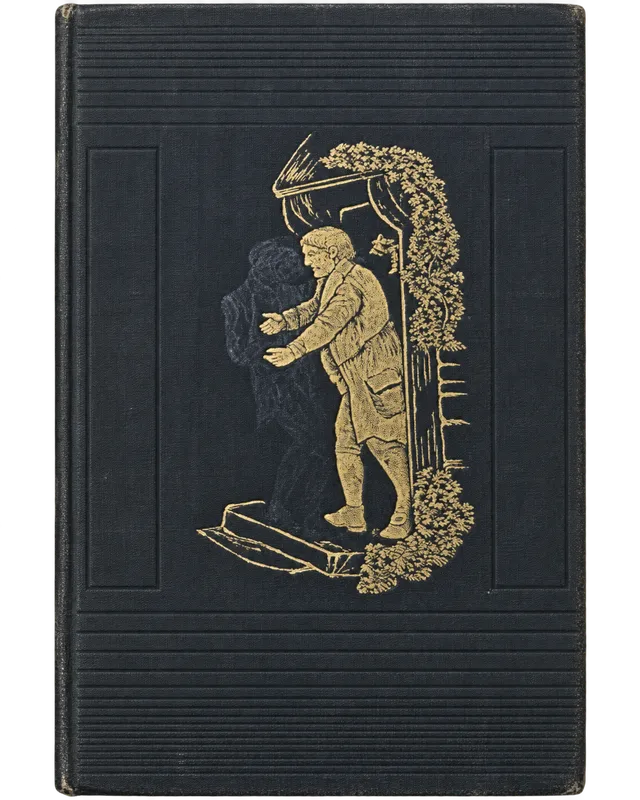 Source
Sikes’s term for a broader form of Welsh mutual assistance, including wedding bidding and assistance meetings.
Welsh customs as described by Wirt SikesSourceThe ordering of conduct, expressed through duty and tested through loyalty.
Indian traditions, Nivedita and CoomaraswamySourceThe soul’s receptive surface for images within the astral light.
Éliphas Lévi, Transcendental Magic Source
The Ego is presented as the directing identity and the Will as its instrument for governing mental states.
Ramacharaka’s Raja Yoga expositionSourceSpiritual force descending into matter in Leadbeater’s system, distinguished from individual nature spirits and human-like creatures.
Theosophical astral cosmologySourceA subtle bodily counterpart assigned to the physical plane in Leadbeater’s model.
Theosophical astral cosmology Source
The belief that a hostile or envious glance can harm another being.
Historical talisman traditions Source
Routes whose passage humans are warned not to obstruct.
Celtic fairy traditions Source
The bargain whose decisive condition concerns a moment of complete satisfaction.
Goethe’s Faust, Part One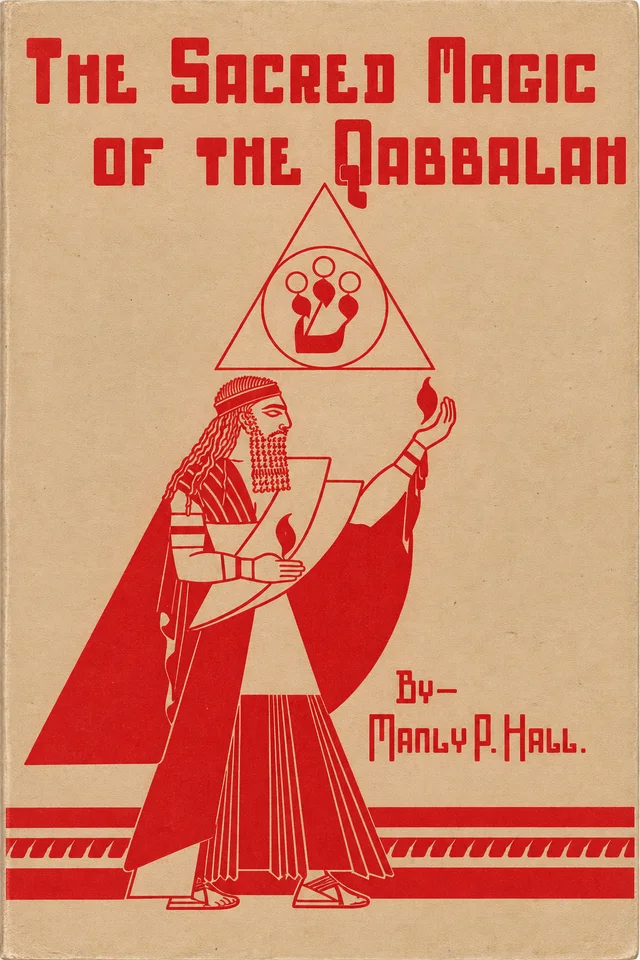 Source
The five-pointed star accompanies Hall’s account of spirit finding support in the four elements.
Manly P. Hall, The Sacred Magic of the Qabbalah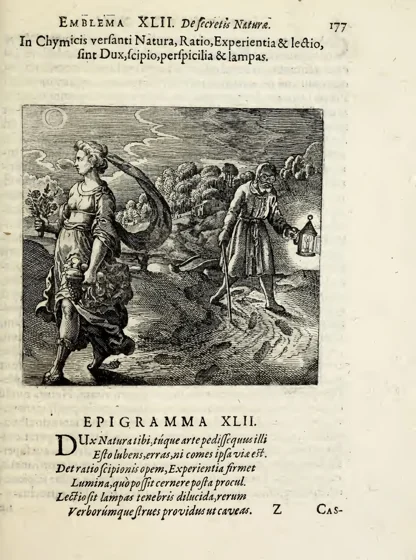
Nature, reason, experience and reading become a guide, staff, spectacles and lamp in Maier’s image of inquiry.
Michael Maier, Atalanta Fugiens (1618)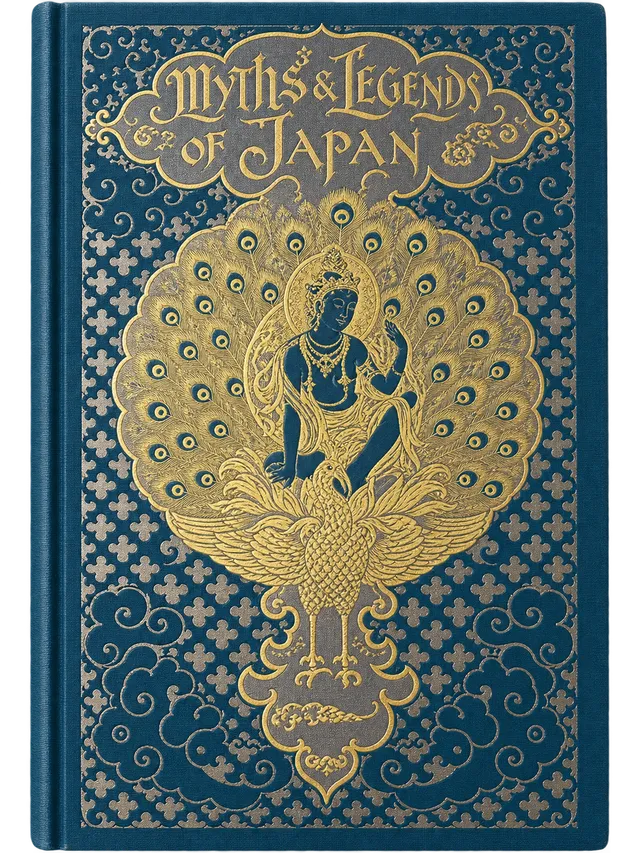 Source
The changes of appearance that let foxes pass as humans and later reveal themselves in Davis's legends.
Japanese fox legends, Davis retelling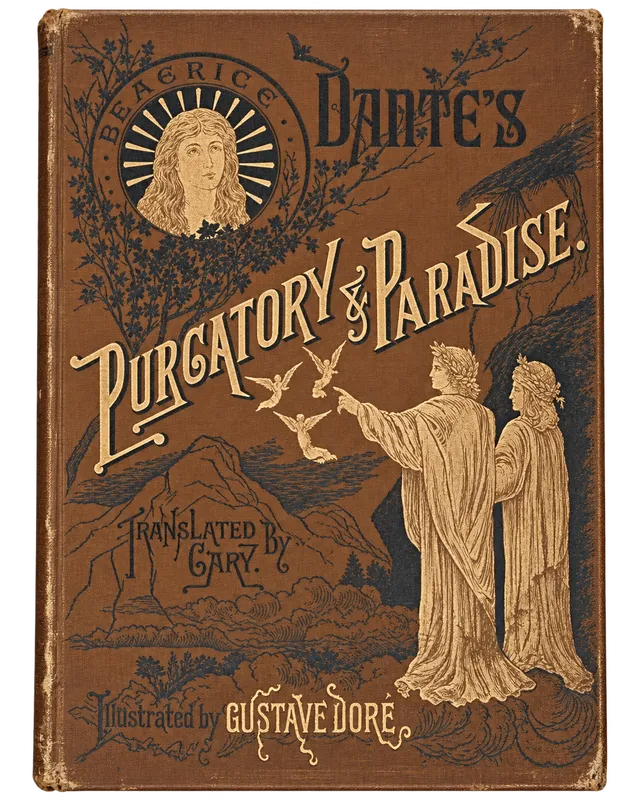 Source
The power to admit or reject an affection despite its first arising.
Dante, Purgatory and ParadiseSourceAusterity in Lévi’s symbolic scale, joining severity with goodwill and the justice represented by the Tarot fives.
Éliphas Lévi, Transcendental Magic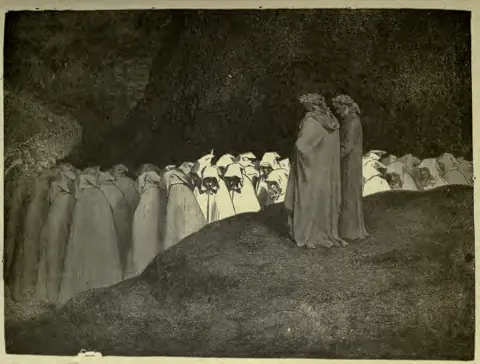
The hypocrites’ bright garments conceal a burden that slows every step.
Dante, Inferno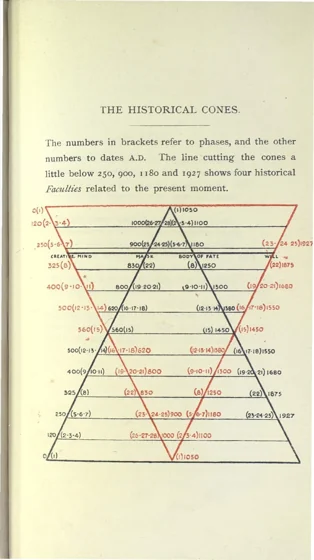
Expanding and contracting figures through which Yeats represents opposed tendencies and their movement.
W. B. Yeats’s A Vision (1925)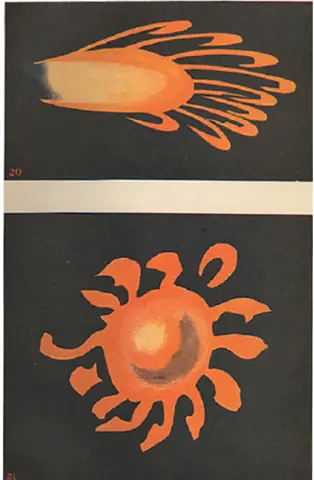
The directed orange form used to distinguish ambition for useful work from ambition for personal acquisition.
Theosophy, Besant and LeadbeaterSourceEnduring accomplishment in Lévi’s symbolic scale, linking the triumph of mind over matter with the Tarot eights.
Éliphas Lévi, Transcendental MagicSourceRaja Yoga presents sensory organs, brain and nerves as instruments used by the mind.
Ramacharaka’s Raja Yoga expositionSourceThe source distinguishes feelings of one's own bodily condition from impressions referred to external objects.
Ramacharaka’s Raja Yoga exposition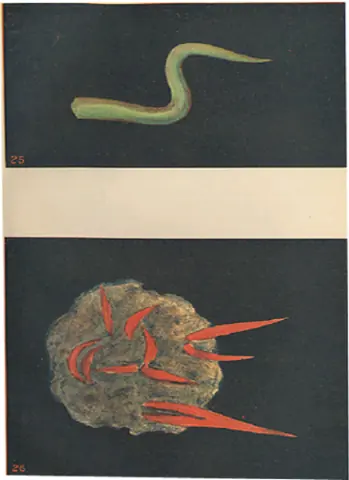
The watchful, snake-like form that changes as jealousy becomes mixed with anger.
Theosophy, Besant and LeadbeaterSourceFoundation in Lévi’s symbolic scale, the basis of truth and belief represented by the four Tarot nines.
Éliphas Lévi, Transcendental MagicSourceThe personal double for whom the tomb remains a dwelling.
Egyptian funerary religionSourceThe Crown in Lévi’s symbolic scale, balancing Mercy and Austerity and corresponding to the four Tarot aces.
Éliphas Lévi, Transcendental MagicSourceThe luminous aspect of the deceased in Tirard’s account, associated with radiance and the company of the glorified dead.
Egyptian funerary religion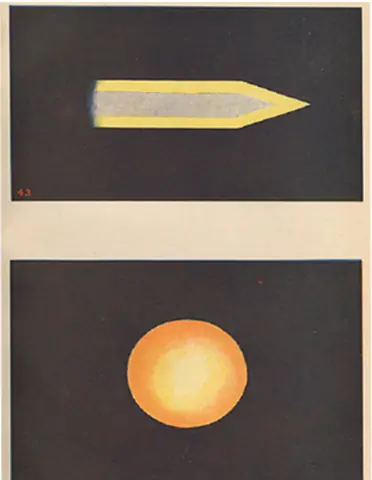
The divine principle contemplated through globes, interwoven lines and threefold symbolism in Thought-Forms.
Theosophy, Besant and LeadbeaterSourceTruth, justice, and cosmic order represented in funerary judgment.
Egyptian funerary religionSourceThe Kingdom in Lévi’s symbolic scale, representing creation and completing the Tarot decade with the four tens.
Éliphas Lévi, Transcendental Magic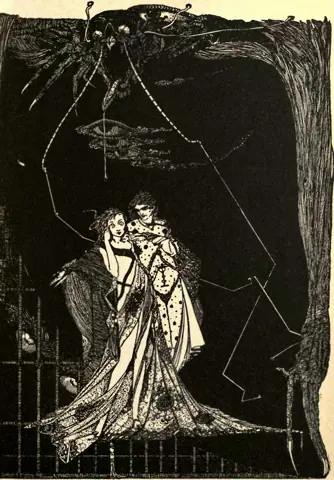
The dungeon’s final heavenly answer in Faust, declaring Margaret saved despite Mephistopheles’ opposing judgement.
Goethe’s Faust, Part OneSourceThe principle of appearance and material manifestation in the collection’s Shaiva explanation.
Indian traditions, Nivedita and CoomaraswamySourceThe colour correspondences used by Besant and Leadbeater to interpret their illustrations.
Theosophy, Besant and LeadbeaterSourceThe subtle body that Thought-Forms presents as the material of thinking and the origin of thought-generated vibrations.
Theosophy, Besant and LeadbeaterSourceThe character-building lesson frames recurring mental tendencies as habits subject to the Ego's direction.
Ramacharaka’s Raja Yoga exposition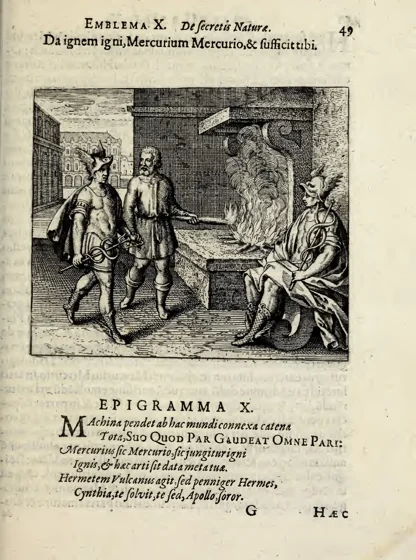
Two Mercuries and a furnace introduce Maier’s distinction between the subject’s inward qualities and the heat applied from outside.
Michael Maier, Atalanta Fugiens (1618)SourceThe little world through which human structure corresponds with the greater world.
Éliphas Lévi, Transcendental Magic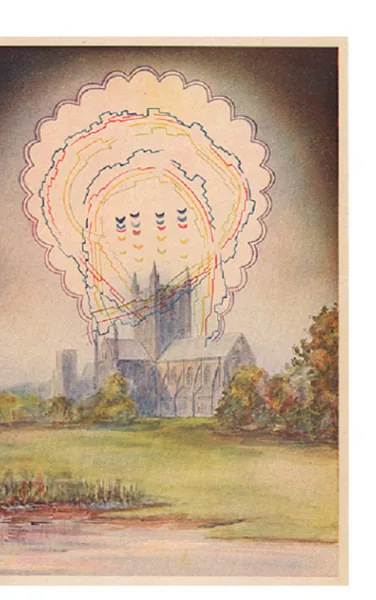
The coloured forms that Thought-Forms claims musical performances leave above their surroundings.
Theosophy, Besant and Leadbeater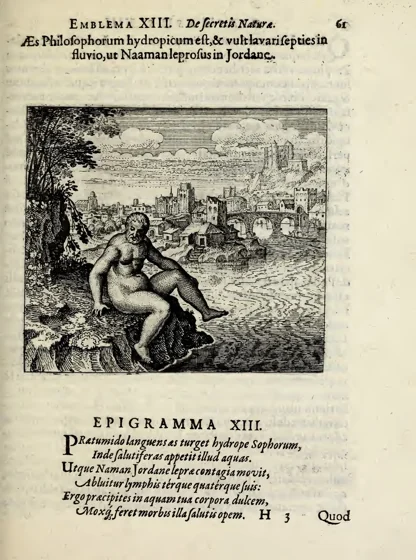
The biblical washing in Jordan becomes Maier’s analogy for the purification of the philosophers’ brass.
Michael Maier, Atalanta Fugiens (1618)SourceVictory in Lévi’s symbolic scale, the enduring triumph of intelligence and justice associated with the Tarot sevens.
Éliphas Lévi, Transcendental MagicSourceRelease from the fetters of individuality, explained by the collection through a broken pot and open space.
Buddhist traditions, Nivedita and Coomaraswamy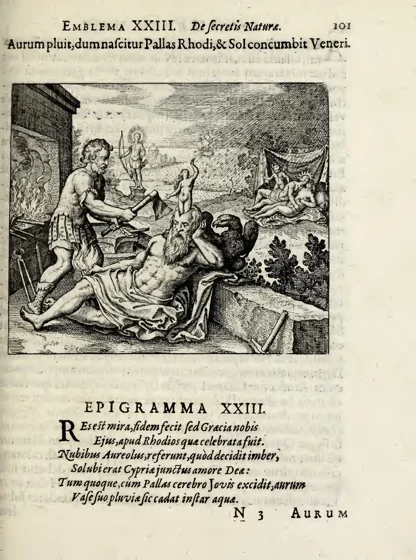
Pallas’s birth and a shower of gold at Rhodes become an explicitly allegorical reading of myth and alchemical wisdom.
Michael Maier, Atalanta Fugiens (1618)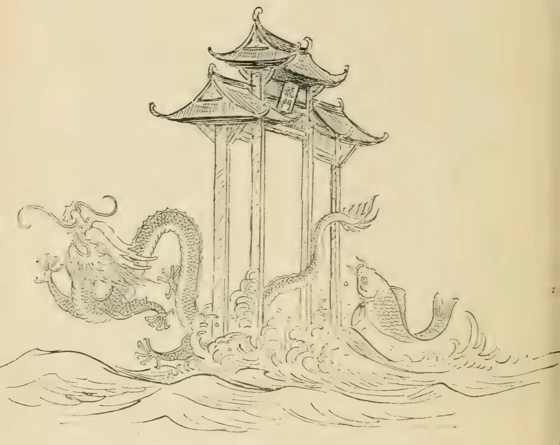
Hayes connects the carp becoming a dragon with success in the old examination system.
L. Newton Hayes, The Chinese Dragon
The contrasting objective and subjective tendencies that Yeats calls the two Tinctures.
W. B. Yeats’s A Vision (1925)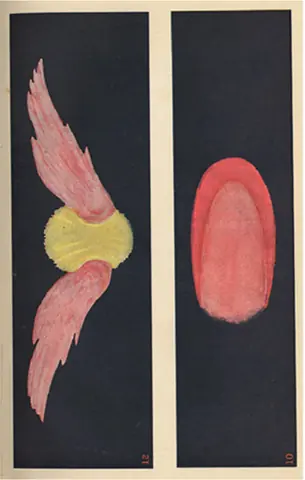
The wing-like form that Besant and Leadbeater associate with affection, peace and a wish to protect another person.
Theosophy, Besant and Leadbeater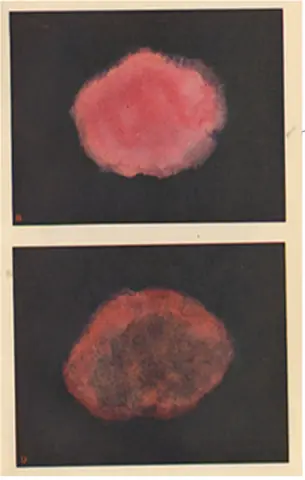
A revolving cloud used to picture quiet, unselfish affection in the book.
Theosophy, Besant and Leadbeater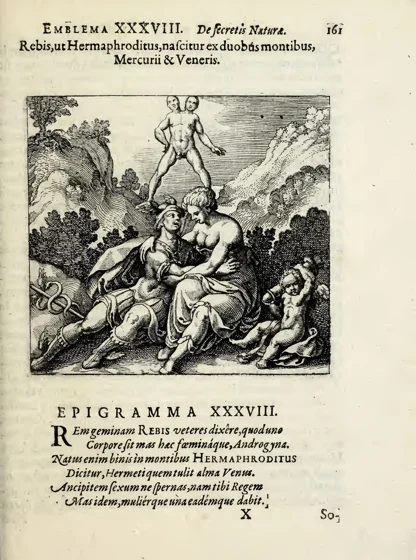
Mercury and Venus provide a double origin for the two-headed figure Maier calls Rebis.
Michael Maier, Atalanta Fugiens (1618)SourceThe supposed memory of past events, only imperfectly reflected at the astral level.
Theosophical astral cosmology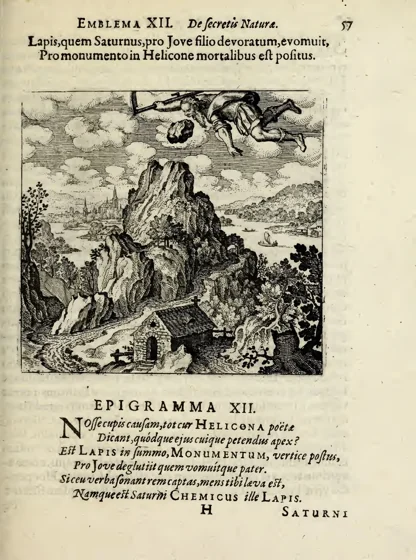
Maier reads Saturn’s swallowed stone through blackness, whiteness and redness in Emblem XII.
Michael Maier, Atalanta Fugiens (1618)SourceReported perception of people and events beyond ordinary sensory access.
Celtic fairy traditions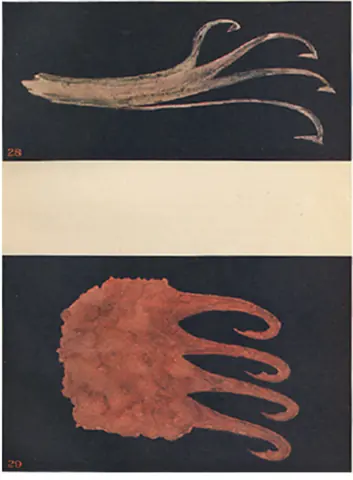
The clawed extensions used to depict acquisitive desire in Thought-Forms.
Theosophy, Besant and LeadbeaterSourceRaja Yoga describes sensation as the mind becoming aware of an external object through the senses.
Ramacharaka’s Raja Yoga expositionSourceThe book treats sensory impressions as material from which the mind forms thought.
Ramacharaka’s Raja Yoga expositionSourceThe ten primary notions used as a scale for names, numbers and creation.
Éliphas Lévi, Transcendental MagicSourceHall associates six with a latent faculty of clear vision and a returning movement towards its source.
Manly P. Hall, The Sacred Magic of the QabbalahSourceThe handbook places much mental activity outside the field of present awareness.
Ramacharaka’s Raja Yoga exposition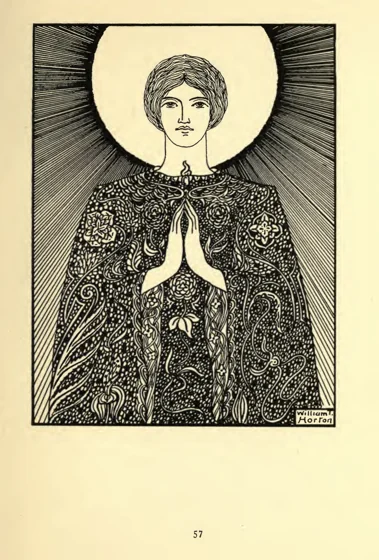
Yeats’s distinction between images that continue to suggest meaning and images that can be translated into a fixed explanation.
W. B. Yeats’s introduction to W. T. Horton, A Book of Images (1898)SourceA plain circle accompanies Hall’s account of unity, thought and the purpose of human effort.
Manly P. Hall, The Sacred Magic of the Qabbalah Source
Farinata’s explanation of foresight combined with ignorance of present events.
Dante, Inferno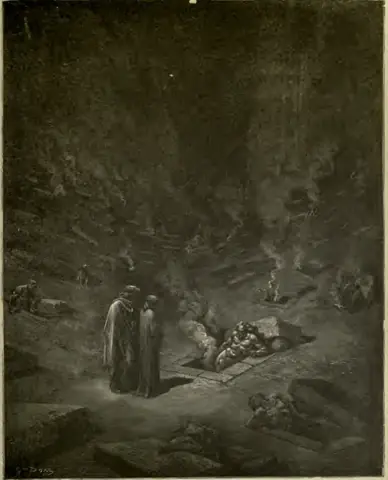
The group defined in the poem by the belief that spirit dies with the body.
Dante, InfernoSourceHall uses the triangle to describe a threefold human nature brought into harmony.
Manly P. Hall, The Sacred Magic of the QabbalahWill, Mask, Creative Mind and Body of Fate: the four interacting faculties in Yeats’s 1925 model.
W. B. Yeats’s A Vision (1925)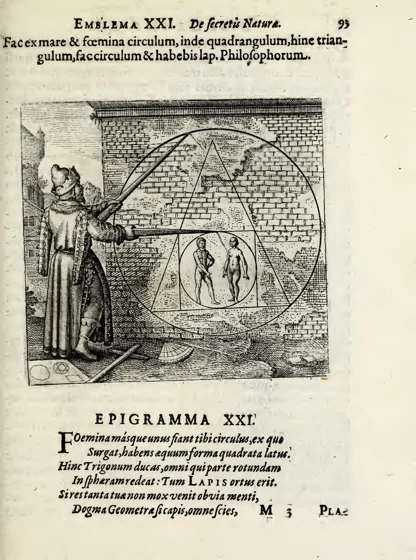
A circle, square and triangle explain the transformation of a divided body into a renewed unity in Emblem XXI.
Michael Maier, Atalanta Fugiens (1618)SourceSelf-creation and the emancipation of the will within Hermetic transformation.
Éliphas Lévi, Transcendental MagicSourceThe organ made witness to a person’s conduct at the balance.
Egyptian funerary religion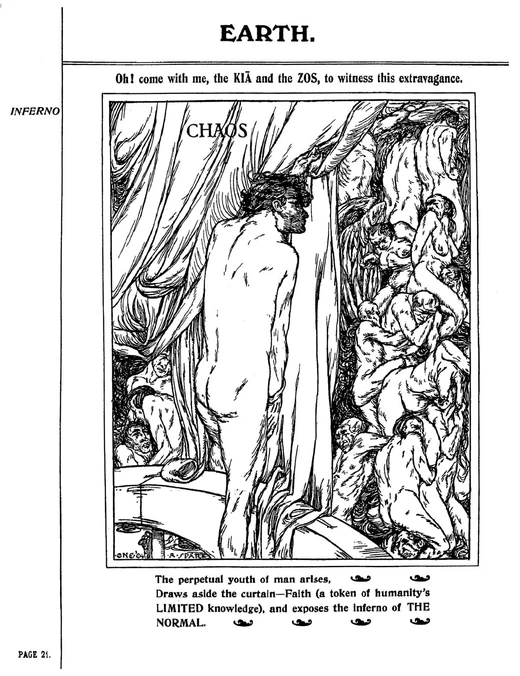
Spare’s recurring image of ordinary existence shaped by conventional belief, limited knowledge and inner conflict.
Austin Osman Spare’s allegorical drawings and verse in Earth Inferno (1905)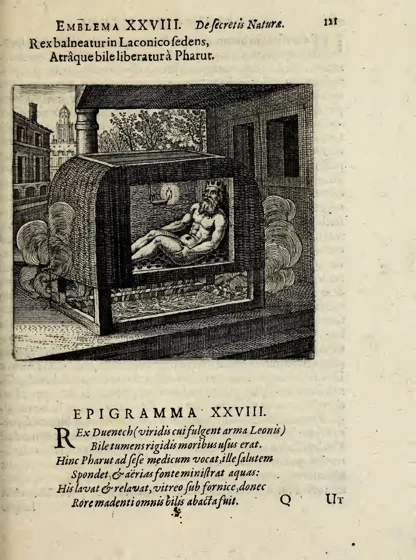
King Duenech’s enclosed bath connects an alchemical allegory with historical theories of digestion, sweat and purification.
Michael Maier, Atalanta Fugiens (1618)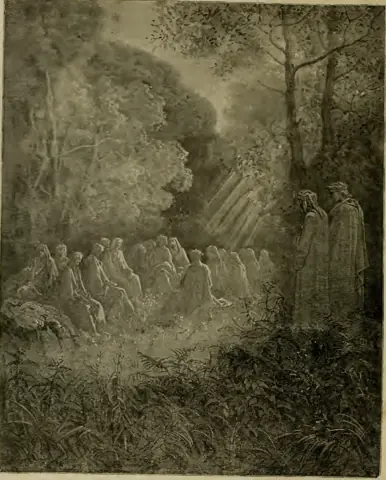
The mountain cannot be climbed upward once daylight has gone.
Dante, Purgatorio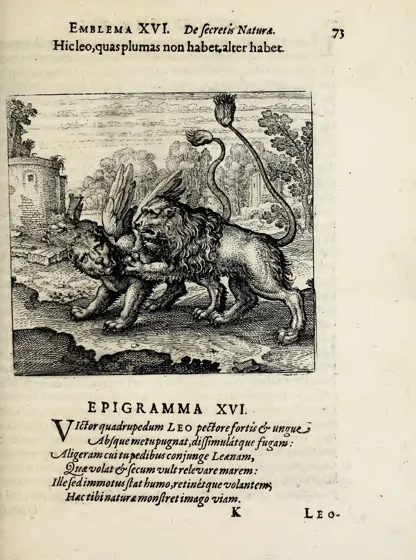
A fixed lion and flying lioness picture the difficult union of contrasting alchemical qualities.
Michael Maier, Atalanta Fugiens (1618)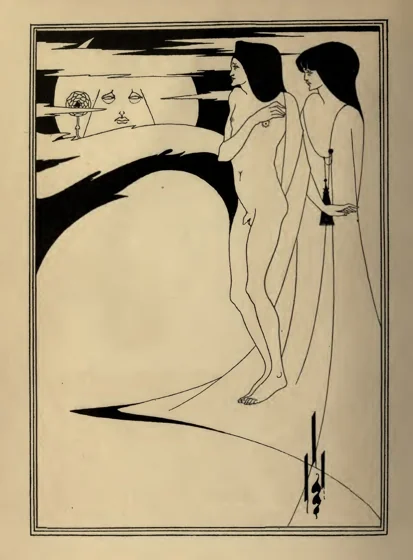
Conflicting visions of the moon frame a tragedy in which looking becomes desire, warning and, finally, exposure.
Literary symbolism in Oscar Wilde’s Salomé, English edition of 1907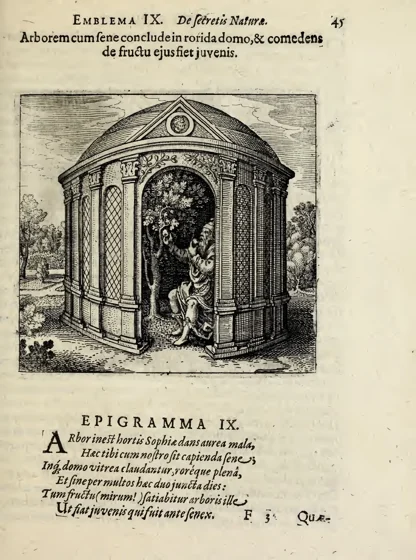
A tree, an enclosed house and an ageing man form Maier’s allegory of renewal in Emblem IX.
Michael Maier, Atalanta Fugiens (1618)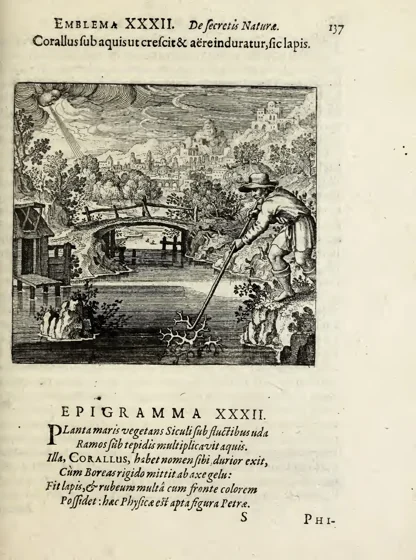
Coral supplies Maier with an image of growth, hardening and red colour in the philosophers’ stone.
Michael Maier, Atalanta Fugiens (1618)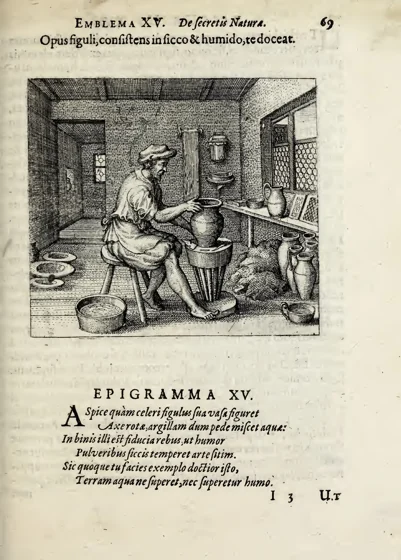
The potter’s handling of earth, water, air and fire becomes a model for Maier’s account of transformation.
Michael Maier, Atalanta Fugiens (1618)SourceRequests for prayer link the waiting spirits to people still on earth.
Dante, Purgatorio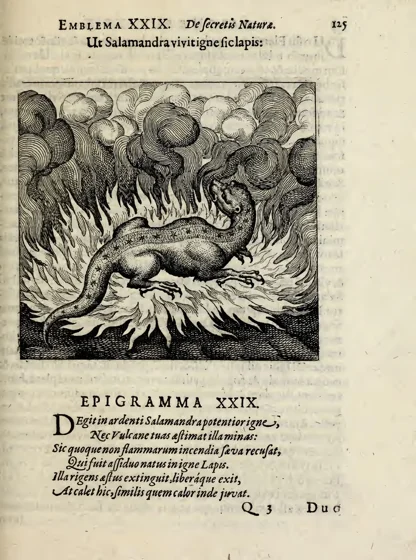
The salamander in the flames represents the resistance to fire that Maier calls fixation.
Michael Maier, Atalanta Fugiens (1618)SourceHall makes the square an image of matter, resistance and a problem that spiritual effort must work through.
Manly P. Hall, The Sacred Magic of the Qabbalah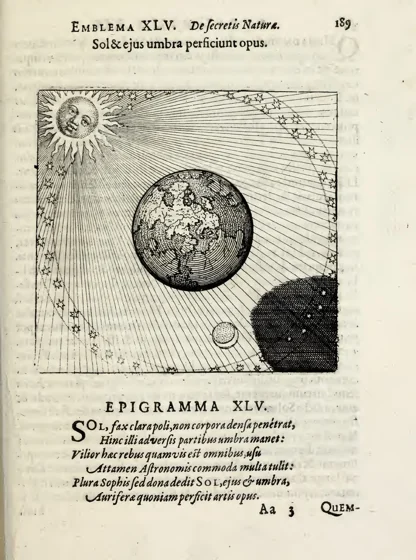
Light and shade work together in Maier’s forty-fifth emblem, linking an astronomical image with alchemical transformation.
Michael Maier, Atalanta Fugiens (1618)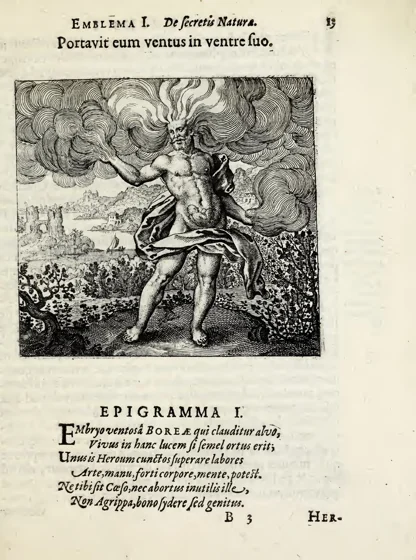
Atalanta, Hippomenes and the delaying apple name the three musical roles printed beside Maier’s first fugue.
Michael Maier’s Atalanta Fugiens (1618)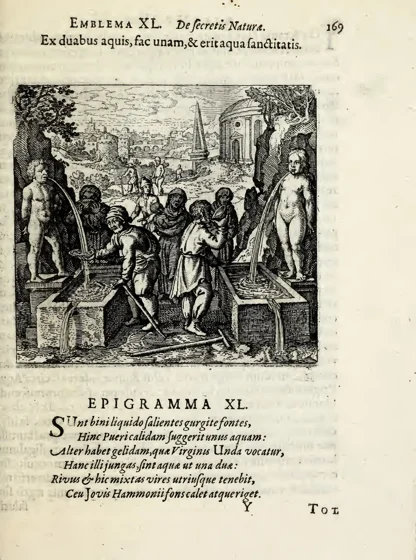
A hot fountain and a cold fountain picture Maier’s account of opposed qualities becoming one philosophical water.
Michael Maier, Atalanta Fugiens (1618)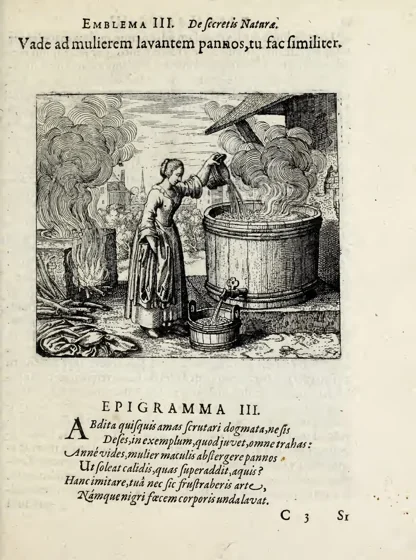
The household washing scene through which Maier connects cleansing with the varied operations of the chymist.
Michael Maier’s Atalanta Fugiens (1618)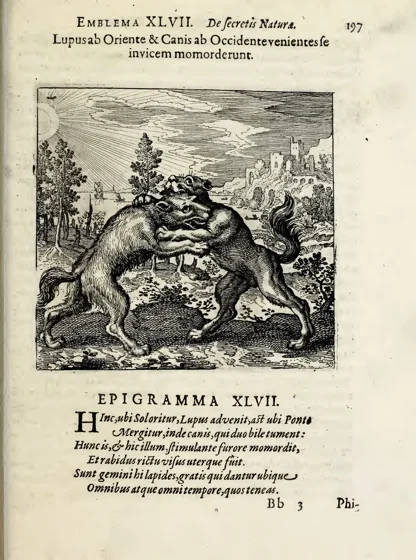
An eastern wolf and a western dog turn the opposed forces of sulphur and Mercury into a struggle of mutual dependence.
Michael Maier, Atalanta Fugiens (1618)The coloured shapes that Besant and Leadbeater describe as expressions of thought and feeling.
Theosophy, Besant and LeadbeaterSourceThe book’s division between likenesses, imagined objects and forms expressing qualities.
Theosophy, Besant and LeadbeaterSourceBuddha, the teaching and the community, which the final narrative leaves as enduring points of reliance.
Buddhist traditions, Nivedita and CoomaraswamySourceUnequal passage of time between Fairyland and the returning hero’s home.
Celtic fairy traditionsSourceBeauty in Lévi’s symbolic scale, mediating between Crown and Kingdom and expressed through the four Tarot sixes.
Éliphas Lévi, Transcendental MagicSourceFunerary freedom to assume animal, plant, and divine forms.
Egyptian funerary religionSourceRamacharaka describes changing awareness as an unfolding from within a larger mind.
Ramacharaka’s Raja Yoga expositionSourceCharacter-building advice places the personal self within an encompassing Universal Life.
Ramacharaka’s Raja Yoga exposition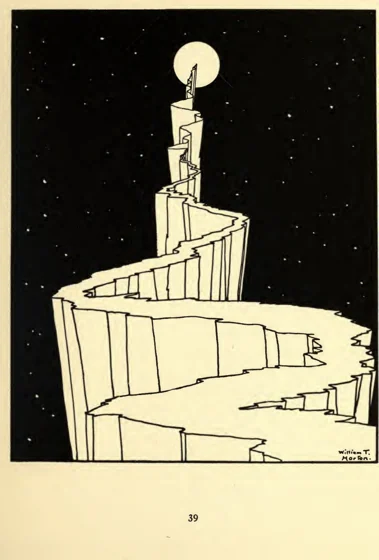
Yeats’s account of Horton turning reported waking visions into formal black-and-white drawings.
W. B. Yeats’s introduction to W. T. Horton, A Book of Images (1898)SourceThe collection’s image for Buddha’s continuing proclamation of the teaching.
Buddhist traditions, Nivedita and Coomaraswamy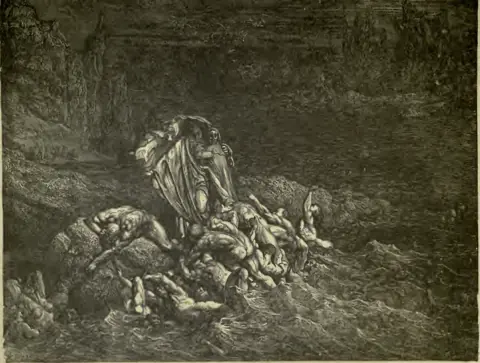
The fifth circle’s paired expressions of anger and inward gloom.
Dante, InfernoShowing 104 of 104 entries