W. B. Yeats’s introduction to W. T. Horton, A Book of Images (1898)
Waking Dreams and Horton’s Art
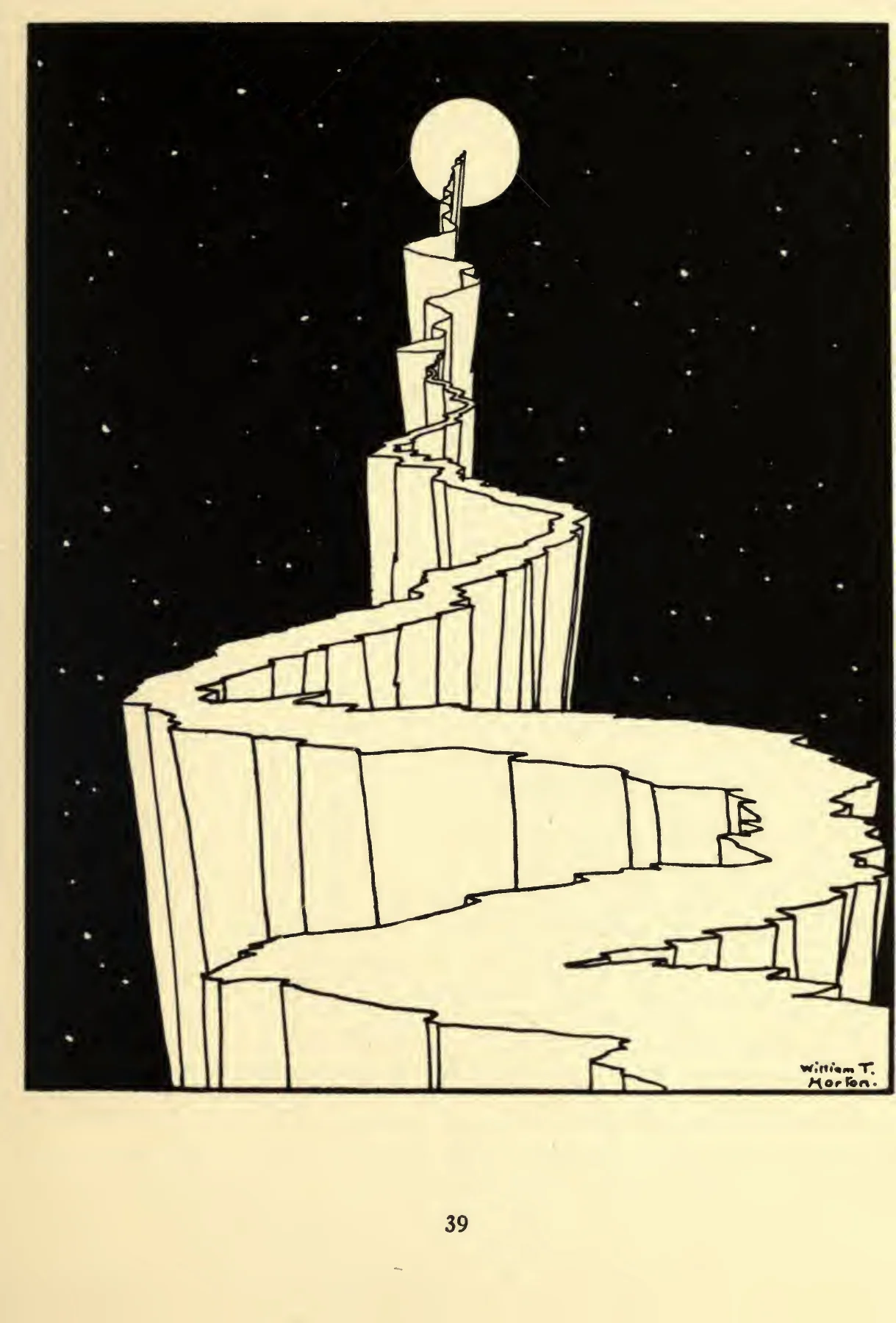
Yeats describes Horton’s drawings as attempts to give visible form to waking dreams. He first recounts his own fleeting inner images and asks whether such experiences are eternal realities or momentary dreams. Turning to Horton, he says the artist’s experiences are more detailed and vivid than his own, and that Horton copies them like models. Yet Yeats does not present literal copying as the final aim. He discusses the constraints of line, colour and paper, and praises later works for transforming the vision through art. His account links the repeated figures, paths, waves and towns to a limited personal symbolic vocabulary. The introduction documents how Yeats understood this art; the reported experiences themselves remain the testimony of the people describing them.
Loading your archive…
In the sources
Yeats’s own uncertainty
DocumentedAfter recounting an inner vision, Yeats asks whether such figures are eternal realities or a momentary dream.
Horton’s reported experience
DocumentedYeats describes Horton’s waking dreams as detailed and vivid and connects them with the artist’s drawings.
The demands of the medium
DocumentedAt the introduction’s close, Yeats argues that a vision must be reconsidered through what line, colour and paper can express.
Context & interpretation
This entry concerns an attributed account of visionary art. It neither diagnoses the artists nor confirms the supernatural origin of their reported images. Yeats’s comments about Horton are distinguished from Horton’s own direct testimony.
Original passages
Source 1
A Book of Images
a capricious and variable worldOpen this page in the book
Passage & edition details
Location recorded at citation review: W. B. Yeats, Introduction to A Book of Images (1898), printed p. 13
Printed introduction and cited passage inspected in the public Reader.
- Edition
- IMJ-0249-E001
- Reader page
- IMJ-0249-E001-P0010
- Original scan leaf
- 17
- Recorded leaf number
- 17
- Current Reader position
- 11
- Reader verification
- Matches the reviewed Reader
Source 2
A Book of Images
copies them in his drawings as if they were models posed for himOpen this page in the book
Passage & edition details
Location recorded at citation review: W. B. Yeats, Introduction to A Book of Images (1898), printed p. 14
Printed introduction and cited passage inspected in the public Reader.
- Edition
- IMJ-0249-E001
- Reader page
- IMJ-0249-E001-P0011
- Original scan leaf
- 18
- Recorded leaf number
- 18
- Current Reader position
- 12
- Reader verification
- Matches the reviewed Reader
Source 3
A Book of Images
in the magical mirror of his artOpen this page in the book
Passage & edition details
Location recorded at citation review: W. B. Yeats, Introduction to A Book of Images (1898), printed p. 16
Printed introduction and cited passage inspected in the public Reader.
- Edition
- IMJ-0249-E001
- Reader page
- IMJ-0249-E001-P0013
- Original scan leaf
- 20
- Recorded leaf number
- 20
- Current Reader position
- 14
- Reader verification
- Matches the reviewed Reader
Illustrations
Continue exploring
Art as Talisman in Yeats
The comparison between symbolic art and a talisman in Yeats’s introduction to A Book of Images.
Same subject and traditionSymbol and Allegory in Yeats
Yeats’s distinction between images that continue to suggest meaning and images that can be translated into a fixed explanation.