Spiritual fire
Spiritual fire can describe sacred presence, divine love or inward change. Compare Agni, Pentecost and the accounts of Dowd, Swedenborg and Arundale.
In this article
What does spiritual fire mean?
Fire can be an actual flame in worship, an image of divine presence or a way to describe inward change. The sacrificial fire addressed as Agni has a ritual role. In Acts, tongues like fire mark the coming of the Holy Spirit. Later esoteric writers use warmth, light and burning to explain what love or consciousness does. [1][2][3]
Rig Veda: Agni and the sacrificial fire
The opening hymn of the Rig Veda addresses Agni as the priest of sacrifice. It asks him to bring the gods and carry the worshippers’ offering to them. The hymn ends by asking Agni to be as approachable as a father to a son, joining his ritual office with a personal appeal. [1]
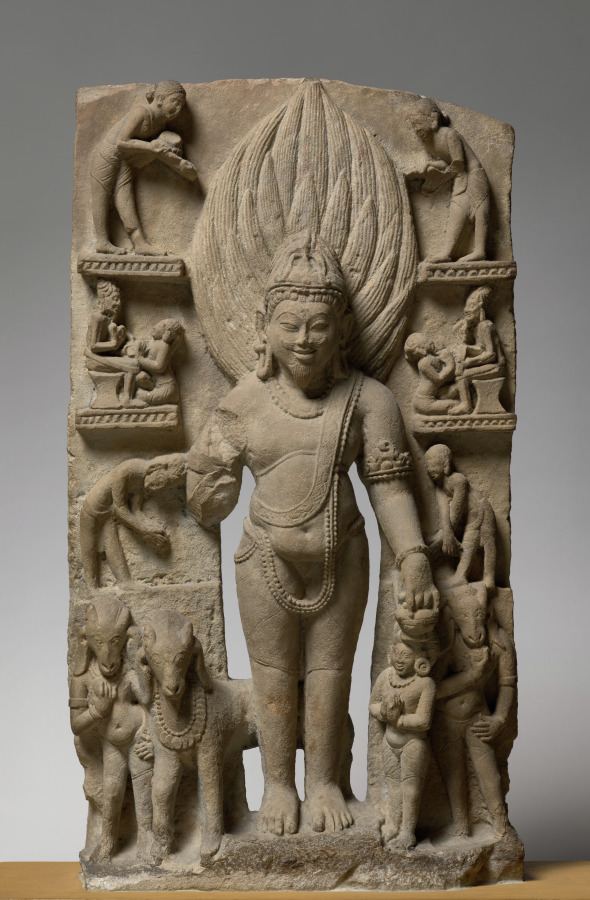
Agni, God of Fire. Sandstone relief from Uttar Pradesh, about 1000. Flames rise behind Agni, with a goat beside him.
The Cleveland Museum of Art, Edward L. Whittemore Fund. 1955.51. CC0. · Image source ↗ · CC0
Acts: fire at Pentecost
In Acts 2:1–4, the disciples see tongues like fire divide and rest upon them. They are filled with the Holy Spirit and speak in other languages. The fire marks a moment of shared divine presence whose first outward effect is speech. [2]
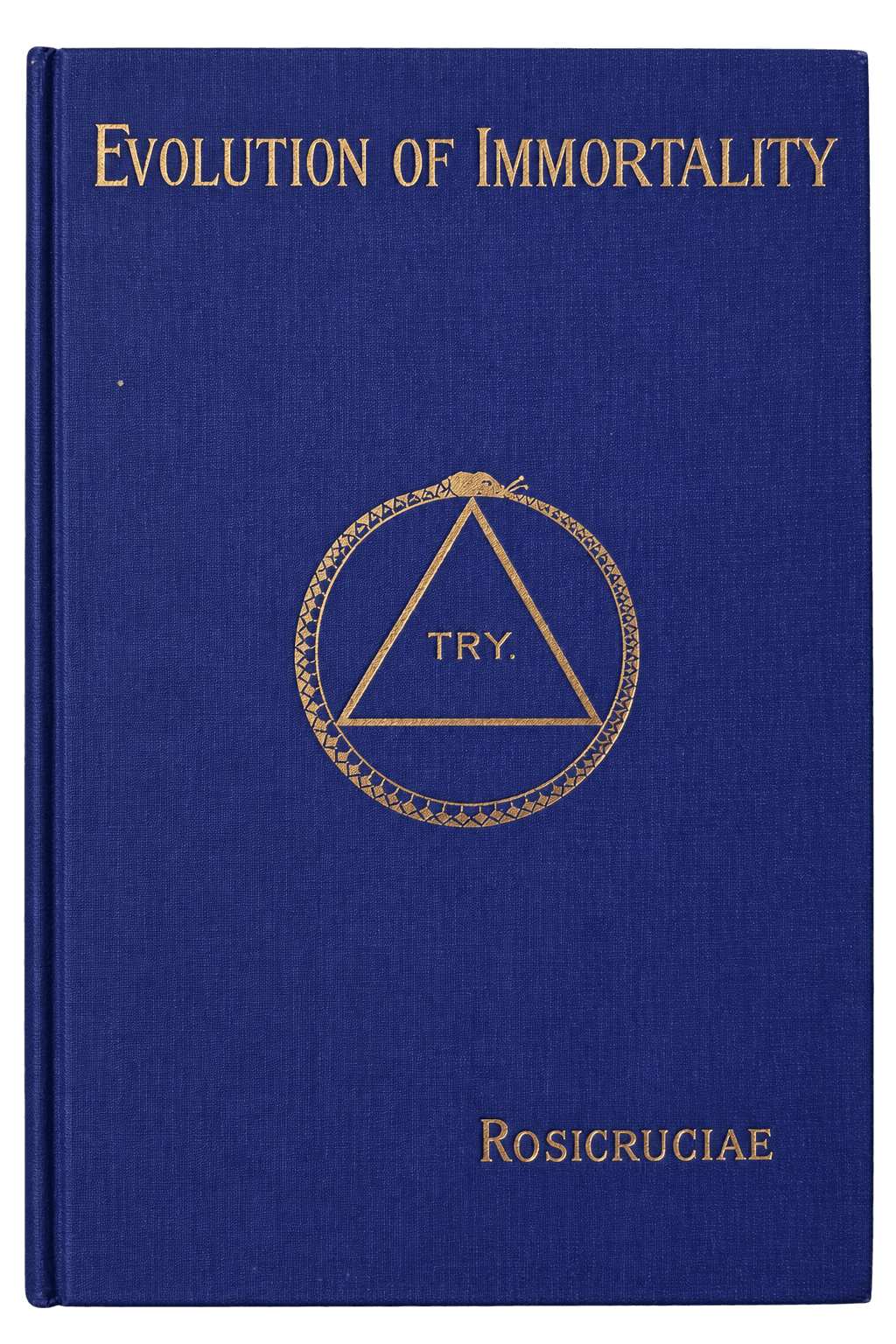
Evolution of Immortality
Freeman Benjamin Dowd, writing as Rosicruciæ in Evolution of Immortality, places fire within an account of the human soul. Love gives warmth and intelligence gives light; their cooperation is supposed to kindle an inward flame. A passage in the main text locates a proposed centre near the solar plexus and describes an experience of warmth as a sign of development. These are claims within his account, rather than a verified spiritual anatomy. [4][5][6]
The appendix brings Intelligence, Will and Love together as a human trinity. Their activity is said to develop heat that can gather into a conscious flame in the breast. Rosicruciæ identifies this with baptism by fire and the Holy Ghost, and with an alchemical transmuting fire. His interpretation of alchemy emphasises inward transformation; it does not settle the aims of every historical alchemist. [3]
The flame also becomes a way of reading scripture. The burning bush of Moses and the disciples’ burning hearts on the road to Emmaus are treated as expressions of an inward power that can find an outward voice. The appendix associates the developed flame with Christ-union and immortality. These connections are the author’s esoteric interpretation of the narratives, rather than a reading shared automatically by all Christians. [7]
Elsewhere the book describes an incorruptible fire body resulting from spiritual perfection. This proposed embodiment extends its fire imagery into a theory of transformed existence. A ritual flame, a scriptural sign, an inward experience and a claimed spiritual body consequently need to remain distinct, even when a writer places them within one larger pattern. [8][9]
See references (7)
- Evolution of Immortality, printed p. 137, Reader page 136
- Evolution of Immortality, printed p. 16, Reader page 13
- Evolution of Immortality, printed p. 84, Reader page 81
- Evolution of Immortality, printed p. 85, Reader page 82
- Evolution of Immortality, printed p. 138, Reader page 137
- Evolution of Immortality, printed p. 20, Reader page 17
- Evolution of Immortality, printed p. 21, Reader page 18
Heaven and Its Wonders and Hell
In Heaven and Its Wonders and Hell, Emanuel Swedenborg interprets spiritual heat as love. Heavenly fire expresses love towards the Lord and the neighbour; infernal fire expresses destructive self-love and love of the world. Fire thus has opposed meanings within the same language of correspondences. Its quality depends on the love being described. [12][13][14]
The difference lies in reception. Swedenborg compares it with sunlight that makes flowers fragrant but draws foul odours from decaying matter. The Divine source remains good, while what receives its influence can distort it. The image allows him to explain how an unchanging source can be associated with very different experiences. [12][13]
Infernal flames are appearances corresponding to the inhabitants’ desires. Swedenborg explicitly says that they do not experience material fire burning them, although smoke and fire may be seen when a hell opens. Their torments include the cruelty, domination and conflict those desires produce. The fire is consequently connected with suffering without becoming a description of ordinary combustion. [15][16][17][18]
He also interprets the gnashing of teeth as the contention of falsities, heard as a grating conflict. Fire and teeth form parts of a consistent scriptural reading in which outward images disclose inward life. This gives his account its own meaning beside ritual flames, visionary signs and the transformative fires described by other writers. [11][18][19]
See references (9)
- Heaven and Its Wonders and Hell, printed p. 531, Reader page 538
- Heaven and Its Wonders and Hell, printed p. 533, Reader page 540
- Heaven and Its Wonders and Hell, printed p. 534, Reader page 541
- Heaven and Its Wonders and Hell, printed p. 535, Reader page 542
- Heaven and Its Wonders and Hell, printed p. 537, Reader page 544
- Heaven and Its Wonders and Hell, printed p. 538, Reader page 545
- Heaven and Its Wonders and Hell, printed p. 539, Reader page 546
- Heaven and Its Wonders and Hell, printed p. 540, Reader page 547
- Heaven and Its Wonders and Hell, printed p. 541, Reader page 548
Kundalini: An Occult Experience by George S. Arundale
George S. Arundale uses Fire as a name for the creative life he believes runs through the universe. Individual Kundalini is a particular expression of that life. He describes it as a gentle, generally vitalizing stream in ordinary existence and as a concentrated force in deliberate esoteric development. [20][21][22]
This makes his Fire both universal and individual. It belongs to a common source while acquiring a distinctive expression through a particular being’s experience. Arundale compares the enduring individual Fire with a Permanent Atom, a Theosophical principle intended to carry continuity across changing embodiments. He presents the relationship speculatively. [23][24][25]
Arundale also connects Fire with divine love and creativity. In discussing its aim, he describes the particular entering the universal and the universal descending into the individual. The result he seeks is a changed waking consciousness. The language of burning therefore carries claims about identity and knowledge as well as purification. [26][27][28][25]
The final chapter expands the image into a visionary cosmogony. A Knower breathes knowing upon a vast expanse of potential knowers. Their sparks grow through the experiences of successive kingdoms of nature until Fire-Form gives way to Fire-Life. Withdrawal into Being is followed by a renewed evolutionary movement. [29][30][31][32][33]
These passages are Arundale’s record and interpretation of an occult experience. His images of sparks, fuel and conflagration make his proposed evolution imaginable; they are not descriptions of chemical combustion or evidence for a physical mechanism of consciousness. [29][31][32][33]
See references (14)
- Kundalini: An Occult Experience, Reader page 29
- Kundalini: An Occult Experience, printed p. 35, Reader page 51
- Kundalini: An Occult Experience, printed p. 38, Reader page 54
- Kundalini: An Occult Experience, Reader page 89
- Kundalini: An Occult Experience, printed p. 88, Reader page 90
- Kundalini: An Occult Experience, printed p. 89, Reader page 91
- Kundalini: An Occult Experience, Reader page 66
- Kundalini: An Occult Experience, printed p. 65, Reader page 67
- Kundalini: An Occult Experience, Reader page 75
- Kundalini: An Occult Experience, Reader page 105
- Kundalini: An Occult Experience, Reader page 106
- Kundalini: An Occult Experience, printed p. 105, Reader page 107
- Kundalini: An Occult Experience, printed p. 106, Reader page 108
- Kundalini: An Occult Experience, Reader page 109
What does the fire do?
In Swedenborg’s account, fire can express either heavenly love or destructive desire. The kind of love makes the difference. Dowd instead uses an inward flame to describe love working with intelligence and will. Fire helps each author make inward life visible, but only Swedenborg gives it these opposed meanings. [4][5][6][8][9][12][13][14][11][18][19][21][34][25]
Arundale extends the image to the development of consciousness across the kingdoms of nature. The scale of his account is cosmic. Agni’s role in sacrifice and the tongues of fire at Pentecost concern different relationships: carrying an offering and receiving the Holy Spirit. [4][3][1][2][20][31][32][1][2]
See references (20)
- Rig Veda 1.1, Hymn to Agni
- Acts of the Apostles 2:1–4
- Evolution of Immortality, printed p. 137, Reader page 136
- Evolution of Immortality, printed p. 16, Reader page 13
- Evolution of Immortality, printed p. 84, Reader page 81
- Evolution of Immortality, printed p. 85, Reader page 82
- Evolution of Immortality, printed p. 20, Reader page 17
- Evolution of Immortality, printed p. 21, Reader page 18
- Heaven and Its Wonders and Hell, printed p. 531, Reader page 538
- Heaven and Its Wonders and Hell, printed p. 533, Reader page 540
- Heaven and Its Wonders and Hell, printed p. 534, Reader page 541
- Heaven and Its Wonders and Hell, printed p. 535, Reader page 542
- Heaven and Its Wonders and Hell, printed p. 540, Reader page 547
- Heaven and Its Wonders and Hell, printed p. 541, Reader page 548
- Kundalini: An Occult Experience, Reader page 29
- Kundalini: An Occult Experience, printed p. 35, Reader page 51
- Kundalini: An Occult Experience, printed p. 89, Reader page 91
- Kundalini: An Occult Experience, printed p. 105, Reader page 107
- Kundalini: An Occult Experience, printed p. 106, Reader page 108
- Kundalini: An Occult Experience, Reader page 56
Read further in the library
Evolution of Immortality
Reading note
The inner flame, a transmuting fire and a proposed fire body appear at different stages of the author’s account.

Heaven and Its Wonders and Hell
Reading note
Heavenly and infernal fire express different loves, with a distinction between apparent flames and actual torment.
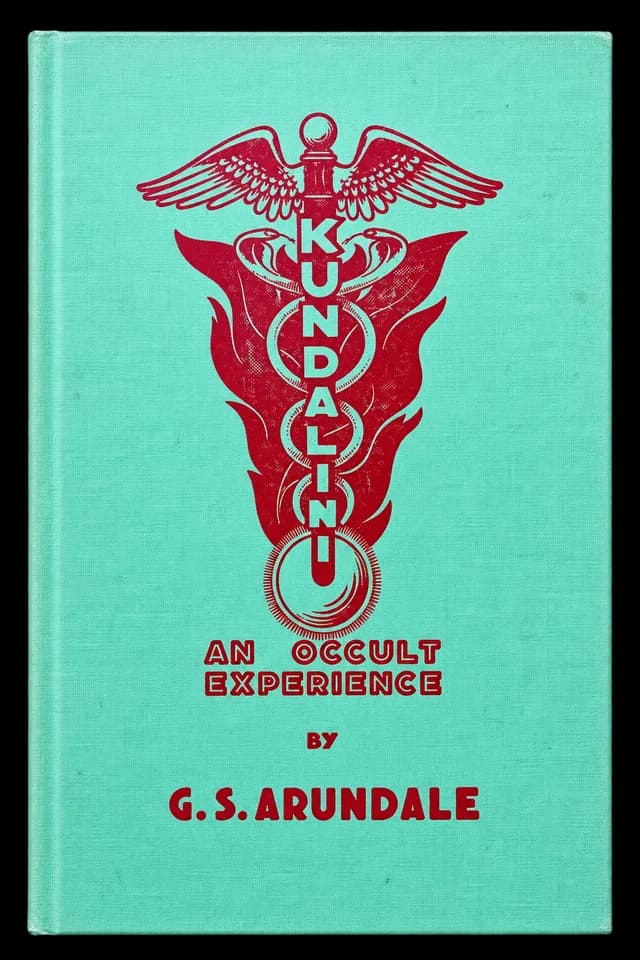
Kundalini: An Occult Experience
Reading note
The separately titled account draws on exact passages in the consulted Library edition.
Sources
See references (34)
- Rig Veda 1.1, Hymn to Agni ↗Rig Veda, Book I, hymn 1; English translation by Ralph T. H. Griffith, reproduced by Sacred Texts.Return to text ↑
- Acts of the Apostles 2:1–4 ↗Acts of the Apostles, New American Bible, Revised Edition; United States Conference of Catholic Bishops.Return to text ↑
- Evolution of Immortality, printed p. 137, Reader page 136Rosicruciæ (catalogued as Freeman Benjamin Dowd), Evolution of Immortality. Eulian Publishing Company, Salem, 1900.Read this page in Evolution of Immortality ↗Return to text ↑
- Evolution of Immortality, printed p. 16, Reader page 13Rosicruciæ (catalogued as Freeman Benjamin Dowd), Evolution of Immortality. Eulian Publishing Company, Salem, 1900.Read this page in Evolution of Immortality ↗Return to text ↑
- Evolution of Immortality, printed p. 84, Reader page 81Rosicruciæ (catalogued as Freeman Benjamin Dowd), Evolution of Immortality. Eulian Publishing Company, Salem, 1900.Read this page in Evolution of Immortality ↗Return to text ↑
- Evolution of Immortality, printed p. 85, Reader page 82Rosicruciæ (catalogued as Freeman Benjamin Dowd), Evolution of Immortality. Eulian Publishing Company, Salem, 1900.Read this page in Evolution of Immortality ↗Return to text ↑
- Evolution of Immortality, printed p. 138, Reader page 137Rosicruciæ (catalogued as Freeman Benjamin Dowd), Evolution of Immortality. Eulian Publishing Company, Salem, 1900.Read this page in Evolution of Immortality ↗Return to text ↑
- Evolution of Immortality, printed p. 20, Reader page 17Rosicruciæ (catalogued as Freeman Benjamin Dowd), Evolution of Immortality. Eulian Publishing Company, Salem, 1900.Read this page in Evolution of Immortality ↗Return to text ↑
- Evolution of Immortality, printed p. 21, Reader page 18Rosicruciæ (catalogued as Freeman Benjamin Dowd), Evolution of Immortality. Eulian Publishing Company, Salem, 1900.Read this page in Evolution of Immortality ↗Return to text ↑
- Agni, God of Fire, c. 1000 ↗Agni, God of Fire, c. 1000. India, Uttar Pradesh. Sandstone; overall: 73 x 40.6 cm (28 3/4 x 16 in.). The Cleveland Museum of Art, Edward L. Whittemore Fund, 1955.51. CC0 open-access image.
- Heaven and Its Wonders and Hell, printed p. 531, Reader page 538Emanuel Swedenborg, Heaven and Its Wonders and Hell, translated by J. C. Ager. The American Swedenborg Printing and Publishing Society, New York, 1916. Original Latin work first published in 1758.Read this page in Heaven and Its Wonders and Hell ↗Return to text ↑
- Heaven and Its Wonders and Hell, printed p. 533, Reader page 540Emanuel Swedenborg, Heaven and Its Wonders and Hell, translated by J. C. Ager. The American Swedenborg Printing and Publishing Society, New York, 1916. Original Latin work first published in 1758.Read this page in Heaven and Its Wonders and Hell ↗Return to text ↑
- Heaven and Its Wonders and Hell, printed p. 534, Reader page 541Emanuel Swedenborg, Heaven and Its Wonders and Hell, translated by J. C. Ager. The American Swedenborg Printing and Publishing Society, New York, 1916. Original Latin work first published in 1758.Read this page in Heaven and Its Wonders and Hell ↗Return to text ↑
- Heaven and Its Wonders and Hell, printed p. 535, Reader page 542Emanuel Swedenborg, Heaven and Its Wonders and Hell, translated by J. C. Ager. The American Swedenborg Printing and Publishing Society, New York, 1916. Original Latin work first published in 1758.Read this page in Heaven and Its Wonders and Hell ↗Return to text ↑
- Heaven and Its Wonders and Hell, printed p. 537, Reader page 544Emanuel Swedenborg, Heaven and Its Wonders and Hell, translated by J. C. Ager. The American Swedenborg Printing and Publishing Society, New York, 1916. Original Latin work first published in 1758.Read this page in Heaven and Its Wonders and Hell ↗Return to text ↑
- Heaven and Its Wonders and Hell, printed p. 538, Reader page 545Emanuel Swedenborg, Heaven and Its Wonders and Hell, translated by J. C. Ager. The American Swedenborg Printing and Publishing Society, New York, 1916. Original Latin work first published in 1758.Read this page in Heaven and Its Wonders and Hell ↗Return to text ↑
- Heaven and Its Wonders and Hell, printed p. 539, Reader page 546Emanuel Swedenborg, Heaven and Its Wonders and Hell, translated by J. C. Ager. The American Swedenborg Printing and Publishing Society, New York, 1916. Original Latin work first published in 1758.Read this page in Heaven and Its Wonders and Hell ↗Return to text ↑
- Heaven and Its Wonders and Hell, printed p. 540, Reader page 547Emanuel Swedenborg, Heaven and Its Wonders and Hell, translated by J. C. Ager. The American Swedenborg Printing and Publishing Society, New York, 1916. Original Latin work first published in 1758.Read this page in Heaven and Its Wonders and Hell ↗Return to text ↑
- Heaven and Its Wonders and Hell, printed p. 541, Reader page 548Emanuel Swedenborg, Heaven and Its Wonders and Hell, translated by J. C. Ager. The American Swedenborg Printing and Publishing Society, New York, 1916. Original Latin work first published in 1758.Read this page in Heaven and Its Wonders and Hell ↗Return to text ↑
- Kundalini: An Occult Experience, Reader page 29George S. Arundale, Kundalini: An Occult Experience, The Theosophical Publishing House, Adyar, Madras, India, 1938. Consulted Library edition IMJ-0227-E001.Read this page in Kundalini: An Occult Experience ↗Return to text ↑
- Kundalini: An Occult Experience, printed p. 35, Reader page 51George S. Arundale, Kundalini: An Occult Experience, The Theosophical Publishing House, Adyar, Madras, India, 1938. Consulted Library edition IMJ-0227-E001.Read this page in Kundalini: An Occult Experience ↗Return to text ↑
- Kundalini: An Occult Experience, printed p. 38, Reader page 54George S. Arundale, Kundalini: An Occult Experience, The Theosophical Publishing House, Adyar, Madras, India, 1938. Consulted Library edition IMJ-0227-E001.Read this page in Kundalini: An Occult Experience ↗Return to text ↑
- Kundalini: An Occult Experience, Reader page 89George S. Arundale, Kundalini: An Occult Experience, The Theosophical Publishing House, Adyar, Madras, India, 1938. Consulted Library edition IMJ-0227-E001.Read this page in Kundalini: An Occult Experience ↗Return to text ↑
- Kundalini: An Occult Experience, printed p. 88, Reader page 90George S. Arundale, Kundalini: An Occult Experience, The Theosophical Publishing House, Adyar, Madras, India, 1938. Consulted Library edition IMJ-0227-E001.Read this page in Kundalini: An Occult Experience ↗Return to text ↑
- Kundalini: An Occult Experience, printed p. 89, Reader page 91George S. Arundale, Kundalini: An Occult Experience, The Theosophical Publishing House, Adyar, Madras, India, 1938. Consulted Library edition IMJ-0227-E001.Read this page in Kundalini: An Occult Experience ↗Return to text ↑
- Kundalini: An Occult Experience, Reader page 66George S. Arundale, Kundalini: An Occult Experience, The Theosophical Publishing House, Adyar, Madras, India, 1938. Consulted Library edition IMJ-0227-E001.Read this page in Kundalini: An Occult Experience ↗Return to text ↑
- Kundalini: An Occult Experience, printed p. 65, Reader page 67George S. Arundale, Kundalini: An Occult Experience, The Theosophical Publishing House, Adyar, Madras, India, 1938. Consulted Library edition IMJ-0227-E001.Read this page in Kundalini: An Occult Experience ↗Return to text ↑
- Kundalini: An Occult Experience, Reader page 75George S. Arundale, Kundalini: An Occult Experience, The Theosophical Publishing House, Adyar, Madras, India, 1938. Consulted Library edition IMJ-0227-E001.Read this page in Kundalini: An Occult Experience ↗Return to text ↑
- Kundalini: An Occult Experience, Reader page 105George S. Arundale, Kundalini: An Occult Experience, The Theosophical Publishing House, Adyar, Madras, India, 1938. Consulted Library edition IMJ-0227-E001.Read this page in Kundalini: An Occult Experience ↗Return to text ↑
- Kundalini: An Occult Experience, Reader page 106George S. Arundale, Kundalini: An Occult Experience, The Theosophical Publishing House, Adyar, Madras, India, 1938. Consulted Library edition IMJ-0227-E001.Read this page in Kundalini: An Occult Experience ↗Return to text ↑
- Kundalini: An Occult Experience, printed p. 105, Reader page 107George S. Arundale, Kundalini: An Occult Experience, The Theosophical Publishing House, Adyar, Madras, India, 1938. Consulted Library edition IMJ-0227-E001.Read this page in Kundalini: An Occult Experience ↗Return to text ↑
- Kundalini: An Occult Experience, printed p. 106, Reader page 108George S. Arundale, Kundalini: An Occult Experience, The Theosophical Publishing House, Adyar, Madras, India, 1938. Consulted Library edition IMJ-0227-E001.Read this page in Kundalini: An Occult Experience ↗Return to text ↑
- Kundalini: An Occult Experience, Reader page 109George S. Arundale, Kundalini: An Occult Experience, The Theosophical Publishing House, Adyar, Madras, India, 1938. Consulted Library edition IMJ-0227-E001.Read this page in Kundalini: An Occult Experience ↗Return to text ↑
- Kundalini: An Occult Experience, Reader page 56George S. Arundale, Kundalini: An Occult Experience, The Theosophical Publishing House, Adyar, Madras, India, 1938. Consulted Library edition IMJ-0227-E001.Read this page in Kundalini: An Occult Experience ↗Return to text ↑