Alchemy · History, symbols & spiritual interpretations
Alchemy
Alchemy brings together attempts to transform matter, theories of nature and ideas about perfection. Its histories include work with metals, medicines and artistic materials, alongside religious and spiritual interpretations. This introduction follows Mediterranean and European traditions, then distinguishes the external and internal alchemy of Daoist China.
Also known as Alchemical philosophy · Spiritual alchemy
Loading your archive…
Where does alchemy come from?
The historian Lawrence M. Principe locates the emergence of the Mediterranean discipline in the meeting of craft knowledge and philosophical inquiry in Greco-Roman Egypt. Zosimos of Panopolis, active around 300 CE, is an early author for whom substantial historical information survives. His fragmentary writings discuss equipment and transformations of substances, offering a view of alchemy as work that involved both observation and explanation.
Principe distinguishes Greco-Egyptian, Arabic, Latin medieval, early modern and modern periods. This sequence introduces a long history of transmission and change. Across that history, alchemists pursued different combinations of commercial, philosophical, medical and religious aims. Mining, metallurgy and pharmacy belonged to the same broad story as the search for gold. Any general definition must leave room for this variety of purposes and settings.
The philosopher’s stone and the elixir
The philosopher’s stone is the name given to the sought-after agent of metallic transformation. In the Royal Society of Chemistry’s introductory account, the aims associated with alchemy include transmuting metals and discovering a means of enduring youth and health. These ambitions explain why gold-making and the elixir of life recur so often in descriptions of the art.
These are historical aspirations. An account of what an alchemist hoped to produce is different from evidence that the substance was produced or that it had the powers claimed for it. When reading a passage about a stone or elixir, ask which result the author promises, how the result is described and what evidence the text offers. Lumitheca’s separate Philosopher’s Stone entry follows Redgrove’s account in more detail.
What did alchemists mean by matter?
Redgrove’s historical survey describes theories in which metals shared underlying principles and differed in their proportions or purity. He explains sulphur and mercury as alchemical principles whose meanings could exceed the familiar substances bearing those names. He also discusses the addition of salt in a three-principle scheme. These terms belong to the theories of particular authors; translating them directly into modern chemical elements can obscure the argument.
This distinction gives a useful question to bring to an old book: is a word naming a material, a quality or an explanatory principle? The surrounding passage may matter more than a modern dictionary definition.
The workshop and the symbolic image
Alchemy also belongs to the history of making things. Getty’s Art of Alchemy exhibition followed work with pigments, glass, inks, dyes, glazes and metals. One example was a second-century mummy portrait painted with synthetic red lead. Such objects widen the subject beyond the familiar picture of a solitary gold-maker: transformations of materials mattered to the surfaces, colours and effects that artists could achieve.
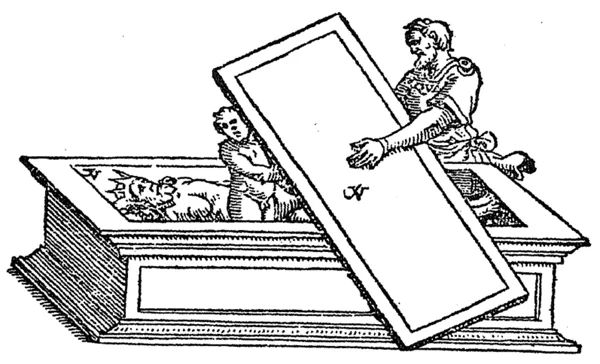
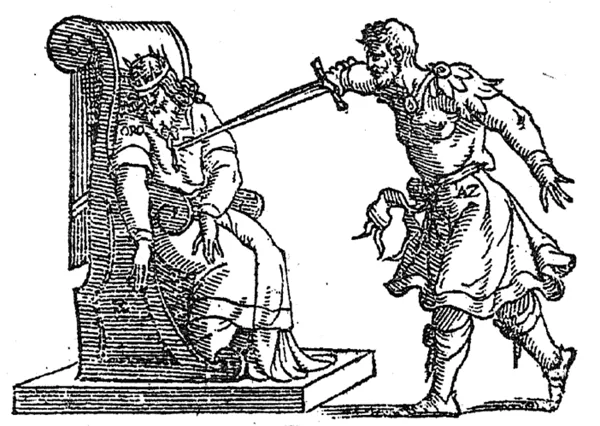
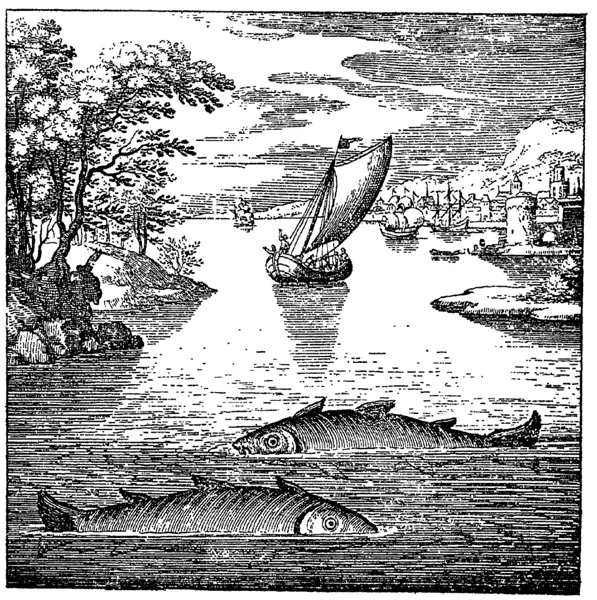
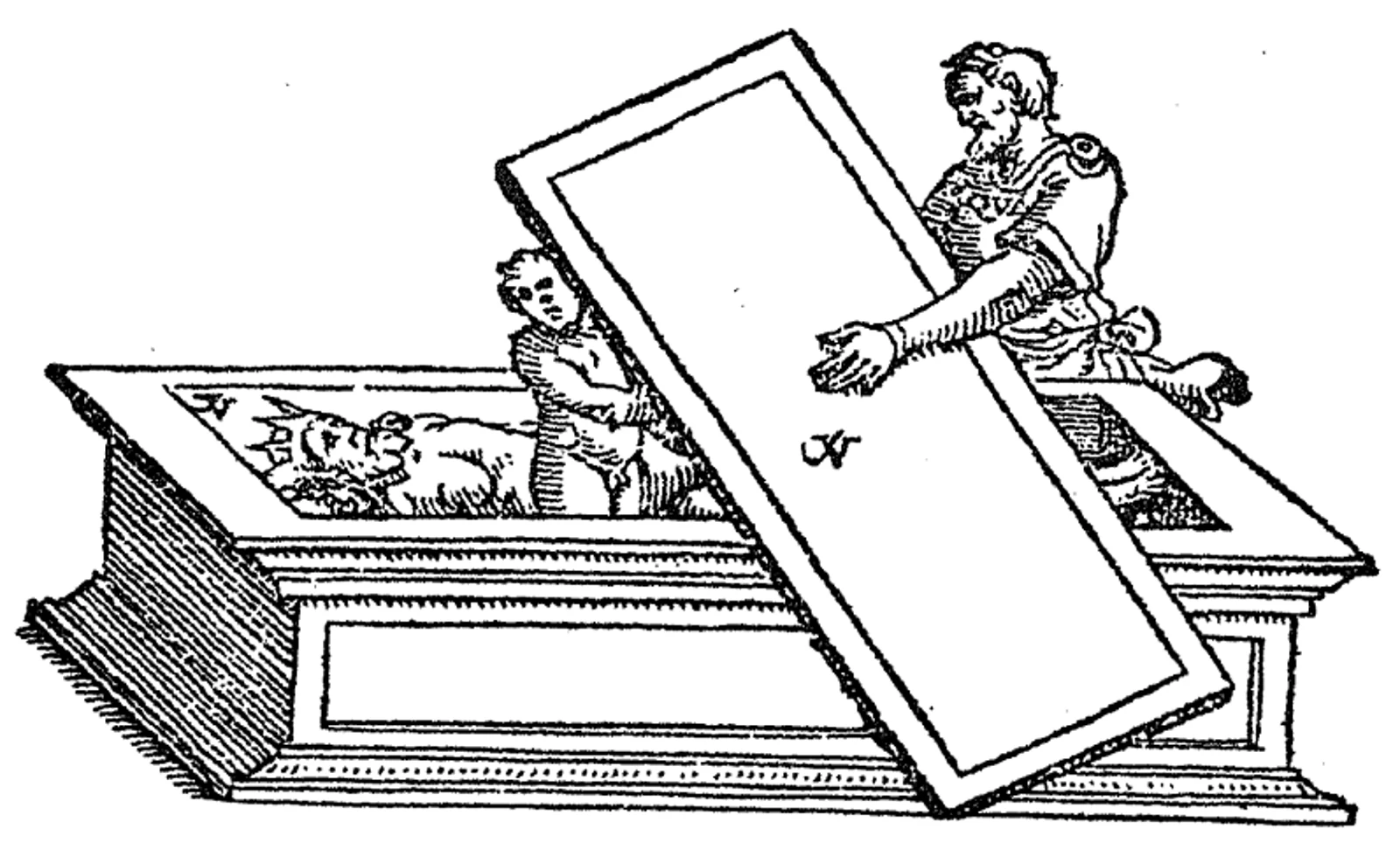
The exhibition’s Ripley Scroll, an eighteenth-century manuscript named for George Ripley, presents alchemical operations through elaborate allegorical pictures. Getty describes its fantastical imagery as a representation of the production of the philosopher’s stone. An image can therefore be evidence for how an operation was imagined, ordered or communicated, as well as an object with its own artistic history.
Getty’s accompanying research project studied artisanal knowledge and visual culture from antiquity to the Enlightenment, including exchanges across cultures. Its attention to illustrated manuscripts suggests a productive way to use Lumitheca’s gallery: read an image beside its book, caption and historical setting. A symbol’s meaning needs that context before it can support a wider interpretation.
Spiritual alchemy and inner transformation
In Chapter I, Redgrove describes an interpretation that reads the transformation of metals as the spiritual perfection of a person. He then challenges the claim that alchemy was exclusively spiritual, pointing to its authors’ material work. His own discussion joins attention to mystical ideas with recognition of laboratory activity.
The opening passages preserved below are therefore evidence for Redgrove’s interpretation of alchemy. They should be read as part of his argument, including the qualifications that follow. They do not establish that every historical alchemist used the same religious language or understood the work as inner transformation.
How are alchemy and chemistry related?
William Newman’s chapter in The Cambridge History of Science cautions against projecting a sharp modern division backwards. He notes that authors of chymical textbooks generally made no strict separation between alchemy and chemistry until the last quarter of the seventeenth century. Metallic transmutation could remain an accepted aim within the same intellectual world as other investigations of matter.
Newman also follows the changing position of the discipline between the High Middle Ages and the end of the seventeenth century, including its expanding claims about matter and medicine. The historical relationship is consequently a question about changing fields of knowledge, their practitioners and their boundaries. Calling something alchemical tells us less than identifying the period, work and problem being discussed.
Daoist external and internal alchemy
Chinese Daoist alchemy has its own texts, cosmological vocabulary and practices. Fabrizio Pregadio distinguishes Waidan, external alchemy, from Neidan, internal alchemy. Waidan is recorded from at least the second century BCE and concerns the preparation of elixirs from natural substances. Its texts connect ingredients, instruments and operations with Chinese cosmology and include ritual requirements.
Pregadio dates the development of Neidan, as far as the surviving evidence permits, from the eighth century CE. It adapts vocabulary and imagery from external alchemy to the production of an elixir within the person. He describes approaches involving cultivation of the mind or purification of the components of the human being. These distinctions introduce a separate tradition that needs its own account; the shared English word alchemy does not make its concepts interchangeable with European ones.
How to explore the sources
Begin with the two original Redgrove passages below, then open the surrounding pages in the Reader. Notice where his description ends and his interpretation begins. Use the chapter links above to follow his fuller argument, and compare it with the named historians and museum research. The illustrations offer another route into the same book: follow their captions before drawing conclusions from an isolated image.
In the sources
Philosophy and experimental science
DocumentedRedgrove expressly describes alchemy as both a philosophy and an experimental science. He presents material experiments as connected with a wider account of nature, rather than reducing the subject to gold-making alone.
A transcendental interpretation
DocumentedThe next page describes an interpretation in which alchemy concerns the human soul and spiritual perfection. Redgrove attributes this understanding to some mystics; it is a position within his discussion, not a universal agreement.
Context & interpretation
The entry follows Redgrove's early twentieth-century interpretation rather than claiming a single definition valid for all periods and practitioners. His discussion of spiritual alchemy is presented as an interpretation held by some mystics. Historical illustrations and descriptions do not establish transmutation, medical efficacy or an effective practical recipe.
Original passages
Source 1
Alchemy: Ancient and Modern
Alchemy was both a philosophy and an experimental scienceOpen this page in the book
Passage & edition details
Location recorded at citation review: Chapter I, printed p. 1
Read directly from the active prepared scan; line breaks and spacing normalised.
- Edition
- IMJ-0023-E001
- Reader page
- IMJ-0023-E001-P0020
- Original scan leaf
- 26
- Recorded leaf number
- 26
- Current Reader position
- 21
- Reader verification
- Matches the reviewed Reader
Source 2
Alchemy: Ancient and Modern
Alchemy was concerned with man's soulOpen this page in the book
Passage & edition details
Location recorded at citation review: Chapter I, printed p. 2
Read directly from the active prepared scan; line breaks and spacing normalised.
- Edition
- IMJ-0023-E001
- Reader page
- IMJ-0023-E001-P0021
- Original scan leaf
- 27
- Recorded leaf number
- 27
- Current Reader position
- 22
- Reader verification
- Matches the reviewed Reader