Kundalini
Kundalini is a spiritual power pictured as a coiled goddess. Explore her ascent and return in Pūrṇānanda and compare later Theosophical and esoteric accounts.
In this article
What is kundalini?
Kundalini is a spiritual power described in Tantric and yogic traditions. In Pūrṇānanda’s Ṣaṭ-cakra-nirūpaṇa, she is a goddess coiled like a serpent in the root lotus. The text follows her ascent through the lotuses, her union with Śiva and her return. [46][47][48][49]
Later writers adapted the image to different accounts of the body and the cosmos. Arundale describes a fire active throughout nature. Steiner places a kindling at the heart. The differences become clearer once the Tantric account has been read on its own terms. [16][17][6][7]
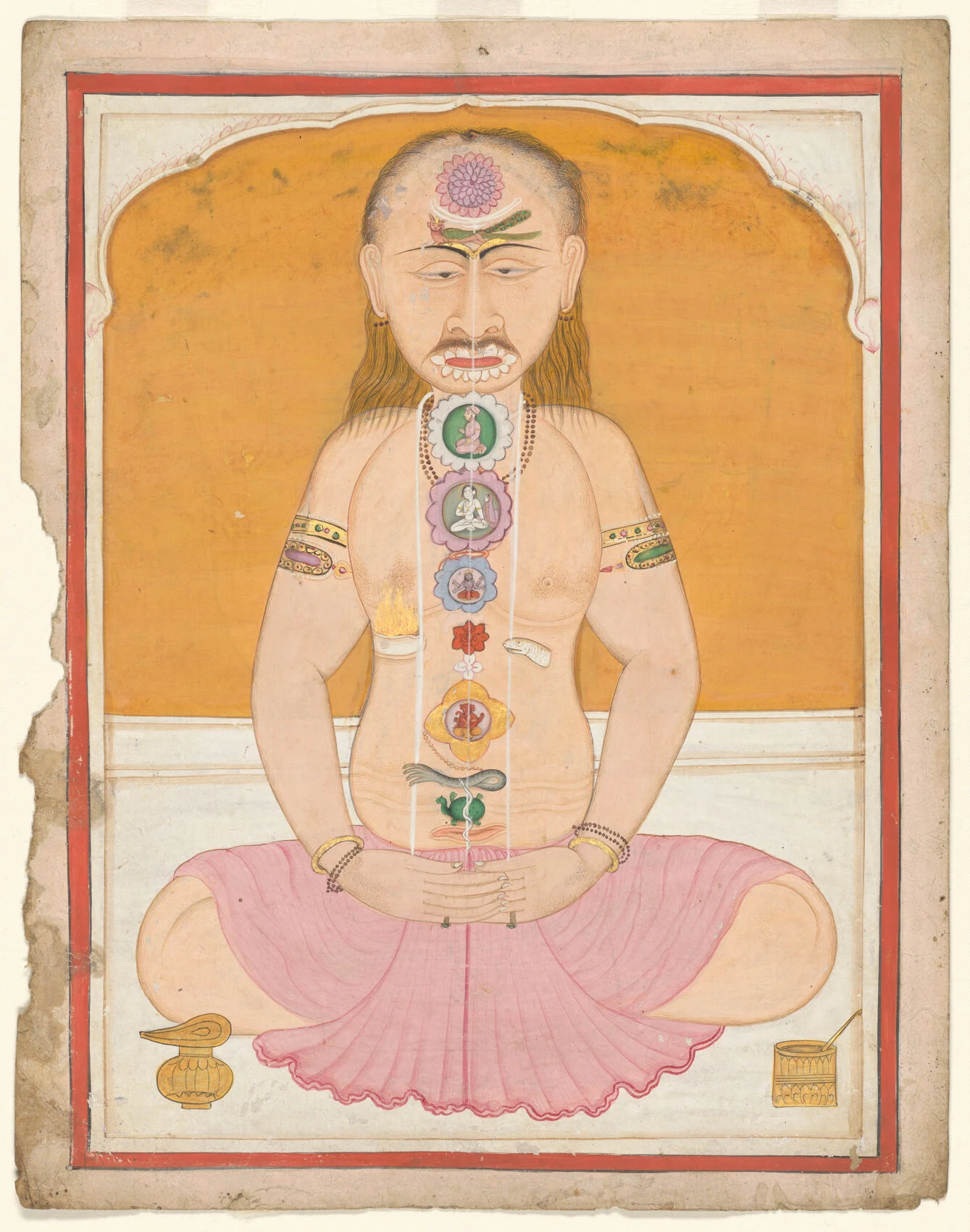
A painted representation of centres in the subtle body, from Wellcome MS Hindi (Indic) beta 511. This manuscript supplies historical visual context; it does not illustrate Arundale’s distinct Theosophical account.
Wellcome Collection, MS Hindi (Indic) beta 511, recto. Public Domain Mark. Source image resized by IIIF and converted to WebP; no crop or recolouring. · Image source ↗ · Public Domain
See references (8)
- Initiation and Its Results, printed p. 70, Reader page 68
- Initiation and Its Results, printed p. 71, Reader page 69
- Kundalini: An Occult Experience, printed p. 4, Reader page 20
- Kundalini: An Occult Experience, printed p. 35, Reader page 51
- The Serpent Power, Reader page 360
- The Serpent Power, Reader page 491
- The Serpent Power, Reader page 499
- The Serpent Power, printed p. 482, Reader page 509
The Serpent Power in Arthur Avalon’s translation
Arthur Avalon’s The Serpent Power includes Pūrṇānanda’s Ṣaṭ-cakra-nirūpaṇa with Kālīcaraṇa’s commentary. Verses 10 and 11 picture Kuṇḍalinī bright as lightning and fine as a lotus fibre. She coils around Śiva three and a half times like the spiral of a conch. [50][46]
Her mouth covers the opening she will later pass through. Kālīcaraṇa’s commentary gives the sleeping goddess work even within this posture: he links her with breathing and the emergence of speech. [46][51]
The account places the ascent after preparation and instruction from a guru. Pūrṇānanda describes the goddess moving through the lotuses and approaching Śiva. The next verse places individual consciousness on the same journey, with the other principles absorbed into her. The culmination is described as the bliss of liberation. [52][47][48]
The journey also has a downward movement. In verse 53, Kuṇḍalinī drinks red nectar issuing from Para Śiva and returns to Mūlādhāra. The practitioner makes an offering, or tarpaṇa, to a chosen deity and to the deities of the six centres. The nectar carries the bliss of union into an act of worship. [49]
In his introduction, Avalon distinguishes reaching Sahasrāra from attaining liberation. He describes returns after temporary union and reserves liberation while living for an abiding realization. Pūrṇānanda’s verse 54 gives release from rebirth as the result of disciplined, teacher-guided practice. Read together, the passages give ascent, worship and lasting liberation distinct roles. [53][54][55]
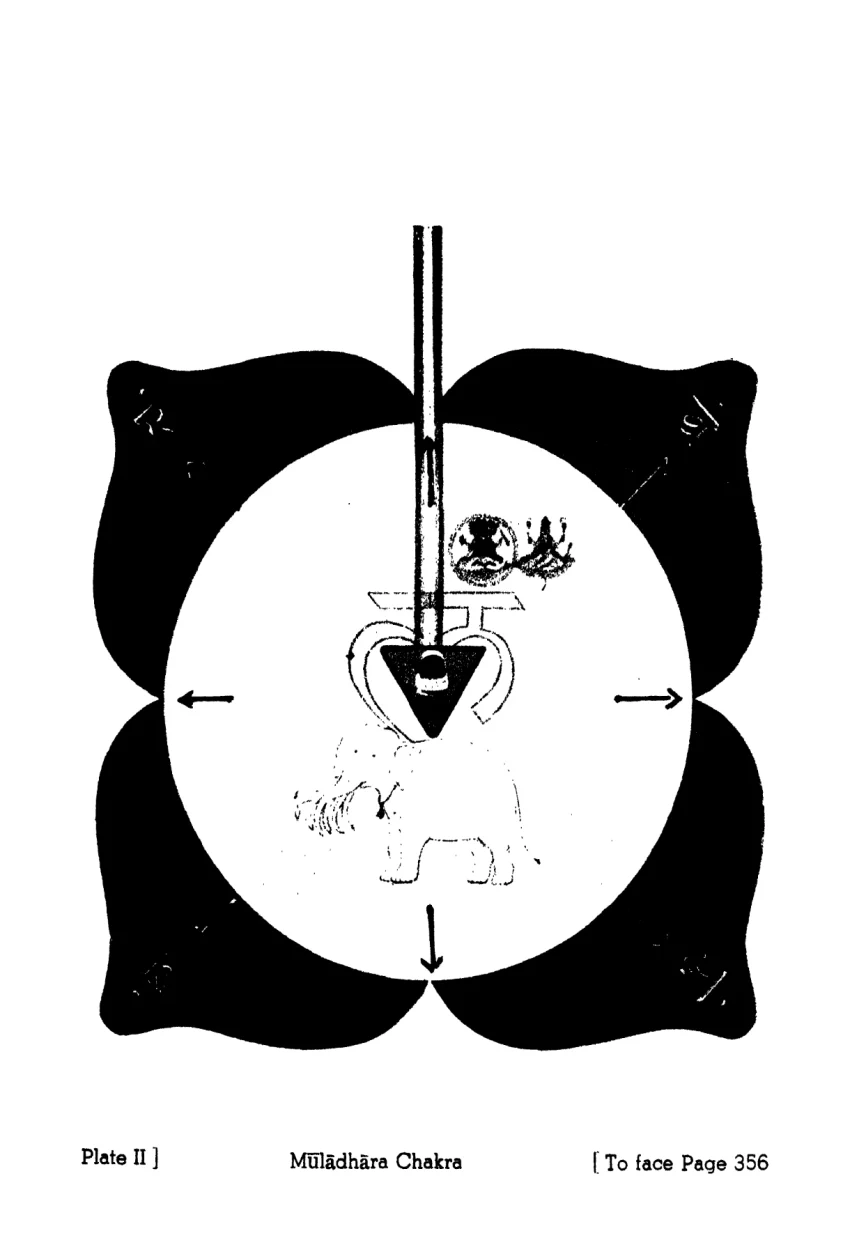
Plate II shows the four-petalled root lotus, with a figure and a coiled form inside its central triangle.
Illustrator unrecorded. The Serpent Power, Plate II. Library facsimile, compared with the 1924 second edition. · Image source ↗ · Public Domain
See references (10)
- The Serpent Power, Reader page 360
- The Serpent Power, Reader page 491
- The Serpent Power, Reader page 499
- The Serpent Power, printed p. 482, Reader page 509
- The Serpent Power, Reader page 330
- The Serpent Power, Reader page 361
- The Serpent Power, Reader page 484
- The Serpent Power, Reader page 258
- The Serpent Power, Reader page 297
- The Serpent Power, printed p. 486, Reader page 513
Initiation and Its Results by Rudolf Steiner
Rudolf Steiner’s Initiation and Its Results introduces Kundalini as a higher vital element to be controlled through the development already discussed. It is connected with a greater freedom from dependence on physical embodiment. The book’s description rests on its earlier account of etheric currents and a Higher Self. [8][9][10]
In the chapter on dream life, Steiner places the kindling of Kundalini at an organ associated with the heart. It belongs to his account of the learner’s changing relation to the Higher Self and to the world they are said to perceive. [11][6][7]
He describes a fine element flowing through lotus flowers and the channels of the evolved etheric body, then radiating into the surrounding spiritual world. His analogy is illumination: as sunlight makes ordinary objects visible, the proposed fire makes spiritual objects perceptible. [7]
The account also qualifies what a heart location means. Steiner says the ego no longer dwells within the physical body in the same way; the heart organ is the place where it kindles the fire from without. The explanation belongs to his particular relation of Higher Self, etheric organisation and perception. [6][7]
Steiner gives the fire a purpose without setting out the method of kindling it in print. In his account, changes in spiritual consciousness should strengthen ordinary life. [6][7]
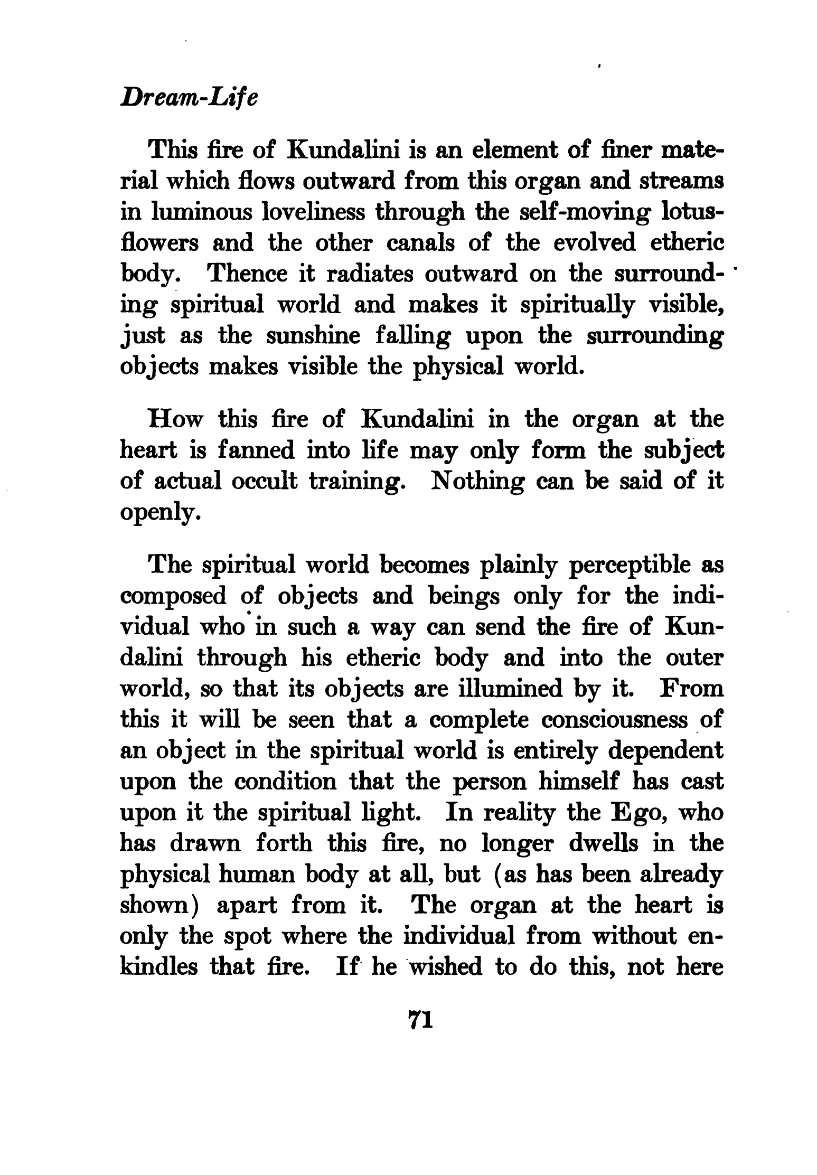
Source facsimile: Initiation and Its Results (1909), printed p. 71, Reader page 69.
Rudolf Steiner, Initiation and Its Results, Clifford Bax translation, First American Edition, 1909. Public-domain historical page from the checksum-verified Library PDF. · Image source ↗ · Public Domain
See references (6)
- Initiation and Its Results, printed p. 70, Reader page 68
- Initiation and Its Results, printed p. 71, Reader page 69
- Initiation and Its Results, printed p. 61, Reader page 60
- Initiation and Its Results, printed p. 62, Reader page 61
- Initiation and Its Results, printed p. 63, Reader page 62
- Initiation and Its Results, printed p. 69, Reader page 67
Kundalini: An Occult Experience by George S. Arundale
George S. Arundale describes Kundalini as a feminine creative power, using the image of Serpent-Fire coiled at the base of the spine. He gives the image an evolutionary scope: the same Fire is said to operate in minerals, plants, animals and human beings, with different degrees of intensity. The spinal image therefore belongs to a much larger account of life. [15][16][17]
Arundale later questions the language of awakening. In his view, Kundalini already acts wherever life exists. What changes in spiritual development is how consciously and intensely that activity is directed. [18][17][19][20]
Arundale’s examples range from public speaking to discipleship. He interprets a speaker’s concentrated effort as an intensification of the universal Fire, while expressly distinguishing this from its full arousal. He also believes that a teacher, a religious gathering or an institution can affect this activity. These examples show how widely he applies the idea within his own Theosophical worldview. [21][18][22][23][24]
The proposed goal is a transformation of waking consciousness. Arundale gives priority to the establishment of Buddhic and later Nirvanic consciousness within ordinary awareness. Clairvoyance and communication between planes are secondary results in his explanation. Intuition is supposed to become less distorted by personal desire, and the intensified power is meant to support service to others. [25][26][27][28]
He describes both a gradual development extending over lives and a later, concentrated awakening under a Master’s direction. He also stresses differences of temperament and individual soul-note. These qualifications belong beside his vivid descriptions: he does not offer one public sequence that every reader is expected to reproduce. [29][27][28][30][31]
His warnings connect premature development with sexual disturbance, bodily strain and mental breakdown. Arundale offers these explanations within a theory of subtle bodies and forces. They are historical authorial claims, rather than clinical evidence that a particular sensation or illness has a Kundalini cause. [32][33][34][35][36][37]
Arundale’s feminine language is more than an occasional pronoun. He describes Kundalini as a creative power that unfolds through coiling and rhythmic movement, and later corrects himself from it to her when describing the Fire’s adaptation to individual nature. Personification gives the power an active, individual presence within the account. [15][16][30]
The scope remains universal: he assigns Kundalini to life throughout the kingdoms of nature. Feminine therefore describes the character of the proposed creative power, rather than restricting its presence to women. His account of development also moves from localized sexual creativity towards what he calls a universal creative principle. [16][17][25]
See references (23)
- Kundalini: An Occult Experience, Reader page 19
- Kundalini: An Occult Experience, printed p. 4, Reader page 20
- Kundalini: An Occult Experience, printed p. 35, Reader page 51
- Kundalini: An Occult Experience, printed p. 15, Reader page 31
- Kundalini: An Occult Experience, printed p. 38, Reader page 54
- Kundalini: An Occult Experience, Reader page 93
- Kundalini: An Occult Experience, Reader page 30
- Kundalini: An Occult Experience, Reader page 32
- Kundalini: An Occult Experience, Reader page 52
- Kundalini: An Occult Experience, Reader page 55
- Kundalini: An Occult Experience, Reader page 66
- Kundalini: An Occult Experience, printed p. 65, Reader page 67
- Kundalini: An Occult Experience, Reader page 68
- Kundalini: An Occult Experience, Reader page 69
- Kundalini: An Occult Experience, Reader page 21
- Kundalini: An Occult Experience, printed p. 84, Reader page 86
- Kundalini: An Occult Experience, printed p. 85, Reader page 87
- Kundalini: An Occult Experience, Reader page 37
- Kundalini: An Occult Experience, Reader page 38
- Kundalini: An Occult Experience, Reader page 39
- Kundalini: An Occult Experience, Reader page 44
- Kundalini: An Occult Experience, Reader page 45
- Kundalini: An Occult Experience, Reader page 46
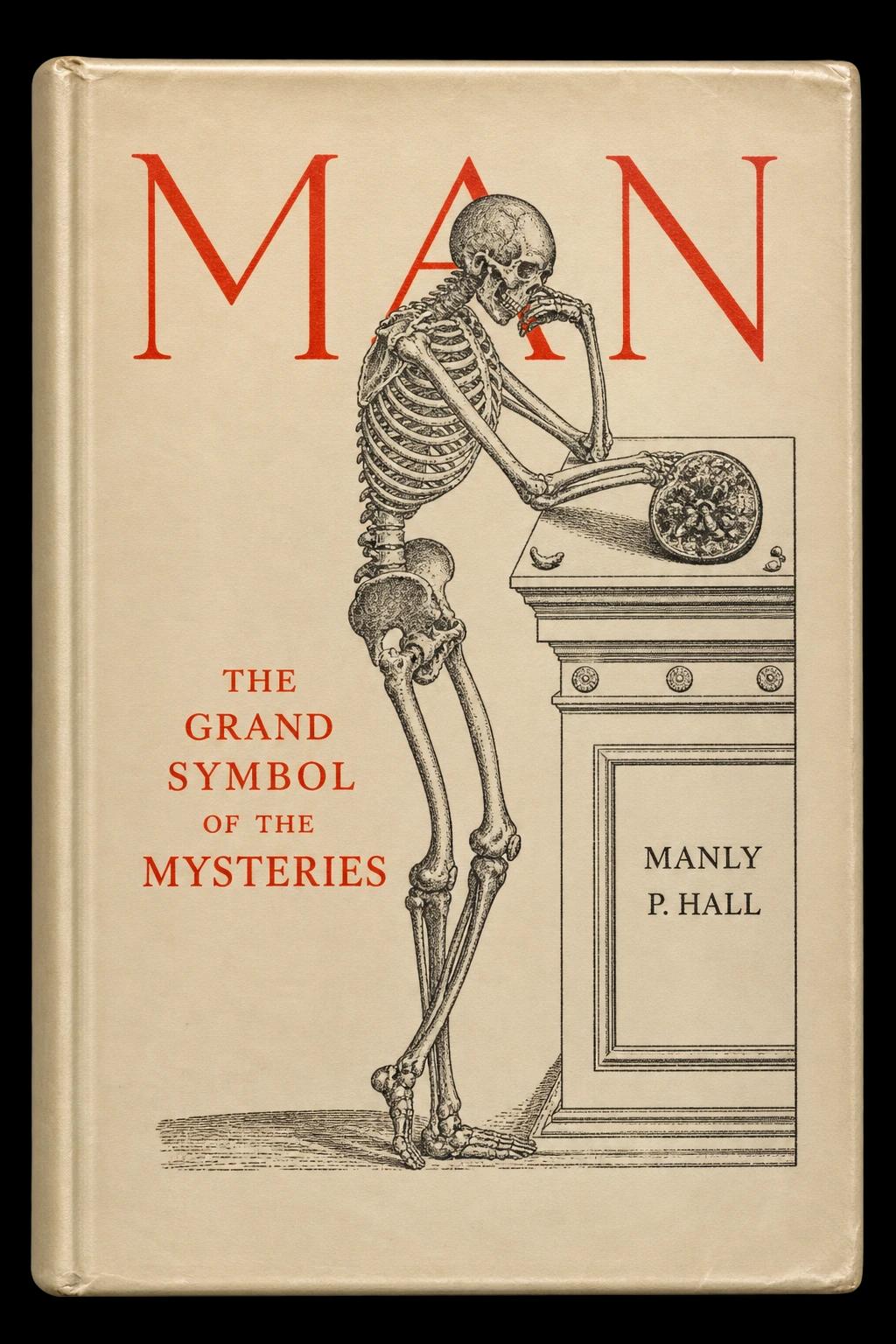
Man the Grand Symbol of the Mysteries by Manly P. Hall
Manly P. Hall describes Kundalini within a two-way account of creation and return. In his cosmology, the life of the Logos descends through seven centers. Lower worlds come into form as that force moves downward, and the physical world marks the end of its descent. [62][63][64]
Hall then uses the same pattern at the scale of a person. He describes the ascent of Kundalini through Sushumna and links it with awakening the capacity he associates with the third eye. The upward movement is a return in his cosmological reading. Hall also warns against attempting the practices he discusses without qualified instruction. [64][65][66][67]
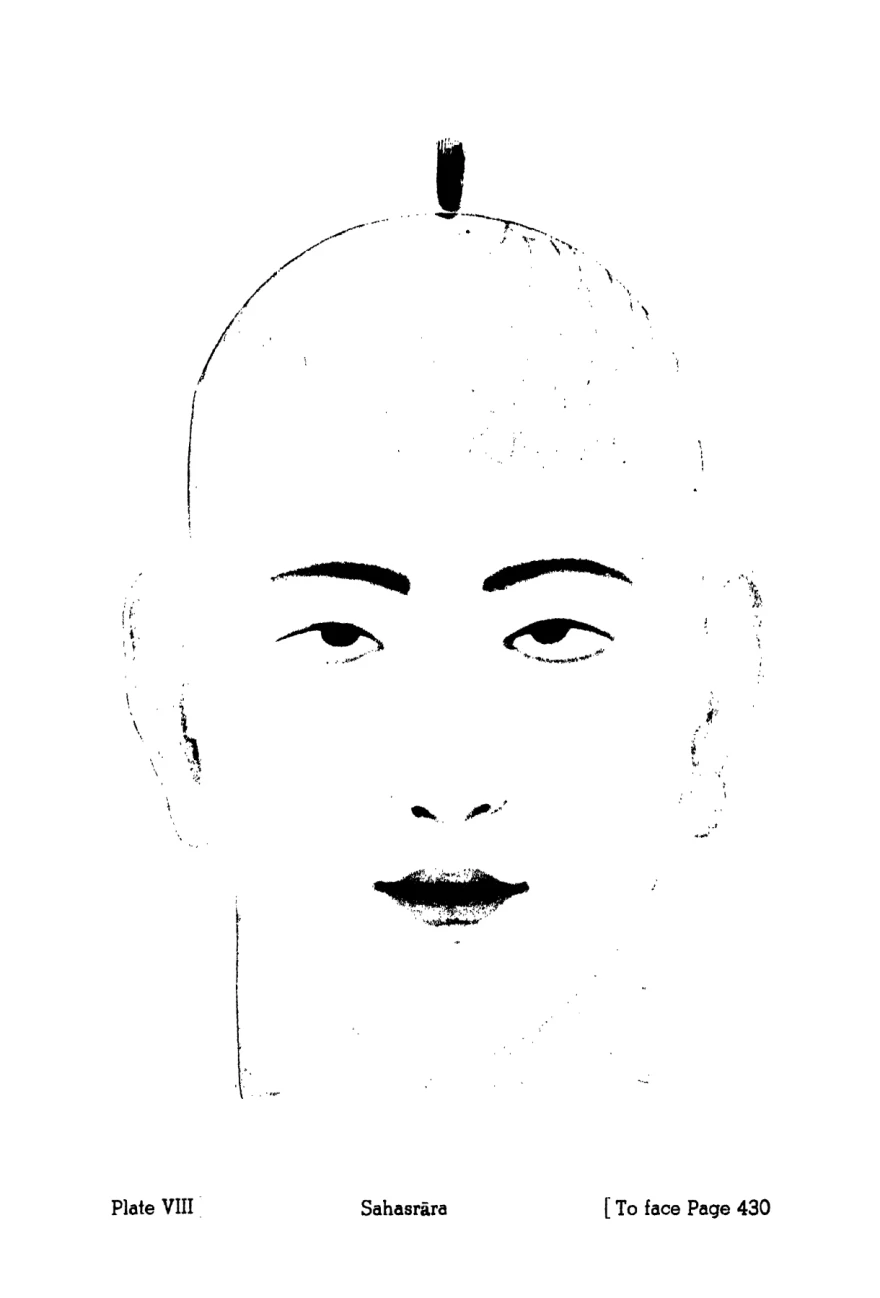
Plate VIII of The Serpent Power marks the crown lotus. Hall describes the movement toward the upper centers as one part of a larger pattern of descent and return.
Illustrator unrecorded. The Serpent Power, Plate VIII. Library facsimile, compared with the 1924 second edition. · Image source ↗ · Public Domain
See references (6)
- Man the Grand Symbol of the Mysteries, Reader page 295
- Man the Grand Symbol of the Mysteries, Reader page 296
- Man the Grand Symbol of the Mysteries, Reader page 297
- Man the Grand Symbol of the Mysteries, Reader page 298
- Man the Grand Symbol of the Mysteries, Reader page 306
- Man the Grand Symbol of the Mysteries, Reader page 307
The Kingdom of the Gods by Geoffrey Hodson
Geoffrey Hodson assigns three functions to forces he associates with the Logos. On his scheme, kundalini transmits life, prana organises it, and Fohat uses it as a constructive power. He then speaks of kundalini as a local expression of a universal power, giving the relation between the three a place in his cosmology. [58]
Hodson describes a central current along suṣumṇā and complementary currents associated with iḍā and piṅgalā. He compares them with the rod and two serpents of the caduceus. The correspondence belongs to his interpretation of the emblem. His comparison with a receiver likewise serves his proposed account of perception. [59][60]
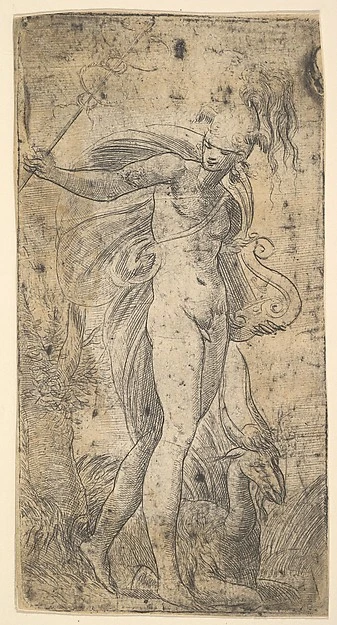
Andrea Schiavone’s print shows Mercury holding the caduceus. Hodson later reads the staff and its serpents alongside three subtle currents.
Andrea Schiavone, Mercury with a Caduceus and Lyre. The Metropolitan Museum of Art. Harris Brisbane Dick Fund, 1926. · Image source ↗ · CC0
Light-Bearers of Darkness: Inquire Within
Inquire Within gives Kundalini a hostile interpretation in Light-Bearers of Darkness. In the discussion of Steiner’s initiation, the writer links the awakening of positive and negative forces with clairvoyant colours and eventual contact with hidden beings. What a training text presents as development is recast as preparation for another will to take control. [38][39]
The discussion of eurythmy extends that reading to movement, sound and cosmic correspondences. The author asks whether rhythmic movement awakens the same force and treats the result as the fixation of astral light in a material body. This is an inference within the polemic, rather than a demonstrated account of what a dancer experiences or of how Kundalini functions. [40][41][42]
The text also places tattvic vision and the ritual analysis of letters within its larger explanation of illumination. These associations show how widely the critic applies the idea of a single force. They do not make Kundalini, astral light, ritual sound and every form of visionary perception interchangeable in the traditions that use those terms. [43][44]
The book links its argument to antisemitic ideas of hidden political control. Its claims document a strand of hostility to occult movements. [45][40][39][42]
See references (8)
- Light-Bearers of Darkness, printed p. 65, Reader page 68
- Light-Bearers of Darkness, printed p. 66, Reader page 69
- Light-Bearers of Darkness, printed p. 64, Reader page 67
- Light-Bearers of Darkness, printed p. 73, Reader page 76
- Light-Bearers of Darkness, printed p. 75, Reader page 78
- Light-Bearers of Darkness, printed p. 128, Reader page 131
- Light-Bearers of Darkness, printed p. 156, Reader page 159
- Light-Bearers of Darkness, printed p. 10, Reader page 13
How the accounts differ
Pūrṇānanda’s goddess begins at the root lotus and moves towards union with Śiva. Steiner’s fire is kindled at a heart organ and is said to illuminate spiritual surroundings. Each author gives the same name a different place and task. [46][48][6][7]
Arundale shares the feminine serpent image and treats the power as active wherever there is life. Pūrṇānanda’s commentary likewise connects it with breathing and speech at rest. Arundale extends the idea across the kingdoms of nature, while Pūrṇānanda follows the goddess through ascent, offering and return. [46][51][49][16][17]
Hall sets ascent against an earlier descent of creative life through the worlds. Hodson distinguishes kundalini from prana and Fohat by giving each a different cosmic function. Both take the image into a larger account of how the cosmos is made and sustained. [63][64][58][59]
See references (12)
- Initiation and Its Results, printed p. 70, Reader page 68
- Initiation and Its Results, printed p. 71, Reader page 69
- Kundalini: An Occult Experience, printed p. 4, Reader page 20
- Kundalini: An Occult Experience, printed p. 35, Reader page 51
- The Serpent Power, Reader page 360
- The Serpent Power, Reader page 499
- The Serpent Power, printed p. 482, Reader page 509
- The Serpent Power, Reader page 361
- The Kingdom of the Gods, Reader page 227
- The Kingdom of the Gods, Reader page 229
- Man the Grand Symbol of the Mysteries, Reader page 296
- Man the Grand Symbol of the Mysteries, Reader page 297
In the library

Initiation and Its Results
Reading note
The separately titled account draws on exact passages in the consulted Library edition.
The Serpent Power
Reading note
Read the separately attributed account in the exact Library edition, with links to the individual pages cited.

Kundalini: An Occult Experience
Reading note
The separately titled account draws on exact passages in the consulted Library edition.
Light-Bearers of Darkness
Reading note
The separately titled account draws on exact passages in the consulted Library edition.
The Kingdom of the Gods
Reading note
The separately titled account draws on exact passages in the consulted Library edition.
Man the Grand Symbol of the Mysteries
Reading note
The separately titled account draws on exact passages in the consulted Library edition.
Sources
See references (67)
- Pūrṇānanda, Ṣaṭcakranirūpaṇa, preliminary verse, translated by Arthur Avalon ↗Pūrṇānanda, Ṣaṭcakranirūpaṇa; Arthur Avalon (John Woodroffe), English translation with Kālīcaraṇa’s commentary in The Serpent Power. Verse reference identifies the primary text, separately from its commentary.
- Pūrṇānanda, Ṣaṭcakranirūpaṇa, verse 4, translated by Arthur Avalon ↗Pūrṇānanda, Ṣaṭcakranirūpaṇa; Arthur Avalon (John Woodroffe), English translation with Kālīcaraṇa’s commentary in The Serpent Power. Verse reference identifies the primary text, separately from its commentary.
- Pūrṇānanda, Ṣaṭcakranirūpaṇa, verses 10–11, translated by Arthur Avalon ↗Pūrṇānanda, Ṣaṭcakranirūpaṇa; Arthur Avalon (John Woodroffe), English translation with Kālīcaraṇa’s commentary in The Serpent Power. Verse reference identifies the primary text, separately from its commentary.
- Pūrṇānanda, Ṣaṭcakranirūpaṇa, verse 50 and Kālīcaraṇa’s commentary, translated by Arthur Avalon ↗Pūrṇānanda, Ṣaṭcakranirūpaṇa; Arthur Avalon (John Woodroffe), English translation with Kālīcaraṇa’s commentary in The Serpent Power. Verse reference identifies the primary text, separately from its commentary.
- Pūrṇānanda, Ṣaṭcakranirūpaṇa, verse 40, translated by Arthur Avalon ↗Pūrṇānanda, Ṣaṭcakranirūpaṇa; Arthur Avalon (John Woodroffe), English translation with Kālīcaraṇa’s commentary in The Serpent Power. Verse reference identifies the primary text, separately from its commentary.
- Initiation and Its Results, printed p. 70, Reader page 68Rudolf Steiner, Initiation and Its Results: A Sequel to The Way of Initiation, translated by Clifford Bax. First American Edition, 1909. Macoy Publishing and Masonic Supply Co., New York; Max Gysi, London. Claims of clairvoyant perception and subtle organs remain attributed. References identify the exact consulted Library edition.Read this page in Initiation and Its Results ↗
- Initiation and Its Results, printed p. 71, Reader page 69Rudolf Steiner, Initiation and Its Results: A Sequel to The Way of Initiation, translated by Clifford Bax. First American Edition, 1909. Macoy Publishing and Masonic Supply Co., New York; Max Gysi, London. Claims of clairvoyant perception and subtle organs remain attributed. References identify the exact consulted Library edition.Read this page in Initiation and Its Results ↗
- Initiation and Its Results, printed p. 61, Reader page 60Rudolf Steiner, Initiation and Its Results: A Sequel to The Way of Initiation, translated by Clifford Bax. First American Edition, 1909. Macoy Publishing and Masonic Supply Co., New York; Max Gysi, London. Claims of clairvoyant perception and subtle organs remain attributed. References identify the exact consulted Library edition.Read this page in Initiation and Its Results ↗
- Initiation and Its Results, printed p. 62, Reader page 61Rudolf Steiner, Initiation and Its Results: A Sequel to The Way of Initiation, translated by Clifford Bax. First American Edition, 1909. Macoy Publishing and Masonic Supply Co., New York; Max Gysi, London. Claims of clairvoyant perception and subtle organs remain attributed. References identify the exact consulted Library edition.Read this page in Initiation and Its Results ↗
- Initiation and Its Results, printed p. 63, Reader page 62Rudolf Steiner, Initiation and Its Results: A Sequel to The Way of Initiation, translated by Clifford Bax. First American Edition, 1909. Macoy Publishing and Masonic Supply Co., New York; Max Gysi, London. Claims of clairvoyant perception and subtle organs remain attributed. References identify the exact consulted Library edition.Read this page in Initiation and Its Results ↗
- Initiation and Its Results, printed p. 69, Reader page 67Rudolf Steiner, Initiation and Its Results: A Sequel to The Way of Initiation, translated by Clifford Bax. First American Edition, 1909. Macoy Publishing and Masonic Supply Co., New York; Max Gysi, London. Claims of clairvoyant perception and subtle organs remain attributed. References identify the exact consulted Library edition.Read this page in Initiation and Its Results ↗
- Pūrṇānanda, Ṣaṭcakranirūpaṇa, verse 51 and Kālīcaraṇa’s commentary, translated by Arthur Avalon ↗Primary verse and its separately identified commentary. The passage describes the goddess’s approach to Śiva and the bliss of liberation.
- Pūrṇānanda, Ṣaṭcakranirūpaṇa, verse 54, translated by Arthur Avalon ↗Primary verse on preparation, instruction and the claimed freedom from further birth.
- Wellcome Collection, MS Hindi (Indic) beta 511, natural-colour recto ↗Wellcome Collection. Current collection catalogue and IIIF manifest designate this digital image Public Domain Mark; creator and date are not supplied in the consulted catalogue.
- Kundalini: An Occult Experience, Reader page 19George S. Arundale, Kundalini: An Occult Experience, The Theosophical Publishing House, Adyar, Madras, India, 1938. Consulted Library edition IMJ-0227-E001.Read this page in Kundalini: An Occult Experience ↗
- Kundalini: An Occult Experience, printed p. 4, Reader page 20George S. Arundale, Kundalini: An Occult Experience, The Theosophical Publishing House, Adyar, Madras, India, 1938. Consulted Library edition IMJ-0227-E001.Read this page in Kundalini: An Occult Experience ↗
- Kundalini: An Occult Experience, printed p. 35, Reader page 51George S. Arundale, Kundalini: An Occult Experience, The Theosophical Publishing House, Adyar, Madras, India, 1938. Consulted Library edition IMJ-0227-E001.Read this page in Kundalini: An Occult Experience ↗
- Kundalini: An Occult Experience, printed p. 15, Reader page 31George S. Arundale, Kundalini: An Occult Experience, The Theosophical Publishing House, Adyar, Madras, India, 1938. Consulted Library edition IMJ-0227-E001.Read this page in Kundalini: An Occult Experience ↗
- Kundalini: An Occult Experience, printed p. 38, Reader page 54George S. Arundale, Kundalini: An Occult Experience, The Theosophical Publishing House, Adyar, Madras, India, 1938. Consulted Library edition IMJ-0227-E001.Read this page in Kundalini: An Occult Experience ↗
- Kundalini: An Occult Experience, Reader page 93George S. Arundale, Kundalini: An Occult Experience, The Theosophical Publishing House, Adyar, Madras, India, 1938. Consulted Library edition IMJ-0227-E001.Read this page in Kundalini: An Occult Experience ↗
- Kundalini: An Occult Experience, Reader page 30George S. Arundale, Kundalini: An Occult Experience, The Theosophical Publishing House, Adyar, Madras, India, 1938. Consulted Library edition IMJ-0227-E001.Read this page in Kundalini: An Occult Experience ↗
- Kundalini: An Occult Experience, Reader page 32George S. Arundale, Kundalini: An Occult Experience, The Theosophical Publishing House, Adyar, Madras, India, 1938. Consulted Library edition IMJ-0227-E001.Read this page in Kundalini: An Occult Experience ↗
- Kundalini: An Occult Experience, Reader page 52George S. Arundale, Kundalini: An Occult Experience, The Theosophical Publishing House, Adyar, Madras, India, 1938. Consulted Library edition IMJ-0227-E001.Read this page in Kundalini: An Occult Experience ↗
- Kundalini: An Occult Experience, Reader page 55George S. Arundale, Kundalini: An Occult Experience, The Theosophical Publishing House, Adyar, Madras, India, 1938. Consulted Library edition IMJ-0227-E001.Read this page in Kundalini: An Occult Experience ↗
- Kundalini: An Occult Experience, Reader page 66George S. Arundale, Kundalini: An Occult Experience, The Theosophical Publishing House, Adyar, Madras, India, 1938. Consulted Library edition IMJ-0227-E001.Read this page in Kundalini: An Occult Experience ↗
- Kundalini: An Occult Experience, printed p. 65, Reader page 67George S. Arundale, Kundalini: An Occult Experience, The Theosophical Publishing House, Adyar, Madras, India, 1938. Consulted Library edition IMJ-0227-E001.Read this page in Kundalini: An Occult Experience ↗
- Kundalini: An Occult Experience, Reader page 68George S. Arundale, Kundalini: An Occult Experience, The Theosophical Publishing House, Adyar, Madras, India, 1938. Consulted Library edition IMJ-0227-E001.Read this page in Kundalini: An Occult Experience ↗
- Kundalini: An Occult Experience, Reader page 69George S. Arundale, Kundalini: An Occult Experience, The Theosophical Publishing House, Adyar, Madras, India, 1938. Consulted Library edition IMJ-0227-E001.Read this page in Kundalini: An Occult Experience ↗
- Kundalini: An Occult Experience, Reader page 21George S. Arundale, Kundalini: An Occult Experience, The Theosophical Publishing House, Adyar, Madras, India, 1938. Consulted Library edition IMJ-0227-E001.Read this page in Kundalini: An Occult Experience ↗
- Kundalini: An Occult Experience, printed p. 84, Reader page 86George S. Arundale, Kundalini: An Occult Experience, The Theosophical Publishing House, Adyar, Madras, India, 1938. Consulted Library edition IMJ-0227-E001.Read this page in Kundalini: An Occult Experience ↗
- Kundalini: An Occult Experience, printed p. 85, Reader page 87George S. Arundale, Kundalini: An Occult Experience, The Theosophical Publishing House, Adyar, Madras, India, 1938. Consulted Library edition IMJ-0227-E001.Read this page in Kundalini: An Occult Experience ↗
- Kundalini: An Occult Experience, Reader page 37George S. Arundale, Kundalini: An Occult Experience, The Theosophical Publishing House, Adyar, Madras, India, 1938. Consulted Library edition IMJ-0227-E001.Read this page in Kundalini: An Occult Experience ↗
- Kundalini: An Occult Experience, Reader page 38George S. Arundale, Kundalini: An Occult Experience, The Theosophical Publishing House, Adyar, Madras, India, 1938. Consulted Library edition IMJ-0227-E001.Read this page in Kundalini: An Occult Experience ↗
- Kundalini: An Occult Experience, Reader page 39George S. Arundale, Kundalini: An Occult Experience, The Theosophical Publishing House, Adyar, Madras, India, 1938. Consulted Library edition IMJ-0227-E001.Read this page in Kundalini: An Occult Experience ↗
- Kundalini: An Occult Experience, Reader page 44George S. Arundale, Kundalini: An Occult Experience, The Theosophical Publishing House, Adyar, Madras, India, 1938. Consulted Library edition IMJ-0227-E001.Read this page in Kundalini: An Occult Experience ↗
- Kundalini: An Occult Experience, Reader page 45George S. Arundale, Kundalini: An Occult Experience, The Theosophical Publishing House, Adyar, Madras, India, 1938. Consulted Library edition IMJ-0227-E001.Read this page in Kundalini: An Occult Experience ↗
- Kundalini: An Occult Experience, Reader page 46George S. Arundale, Kundalini: An Occult Experience, The Theosophical Publishing House, Adyar, Madras, India, 1938. Consulted Library edition IMJ-0227-E001.Read this page in Kundalini: An Occult Experience ↗
- Light-Bearers of Darkness, printed p. 65, Reader page 68Inquire Within, Light-Bearers of Darkness (first printed 1930; supplied facsimile reprinted 2001), exact selected Library edition IMJ-0032-E002. Quotations and reported documents are read through this polemical source, unless a separately titled account states otherwise. Original source leaf 206 is absent; original PageIDs and current Reader positions are verified.Read this page in Light-Bearers of Darkness ↗
- Light-Bearers of Darkness, printed p. 66, Reader page 69Inquire Within, Light-Bearers of Darkness (first printed 1930; supplied facsimile reprinted 2001), exact selected Library edition IMJ-0032-E002. Quotations and reported documents are read through this polemical source, unless a separately titled account states otherwise. Original source leaf 206 is absent; original PageIDs and current Reader positions are verified.Read this page in Light-Bearers of Darkness ↗
- Light-Bearers of Darkness, printed p. 64, Reader page 67Inquire Within, Light-Bearers of Darkness (first printed 1930; supplied facsimile reprinted 2001), exact selected Library edition IMJ-0032-E002. Quotations and reported documents are read through this polemical source, unless a separately titled account states otherwise. Original source leaf 206 is absent; original PageIDs and current Reader positions are verified.Read this page in Light-Bearers of Darkness ↗
- Light-Bearers of Darkness, printed p. 73, Reader page 76Inquire Within, Light-Bearers of Darkness (first printed 1930; supplied facsimile reprinted 2001), exact selected Library edition IMJ-0032-E002. Quotations and reported documents are read through this polemical source, unless a separately titled account states otherwise. Original source leaf 206 is absent; original PageIDs and current Reader positions are verified.Read this page in Light-Bearers of Darkness ↗
- Light-Bearers of Darkness, printed p. 75, Reader page 78Inquire Within, Light-Bearers of Darkness (first printed 1930; supplied facsimile reprinted 2001), exact selected Library edition IMJ-0032-E002. Quotations and reported documents are read through this polemical source, unless a separately titled account states otherwise. Original source leaf 206 is absent; original PageIDs and current Reader positions are verified.Read this page in Light-Bearers of Darkness ↗
- Light-Bearers of Darkness, printed p. 128, Reader page 131Inquire Within, Light-Bearers of Darkness (first printed 1930; supplied facsimile reprinted 2001), exact selected Library edition IMJ-0032-E002. Quotations and reported documents are read through this polemical source, unless a separately titled account states otherwise. Original source leaf 206 is absent; original PageIDs and current Reader positions are verified.Read this page in Light-Bearers of Darkness ↗
- Light-Bearers of Darkness, printed p. 156, Reader page 159Inquire Within, Light-Bearers of Darkness (first printed 1930; supplied facsimile reprinted 2001), exact selected Library edition IMJ-0032-E002. Quotations and reported documents are read through this polemical source, unless a separately titled account states otherwise. Original source leaf 206 is absent; original PageIDs and current Reader positions are verified.Read this page in Light-Bearers of Darkness ↗
- Light-Bearers of Darkness, printed p. 10, Reader page 13Inquire Within, Light-Bearers of Darkness (first printed 1930; supplied facsimile reprinted 2001), exact selected Library edition IMJ-0032-E002. Quotations and reported documents are read through this polemical source, unless a separately titled account states otherwise. Original source leaf 206 is absent; original PageIDs and current Reader positions are verified.Read this page in Light-Bearers of Darkness ↗
- The Serpent Power, Reader page 360Pūrṇānanda, Ṣaṭ-cakra-nirūpaṇa, with Kālīcaraṇa’s commentary, translated by Arthur Avalon in The Serpent Power. Exact Library edition IMJ-0608-E001.Read this page in The Serpent Power ↗
- The Serpent Power, Reader page 491Pūrṇānanda, Ṣaṭ-cakra-nirūpaṇa, with Kālīcaraṇa’s commentary, translated by Arthur Avalon in The Serpent Power. Exact Library edition IMJ-0608-E001.Read this page in The Serpent Power ↗
- The Serpent Power, Reader page 499Pūrṇānanda, Ṣaṭ-cakra-nirūpaṇa, with Kālīcaraṇa’s commentary, translated by Arthur Avalon in The Serpent Power. Exact Library edition IMJ-0608-E001.Read this page in The Serpent Power ↗
- The Serpent Power, printed p. 482, Reader page 509Pūrṇānanda, Ṣaṭ-cakra-nirūpaṇa, with Kālīcaraṇa’s commentary, translated by Arthur Avalon in The Serpent Power. Exact Library edition IMJ-0608-E001.Read this page in The Serpent Power ↗
- The Serpent Power, Reader page 330Pūrṇānanda, Ṣaṭ-cakra-nirūpaṇa, with Kālīcaraṇa’s commentary, translated by Arthur Avalon in The Serpent Power. Exact Library edition IMJ-0608-E001.Read this page in The Serpent Power ↗
- The Serpent Power, Reader page 361Pūrṇānanda, Ṣaṭ-cakra-nirūpaṇa, with Kālīcaraṇa’s commentary, translated by Arthur Avalon in The Serpent Power. Exact Library edition IMJ-0608-E001.Read this page in The Serpent Power ↗
- The Serpent Power, Reader page 484Pūrṇānanda, Ṣaṭ-cakra-nirūpaṇa, with Kālīcaraṇa’s commentary, translated by Arthur Avalon in The Serpent Power. Exact Library edition IMJ-0608-E001.Read this page in The Serpent Power ↗
- The Serpent Power, Reader page 258Arthur Avalon (Sir John Woodroffe), The Serpent Power, fifth enlarged edition, Ganesh & Co., Madras, 1953. Exact Library edition IMJ-0608-E001.Read this page in The Serpent Power ↗
- The Serpent Power, Reader page 297Arthur Avalon (Sir John Woodroffe), The Serpent Power, fifth enlarged edition, Ganesh & Co., Madras, 1953. Exact Library edition IMJ-0608-E001.Read this page in The Serpent Power ↗
- The Serpent Power, printed p. 486, Reader page 513Pūrṇānanda, Ṣaṭ-cakra-nirūpaṇa, with Kālīcaraṇa’s commentary, translated by Arthur Avalon in The Serpent Power. Exact Library edition IMJ-0608-E001.Read this page in The Serpent Power ↗
- The Serpent Power, Plate II, Reader page 370Arthur Avalon (Sir John Woodroffe), The Serpent Power, fifth enlarged edition, Ganesh & Co., Madras, 1953. Exact Library edition IMJ-0608-E001.Read this page in The Serpent Power ↗
- Andrea Schiavone, Mercury with a Caduceus and Lyre ↗Andrea Schiavone, Mercury with a Caduceus and Lyre. The Metropolitan Museum of Art. Harris Brisbane Dick Fund, 1926.
- The Kingdom of the Gods, Reader page 227Geoffrey Hodson, The Kingdom of the Gods, Theosophical Publishing House, first published 1952, thirteenth reprint 2007. Lumitheca Library edition IMJ-0606-E001.Read this page in The Kingdom of the Gods ↗
- The Kingdom of the Gods, Reader page 229Geoffrey Hodson, The Kingdom of the Gods, Theosophical Publishing House, first published 1952, thirteenth reprint 2007. Lumitheca Library edition IMJ-0606-E001.Read this page in The Kingdom of the Gods ↗
- The Kingdom of the Gods, Reader page 230Geoffrey Hodson, The Kingdom of the Gods, Theosophical Publishing House, first published 1952, thirteenth reprint 2007. Lumitheca Library edition IMJ-0606-E001.Read this page in The Kingdom of the Gods ↗
- The Serpent Power, Plate VIII, Reader page 450Illustrator unrecorded. The Serpent Power, Plate VIII. Library facsimile, compared with the 1924 second edition.Read this page in The Serpent Power ↗
- Man the Grand Symbol of the Mysteries, Reader page 295Manly P. Hall, Man the Grand Symbol of the Mysteries, Fourth Edition, The Philosophers Press, Los Angeles, 1937. Lumitheca Library edition IMJ-0603-E001.Read this page in Man the Grand Symbol of the Mysteries ↗
- Man the Grand Symbol of the Mysteries, Reader page 296Manly P. Hall, Man the Grand Symbol of the Mysteries, Fourth Edition, The Philosophers Press, Los Angeles, 1937. Lumitheca Library edition IMJ-0603-E001.Read this page in Man the Grand Symbol of the Mysteries ↗
- Man the Grand Symbol of the Mysteries, Reader page 297Manly P. Hall, Man the Grand Symbol of the Mysteries, Fourth Edition, The Philosophers Press, Los Angeles, 1937. Lumitheca Library edition IMJ-0603-E001.Read this page in Man the Grand Symbol of the Mysteries ↗
- Man the Grand Symbol of the Mysteries, Reader page 298Manly P. Hall, Man the Grand Symbol of the Mysteries, Fourth Edition, The Philosophers Press, Los Angeles, 1937. Lumitheca Library edition IMJ-0603-E001.Read this page in Man the Grand Symbol of the Mysteries ↗
- Man the Grand Symbol of the Mysteries, Reader page 306Manly P. Hall, Man the Grand Symbol of the Mysteries, Fourth Edition, The Philosophers Press, Los Angeles, 1937. Lumitheca Library edition IMJ-0603-E001.Read this page in Man the Grand Symbol of the Mysteries ↗
- Man the Grand Symbol of the Mysteries, Reader page 307Manly P. Hall, Man the Grand Symbol of the Mysteries, Fourth Edition, The Philosophers Press, Los Angeles, 1937. Lumitheca Library edition IMJ-0603-E001.Read this page in Man the Grand Symbol of the Mysteries ↗