Fohat in Theosophy
What is Fohat in Theosophy? Compare Blavatsky’s account of cosmic formation with Geoffrey Hodson’s distinction between Fohat, prana and kundalini.
In this article
An active power of formation
Fohat is a Theosophical term for a power said to bring cosmic design into operation. H. P. Blavatsky and Geoffrey Hodson describe it with the language of electricity. They use that language to explain how divine purpose can acquire force in the formation of matter. [3][4][5][2]
The Secret Doctrine by H. P. Blavatsky
In The Secret Doctrine, H. P. Blavatsky distinguishes Fohat before manifestation, as potential power, from its activity once a universe manifests. She credits it with setting cosmic evolution in motion and bringing elemental atoms into combination. [2]
The Kingdom of the Gods by Geoffrey Hodson
In The Kingdom of the Gods, Geoffrey Hodson describes Fohat as alternating between latency and activity. During a creative period the angelic orders he associates with Will direct its fiery current. The orders of Wisdom and Intelligence have different roles in receiving or directing its effects. [3][6][4][7]
Hodson also pictures Fohat as an archangel of fire. In a separate passage he distinguishes three functions. He gives kundalini the transmission of life, prana its organisation and Fohat its constructive use. Physical electricity is one correspondence he attaches to that third function. [8][5][9]
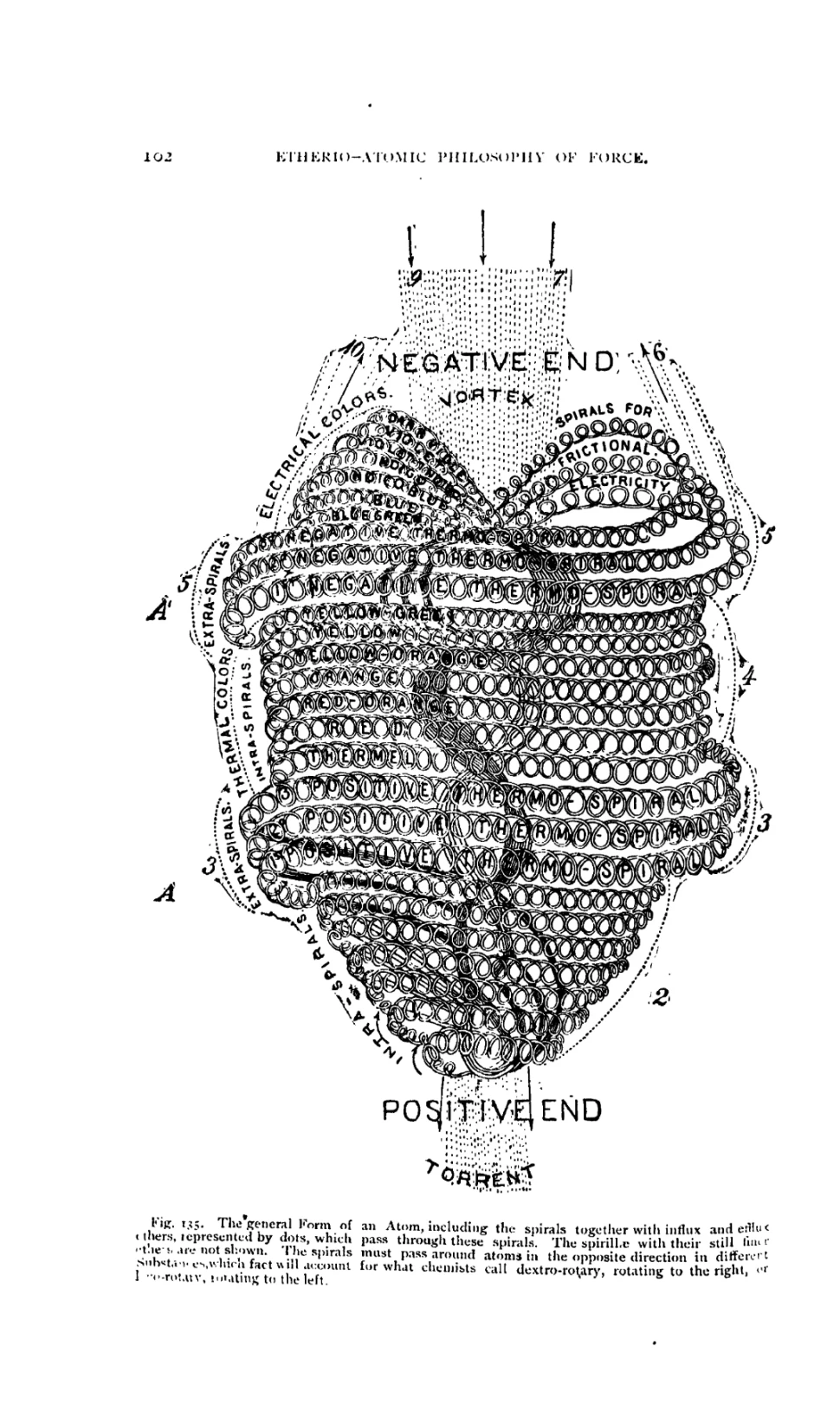
Edwin D. Babbitt’s spiral atom is a separate historical attempt to draw subtle forces within matter. Its coils give a visual comparison for the language of currents and whirling forms in Hodson.
Edwin D. Babbitt, The Principles of Light and Color, second edition, 1896. Lumitheca Library facsimile. · Image source ↗ · Public Domain
Watchers of the Seven Spheres by H. K. Challoner
In The Cosmic Messengers, a poem in H. K. Challoner’s Watchers of the Seven Spheres, particles of fiery life are called the sons of Fohat. They turn in response to the slightest impulse. Sound, thought and movement can each begin a disturbance that travels beyond its origin. [11][12]
Challoner places this image after the withdrawal of energy from a vortex. The poem then changes scale from the response of a particle to the response of human life within stellar and planetary influences. [11][12]
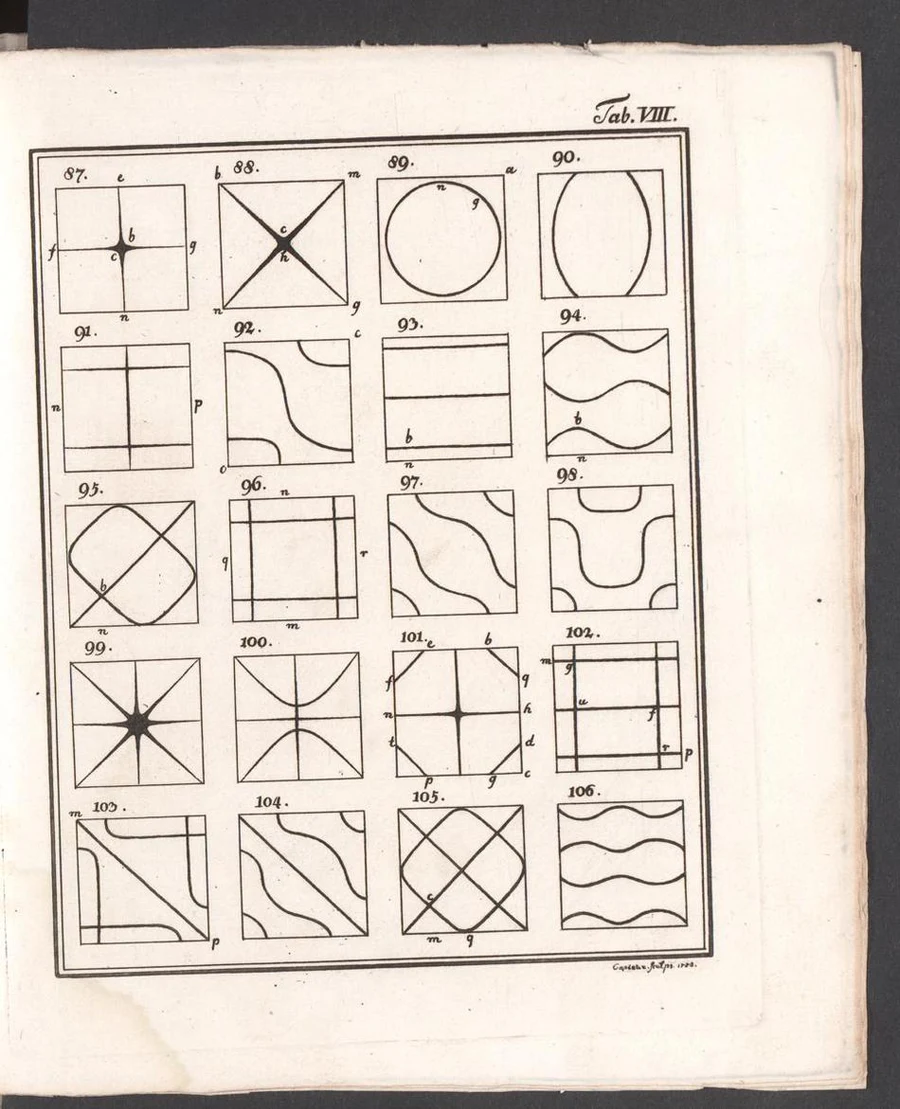
Chladni records the patterns produced as a plate vibrates. Challoner’s rotating particles belong to a poetic account in which even a sound or thought can set off a response.
ETH-Bibliothek Zürich, Rar 5284. DOI 10.3931/e-rara-4235. Public Domain Mark. · Image source ↗ · Public Domain
Force and personification
Blavatsky uses Fohat to set elemental life in motion. Hodson describes angelic orders that direct its effects. Challoner concentrates on the response of the smallest lives when that impulse reaches them. [11][12][2][3][4]
Blavatsky moves between a binding force and a personified agent. Hodson makes the division of creative labour more explicit, distinguishing the current that gives formation its force from the thought that directs its pattern. [8][3][6][4][7][5][2]
See references (9)
- The Secret Doctrine, vol. I, pp. 109–112
- The Kingdom of the Gods, Reader page 114
- The Kingdom of the Gods, Reader page 116
- The Kingdom of the Gods, Reader page 227
- The Kingdom of the Gods, Reader page 115
- The Kingdom of the Gods, Reader page 117
- The Kingdom of the Gods, Reader page 66
- Watchers of the Seven Spheres, Reader page 81
- Watchers of the Seven Spheres, Reader page 82
In the library

The Principles of Light and Color
Reading note
Separately attributed primary Library account, cited on exact verified Reader leaves.
The Kingdom of the Gods
Reading note
The separately titled account draws on exact passages in the consulted Library edition.
Watchers of the Seven Spheres
Reading note
The separately titled account draws on exact passages in the consulted Library edition.
Sources
See references (12)
- Figure 135, Babbitt’s spiral atom, printed p. 102, Reader page 109Edwin D. Babbitt, The Principles of Light and Color, second edition, 1896. Lumitheca Library facsimile.Read this page in The Principles of Light and Color ↗
- The Secret Doctrine, vol. I, pp. 109–112 ↗H. P. Blavatsky, The Secret Doctrine, first edition, 1888, vol. I, pp. 109–112, Theosophical University Press transcription.
- The Kingdom of the Gods, Reader page 114Geoffrey Hodson, The Kingdom of the Gods, Theosophical Publishing House, first published 1952, thirteenth reprint 2007. Lumitheca Library edition IMJ-0606-E001.Read this page in The Kingdom of the Gods ↗
- The Kingdom of the Gods, Reader page 116Geoffrey Hodson, The Kingdom of the Gods, Theosophical Publishing House, first published 1952, thirteenth reprint 2007. Lumitheca Library edition IMJ-0606-E001.Read this page in The Kingdom of the Gods ↗
- The Kingdom of the Gods, Reader page 227Geoffrey Hodson, The Kingdom of the Gods, Theosophical Publishing House, first published 1952, thirteenth reprint 2007. Lumitheca Library edition IMJ-0606-E001.Read this page in The Kingdom of the Gods ↗
- The Kingdom of the Gods, Reader page 115Geoffrey Hodson, The Kingdom of the Gods, Theosophical Publishing House, first published 1952, thirteenth reprint 2007. Lumitheca Library edition IMJ-0606-E001.Read this page in The Kingdom of the Gods ↗
- The Kingdom of the Gods, Reader page 117Geoffrey Hodson, The Kingdom of the Gods, Theosophical Publishing House, first published 1952, thirteenth reprint 2007. Lumitheca Library edition IMJ-0606-E001.Read this page in The Kingdom of the Gods ↗
- The Kingdom of the Gods, Reader page 66Geoffrey Hodson, The Kingdom of the Gods, Theosophical Publishing House, first published 1952, thirteenth reprint 2007. Lumitheca Library edition IMJ-0606-E001.Read this page in The Kingdom of the Gods ↗
- The Kingdom of the Gods, Reader page 248Geoffrey Hodson, The Kingdom of the Gods, Theosophical Publishing House, first published 1952, thirteenth reprint 2007. Lumitheca Library edition IMJ-0606-E001.Read this page in The Kingdom of the Gods ↗
- Ernst Chladni, Entdeckungen über die Theorie des Klanges, plate VIII (1787) ↗ETH-Bibliothek Zürich, Rar 5284. DOI 10.3931/e-rara-4235. Public Domain Mark.
- Watchers of the Seven Spheres, Reader page 81H. K. Challoner, Watchers of the Seven Spheres, London, George Routledge & Sons, 1933. Lumitheca Library edition IMJ-0604-E001.Read this page in Watchers of the Seven Spheres ↗
- Watchers of the Seven Spheres, Reader page 82H. K. Challoner, Watchers of the Seven Spheres, London, George Routledge & Sons, 1933. Lumitheca Library edition IMJ-0604-E001.Read this page in Watchers of the Seven Spheres ↗