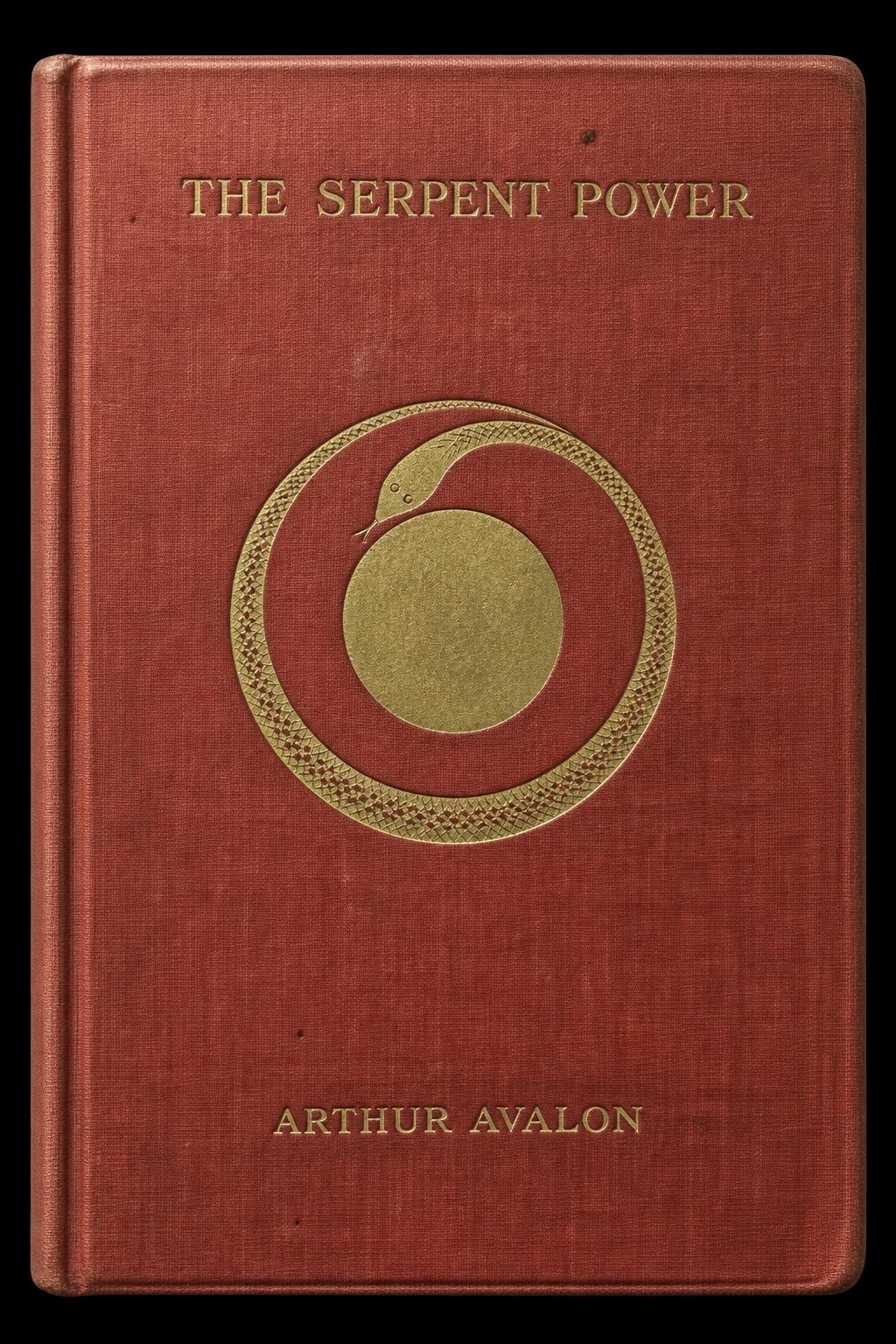
The Serpent Power
About this book
At the base of the spine a serpent lies coiled, waiting to rise through the centres of the subtle body. The image belongs to a complex Tantric account of consciousness, sound and liberation, expressed through Sanskrit verses and intricate diagrams.
Writing as Arthur Avalon, Sir John Woodroffe translates and comments on the Shat-chakra-nirupana and Paduka-panchaka. He explains the lotuses, seed syllables, deities and practices associated with Kundalini in their textual setting. The book became influential in Western discussions of chakras, though its traditional symbolism is far richer and more demanding than the simplified charts that followed it.
Cite this edition
Sanskrit texts including Purnananda Svami’s Shat-Chakra-Nirupana, with commentary by Kalicharana; translated and explained by Arthur Avalon (Sir John Woodroffe). The Serpent Power. Fifth enlarged edition, 1953, visually verified on publication leaf; original work first issued 1918. Sanskrit texts and commentaries translated with introduction and further notes by Arthur Avalon. 1953. Lumitheca. https://lumitheca.com/books/the-serpent-power
Reviews
What did you think?
Choose your stars, then sign in to write your review.
Loading reviews...
Comments
Loading comments...
 Muladhara Chakra in The Serpent Power
 Svadhishthana Chakra in The Serpent Power
 Manipura Chakra in The Serpent Power
 Anahata Chakra in The Serpent Power