Heaven
Understand Heaven through Christian, Jewish, Islamic, Buddhist, Zoroastrian and Bahá’í accounts, with clear distinctions between paradise and liberation.
In this article
What does Heaven mean?
Heaven commonly names a blessed condition or realm associated with divine presence and the fulfilment of religious hope. In Christianity, it is closely connected with salvation and fellowship with God. Used across traditions, however, the English word can conceal substantial differences: an everlasting destiny, a temporary celestial rebirth and a state of spiritual nearness answer different questions about human life. [1]
Christian Heaven and new creation
Communion with God
The Catholic Catechism describes Heaven as perfected life with the Trinity, Christ, the angels and the blessed. Its emphasis is communion rather than a catalogue of pleasures. The beatific vision names direct contemplation of God, made possible by God. Individual identity is fulfilled within this life, rather than dissolved into anonymity. Biblical images such as light, peace, a wedding feast and the heavenly Jerusalem express a happiness the text considers beyond adequate description. This is a Catholic doctrinal formulation within the wider range of Christian accounts. [2]
A renewed world in Revelation
Revelation 21 opens with a new heaven and a new earth. The holy city descends from God, and God dwells with humanity. Tears, death and mourning disappear. The direction of the vision is striking: the city comes down, and creation is renewed. The closing hope cannot be reduced to disembodied souls leaving the world behind. [3]
The city is also described through architecture, precious materials, open gates and divine light. These images give the promise a visible form while remaining part of an apocalyptic vision. Reading the chapter in sequence keeps its communal scale in view. The text imagines a transformed dwelling for peoples and nations, as well as consolation for individual grief. Its Jerusalem is theological imagery, not an ordinary city plan. [3]
A Christian vision of heavenly celebration
Giovanni di Paolo’s Coronation of the Virgin presents Christ and Mary on an elaborate throne, with a choir of angels behind and two musicians below. The Met emphasizes the painting’s devotional storytelling and rich surfaces. Made around 1455, the panel gives heavenly celebration a visible language of music, honour and splendour within a particular Christian scene. [9]
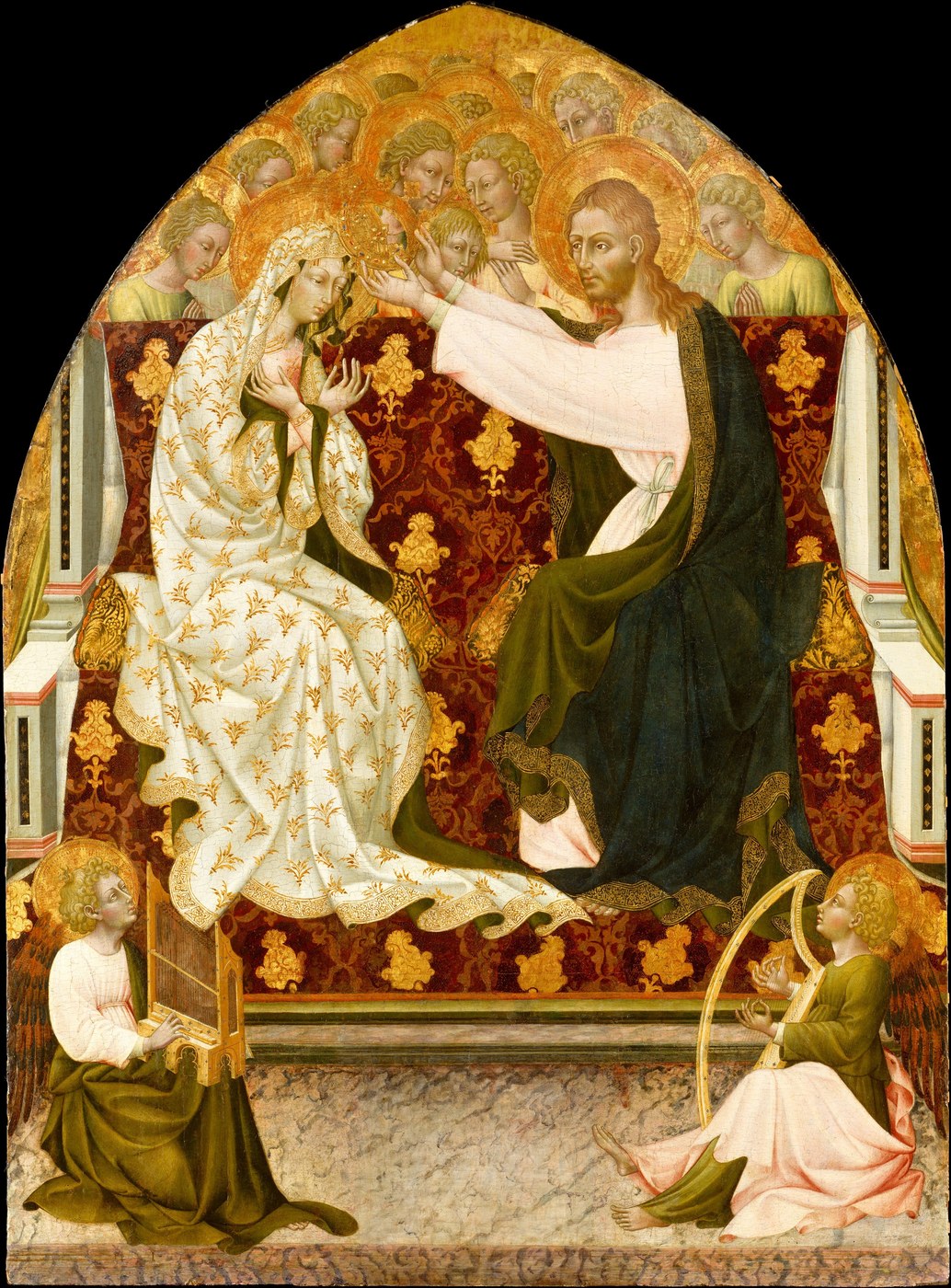
Giovanni di Paolo, Coronation of the Virgin, ca. 1455. Tempera on wood with a gold ground.
The Metropolitan Museum of Art. Robert Lehman Collection, 1975. Accession 1975.1.38. Public Domain (CC0). · Museum record ↗ · CC0
Gardens and celestial realms
Gan Eden and Jewish accounts
Jewish afterlife language needs its own setting. In Chabad’s traditional account, Gan Eden describes the soul’s delight in the divine good accomplished during embodied life. The experience is related to the meaning of a person’s deeds, rather than the familiar cartoon furniture of clouds and harps. The same essay also discusses resurrection. These strands should not be compressed into one simple equivalent of Christian Heaven. Chabad represents a particular traditional Jewish interpretation; its confident account does not settle the full range of Jewish views. [4]
The gardens of Jannah
In Islam, Jannah is the garden paradise promised by God. Qur’an 55:46–78 presents gardens, springs, fruits, fine furnishings and companionship through a repeated invitation to recognise divine generosity. The imagery joins abundance to reverence and moral responsibility. Its sensory detail is part of the passage’s account of blessedness, rather than an incidental decoration. Reading the entire passage also prevents a single much-quoted feature from standing in for its whole vision. Here the source is the Qur’anic description itself; questions about its interpretation belong within Islamic commentary. [5]
Celestial rebirth in Buddhism
Buddhist heavens occupy a different place in the religious goal. Access to Insight’s Theravada account arranges thirty-one planes within the worlds of sense experience, fine material form and immaterial existence. Rebirth depends on karma and, for some higher states, meditative attainment. Celestial lives can be extraordinarily long and happy, yet remain temporary. [6]
Tusita and Tavatimsa are named heavenly realms within this account. Their inhabitants have particular stories and positions in Buddhist cosmology. A favourable rebirth still belongs to samsara, the continuing round of existence. Nirvana therefore should not be defined as simply the best available heaven. The distinction changes what liberation means: the goal concerns freedom from the conditions that sustain rebirth, rather than indefinite residence in a pleasant realm. [6]
Paradise and spiritual nearness
Paradise and Iranian vocabulary
The word paradise has an Iranian history, passing into Greek and Latin before its wider European use. Its linguistic ancestry concerns an enclosed garden. That history does not mean every later theology of paradise was already contained in the garden word. [7]
Antonio Panaino’s study distinguishes this vocabulary from specifically Zoroastrian terms for the blessed afterlife. Gathic and later Avestan expressions describe a welcoming divine dwelling, often rendered as the House of Song or House of Welcome. Texts from different periods develop their own accounts of the soul’s destination. Language, landscape and religious doctrine meet here, but do not move through history as one unchanged package. Zoroastrianism deserves to be read through those particular sources, alongside comparisons with its neighbours. [7]
Heaven as spiritual nearness
The Bahá’í Faith explicitly interprets Heaven and Hell as states of nearness to and distance from God, extending through this life and the worlds beyond. Its official account rejects a physical location for either. This provides a useful reminder that religious descriptions may concern a relationship or condition as much as a place. The Bahá’í interpretation is its own theological position; other traditions need not accept it as the explanation of their scriptures. [8]
Read further in the library
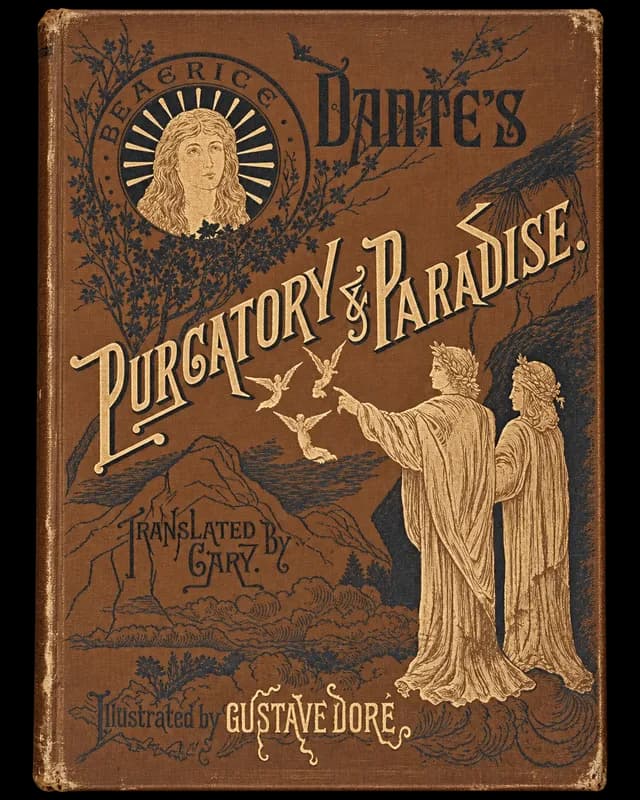
Purgatory and Paradise: The Vision of Dante
Reading note
Dante’s poetic journey through Purgatory and Paradise, illustrated by Gustave Doré. Read it as a particular medieval Christian literary vision, alongside the primary and doctrinal sources above.
Sources
- Heaven and Hell in Christian Thought ↗Stanford Encyclopedia of Philosophy; Christian theological scopeReturn to text ↑
- Catechism of the Catholic Church: Heaven, 1023–1029 ↗Catholic doctrinal accountReturn to text ↑
- Revelation 21 ↗New American Bible text and notes, United States Conference of Catholic BishopsReturn to text ↑
- Do Jews Believe in an Afterlife? ↗Chabad’s traditional Jewish account; not a statement of every Jewish positionReturn to text ↑
- Qur’an 55:46–78 ↗Qur’anic garden imagery, translation hosted by Quran.comReturn to text ↑
- The Thirty-one Planes of Existence ↗Access to Insight’s account of Theravada cosmologyReturn to text ↑
- Paradise ↗Antonio Panaino, Encyclopaedia Iranica; terminology and Iranian traditionsReturn to text ↑
- Heaven and Hell ↗Official Bahá’í account of spiritual nearness and distanceReturn to text ↑
- Coronation of the Virgin ↗The Metropolitan Museum of Art; object 1975.1.38Return to text ↑
About this article & its sources
An introductory cross-tradition orientation, not an exhaustive account of every celestial realm. Traditions and schools retain their own meanings. Religious claims are attributed; named realms will receive their own focused entries.
Passage attributions
What does Heaven mean?
Passage 1: Stanford Encyclopedia of Philosophy; Christian theological scope.
Communion with God
Passage 1: Catholic doctrinal account.
A renewed world in Revelation
Passage 1: New American Bible text and notes, United States Conference of Catholic Bishops.
Passage 2: New American Bible text and notes, United States Conference of Catholic Bishops.
A Christian vision of heavenly celebration
Passage 1: The Metropolitan Museum of Art; curatorial interpretation and inspected historical image.
Gan Eden and Jewish accounts
Passage 1: Chabad’s traditional Jewish account; not a statement of every Jewish position.
The gardens of Jannah
Passage 1: Qur’anic garden imagery, translation hosted by Quran.com.
Celestial rebirth in Buddhism
Passage 1: Access to Insight’s account of Theravada cosmology.
Passage 2: Access to Insight’s account of Theravada cosmology.
Paradise and Iranian vocabulary
Passage 1: Antonio Panaino, Encyclopaedia Iranica; terminology and Iranian traditions.
Passage 2: Antonio Panaino, Encyclopaedia Iranica; terminology and Iranian traditions.
Heaven as spiritual nearness
Passage 1: Official Bahá’í account of spiritual nearness and distance.