Christianity
Explore Christianity’s origins, Jesus, the Bible, beliefs, churches and worship, with primary-text readings, historical art and clear distinctions between traditions.
In this article
Jesus and the early church
What is Christianity?
Christianity is a religious tradition centred on Jesus of Nazareth, whom Christians confess as the Christ, or Messiah. His life, teachings, death and proclaimed resurrection stand at the heart of Christian worship and belief. The movement began among Jewish followers of Jesus in the first-century eastern Mediterranean and became a worldwide family of churches. [1]
Catholic, Orthodox and Protestant are familiar broad categories, but each contains substantial diversity. Independent churches, Pentecostal movements and other Christian communities make the picture more complex. Shared reference to Jesus does not settle every question about scripture, salvation, worship or authority. Those differences are part of Christianity’s history and living practice, rather than details that can be removed from an otherwise uniform faith. [1]
Jesus in his Jewish and Roman setting
Jesus lived as a Jew under Roman rule. The Gospels portray him teaching in Galilee and travelling with disciples, proclaiming God’s kingdom, healing and calling people to repentance. Parables and encounters with people at society’s margins give his teaching a characteristic form. The narratives connect love of God with generosity, forgiveness and responsibility towards others. [2]
Matthew, Mark, Luke and John preserve different accounts. Matthew and Luke include birth narratives; Mark begins with Jesus’ adult ministry, while John opens with the divine Word. The differences are important to reading them as texts formed within early communities. Miracle accounts belong to the Gospels’ religious testimony; historical study asks how these writings were composed, transmitted and understood alongside what can be reconstructed about Jesus’ life. [2]
A teaching in detail: the Beatitudes
Matthew 5 begins the Sermon on the Mount with blessings directed towards people who are poor in spirit, mourn, seek righteousness, show mercy or make peace. The reversal of ordinary measures of power gives the passage its force. The people pronounced blessed are not simply those who appear secure or successful. The teaching connects hope in God’s kingdom with dispositions and actions in the present. [26]
Later in the chapter, teachings about anger, reconciliation, retaliation and love of enemies press the question of how a person treats others. These verses have generated different Christian interpretations and demanding forms of ethical practice. Reading the whole setting matters: the Beatitudes introduce a larger discourse about righteousness, rather than functioning only as isolated words of reassurance. [26]
Crucifixion and resurrection
Jesus was executed by crucifixion under Roman authority. Christian narratives place his final meal, arrest and death within the setting of Passover in Jerusalem. The cross became a central symbol because Christians understand his death through the story of salvation. The Gospels then proclaim that he was raised and encountered by his followers. This proclamation is foundational Christian testimony; describing it as belief keeps its religious status distinct from the historical fact of execution. [3]
The accounts differ in their details, including who encounters Jesus and how recognition occurs. Their shared importance lies in the community’s conviction that death did not have the final word. Across Christian traditions, preaching, prayer, art and ritual return to this relationship between suffering and new life, while explanations of what Christ’s death accomplishes vary. [3]
Paul’s argument about new life
In 1 Corinthians 15, Paul recounts a tradition he says he received: Christ died, was buried, was raised and appeared to witnesses. He then argues that the resurrection of Christ and the resurrection of the dead belong together. The chapter is evidence for how an early Christian author proclaimed and reasoned about resurrection, rather than independent verification of each appearance he reports. [27]
Paul’s argument moves beyond the survival of an individual soul. He asks what resurrection means for embodied life and uses the image of a seed to discuss transformation. The chapter shows why Christian hope cannot always be summarized as souls going to heaven after death. Resurrection, transformed life and the defeat of death are central elements in this influential scriptural account. [27]
How a movement became churches
Acts tells the story of the disciples’ empowerment by the Holy Spirit at Pentecost and the expansion of their community. Paul’s journeys and letters belong to the spread of the movement among non-Jews as well as Jews. Disputes about whether Gentile converts needed to adopt Jewish practices were consequential for the emerging churches. [4]
Church names both a local gathering and a larger community of believers. New Testament images such as the body of Christ express belonging through different members and gifts. Early communities were linked by teachers, letters, worship and argument. The formation of Christianity was a process involving particular places and people; later institutional arrangements should not simply be projected backwards onto its beginnings. [4]
A few historical turning points
Creeds, councils, monastic communities and reform movements all shaped the churches. The Council of Nicaea in 325 was a major point in debates about Christ and the relation of the Son to the Father. Later formulations and disputes continued the work of defining orthodoxy. A council’s decision could establish a church’s teaching without ending disagreement among everyone who identified as Christian. [20]
- First century
Early communities
Followers of Jesus establish churches across the Mediterranean world. [4]
- 325 and 381
Creedal formation
Nicaea and Constantinople become central to Trinitarian confession. [22]
- 451
Chalcedon and its aftermath
Disputes about Christ contribute to enduring divisions among churches. [5]
- Eleventh century onward
East–West estrangement
The events associated with 1054 belong to a longer history of division. [5]
- Sixteenth century
Reformations
Protestant movements and Catholic renewal reshape Western Christianity. [7]
- Modern centuries
Global communities
Mission, migration and local leadership create new Christian settings. [8]
God, salvation and scripture
Trinity and incarnation
The major creedal traditions confess one God as Father, Son and Holy Spirit. The Catholic Catechism presents the Trinity as the central mystery of Christian faith: three divine persons, one God. This teaching does not mean three separate gods. Incarnation concerns the Christian conviction that the divine Son became human in Jesus Christ. The major creedal traditions confess him as fully divine and fully human, rather than a divine figure merely appearing to have a human body. The language is an attempt to hold together divine unity, Christ’s significance and the experience of the Spirit. [22][20]
The Orthodox Church in America’s account places Trinitarian doctrine within worship and the lived knowledge of God. Understanding theological terms and participating in religious life are connected in its explanation. This is a particular church’s own account of its faith, rather than a neutral demonstration of the doctrine’s truth. It also shows why theology appears in prayers and liturgy as well as in philosophical argument. [23]
Sin, grace and salvation
Christian explanations of salvation connect human estrangement, sin and death with God’s action through Christ. Traditions differ over how to express that relationship. An Eastern Orthodox emphasis on theosis speaks of transformation and participation in divine life; Western traditions have developed their own accounts of forgiveness, reconciliation and justification. These emphases should not be made into a claim that one side has no place for ideas associated with the other. [5]
The Evangelical Lutheran Church in America gives a concrete Protestant example. Its account describes grace as God’s gift, received through faith, and connects that gift with freedom to love and serve one’s neighbour. Good works are presented as a response to grace rather than its purchase. Naming the Lutheran source makes the explanation specific; it does not settle every Catholic, Orthodox or Protestant argument about faith, action and salvation. [25]
The Bible: a collection of books
The Christian Bible contains the Old and New Testaments. Its writings span different periods, languages and genres: narrative, poetry, prophecy, letters and apocalyptic visions. The New Testament includes four Gospels, Acts, letters and Revelation. A passage’s genre matters to interpretation; a parable, a hymn and a letter to a particular community do not work in the same way. [19]
Christian canons also differ. Catholic and Orthodox Bibles include books absent from most Protestant Old Testaments, and Orthodox collections are themselves not completely uniform. Churches disagree about how scripture relates to tradition and interpretive authority, as well as about inerrancy and historical criticism. Translation adds another layer of interpretation. These differences help explain why two Christians may both appeal to the Bible and still reach different conclusions. [19]
Churches and traditions
Catholic Christianity
The Catholic Church understands communion with the bishop of Rome, the pope, as central to its institutional life. It includes Eastern Catholic churches as well as the much larger Latin Church. Shared communion therefore does not require every Catholic community to have the same liturgical language or rite. The word catholic also has a broader historical meaning, universal, which appears in creeds beyond Roman Catholic settings. [6]
Catholic history includes monastic orders, theological schools, missionary networks, councils and reform. Benedictine, Franciscan, Dominican and Jesuit traditions illustrate differing forms of prayer, service and learning. The Council of Trent responded to the Reformation; the Second Vatican Council addressed the church’s relation to the modern world. These events belong to an institution with internal variety and continuing interpretation, rather than an unchanging set of social arrangements. [6]
Eastern and Oriental Orthodox churches
Eastern Orthodox churches form a family of churches with shared sacramental and theological commitments. Oriental Orthodox churches, including Coptic, Armenian and others, have a different history of reception of the Council of Chalcedon. These are distinct church families; calling them all Eastern Orthodox hides a major historical difference. Christian communities in Africa, the Middle East and Asia are integral to these histories. [5]
The Orthodox Church in America describes eternal life in Trinitarian terms: communion with God through Christ in the Spirit. Its account draws on Revelation’s imagery and the language of worship. This offers a theological perspective on the transformation sought in religious life. It belongs to a named Eastern Orthodox source, while the histories and expressions of other Orthodox churches deserve their own treatment. [24]
Protestant traditions
The sixteenth-century Reformation produced a movement of churches rather than one Protestant institution. Luther’s challenges to ecclesiastical authority, indulgences and accounts of salvation helped initiate lasting divisions. Reformed traditions associated with Zwingli and Calvin developed distinctive teachings; Anabaptists challenged infant baptism and coercive church–state arrangements. The English Reformation gave Anglicanism a particular history of reform, liturgy and episcopal organization. [7]
Later movements further diversified the field. Methodism emphasized conversion and disciplined religious life; Baptist and other traditions developed their own forms of congregation and ministry. Protestant commitments to scripture do not eliminate disagreements about its interpretation. A church’s history, confession, worship and forms of authority are more informative than a single label that attempts to stand for the whole movement. [7]
Evangelical, Pentecostal and charismatic life
Evangelical Christianity commonly emphasizes conversion, biblical authority, personal faith and evangelism. It cuts across denominations and cannot be equated with one national political identity. Pentecostal traditions place particular weight on the gifts and activity of the Holy Spirit. Speaking in tongues, testimony and prayers for healing can be prominent, with their significance understood within the community’s religious framework. [21]
The Azusa Street revival in Los Angeles, associated with William J. Seymour in 1906, is an important event in Pentecostal history. Charismatic movements later developed within existing Protestant and Catholic settings as well. These overlapping patterns show why a simple Catholic–Orthodox–Protestant diagram does not describe every community adequately. Claims about healing are religious testimony here, not established medical evidence. [21]
Different understandings of Christian identity
Not every community that identifies as Christian accepts Nicene formulations. The Church of Jesus Christ of Latter-day Saints, for example, describes the Father, Son and Holy Ghost as distinct beings united in purpose. Its teaching differs substantially from the one divine essence confessed in major Trinitarian creeds. Reporting that difference does not require adopting one church’s judgment about the religious status of another. [31]
The same church’s Articles of Faith recognize the Bible and the Book of Mormon as scripture and affirm continuing revelation. They also connect faith in Christ with repentance, baptism and the gift of the Holy Ghost. These commitments give a concrete example of how a community can organize Christian identity through a different account of scripture, religious authority and restoration. [35]
Worship and religious life
Baptism and belonging
Baptism uses water in a rite associated with entry into Christian life. Its imagery joins cleansing, death and rebirth with participation in Christ. Many churches baptize infants, with parents and sponsors promising religious nurture. Others baptize those who can profess faith for themselves. Immersion and other uses of water express these meanings in different ways. [13]
The differences are theological as well as practical: churches disagree about the relation between the rite, faith, grace and belonging. Some communities, including Quakers, do not make outward water baptism part of their practice. A description of Christian initiation therefore needs to name the church concerned. One congregation’s ceremony cannot establish a universal order of events for every Christian. [13]
Eucharist, Communion and the Lord’s Supper
The sharing of bread and wine returns to the New Testament accounts of Jesus’ last meal and the early church’s practice. Eucharist means thanksgiving; Communion and the Lord’s Supper are other familiar names. Christians disagree about how Christ is present, how the elements relate to his body and blood, and who may receive them. These differences can affect whether members of different churches share the same table. [11]
The Catholic Catechism describes the Eucharist as a sacramental participation in Christ’s sacrifice and a memorial of his death and resurrection. Other traditions formulate the mystery differently, including different accounts of presence and remembrance. The meal’s frequency and manner also vary. Naming the interpretation preserves the particular meaning a church gives the act, rather than reducing every practice to an identical symbol. [29]
Prayer, song and contemplation
Christian prayer includes praise, thanksgiving, confession, petition and attentive silence. The Lord’s Prayer and the Psalms supply inherited words, while many communities also cultivate spontaneous prayer. Congregational singing, responsive speech and private devotion give those forms different settings. Prayer may take place at home, during work or travel, and in church; it is not restricted to a weekly service. [12]
In the Orthodox Church in America’s account, the Jesus Prayer joins the invocation of Jesus with a request for mercy. It can be repeated amid ordinary activity or cultivated within a contemplative tradition known as prayer of the heart. The source distinguishes simple repetition from a specialized hesychast method that requires spiritual guidance. Its stated aim is continuing remembrance of God expressed in religious life and conduct. [34]
Christmas, Easter and the Christian year
Many churches order the year around the life of Christ. Advent prepares for Christmas, which celebrates his birth and the meaning of incarnation. Candles, hymns, nativity scenes and local processions give the season different forms. Calendar systems and local traditions affect dates and observance. The pattern described here is widespread, without being the calendar of every Christian church. [15]
Lent is a season of preparation that leads towards Holy Week and Easter in many traditions. Prayer, fasting, study and acts of service accompany remembrance of Jesus’ final days. Palm Sunday, Holy Thursday and Good Friday recall particular moments in that narrative; Easter celebrates resurrection. Eastern and Western calendars and practices differ. These observances make the story recurrent in worship, joining remembered events with the religious life of a present community. [16]
Devotion and historical art
Mary, saints and local devotion
Mary, the mother of Jesus, has a prominent place in Catholic and Orthodox devotion, with important differences in how churches express that honour. The Pluralism Project describes Marian shrines and images carried into American settings by communities from Poland, Cuba, Italy, Mexico and elsewhere. Names such as Our Lady of Częstochowa or Guadalupe connect devotion with particular histories and places. [14]
This Byzantine ivory follows the Hodegetria image type, with Mary supporting the Christ Child on her left arm. The museum relates the name to an icon once housed at the Hodegon Monastery in Constantinople. The small object belongs to a specific visual tradition; its gesture and composition tell more than the generic label religious art. [33]
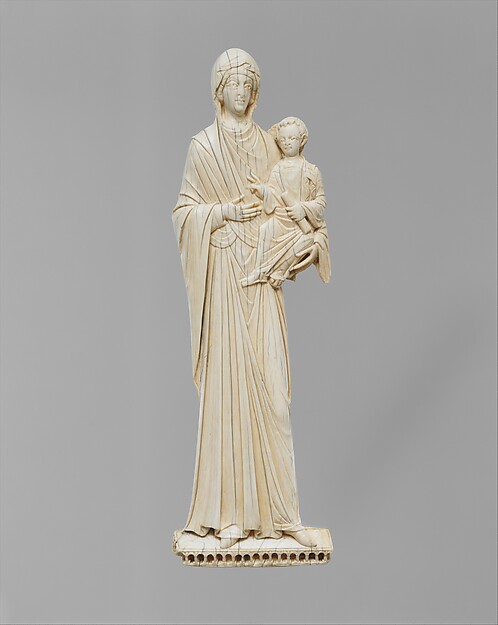
Icon with the Virgin and Child, Byzantine, mid-tenth–mid-eleventh century, probably Constantinople. Elephant ivory, The Metropolitan Museum of Art, 17.190.103.
Gift of J. Pierpont Morgan, 1917. Public Domain, The Met Open Access. · Museum record ↗ · CC0
Reading the cross and the icon
The cross recalls Jesus’ execution and, in Christian interpretation, salvation through his death and resurrection. It appears in buildings, processions, jewellery and gestures of blessing. Icons give images of Christ, Mary and saints a distinctive role in Orthodox religious life. Veneration of an icon is understood through its relation to the person depicted, rather than as worship of the material alone. Attitudes towards sacred images differ across churches. [10]
The Byzantine ivory below makes an interpretation visible. Christ’s cross reaches down into a personification of Hades, proclaiming victory over death. Mary and John stand beside the crucified figure; soldiers appear beneath him. The museum identifies the panel as the surviving centre of a triptych, probably used for private devotion. Its missing wings remind us that the object’s present museum form is not its original complete arrangement. [32]
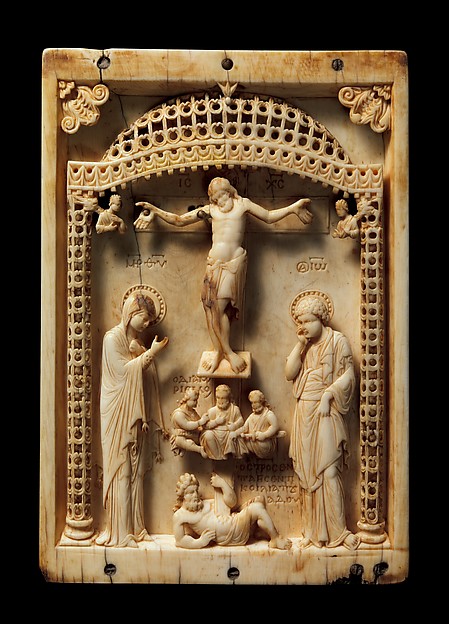
Icon with the Crucifixion, Byzantine, mid-tenth century, probably Constantinople. Surviving centre of an ivory triptych, The Metropolitan Museum of Art, 17.190.44.
Gift of J. Pierpont Morgan, 1917. Public Domain, The Met Open Access. · Museum record ↗ · CC0
Hope, service and relationships
Judgment, resurrection and a renewed world
Revelation 21 presents a vision of a new heaven and a new earth, with a new Jerusalem descending from God. Its imagery brings divine presence among humanity and the ending of death and mourning together. The chapter also contains judgment imagery. It is an apocalyptic vision whose symbols have generated extensive interpretation, not a neutral map of places that have been empirically observed. [28]
Reading this chapter beside Paul’s discussion of resurrection shows different scriptural forms of Christian hope: argument and visionary narrative. Traditions vary in their explanations of judgment and the life to come. The texts give readers a firmer starting point than assuming that a familiar picture from later literature or art is a teaching shared without qualification by all Christians. [28]
Service, mission and responsibility
Christian service connects religious commitment with care for other people. The Pluralism Project describes shelters, disaster response and local projects organized by congregations and related ministries. Its account of Clifton Sanctuary Ministries in Atlanta shows how a church’s space and community could be organized around hospitality to people without housing. The example makes a broad ethical commitment visible in an institution’s daily work. [17]
Mission also has a difficult history. Christian expansion has been entangled with colonial power, exploitation and coercion, as well as with opposition to oppression. Local Christians have reshaped inherited forms rather than simply receiving European versions unchanged. Histories in Africa, Asia and the Americas require attention to those communities’ agency, languages and leadership. The history of a worldwide religion includes both acts of service and responsibility for harms carried out in its name. [8]
Relations with other religions
Christian relations with Jews and Muslims include conflict, shared histories and efforts at dialogue. In the Catholic declaration Nostra Aetate, the Second Vatican Council rejected collective blame against Jews for Jesus’ death and condemned antisemitism. This is a specific institutional teaching from 1965, with significance for how scripture and the passion narratives are presented. It should not be mistaken for evidence that anti-Jewish hostility never existed in Christian history. [30]
The declaration also addresses Islam, recognizing Muslim devotion to one God and respect for Jesus as a prophet while identifying a difference over his divinity. Its call for understanding retains these doctrinal differences. Interreligious dialogue does not require treating every tradition as the same, and the Catholic document should be read as one church’s approach rather than a statement issued by all Christians. [30]
Continuity, disagreement and Christian unity
Modern Christian debates concern biblical interpretation, science, ministry, gender, sexuality and the relationship between church and political life. The answers differ within as well as between major traditions. Historical criticism has prompted new questions about how biblical writings took shape and what kind of authority they have. New institutions and movements have formed as Christians respond to those questions. [9]
Ecumenical work seeks relations and forms of unity among churches while facing real disagreements about belief and authority. Cooperation in service or prayer does not automatically create full sacramental communion. The distinction matters: a shared Christian identity can coexist with institutional separation. Following the worship, sources and self-understanding of a particular community provides a more useful next step than expecting any short list of denominations to exhaust Christian life. [18]
Read further in the library
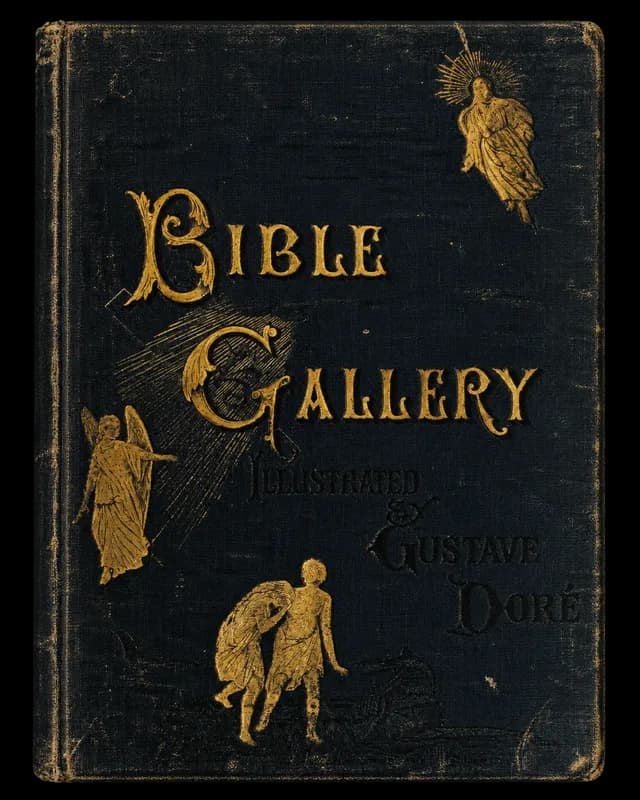
The Bible Gallery
Reading note
Gustave Doré’s selected biblical illustrations, accompanied by descriptive narratives by Talbot W. Chambers, offer a nineteenth-century visual encounter with scriptural stories. This is an illustrated selection, rather than a complete Bible.
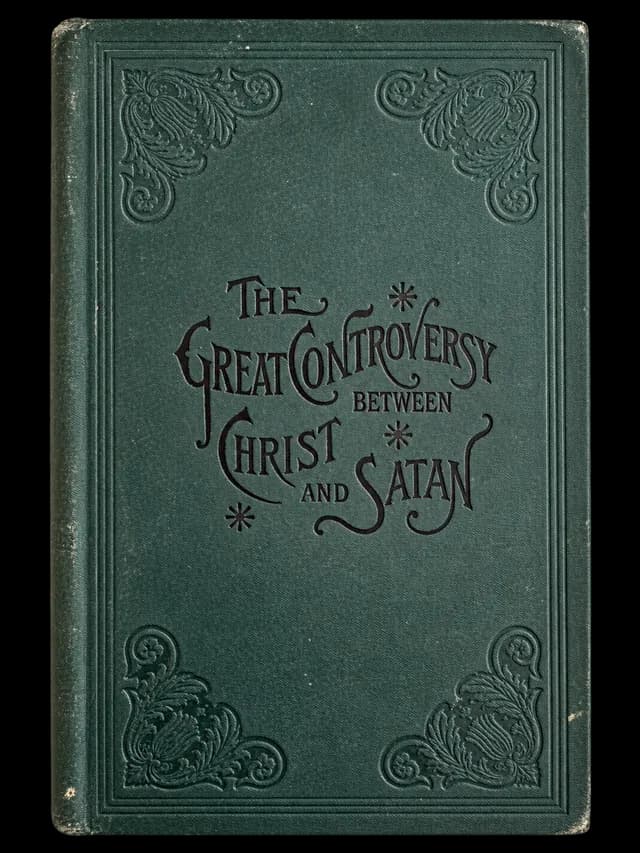
The Great Controversy Between Christ and Satan
Reading note
Ellen G. White interprets Christian history and prophecy from a Seventh-day Adventist perspective. Read it as evidence of a particular tradition’s religious interpretation, rather than as a neutral history of all churches.
Sources
- A Worldwide Tradition ↗The Pluralism Project, Harvard UniversityReturn to text ↑
- Life and Teachings of Jesus ↗The Pluralism Project, Harvard UniversityReturn to text ↑
- Death and Resurrection of Jesus ↗The Pluralism Project, Harvard UniversityReturn to text ↑
- Birth of the Church ↗The Pluralism Project, Harvard UniversityReturn to text ↑
- Orthodox Christian Churches ↗The Pluralism Project, Harvard UniversityReturn to text ↑
- The Roman Catholic Church and the Catholic Communion ↗The Pluralism Project, Harvard UniversityReturn to text ↑
- The Protestant Movement ↗The Pluralism Project, Harvard UniversityReturn to text ↑
- Mission to the World ↗The Pluralism Project, Harvard UniversityReturn to text ↑
- The Modern Era ↗The Pluralism Project, Harvard UniversityReturn to text ↑
- The Cross and the Icon ↗The Pluralism Project, Harvard UniversityReturn to text ↑
- Sharing the Bread of Life ↗The Pluralism Project, Harvard UniversityReturn to text ↑
- The Power of Prayer ↗The Pluralism Project, Harvard UniversityReturn to text ↑
- Baptism by Water and Spirit ↗The Pluralism Project, Harvard UniversityReturn to text ↑
- Devotion to the Virgin Mary ↗The Pluralism Project, Harvard UniversityReturn to text ↑
- Advent and Christmas ↗The Pluralism Project, Harvard UniversityReturn to text ↑
- Ash Wednesday to Easter Sunday ↗The Pluralism Project, Harvard UniversityReturn to text ↑
- Service and Mission ↗The Pluralism Project, Harvard UniversityReturn to text ↑
- The Ecumenical Movement ↗The Pluralism Project, Harvard UniversityReturn to text ↑
- Fighting for the Bible ↗The Pluralism Project, Harvard UniversityReturn to text ↑
- Credo: I Believe ↗The Pluralism Project, Harvard UniversityReturn to text ↑
- Evangelicalism, Fundamentalism, and Pentecostalism ↗The Pluralism Project, Harvard UniversityReturn to text ↑
- Catechism of the Catholic Church, 232–267: The Father and the Trinity ↗The Holy See; Catechism of the Catholic ChurchReturn to text ↑
- The Doctrine of the Holy Trinity ↗The Orthodox Church in America, The Orthodox FaithReturn to text ↑
- The Holy Trinity in Eternal Life ↗The Orthodox Church in America, The Orthodox FaithReturn to text ↑
- Lutheran Beliefs ↗Evangelical Lutheran Church in AmericaReturn to text ↑
- Matthew 5: The Sermon on the Mount ↗United States Conference of Catholic Bishops; New American Bible, Revised EditionReturn to text ↑
- 1 Corinthians 15: Resurrection ↗United States Conference of Catholic Bishops; New American Bible, Revised EditionReturn to text ↑
- Revelation 21: The new heaven and earth ↗United States Conference of Catholic Bishops; New American Bible, Revised EditionReturn to text ↑
- Catechism of the Catholic Church, 1322–1323: The Eucharist ↗The Holy See; Catechism of the Catholic ChurchReturn to text ↑
- Nostra Aetate, especially sections 3–4 ↗Second Vatican Council, 28 October 1965Return to text ↑
- Godhead ↗The Church of Jesus Christ of Latter-day SaintsReturn to text ↑
- Icon with the Crucifixion, 17.190.44 ↗The Metropolitan Museum of ArtReturn to text ↑
- Icon with the Virgin and Child, 17.190.103 ↗The Metropolitan Museum of ArtReturn to text ↑
- The Jesus Prayer ↗The Orthodox Church in America, The Orthodox FaithReturn to text ↑
- The Articles of Faith ↗The Church of Jesus Christ of Latter-day SaintsReturn to text ↑
About this article & its sources
A sourced introduction to Christian traditions. Historical reconstruction is distinguished from Christian testimony about incarnation, resurrection and the life to come. Named churches’ explanations are not assigned to every Christian.
Passage attributions
What is Christianity?
Passage 1: The Pluralism Project, Harvard University.
Passage 2: The Pluralism Project, Harvard University.
Jesus in his Jewish and Roman setting
Passage 1: Harvard Pluralism Project; Gospel narratives and historical setting.
Passage 2: The Pluralism Project, Harvard University.
A teaching in detail: the Beatitudes
Passage 1: United States Conference of Catholic Bishops; New American Bible, Revised Edition.
Passage 2: Matthew 5, New American Bible, Revised Edition; contextual reading.
Crucifixion and resurrection
Passage 1: Harvard Pluralism Project; historical execution and Christian resurrection testimony.
Passage 2: The Pluralism Project, Harvard University.
Paul’s argument about new life
Passage 1: United States Conference of Catholic Bishops; New American Bible, Revised Edition.
Passage 2: 1 Corinthians 15, New American Bible, Revised Edition; textual interpretation.
How a movement became churches
Passage 1: Harvard Pluralism Project; Acts narrative and early community history.
Passage 2: The Pluralism Project, Harvard University.
A few historical turning points
Passage 1: The Pluralism Project, Harvard University.
Trinity and incarnation
Passage 1: Catechism of the Catholic Church; Trinitarian Christian teaching.
Passage 2: Orthodox Church in America; a named Eastern Orthodox account.
Sin, grace and salvation
Passage 1: Harvard Pluralism Project; broad theological emphases.
Passage 2: Evangelical Lutheran Church in America; Lutheran account.
The Bible: a collection of books
Passage 1: The Pluralism Project, Harvard University.
Passage 2: The Pluralism Project, Harvard University.
Catholic Christianity
Passage 1: The Pluralism Project, Harvard University.
Passage 2: The Pluralism Project, Harvard University.
Eastern and Oriental Orthodox churches
Passage 1: The Pluralism Project, Harvard University.
Passage 2: The Orthodox Church in America, The Orthodox Faith.
Protestant traditions
Passage 1: The Pluralism Project, Harvard University.
Passage 2: The Pluralism Project, Harvard University.
Evangelical, Pentecostal and charismatic life
Passage 1: The Pluralism Project, Harvard University.
Passage 2: The Pluralism Project, Harvard University.
Different understandings of Christian identity
Passage 1: The Church of Jesus Christ of Latter-day Saints; Godhead teaching.
Passage 2: The Church of Jesus Christ of Latter-day Saints, Articles of Faith.
Baptism and belonging
Passage 1: The Pluralism Project, Harvard University.
Passage 2: The Pluralism Project, Harvard University.
Eucharist, Communion and the Lord’s Supper
Passage 1: The Pluralism Project, Harvard University.
Passage 2: Catechism of the Catholic Church, 1322–1323; final comparison is editorial context.
Prayer, song and contemplation
Passage 1: The Pluralism Project, Harvard University.
Passage 2: Orthodox Church in America; uses and religious purpose of the Jesus Prayer.
Christmas, Easter and the Christian year
Passage 1: The Pluralism Project, Harvard University.
Passage 2: The Pluralism Project, Harvard University.
Mary, saints and local devotion
Passage 1: The Pluralism Project, Harvard University.
Passage 2: The Metropolitan Museum of Art.
Reading the cross and the icon
Passage 1: The Pluralism Project, Harvard University.
Passage 2: The Metropolitan Museum of Art.
Judgment, resurrection and a renewed world
Passage 1: United States Conference of Catholic Bishops; New American Bible, Revised Edition.
Passage 2: Revelation 21; comparative reading is editorial synthesis.
Service, mission and responsibility
Passage 1: The Pluralism Project, Harvard University.
Passage 2: The Pluralism Project, Harvard University.