Zoroastrianism
Explore Zoroastrianism’s sacred texts, ethical teachings, worship, judgment and renewal, with histories of Iranian, Parsi and diaspora communities.
In this article
Origins and sacred texts
What is Zoroastrianism?
Zoroastrianism is a living religious tradition rooted in ancient Iranian cultures and associated with the teachings of Zarathustra, known in Greek as Zoroaster. Worship centres on Ahura Mazda, the Wise Lord. Its teachings connect the struggle between good and evil with human responsibility: thought, speech and action contribute to the kind of world people help to make. [1]
The Avesta preserves the tradition’s sacred literature, including the Gathas attributed to Zarathustra. Iranian Zoroastrians, Parsis of the Indian subcontinent and communities across the diaspora share important texts and commitments while maintaining differences of language, ritual and interpretation. An introduction therefore needs to hold the ancient sources and the lives of present communities together. [1]
Zarathustra and the limits of the historical record
Zarathustra’s precise dates remain disputed. The religious texts do not supply the sort of securely dated biography that a modern historian might want. William Malandra’s historical survey stresses the unevenness of the evidence: some periods are poorly documented, while later texts preserve traditions about much earlier times. A confident single birth year would conceal that uncertainty. [2]
The Gathas belong to an old Iranian linguistic and religious world. Their transmission, the development of later Avestan literature and the compilation of Middle Persian books are separate stages of a long history. Malandra identifies the Avesta as the central scriptural source, alongside inscriptions, archaeology and accounts by outsiders. Each kind of evidence answers different questions. A later retelling may preserve an important religious memory without being a contemporary record of the event it describes. [2]
The Avesta and the Gathas
The Avesta is a collection rather than a single continuous narrative. Its texts include hymns, liturgical material, prayers and religious prescriptions. The Gathas comprise seventeen hymns arranged in five groups within the Yasna. Their questions concern the divine, right conduct, the condition of the world and the consequences of human choices. [1]
Almut Hintze describes the Yasna as both a written text and an enacted ceremony. Its seventy-two sections place the Older Avestan hymns and the Yasna Haptanghaiti within a larger sequence of recitation. Priests learn words and ritual actions together. This relationship between text and performance matters: reading a translation reveals one aspect of a tradition whose sacred language also lives through memory, sound and carefully transmitted practice. [7]
Ethical choice and the divine
Good thoughts, good words, good deeds
Humata, hūxta and huvaršta express the familiar threefold ethic of good thought, word and action. Mary Boyce traces the formula through the Yasna Haptanghaiti, the profession of faith and later writings. The sequence makes intention, expression and conduct parts of one ethical life. Good intentions do not exhaust the demand; what a person says and does also matters. [9]
Boyce also connects the ethic with the assessment of a whole life in accounts of judgment. Its continuing importance reaches beyond a short motto: it can organize religious self-examination and practical responsibility. The same vocabulary appears in worship and in modern community explanations, linking inherited liturgy with everyday moral choices. [9]
Asha and the work of living well
Asha belongs to the language of truth and right order. In FEZANA’s educational account, following its path means cultivating good thoughts, words and deeds while spreading happiness, practising charity and respecting the spiritual equality and duties of women and men. This is a named contemporary community’s explanation of how religious commitments take form in ordinary life. [12]
Such an account joins individual character with responsibility towards other people. Charity becomes one expression of religious life, rather than an activity disconnected from it. FEZANA’s formulation also shows how communities explain inherited terms to new audiences: a sacred vocabulary is made intelligible through conduct, relationships and shared duties. It should be read as an institutional teaching voice, with room for other Zoroastrian explanations. [12]
Ahura Mazda and the Amesha Spentas
Ahura Mazda is honoured as the Wise Lord. The Amesha Spentas belong to the tradition’s account of beneficent divine powers. The name is commonly rendered as Bounteous or Holy Immortals. Boyce explains their role through the furthering of the good creation and the overcoming of evil. These beings belong within a religious account of the world, not a list of independently observable natural forces. [8]
The six are associated with good mind, best righteousness, desirable dominion, holy devotion, wholeness and immortality. Later Middle Persian accounts also connect the beneficent powers with the physical creation: animals, fire, metals, earth, water and plants. These relationships bring worship, ethical qualities and care for the material world into a common religious framework. Interpretations differ over how best to describe the powers as divine beings and as qualities; the vocabulary has a history of its own. [8]
Good, evil and a passage about choice
Yasna 30 gives a concrete entry into the tradition’s language of opposition. In the translation presented by Avesta.org, two spirits are distinguished through better and bad thought, speech and action; the hearer is summoned to discern and choose. The passage places the contrast within a religious account of life, the Lie and the consequences of allegiance to right. [14]
The same collection’s chapter 12 presents a profession of commitment to Mazda and Zarathustra’s teaching, with promises against harming or plundering settlements. Its ethical and social commitments accompany its rejection of hostile powers. These two passages illustrate how belief and conduct meet in particular texts. Their translations have different named translators, and an English rendering should not be confused with the Avestan original. [14]
What does dualism mean here?
Zoroastrianism is often described through the opposition of good and evil. The label dualism needs qualification. Gherardo Gnoli distinguishes ethical opposition, expressed through the choice between right and wrong, from accounts that give the opposed powers a more sharply defined cosmic existence. Scholars disagree about how these forms relate to Zarathustra’s teaching and to later developments. [17]
The worship of Ahura Mazda and the reality assigned to hostile powers have produced descriptions that emphasize monotheism, dualism or their coexistence. Each highlights something different. A useful first question is therefore which text and period an explanation concerns: the Gathas, later Avestan material and Middle Persian cosmology cannot simply be treated as one simultaneous theological statement. This distinction also helps explain why modern Zoroastrians may present the tradition’s unity and its moral struggle in different terms. [17]
Worship and religious life
Why fire matters in worship
Zoroastrians often pray in the presence of fire or light. A dar-e-mehr, commonly called a fire temple, provides a setting for worship and the tending of sacred fire. The Pluralism Project’s account cites religious instruction that connects light with divine purity and presence. Worship is directed towards Ahura Mazda; describing the practice simply as fire worship misidentifies its religious meaning. [5]
The same account describes a Chicago-area centre with a prayer room, learning space, kitchen and assembly hall. Its fire vase had come from a temple in Surat, India. This particular object connects a new community setting with an older place of worship. The building’s different rooms also make visible how prayer, education, food and social relationships support one another. [5]
Initiation and daily remembrance
The initiation ceremony is known as navjote in Parsi communities and sudreh-pushi among Iranian Zoroastrians. It includes investiture with the sudreh, a sacred shirt, and kushti, a sacred cord. The Pluralism Project describes prayer, preparation and the initiate’s declaration of religious commitment. The rites give a material form to entry into a life of responsibility. [6]
The shirt and cord then become part of daily religious remembrance. Tying and retying the cord is associated with prayer; the shirt’s small pocket is interpreted through merit and good actions. The cited account describes differences in age and ceremonial practice between Iranian and Parsi communities. These are inherited forms with particular histories, rather than one identical ceremony performed everywhere. [6]
Seasonal festivals and the good creation
The six Gahanbars are seasonal religious festivals. Their Avestan names preserve connections with the agricultural and pastoral year, including greening, harvest and the return of animals to shelter. In the doctrinal account described by Boyce, they celebrate the creation of sky, water, earth, plants, beneficent animals and humanity. Nowruz joins them in the sacred calendar and is associated with fire. [19]
Festival time brings creation into communal remembrance. Recitation and the shared observance of a feast connect religious cosmology with a year lived among other people. Boyce also traces changes in calendars and the length of celebrations. Such histories explain why an ancient seasonal name, a later ritual date and a community’s present observance may require separate explanations. There is no need to force every calendar into one modern schedule. [19]
Continuity and change in religious practice
Religious practice has changed alongside community life. Stausberg describes different patterns of reform in Iran and India, including changes to purity observances and the treatment of the dead. In Iran, burial came to replace older exposure practices. Shrines such as Pir-e Sabz also show that pilgrimage and sacred places extend beyond a description centred only on fire temples. [18]
These changes resist an image of Zoroastrianism as a fossil of ancient Iran. A priestly ceremony, a family observance and a communal pilgrimage bring different forms of participation. Reforms can involve debates about inherited obligations, local conditions and who may perform religious roles. The resulting differences are part of the tradition’s continuing history. They should be described with the relevant community and period in view, especially when a custom found in one place is absent in another. [18]
Judgment and renewal
Judgment and the bridge to the next world
The Chinvat bridge belongs to Zoroastrian accounts of the soul’s passage after death. Aḥmad Tafażżolī traces references to it from the Gathas through later religious literature. It connects this world and the next, with paradise and hell forming part of the surrounding sacred geography. The bridge gives the transition after death a vivid narrative setting. [10]
In later accounts discussed by Tafażżolī, the soul approaches the bridge at dawn on the fourth day after death. Figures including Mihr, Srosh and Rashn take part in judgment; Rashn weighs the person’s deeds. The bridge becomes broad for the righteous and dangerously narrow for the wicked. The daena can appear as a figure embodying the moral character of the life just lived. These images make a central ethical conviction tangible: a person encounters the consequences of their own conduct. Particular details belong to particular texts within this developing account of the afterlife. [10]
The renewal of creation
Frasho.kereti names the final renovation or transformation of creation after the defeat of evil. Almut Hintze’s Iranica entry identifies it as an eschatological term: it concerns the ultimate condition of the world. In this vision, evil’s presence does not mean that it possesses the final future. The good creation is directed towards restoration. [11]
Later accounts develop this hope through the coming saviour, Soshans, and the resurrection of the dead. Some describe a stream of molten metal through which humanity passes, joining judgment with purification. The texts do not all give the same account of what ultimately happens to the wicked. Their shared horizon is the overcoming of evil and the restoration of creation. Frasho.kereti places moral struggle within a cosmic story whose hoped-for ending is transformation, rather than the permanent triumph of destructive powers. [11]
Iran, India and the diaspora
Iranian and Parsi histories
Zoroastrian communities developed through the histories of Iranian empires and continued after the end of Sasanian rule in the seventh century. Migration to India became central to the history of the Parsis, whose name connects them with Persia. Iranian and Parsi communities subsequently maintained traditions under different political, cultural and linguistic conditions. Their relationship is part of the religion’s history, rather than evidence of two unrelated faiths. [3]
The familiar sugar-and-milk story expresses an ideal of settlement: newcomers sweeten the host society without making the vessel overflow. The Pluralism Project presents it as a remembered migration story. Its symbolic force should be distinguished from documentary certainty about each event or date in the settlement narrative. The account also describes later contacts between Iranian and Parsi communities through religious questions, assistance and migration. [3]
Living together in the diaspora
In North America, Iranian and Parsi Zoroastrians have formed associations, places of worship and educational networks. The Pluralism Project describes communities that share institutions while sometimes maintaining separate ritual schedules or linguistic settings. A shared religious identity can coexist with differences in calendar, family history and inherited custom. [4]
Children’s education, youth programmes and community gatherings become settings in which those traditions are transmitted and negotiated. A local association gives shared religious identity a practical home: people can meet, teach children, mark festivals and discuss the customs inherited from different family histories. These institutions help explain how a tradition rooted in Iran and India continues through communities living elsewhere. [4]
Hearing the Gathas today
FEZANA’s audio-written Yasna project brings recitation together with named English translations. Its selections include verses addressing Ahura Mazda through good mind, truth and religious commitment. The presentation makes the difference between hearing a sacred language and reading an interpretation visible: the recording and the English words offer related, but distinct, encounters with a text. [13]
The project identifies translators such as D. J. Irani and Helmut Humbach. Their formulations are not interchangeable transcripts of sound; each is an interpretation shaped by linguistic and religious understanding. Reading several versions can reveal where an English term has resolved a difficult passage. The community’s use of recorded recitation also demonstrates a continuing form of transmission alongside manuscript study and printed editions. [13]
Historical images and connections
A sacred image on a coin
A Sasanian silver drachm in the Metropolitan Museum is dated to about 629 CE and comes from Qasr-i Abu Nasr in Iran. Its reverse shows a fire altar between attendant figures. The object joins a religious visual vocabulary with royal coinage. It is material evidence for the presence of such imagery in a particular historical setting, rather than a portrait of Zarathustra. [15]
Schindel’s study of Sasanian coinage describes the fire altar as a recurring reverse type, with variations across rulers and issues. A small object thus carries evidence about both authority and religion. Its archaeological and numismatic context is different from a scriptural account or a contemporary temple’s explanation of worship; using those sources together enriches the historical picture without making them identical. [16]
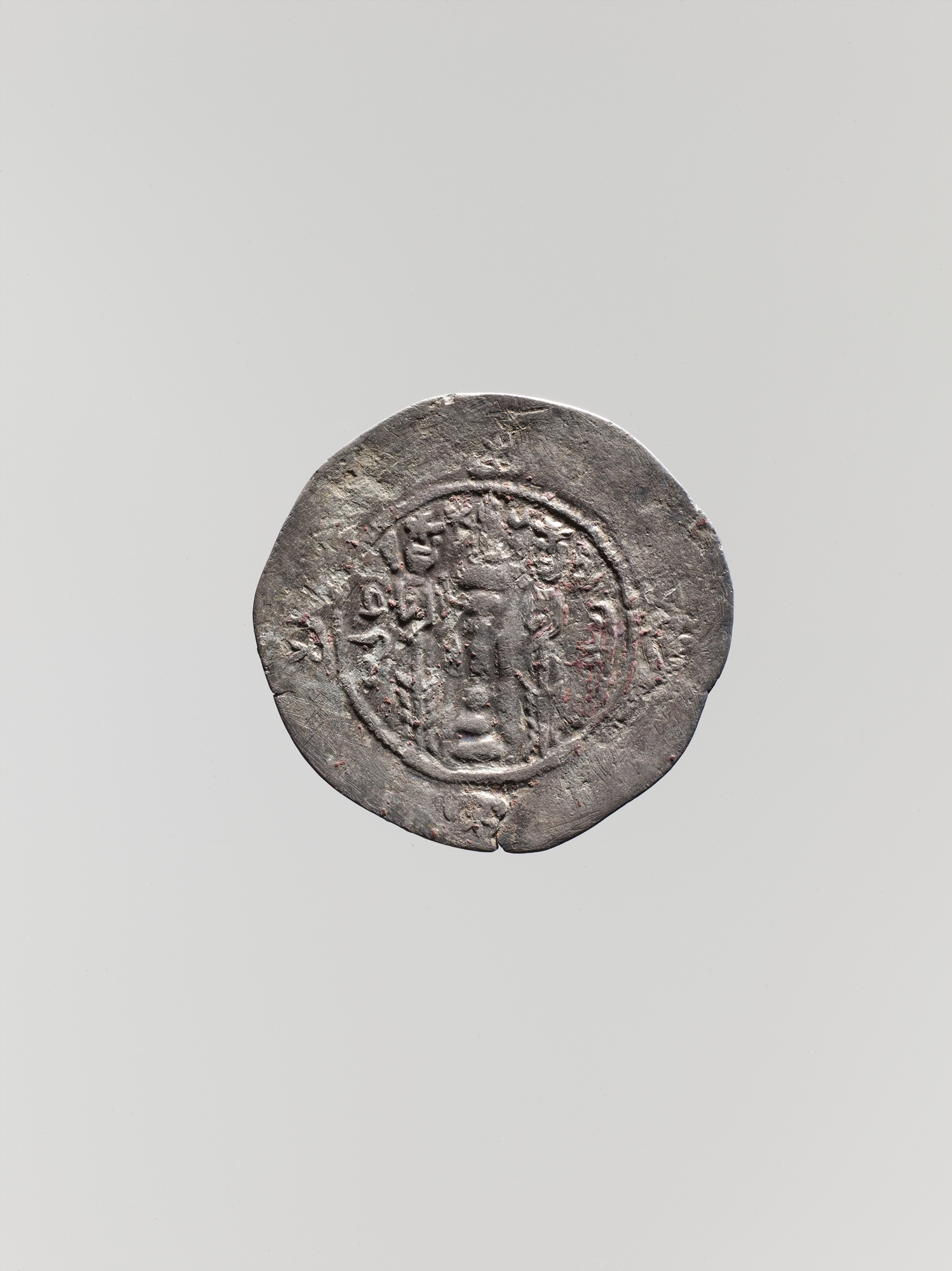
Reverse of a Sasanian drachm, about 629 CE, Qasr-i Abu Nasr, Iran. Silver, The Metropolitan Museum of Art, 36.30.306.
Rogers Fund, 1936. Public Domain, The Met Open Access. · Museum record ↗ · CC0
Connections with other religious histories
Zoroastrian traditions developed in contact with other religious worlds. Hintze notes scholarly discussion of their influence on Judaism and later Christianity and Islam, while emphasizing the difficulties posed by the surviving sources and their editions. Similar ideas alone do not establish a simple chain of borrowing. Particular contacts, texts and dates need their own evidence. [7]
Read further in the library
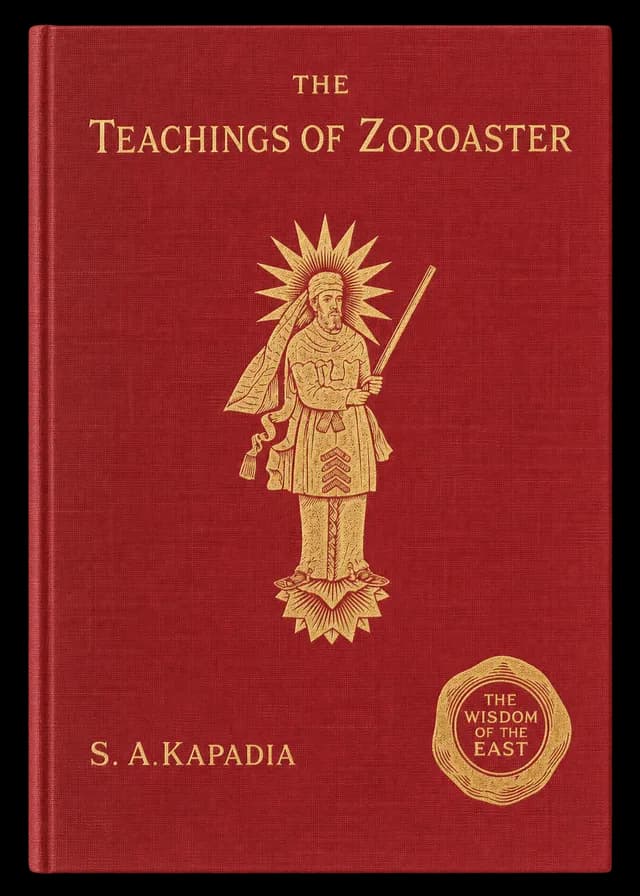
The Teachings of Zoroaster and the Philosophy of the Parsi Religion
Reading note
A historical collection of Zoroastrian religious and ethical teachings. Read it as a selected presentation, rather than a complete translation of the Avesta, alongside the scholarship and living community accounts cited here.
Sources
- Ancient Faith in the Modern World ↗The Pluralism Project, Harvard UniversityReturn to text ↑
- Zoroastrianism: Historical review ↗William W. Malandra, Encyclopaedia IranicaReturn to text ↑
- Zoroastrians in India and Iran ↗The Pluralism Project, Harvard UniversityReturn to text ↑
- Two Streams Converge ↗The Pluralism Project, Harvard UniversityReturn to text ↑
- A Visit to a Dar-e-Mehr ↗The Pluralism Project, Harvard UniversityReturn to text ↑
- Initiation into the Faith ↗The Pluralism Project, Harvard UniversityReturn to text ↑
- Who are the Zoroastrians? ↗Almut Hintze, British Academy Review 28, 2016Return to text ↑
- Aməša Spənta ↗Mary Boyce, Encyclopaedia IranicaReturn to text ↑
- Humata Hūxta Huvaršta ↗Mary Boyce, Encyclopaedia IranicaReturn to text ↑
- Činwad Puhl ↗Aḥmad Tafażżolī, Encyclopaedia IranicaReturn to text ↑
- Frašo.kərəti ↗Almut Hintze, Encyclopaedia IranicaReturn to text ↑
- Religion ↗Federation of Zoroastrian Associations of North AmericaReturn to text ↑
- The Gāthās and Yasna Haptaŋhāiti ↗FEZANA; named translations and recitationsReturn to text ↑
- Yasna, especially chapters 12 and 30 ↗Avesta.org; chapter 12 translated by Joseph H. Peterson; chapter 30 by C. Bartholomae as presented in I. J. S. Taraporewala’s The Divine Songs of ZarathushtraReturn to text ↑
- Drachm, 36.30.306 ↗The Metropolitan Museum of ArtReturn to text ↑
- Sasanian Coinage ↗Nikolaus Schindel, Encyclopaedia IranicaReturn to text ↑
- Dualism ↗Gherardo Gnoli, Encyclopaedia IranicaReturn to text ↑
- Zoroastrian Rituals ↗Michael Stausberg, Encyclopaedia IranicaReturn to text ↑
- Gāhānbār ↗Mary Boyce, Encyclopaedia IranicaReturn to text ↑
About this article & its sources
A sourced introduction to a living Iranian religious tradition. Dates of Zarathustra remain uncertain; particular texts, historical objects and community explanations are distinguished.
Passage attributions
What is Zoroastrianism?
Passage 1: The Pluralism Project, Harvard University.
Passage 2: The Pluralism Project, Harvard University.
Zarathustra and the limits of the historical record
Passage 1: William W. Malandra, Encyclopaedia Iranica.
Passage 2: William W. Malandra, Encyclopaedia Iranica.
The Avesta and the Gathas
Passage 1: The Pluralism Project, Harvard University.
Passage 2: Almut Hintze, British Academy Review 28, 2016.
Good thoughts, good words, good deeds
Passage 1: Mary Boyce, Encyclopaedia Iranica.
Passage 2: Mary Boyce, Encyclopaedia Iranica.
Asha and the work of living well
Passage 1: Federation of Zoroastrian Associations of North America.
Passage 2: Federation of Zoroastrian Associations of North America.
Ahura Mazda and the Amesha Spentas
Passage 1: Mary Boyce, Encyclopaedia Iranica.
Passage 2: Mary Boyce, Encyclopaedia Iranica.
Good, evil and a passage about choice
Passage 1: Avesta.org; chapter 12 translated by Joseph H. Peterson; chapter 30 by C. Bartholomae as presented in I. J. S. Taraporewala’s The Divine Songs of Zarathushtra.
Passage 2: Avesta.org; chapter 12 translated by Joseph H. Peterson; chapter 30 by C. Bartholomae as presented in I. J. S. Taraporewala’s The Divine Songs of Zarathushtra.
What does dualism mean here?
Passage 1: Gherardo Gnoli, Encyclopaedia Iranica.
Passage 2: Gherardo Gnoli, Encyclopaedia Iranica.
Why fire matters in worship
Passage 1: The Pluralism Project, Harvard University.
Passage 2: The Pluralism Project, Harvard University.
Initiation and daily remembrance
Passage 1: The Pluralism Project, Harvard University.
Passage 2: The Pluralism Project, Harvard University.
Seasonal festivals and the good creation
Passage 1: Mary Boyce, Encyclopaedia Iranica.
Passage 2: Mary Boyce, Encyclopaedia Iranica.
Continuity and change in religious practice
Passage 1: Michael Stausberg, Encyclopaedia Iranica.
Passage 2: Michael Stausberg, Encyclopaedia Iranica.
Judgment and the bridge to the next world
Passage 1: Aḥmad Tafażżolī, Encyclopaedia Iranica.
Passage 2: Aḥmad Tafażżolī, Encyclopaedia Iranica.
The renewal of creation
Passage 1: Almut Hintze, Encyclopaedia Iranica.
Passage 2: Almut Hintze, Encyclopaedia Iranica.
Iranian and Parsi histories
Passage 1: The Pluralism Project, Harvard University.
Passage 2: The Pluralism Project, Harvard University.
Living together in the diaspora
Passage 1: The Pluralism Project, Harvard University.
Passage 2: The Pluralism Project, Harvard University.
Hearing the Gathas today
Passage 1: FEZANA; named translations and recitations.
Passage 2: FEZANA; named translations and recitations.
A sacred image on a coin
Passage 1: The Metropolitan Museum of Art.
Passage 2: Nikolaus Schindel, Encyclopaedia Iranica.
Connections with other religious histories
Passage 1: Almut Hintze, British Academy Review 28, 2016.