Devas (Indian Religions)
Understand devas across Hindu, Buddhist and Jain traditions, with Indra, celestial rebirth, liberation and the differences behind a shared religious vocabulary.
In this article
What are devas?
Devas are divine or celestial beings in several Indian religious traditions. Deva and the feminine devi occur within Hindu accounts of gods and goddesses, while Buddhism and Jainism use related language for beings within their own cosmologies. The familiar English translation god is useful, provided it does not imply that every deva is a creator, a supreme being or a liberated soul. [1]
The Rubin Museum’s Hindu overview introduces deities through their different roles and forms. Indra is associated with kingship, rain and storms; Brahma, Vishnu and Shiva have prominent cosmological functions. These names belong to traditions of worship, narrative and image-making. Their relationships are interpreted differently across Hindu communities, so a single list cannot explain every devotional setting. [1]
Devas and the source of divine power
Bhagavad Gita 9.23 addresses worship of other deities from Krishna’s perspective. Swami Mukundananda’s commentary interprets their power as dependent on the Supreme Lord. This is a Krishna-centred account of the relation between celestial gods and the highest divine reality. It explains a theological distinction within Hindu thought; it should not be presented as the only way Hindu devotees understand the deity they worship. [2]
Buddhist rebirth and liberation
Buddhist devas: fortunate and still mortal
In the early Buddhist cosmology surveyed by Punnadhammo Mahathero, devas have attained favourable rebirth. Beauty, pleasure and a lifespan far beyond ordinary human experience can characterize their existence. Yet their lives eventually end. A celestial birth remains within samsara, the continuing round of birth and death. [3]
His discussion of sense-desire devas describes radiant appearances, subtler bodies and spontaneous birth. It also gathers accounts of signs that a deva’s life is drawing to its close. The contrast between splendour and mortality matters: a long, delightful existence can still be impermanent. [3]
Pleasure can encourage heedlessness, but devas may also hear the Dhamma and make spiritual progress. Their status therefore cannot be reduced either to perfected wisdom or to a simple obstacle. The question is how they respond to their condition. Devaloka names a celestial realm or world of devas; it does not by itself mean final liberation. [3]
When a deva king needs reminding
The Pali discourse MN 37 turns that distinction into a vivid encounter. Sakka, king of the devas, asks the Buddha about release through the ending of craving. The answer concerns understanding experience, observing its impermanence and relinquishing attachment. Sakka receives the teaching with delight. [4]
Maha Moggallana then visits him among the devas of the Thirty-three. Asked to repeat the instruction, Sakka speaks of his many duties and shows his visitor a magnificent palace. Moggallana recognizes heedlessness and makes the palace shake with a touch of his toe. Only then does Sakka return to the teaching. [4]
The narrative gives heavenly magnificence a limited place. Sakka’s power and beautiful surroundings do not settle whether he has understood liberation. The monk’s question brings the encounter back to the ending of craving. Within this Buddhist text, the deva king is a participant in religious learning, not its final authority. [4]
Jain devas and liberated beings
Jainism likewise distinguishes celestial existence from liberation. As Nalini Balbir explains, Jain deities belong within a universe without a creator god. Devas can receive worship and assist religious life, but their status differs from that of Jinas and liberated souls. Celestial power and the end of rebirth answer different religious questions. [5]
Indra and shared sacred forms
Indra across religious settings
A sandstone sculpture in the Met’s collection, catalogued as Standing Indra, comes from northern India around the second century. The museum identifies Indra through the object’s inscription and attributes. It also explains his place in Buddhist narratives as an attendant and protector, including his association with the Buddha’s birth and the heaven of the Thirty-three. The photograph reproduced here shows the surviving head. [7]
This example makes the change of setting concrete. A deity prominent in Vedic tradition can have an important role in Buddhist art without becoming the creator or the source of the Buddha’s awakening. [7]
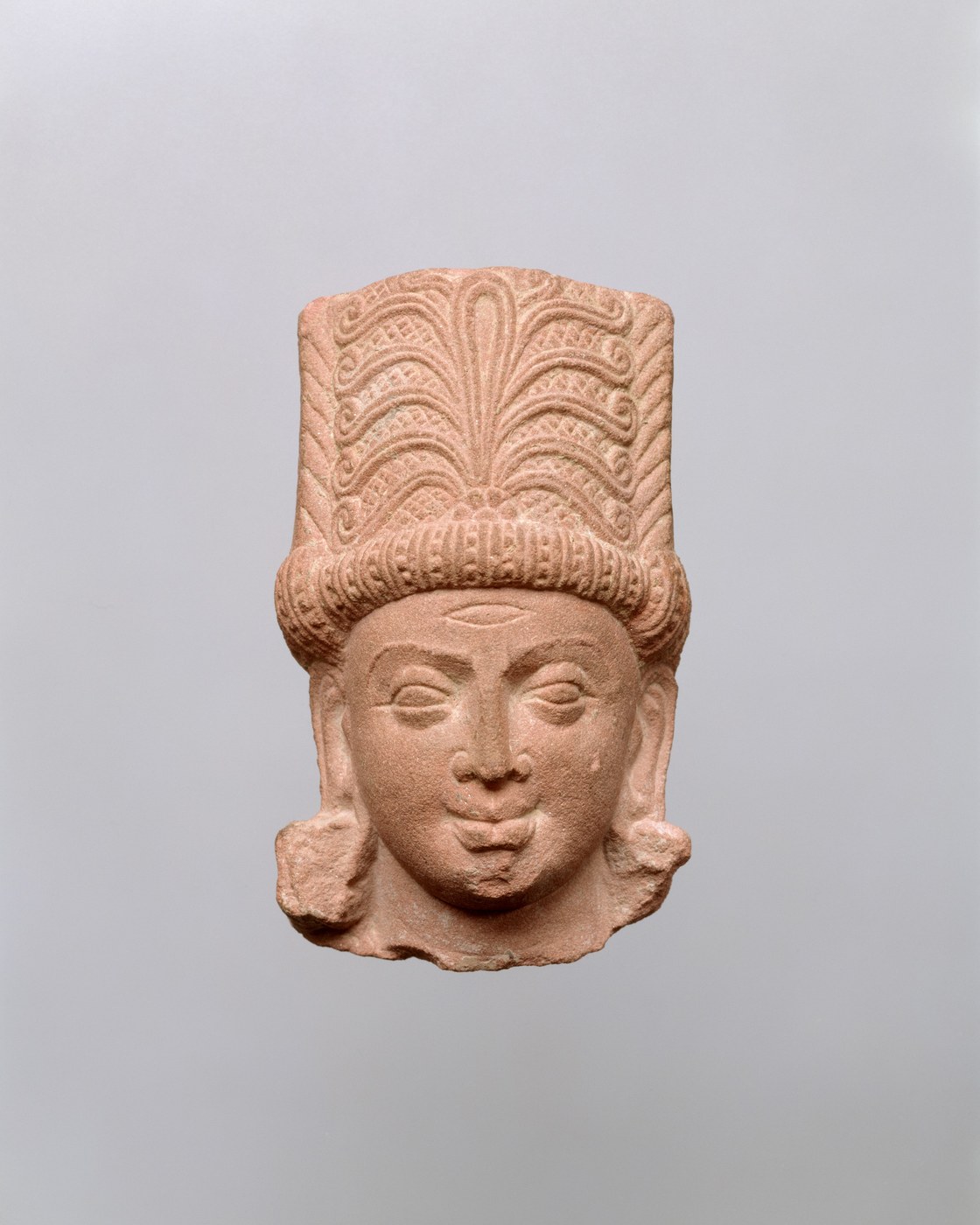
Head from Standing Indra, northern India, ca. second century. Sandstone. The museum connects Indra’s identification with both Vedic tradition and Buddhist narrative.
The Metropolitan Museum of Art. Samuel Eilenberg Collection, Ex Coll.: Columbia University, Purchase, Rogers Fund, 1987. Accession 1987.218.12a, b. Public Domain (CC0). · Museum record ↗ · CC0
The later Theosophical use
Devas in Theosophy has a separate entry here. Leadbeater’s historical account of guardian intervention includes devas among several proposed kinds of helpers. That is a modern esoteric setting for the term, which should be distinguished from its uses in Indian religious texts. [8]
Sources
- Hindu Gods and Goddesses ↗Rubin Museum, Project Himalayan Art; introductory account of Hindu deitiesReturn to text ↑
- Bhagavad Gita 9.23: translation and commentary ↗Swami Mukundananda; Krishna-centred translation and theological expositionReturn to text ↑
- The Buddhist Cosmos, printed pages 260–261 ↗Punnadhammo Mahathero, 2018/2023; Theravada and Sarvastivada sources, official Amaravati PDFReturn to text ↑
- MN 37: The Shorter Craving-Destruction Discourse ↗Pali discourse translated by Thanissaro Bhikkhu; Sakka and Maha MoggallanaReturn to text ↑
- Deities ↗Nalini Balbir, Jainpedia; deities, worship and liberationReturn to text ↑
- Standing Indra ↗The Metropolitan Museum of Art; ca. second century, accession 1987.218.12a, bReturn to text ↑
- The Astral Plane: guardian intervention, printed page 93 ↗C. W. Leadbeater; historical Theosophical account, checked original Library pageReturn to text ↑
About this article & its sources
Selected Hindu, early Buddhist and Jain accounts. The shared term does not imply one theology, one hierarchy or one relationship to liberation. Modern Theosophical usage has its own existing article.
Passage attributions
What are devas?
Passage 1: Rubin Museum, Project Himalayan Art; introductory account of Hindu deities.
Passage 2: Rubin Museum, Project Himalayan Art; introductory account of Hindu deities.
Devas and the source of divine power
Passage 1: Swami Mukundananda; Krishna-centred translation and theological exposition.
Buddhist devas: fortunate and still mortal
Passage 1: Punnadhammo Mahathero, 2018/2023; Theravada and Sarvastivada sources, official Amaravati PDF.
Passage 2: Punnadhammo Mahathero, 2018/2023; Theravada and Sarvastivada sources, official Amaravati PDF.
Passage 3: Punnadhammo Mahathero, 2018/2023; Theravada and Sarvastivada sources, official Amaravati PDF.
When a deva king needs reminding
Passage 1: Pali discourse translated by Thanissaro Bhikkhu; Sakka and Maha Moggallana.
Passage 2: Pali discourse translated by Thanissaro Bhikkhu; Sakka and Maha Moggallana.
Passage 3: Pali discourse translated by Thanissaro Bhikkhu; Sakka and Maha Moggallana.
Jain devas and liberated beings
Passage 1: Nalini Balbir, Jainpedia; deities, worship and liberation.
Indra across religious settings
Passage 1: The Metropolitan Museum of Art; ca. second century, accession 1987.218.12a, b.
Passage 2: The Metropolitan Museum of Art; ca. second century, accession 1987.218.12a, b.
Shared forms, different relationships
Passage 1: Rubin Museum, Project Himalayan Art; shared visual forms and different religious settings.
Passage 2: Rubin Museum, Project Himalayan Art; shared visual forms and different religious settings.
The later Theosophical use
Passage 1: C. W. Leadbeater; historical Theosophical account, checked original Library page.