Satan
Trace Satan through Jewish and Christian sources, from adversary and accuser to the rebellious devil, with rabbinic interpretation and a comparison with Iblis.
In this article
Who is Satan?
Satan is the name commonly given in Christianity to the devil, while its Hebrew background includes the sense of adversary or accuser. Earlier and later texts do not assign the figure one unchanging role. In some biblical settings, an adversary can be a human opponent; in Job and Zechariah, the accusing figure appears within a divine court. [1]
The Jewish Encyclopedia’s biblical discussion makes that setting important. In Job, the adversary challenges the account of Job’s righteousness and acts under limits set by God. This is a different relationship from the later image of an independent rebel leading an army against heaven. Reading the particular narrative first allows its questions about suffering, accusation and divine permission to remain visible. It also prevents a familiar later picture from supplying every earlier text with a biography it does not give. [1]
History and rabbinic interpretation
From divine functionary to enemy
In the public abstract of his study Satan, from Divine Court to Monster, biblical scholar Ryan E. Stokes describes a historical movement from a figure who performs a punitive function within the divine order towards an enemy of God and humanity in later writings. This is a scholarly account of development across texts. [2]
The point is not that every community changed its understanding at the same moment. It is that the sources need to be placed in their own settings. The title adversary, the role of accuser and the developed Christian devil can be related without assuming they were always identical. [2]
A rabbinic reading of accusation and temptation
Bava Batra 16a explores Job through several rabbinic interpretations. A statement attributed to Reish Lakish identifies Satan, the evil inclination and the Angel of Death. The passage connects misleading a person, accusing that person and taking life. Read within the discussion, the identification draws together moral temptation and its consequences. [3]
The same page preserves another interpretive turn: Rabbi Levi explains Satan’s action through concern for the honour of Abraham. The presence of differing voices matters. A Talmudic discussion can test the motives and functions of a figure through argument, rather than offer one official character profile. These particular statements should be attributed to their speakers and setting. They do not justify assigning every later Jewish community a single doctrine of Satan, nor do they erase the divine permission that structures the Job narrative. [3]
Christian theology
The rebellious devil in Christian teaching
The Orthodox Church in America presents Satan as leader of rebellious spiritual powers, associated with deception, temptation and opposition to God. Its account identifies the serpent of Genesis within that Christian reading and emphasizes Satan’s eventual defeat. Evil is powerful within the drama of human life, but its victory is not final. This is a developed theological reading that brings different scriptural passages into relation; it should be distinguished from the historical setting of each passage considered separately. [4]
Job in a historical engraving
Georg Pencz’s engraving The Persecution of Job places a seated sufferer among visitors, with a bird-headed tormentor behind him. It offers a historical European representation of the story. The appearance of the tormentor belongs to this artistic reception, rather than defining Satan’s appearance across religious traditions. [8]
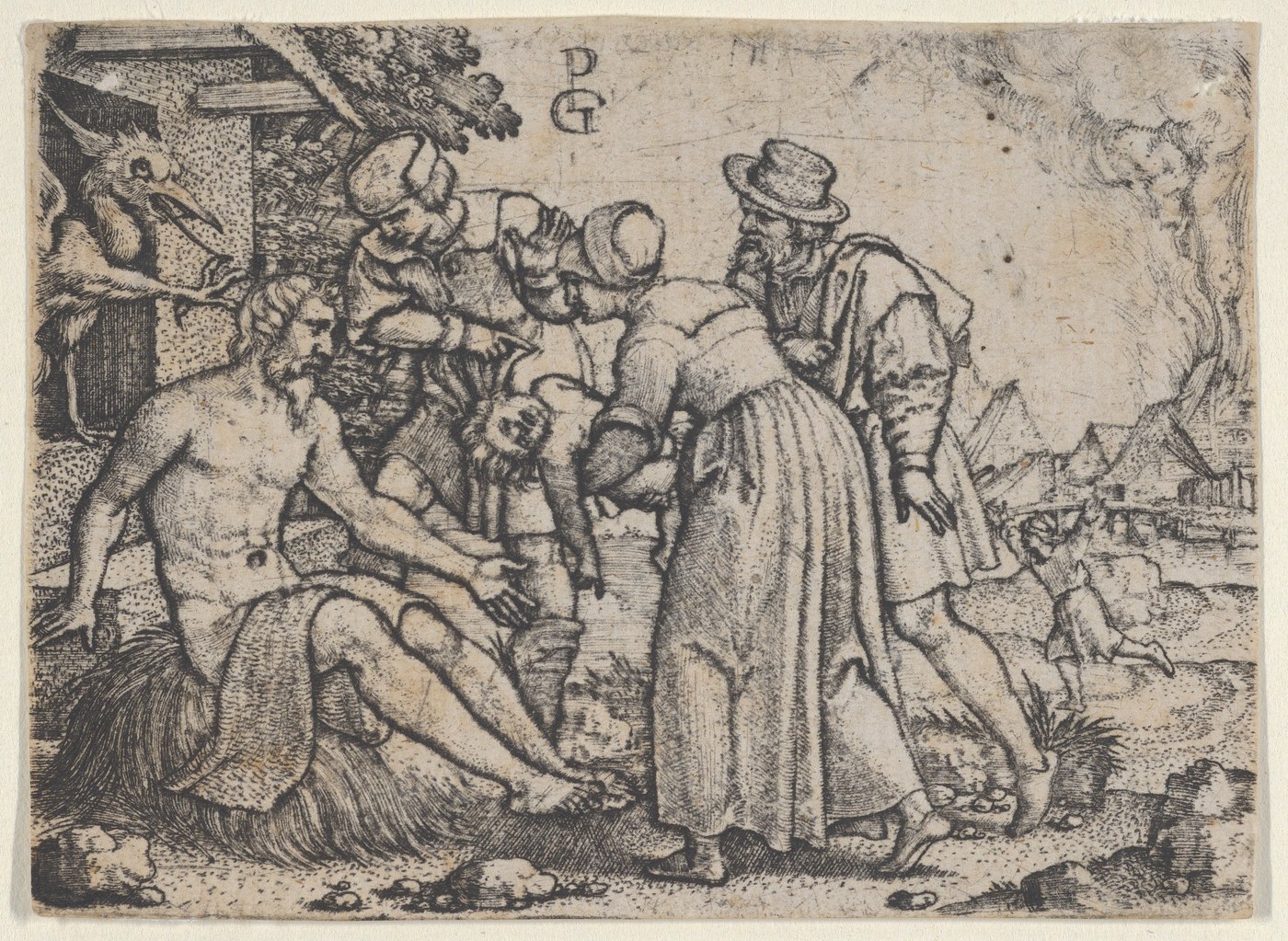
Georg Pencz, The Persecution of Job. Engraving.
The Metropolitan Museum of Art. Gift of Edwin De T. Bechtel, 1949. Accession 49.132.85. Public Domain (CC0). · Museum record ↗ · CC0
Aquinas: how can an angel fall?
Thomas Aquinas approaches the subject through the problem of created freedom. In question 63 of the Summa Theologiae, he argues that an angel can sin because a created will must be directed according to a rule beyond itself. The possibility of failure belongs to the creature’s capacity to choose; the failure concerns the direction of the will. [5]
He then identifies pride as the first angelic sin: the refusal of a due relation to God. Envy follows, directed against another’s good. His explanation concerns spiritual choice, rather than bodily appetite. The wrong lies in seeking a good without its proper order, not in the existence of the good itself. This is a scholastic argument about freedom, dependence and moral disorder. It gives the fall a philosophical explanation, rather than treating it only as a battle scene. [5]
Iblis and the limits of comparison
Islamic accounts use the figure of Iblis in the story of refusing to bow before Adam. As Hamid Algar explains, the name Iblis is especially associated with that refusal, while shaytan emphasizes the activity of temptation. The story belongs within Islamic scripture and interpretation. [6]
There are points of comparison with the Christian devil, but the names should not flatten their different narratives. The Quranic description of Iblis as one of the jinn also creates a question of classification that has its own interpretive history. The related article on Jinn follows that distinction. [6]
Milton’s inward Hell
In Book IV of Paradise Lost, Satan approaches Eden while carrying Hell within him. The checked Library leaf places the torment in memory, despair and the consequences of his ambition. A change of place cannot remove it. This is Milton’s literary treatment of the rebel’s condition, with its own dramatic voice and setting. The separate entry Satan in Paradise Lost follows that portrayal in more detail. [7]
Read further in the library
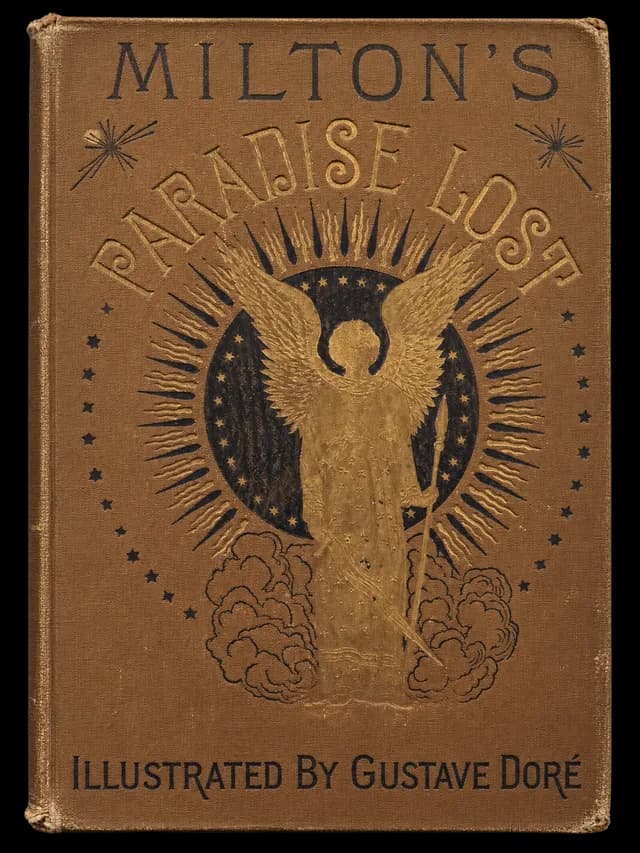
Paradise Lost: Illustrated by Gustave Doré
Reading note
Milton’s epic develops Satan as a literary character. The checked passage in Book IV concerns inward torment and remembered ambition; the related Codex entry follows this particular portrayal.
Sources
- Satan ↗Joseph Jacobs and Ludwig Blau, Jewish Encyclopedia; historical reference, biblical sectionReturn to text ↑
- Satan, from Divine Court to Monster: public abstract ↗Ryan E. Stokes, The Oxford Handbook of Biblical Monsters, 2025; public abstract onlyReturn to text ↑
- Bava Batra 16a ↗Babylonian Talmud; William Davidson English edition via SefariaReturn to text ↑
- Angels and Evil Spirits ↗The Orthodox Faith, Orthodox Church in America; institutional Christian teachingReturn to text ↑
- Summa Theologiae I, question 63, articles 1–2 ↗Thomas Aquinas; scholastic account of angelic sin, English Dominican translation via New AdventReturn to text ↑
- Eblis ↗Hamid Algar, Encyclopaedia Iranica; opening discussion of Iblis, refusal and temptationReturn to text ↑
- Paradise Lost: Illustrated by Gustave Doré: Book IV, printed page 81John Milton; illustrated by Gustave Doré; edited by Henry C. Walsh; historical literary account, exact Library leaf inspectedReturn to text ↑
Examine the original Library page
Original page image and public verified citation checked before this use. Literary vision is distinguished from general religious doctrine.
The hell within him
Open the original page in Paradise Lost: Illustrated by Gustave Doré ↗Scan leaf 103 · John Milton; illustrated by Gustave Doré; edited by Henry C. Walsh
- The Persecution of Job ↗The Metropolitan Museum of Art; object record 49.132.85Return to text ↑
About this article & its sources
Selected biblical reception, rabbinic interpretation and Christian theology, followed by a limited Islamic comparison. These accounts are not treated as episodes in a single biography shared by all religions.
Passage attributions
Who is Satan?
Passage 1: Joseph Jacobs and Ludwig Blau, Jewish Encyclopedia; historical reference, biblical section.
Passage 2: Joseph Jacobs and Ludwig Blau, Jewish Encyclopedia; historical reference, biblical section.
From divine functionary to enemy
Passage 1: Ryan E. Stokes, The Oxford Handbook of Biblical Monsters, 2025; public abstract only.
Passage 2: Ryan E. Stokes, The Oxford Handbook of Biblical Monsters, 2025; public abstract only.
A rabbinic reading of accusation and temptation
Passage 1: Babylonian Talmud; William Davidson English edition via Sefaria.
Passage 2: Babylonian Talmud; William Davidson English edition via Sefaria.
The rebellious devil in Christian teaching
Passage 1: The Orthodox Faith, Orthodox Church in America; institutional Christian teaching.
Job in a historical engraving
Passage 1: The Metropolitan Museum of Art; historical object and visual description.
Aquinas: how can an angel fall?
Passage 1: Thomas Aquinas; scholastic account of angelic sin, English Dominican translation via New Advent.
Passage 2: Thomas Aquinas; scholastic account of angelic sin, English Dominican translation via New Advent.
Iblis and the limits of comparison
Passage 1: Hamid Algar, Encyclopaedia Iranica; opening discussion of Iblis, refusal and temptation.
Passage 2: Hamid Algar, Encyclopaedia Iranica; opening discussion of Iblis, refusal and temptation.
Milton’s inward Hell
Passage 1: John Milton; illustrated by Gustave Doré; edited by Henry C. Walsh; literary interpretation.