Reunion After Death
Reunion after death is the hope of meeting loved ones again. Compare recognition, welcome and lasting companionship in Dante and Spiritualist books.
In this article
What does reunion after death mean?
Reunion after death is the hope that people who have loved one another will meet and recognise one another again. Spiritualist books often give this hope a setting: a relative comes to greet a new arrival, brings them home or stays to explain what has happened. [1][5][6][2]
Recognition has to allow for change. Someone who died as a child may have grown up. A brother or grandmother may be known through a family connection before the two have memories in common. [1][5][9][18][21]
Dante gives reunion a different shape when he recognises a friend by his voice and reaches for an embrace. The books ask in different ways what survives a separation: a memory, a familiar presence or a life that can be shared again. [41][1][2]
See references (8)
- The Angels’ Diary, Reader page 29
- The Angels’ Diary, Reader page 59
- The Angels’ Diary, Reader page 36
- The Angels’ Diary, Reader page 37
- The Angels’ Diary, Reader page 68
- A Subaltern in Spirit Land, printed p. 8, Reader page 23
- A Subaltern in Spirit Land, printed p. 35, Reader page 50
- Purgatory and Paradise, Purgatory II, Reader page 14
Recognition and welcome
Life Here and Hereafter: Charlotte E. Dresser and Fred Rafferty
In Life Here and Hereafter, received chiefly by Charlotte E. Dresser and edited by Fred Rafferty, one exchange raises a problem with names: anyone can give one. The circle also looks for an impression of the person, and conversations draw on guesses and remembered events. Together they show how the participants thought recognition might work. [70][71][72][73]
The account of two brothers who died as infants gives reunion a long domestic setting. One arrives before the other, helps him, and learns from their father to value a family tie where there is congeniality. Shared studies and compatible interests strengthen the brothers’ companionship. They remain near their father even though other studies and higher movement are available. [74][75][76]
Family connection is not presented as automatic agreement. A former teacher describes parents with whom there was duty but little congeniality, while the schoolteacher’s partnership develops gradually through intellectual companionship. The volume gives affection, temperament and growing understanding distinct parts in an enduring relationship. [77][78][79][70][76]
See references (10)
- Life Here and Hereafter, Reader page 55
- Life Here and Hereafter, Reader page 56
- Life Here and Hereafter, Reader page 159
- Life Here and Hereafter, Reader page 160
- Life Here and Hereafter, Reader page 66
- Life Here and Hereafter, Reader page 67
- Life Here and Hereafter, Reader page 68
- Life Here and Hereafter, Reader page 34
- Life Here and Hereafter, Reader page 35
- Life Here and Hereafter, Reader page 54
The Angels’ Diary
In the diary attributed to Effie M. Shirey, the narrator meets a brother who died before she was born. She recognises him as kin although they have no shared earthly childhood. He becomes her companion, taking her through the country and introducing her to its social life. [1][4]
He leads her to a gathering in a grove hung with flowers. Three angels place a robe of pink roses around her, and she learns that relatives from both her mother’s and father’s families have assembled to welcome her. Several generations take part. One relative, Alice Samson, sings, while the audience throws flowers around her. Arrival becomes an occasion the family can celebrate together. [5][6]
The welcome does not remove the narrator’s concern for those still living. She wishes her mother could see her. Later, in an ancestor’s mansion, she is invited to think of something she wants to see. A life-sized image of her mother appears on a wall. The book preserves the ache of separation even amid its descriptions of happiness. [5][6][7][8]
Its account of the fifth sphere makes waiting part of family life. Relatives may stay there for years until loved ones arrive. Meanwhile, the narrator says that study and visits to her husband, children and parents on earth can all fit into the same existence. The absence of sleep leaves time for both learning and affection. [2][3]
A later reception in her own home brings back the wish that her mother, husband and babies could join the guests. On visits to earth she tries to help them, sometimes finding them receptive and sometimes unable to receive what she offers. The diary imagines reunion as a relationship sustained through unequal circumstances, with the full meeting still ahead. [9][10][11]
The brother never met on earth and the mother still awaited occupy different places in an unfolding family history. Recognition begins companionship without bringing every hoped-for reunion into the narrator’s present. [5][2][9]
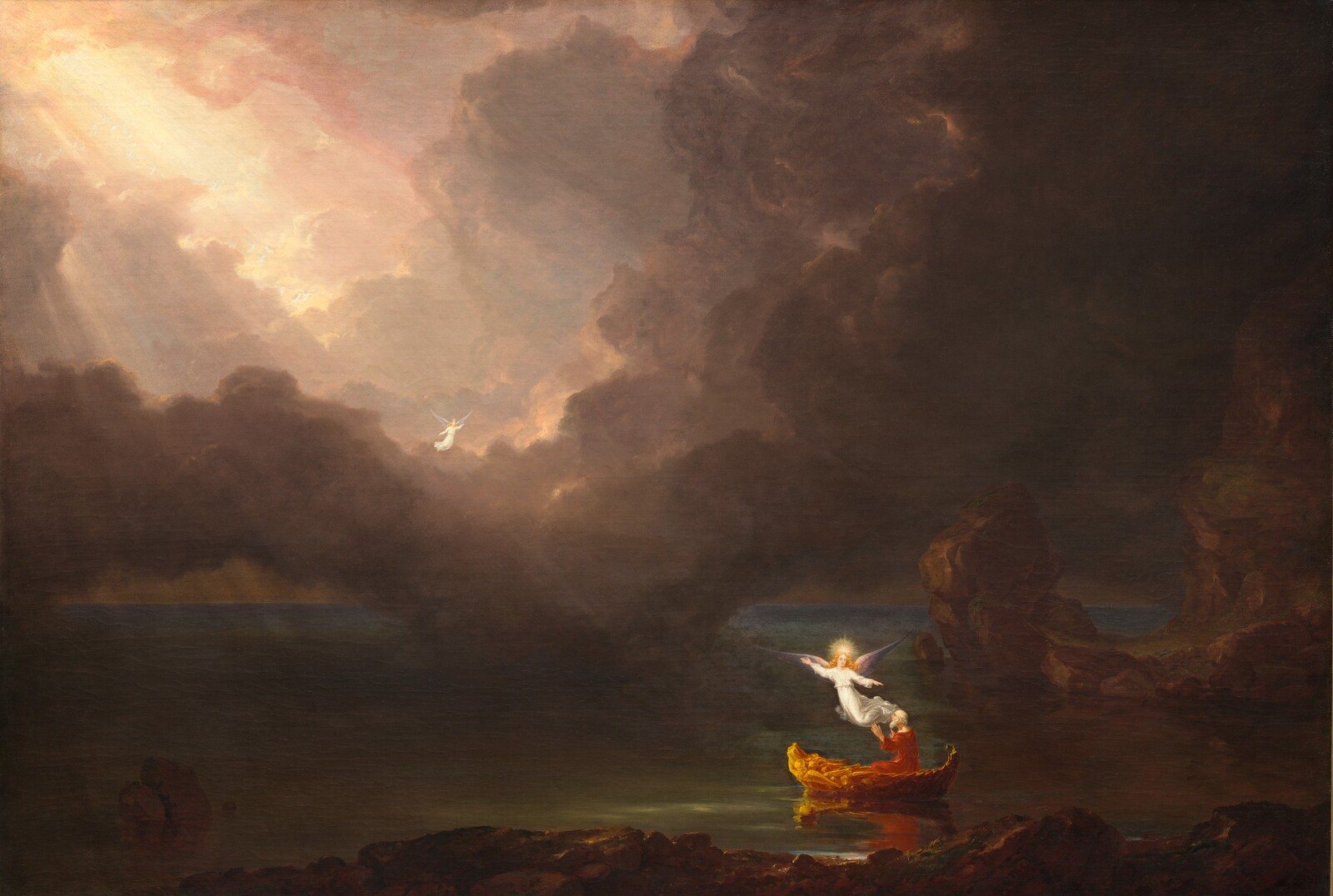
Thomas Cole, The Voyage of Life: Old Age, 1842. The angel points the voyager toward a light above the clouds. This nineteenth-century Christian allegory pictures hope at the end of life through a journey and a welcoming guide.
National Gallery of Art, Washington. Ailsa Mellon Bruce Fund, 1971.16.4. Public Domain. · Image source ↗ · Public Domain
See references (11)
- The Angels’ Diary, Reader page 29
- The Angels’ Diary, Reader page 59
- The Angels’ Diary, Reader page 60
- The Angels’ Diary, Reader page 33
- The Angels’ Diary, Reader page 36
- The Angels’ Diary, Reader page 37
- The Angels’ Diary, Reader page 41
- The Angels’ Diary, Reader page 42
- The Angels’ Diary, Reader page 68
- The Angels’ Diary, Reader page 69
- The Angels’ Diary, Reader page 70
A Subaltern in Spirit Land by J. S. M. Ward
J. S. M. Ward’s A Subaltern in Spirit Land begins with a reunion that is full of uncertainty. His brother Rex recognises him and is glad he has come, but cannot yet give a coherent account of his death. He feels lonely despite the crowds around him. Familiar companionship offers the first point of stability in a strange country. [13][14][15]
Ward then brings H. J. L., a relative already encountered in Gone West. The older man recalls a childhood incident involving Rex, who remembers it immediately. Recognition is carried by shared family history. H. J. L. then agrees to stay and help him understand his circumstances. [16][17][18][19]
Rex later describes how much the meeting changed his condition. Ward’s promise of another companion had given him hope; the relative’s arrival helped him become less confused. He notices that both visitors have forms different from his own. The relationship continues across those differences in embodiment. [20][21]
The same pattern is repeated when Rex helps find his former adjutant. The other man recognises Rex, knows that Rex has died and reasons that he too must be dead if they can speak. A relationship formed during life becomes a means of understanding a new condition and accepting help. [22][23]
The reunion with their mother unfolds more slowly. On waking in the hospital she recognises Rex, but initially understands her surroundings through familiar earthly expectations. Ward’s living presence seems less substantial than those of her new companions. Questions about her granddaughter and the sending of a birthday gift connect recognition after death with the ordinary details of family life. [25][26][27]
Other stories preserve different kinds of meeting. A soldier describes recognising his living mother during her sleep, then losing contact when she wakes. Rex later meets an elderly couple who say they arrived together and still fear a future separation. Ward’s book gives several forms of reunion, with different durations and uncertainties, rather than one guaranteed sequence for all families. [28][29][30][31]
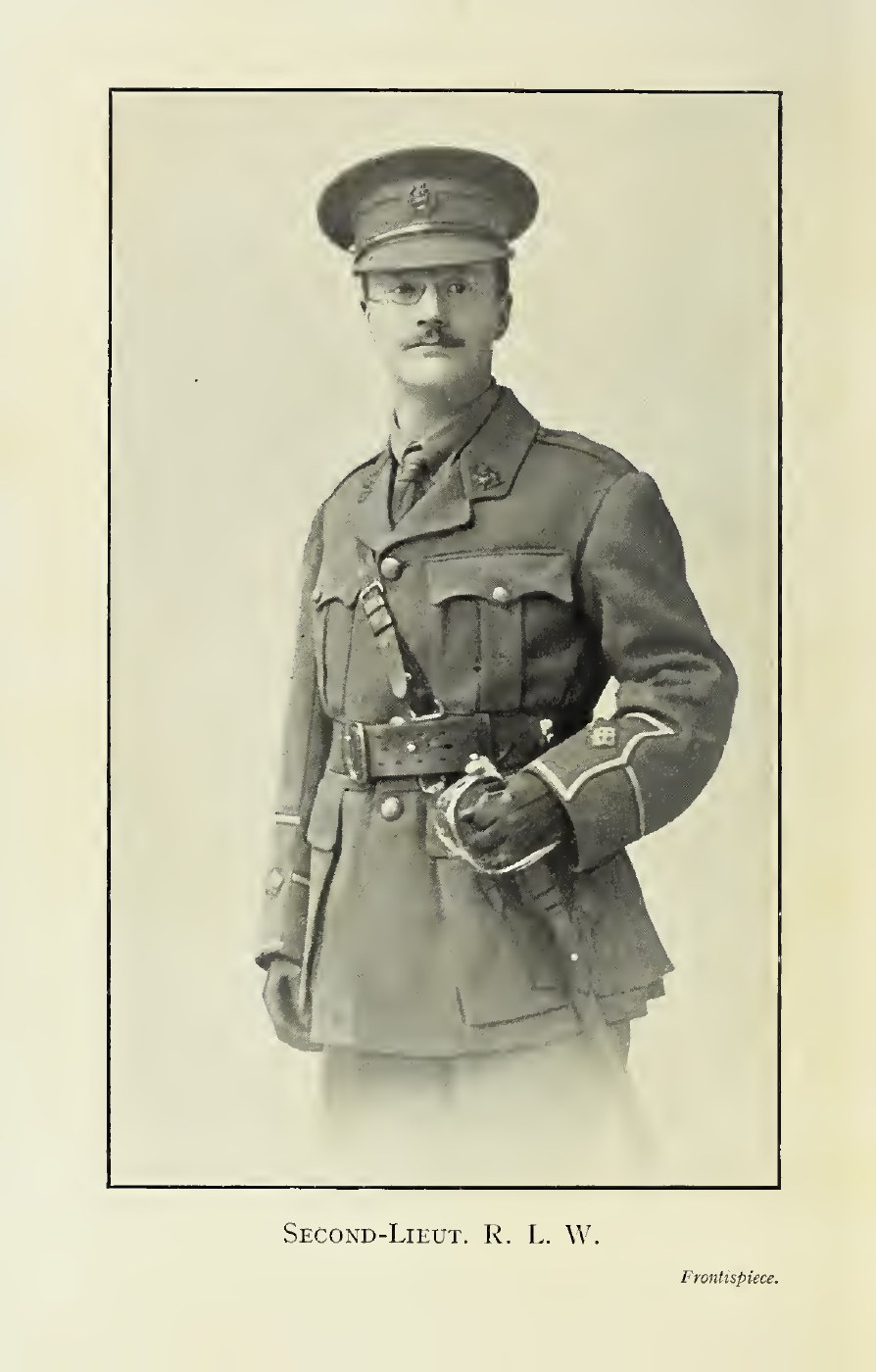
Second-Lieut. R. L. W., frontispiece of A Subaltern in Spirit Land, 1920. Ward’s account of meeting his brother gives the sequel its starting point. The photograph is uncredited in the plate.
J. S. M. Ward, A Subaltern in Spirit Land. William Rider & Son, 1920. Uncredited frontispiece. Public Domain. · Image source ↗ · Public Domain
See references (18)
- A Subaltern in Spirit Land, printed p. 1, Reader page 16
- A Subaltern in Spirit Land, printed p. 2, Reader page 17
- A Subaltern in Spirit Land, printed p. 3, Reader page 18
- A Subaltern in Spirit Land, printed p. 4, Reader page 19
- A Subaltern in Spirit Land, printed p. 5, Reader page 20
- A Subaltern in Spirit Land, printed p. 8, Reader page 23
- A Subaltern in Spirit Land, printed p. 9, Reader page 24
- A Subaltern in Spirit Land, printed p. 34, Reader page 49
- A Subaltern in Spirit Land, printed p. 35, Reader page 50
- A Subaltern in Spirit Land, printed p. 50, Reader page 65
- A Subaltern in Spirit Land, printed p. 51, Reader page 66
- A Subaltern in Spirit Land, printed p. 130, Reader page 145
- A Subaltern in Spirit Land, printed p. 131, Reader page 146
- A Subaltern in Spirit Land, printed p. 132, Reader page 147
- A Subaltern in Spirit Land, printed p. 250, Reader page 265
- A Subaltern in Spirit Land, printed p. 251, Reader page 266
- A Subaltern in Spirit Land, printed p. 296, Reader page 311
- A Subaltern in Spirit Land, printed p. 297, Reader page 312
The Encyclopaedia of Death and Life in Spirit-World, Volume I
In J. R. Francis’s The Encyclopaedia of Death and Life in Spirit-World, Volume I, reunion often supplies the first intelligible shape of the next life. A communication attributed to Judge Rufus W. Peckham, received through J. W. Edmonds, describes his parents appearing during the sinking of the Ville du Havre. His mother draws him from the waves while his wife remains with him. Recognition of family gives the unfamiliar transition a familiar guide. [32][33]
The separate article ‘The Passage to the Spirit Side of Life’ presents a message from a recipient’s elder brother through an unnamed entranced medium. Departed loved ones invite him away from the mourners and introduce him to congenial companions. When the journey exhausts him, they carry him. Reunion includes practical care for a person still learning what has happened. [34][35][36]
The brother’s message also maintains his concern for relatives who remain alive. Another account, attributed to J. W. Edmonds through Cora L. V. Tappan, describes arrival at a home where his wife welcomes him. These are distinct reported communications, not one continuous journey. The compiler’s note to the brother’s account limits its joyful circumstances to a particular spiritual condition; it does not promise an identical welcome to every newcomer. [37][38][39]
See references (8)
- The Encyclopaedia of Death and Life in Spirit-World, Volume I, printed p. 29, Reader page 28
- The Encyclopaedia of Death and Life in Spirit-World, Volume I, printed p. 30, Reader page 29
- The Encyclopaedia of Death and Life in Spirit-World, Volume I, printed p. 46, Reader page 45
- The Encyclopaedia of Death and Life in Spirit-World, Volume I, printed p. 47, Reader page 46
- The Encyclopaedia of Death and Life in Spirit-World, Volume I, printed p. 48, Reader page 47
- The Encyclopaedia of Death and Life in Spirit-World, Volume I, printed p. 50, Reader page 49
- The Encyclopaedia of Death and Life in Spirit-World, Volume I, printed p. 51, Reader page 50
- The Encyclopaedia of Death and Life in Spirit-World, Volume I, printed p. 54, Reader page 53
Friendship and lasting ties
The Divine Comedy by Dante Alighieri
In Dante Alighieri’s Divine Comedy, an angel brings a boat of souls to the shore of Purgatory. One comes forward to embrace the living Dante. Three times his arms close on empty air. A familiar voice brings the recognition his hands could not: it is Casella. [40][41]
Casella tells him that the love he felt while embodied continues after leaving the body. Dante then asks for the song that once relieved his cares, and Casella sings of love. Dante, Virgil and the newly arrived souls become absorbed in listening. The scene makes affection and shared memory survive the failed embrace, without giving the dead friend an ordinary solid body. [41][42]
The meeting is interrupted. Cato calls the listeners back to the mountain and the purification that awaits them, and the group scatters. Casella’s welcome is therefore a pause within an unfinished spiritual journey. Dante is visiting a friend who has died, rather than arriving after his own death to live permanently beside him; both the warmth of the encounter and its limits matter to this account. [41][42]
A Wanderer in the Spirit Lands
A Wanderer in the Spirit Lands, attributed to Franchezzo and transcribed by A. Farnese, distinguishes meetings with the dead from visits involving the living. Franchezzo first receives a message from his father through his beloved, then recognises and embraces the father himself. The feared reproach gives way to a welcome. Both father and son are departed, whereas the woman carrying the earlier message remains on earth. [43][44][45]
At the Golden Gates, the narrator is welcomed by his mother, father, brother, sister and friends. His mother died when he was a child. His living beloved also appears briefly, brought during sleep by her guardian, and is returned to her earthly body. The book places a family reunion and a temporary visit in the same scene without making them the same event. [47][48][49]
Not every reunion is a restored romance. Benedetto and his former lover are expected to forgive one another and go separate ways. Later Benedetto reaches Franchezzo’s circle and becomes his housemate. Shared friendship answers the narrator’s loneliness while his beloved is still living. [46][50][51]
The final paragraph anticipates the beloved eventually joining him, but leaves that event in the future. The narrative thus offers recognition, companionship and continued love while preserving differences in timing, location and the kind of relationship that can endure. [52][53]
See references (11)
- A Wanderer in the Spirit Lands, Reader page 101
- A Wanderer in the Spirit Lands, Reader page 102
- A Wanderer in the Spirit Lands, Reader page 103
- A Wanderer in the Spirit Lands, Reader page 219
- A Wanderer in the Spirit Lands, Reader page 285
- A Wanderer in the Spirit Lands, Reader page 288
- A Wanderer in the Spirit Lands, Reader page 289
- A Wanderer in the Spirit Lands, Reader page 296
- A Wanderer in the Spirit Lands, Reader page 297
- A Wanderer in the Spirit Lands, Reader page 315
- A Wanderer in the Spirit Lands, Reader page 316
Heaven and Its Wonders and Hell
In Heaven and Its Wonders and Hell, Emanuel Swedenborg describes friends and relatives meeting in the world of spirits. Their outward appearance and speech initially resemble what was known on earth. Recognition can also come through the sphere of a person’s life. Thinking of someone brings that person into presence, and Swedenborg reports the mutual joy of friends welcoming a new arrival. [54][55][56]
He includes meetings between parents and children, siblings and spouses. A father conversing with six sons is one of his examples. Yet an early reunion does not by itself establish permanent companionship. The world of spirits is a transitional condition in which people can meet while their inward differences are still becoming apparent. [54][55]
Spouses may remain together for a time and then separate if their minds had not been joined by genuine marriage love. More generally, final association and recognition follow similarity of ruling love. Swedenborg’s account therefore gives reunion both an immediate welcome and a later question: what inward life do the people actually share? It does not make earthly kinship alone a guarantee that every relationship continues in its former form. [55][56][57][58][59]
See references (6)
- Heaven and Its Wonders and Hell, printed p. 367, Reader page 374
- Heaven and Its Wonders and Hell, printed p. 368, Reader page 375
- Heaven and Its Wonders and Hell, printed p. 447, Reader page 454
- Heaven and Its Wonders and Hell, printed p. 448, Reader page 455
- Heaven and Its Wonders and Hell, printed p. 450, Reader page 457
- Heaven and Its Wonders and Hell, printed p. 451, Reader page 458
Life and Labor in the Spirit World: Shelhamer’s spirit-band
Life and Labor in the Spirit World, credited to the spirit-band of the medium M. T. Shelhamer, introduces reunion through the account attributed to Spirit Violet. A young woman first receives care from unfamiliar helpers, then discovers that the loving woman waiting at her new cottage is her own grandmother. Family recognition follows a period of rest and welcome. [60][61][62][63]
She continues to care for the mother left on earth, returning to her side and seeking a sympathetic nurse’s help. When the mother subsequently dies, the daughter is the first to greet her. The three generations then share the valley home and turn their attention towards assisting others. Reunion becomes an ongoing household with work beyond itself. [64][65]
The account attributed to John Critchley Prince includes a different family return. His mother welcomes him into her home after an unsettled beginning, and companionship helps him discover a more secure spiritual life. Familiar relationship supplies an approach to a world the newcomer does not yet understand. [66][67][68][69]
See references (10)
- Life and Labor in the Spirit World, printed p. 48, Reader page 49
- Life and Labor in the Spirit World, printed p. 49, Reader page 50
- Life and Labor in the Spirit World, printed p. 50, Reader page 51
- Life and Labor in the Spirit World, printed p. 51, Reader page 52
- Life and Labor in the Spirit World, printed p. 52, Reader page 53
- Life and Labor in the Spirit World, printed p. 53, Reader page 54
- Life and Labor in the Spirit World, printed p. 363, Reader page 364
- Life and Labor in the Spirit World, printed p. 364, Reader page 365
- Life and Labor in the Spirit World, printed p. 365, Reader page 366
- Life and Labor in the Spirit World, printed p. 366, Reader page 367
Recognition does not settle what follows
The Diary and Francis’s anthology make a family greeting the first recognisable thing about a strange arrival. Ward’s sequel admits uncertainty about how long a meeting can last, and Franchezzo closes with a reunion still to come. [1][4][32][33][28][29][30][31][52][53]
Dante’s Casella can be known by his voice and cannot be held. Swedenborg supplies another distinction: people can meet gladly in the world of spirits, while living together afterwards depends on the loves by which they live. [40][41][54][55][56][57][58][59]
Violet’s family cottage turns a meeting into daily life and service. Swedenborg makes lasting companionship depend on a person’s inward character. Both give affection a continuing place, with different reasons for a household or friendship to endure. [54][55][56][63][64][65]
Shelhamer’s collection follows three generations into one household. Dresser and Rafferty also picture a family circle, where remaining together depends in part on shared interests and choice. [60][61][62][63][64][65][70][74][75][76]
See references (28)
- The Angels’ Diary, Reader page 29
- The Angels’ Diary, Reader page 33
- A Subaltern in Spirit Land, printed p. 250, Reader page 265
- A Subaltern in Spirit Land, printed p. 251, Reader page 266
- A Subaltern in Spirit Land, printed p. 296, Reader page 311
- A Subaltern in Spirit Land, printed p. 297, Reader page 312
- The Encyclopaedia of Death and Life in Spirit-World, Volume I, printed p. 29, Reader page 28
- The Encyclopaedia of Death and Life in Spirit-World, Volume I, printed p. 30, Reader page 29
- Purgatory and Paradise, Purgatory II, Reader page 13
- Purgatory and Paradise, Purgatory II, Reader page 14
- A Wanderer in the Spirit Lands, Reader page 315
- A Wanderer in the Spirit Lands, Reader page 316
- Heaven and Its Wonders and Hell, printed p. 367, Reader page 374
- Heaven and Its Wonders and Hell, printed p. 368, Reader page 375
- Heaven and Its Wonders and Hell, printed p. 447, Reader page 454
- Heaven and Its Wonders and Hell, printed p. 448, Reader page 455
- Heaven and Its Wonders and Hell, printed p. 450, Reader page 457
- Heaven and Its Wonders and Hell, printed p. 451, Reader page 458
- Life and Labor in the Spirit World, printed p. 48, Reader page 49
- Life and Labor in the Spirit World, printed p. 49, Reader page 50
- Life and Labor in the Spirit World, printed p. 50, Reader page 51
- Life and Labor in the Spirit World, printed p. 51, Reader page 52
- Life and Labor in the Spirit World, printed p. 52, Reader page 53
- Life and Labor in the Spirit World, printed p. 53, Reader page 54
- Life Here and Hereafter, Reader page 55
- Life Here and Hereafter, Reader page 66
- Life Here and Hereafter, Reader page 67
- Life Here and Hereafter, Reader page 68
Read further in the library
The Angels’ Diary and Celestion Study of Man
Reading note
Meeting a brother for the first time. Read the original passage in the 1903 edition.

A Subaltern in Spirit Land: A Sequel to Gone West
Reading note
Ward’s sequel adds the separately cited account of this subject.

The Encyclopaedia of Death and Life in the Spirit-World, Volume I
Reading note
Distinct accounts from the 1903 fourth edition, with each contributor and exact printed page identified.
Purgatory and Paradise: The Vision of Dante
Reading note
Dante’s separately attributed literary account, with exact pages of the consulted Cary translation.

A Wanderer in the Spirit Lands
Reading note
Family welcomes, temporary visits by the living and a shared home with a friend give reunion several distinct forms.

Heaven and Its Wonders and Hell
Reading note
Initial recognition and joyful meetings are distinguished from enduring companionship through shared love.
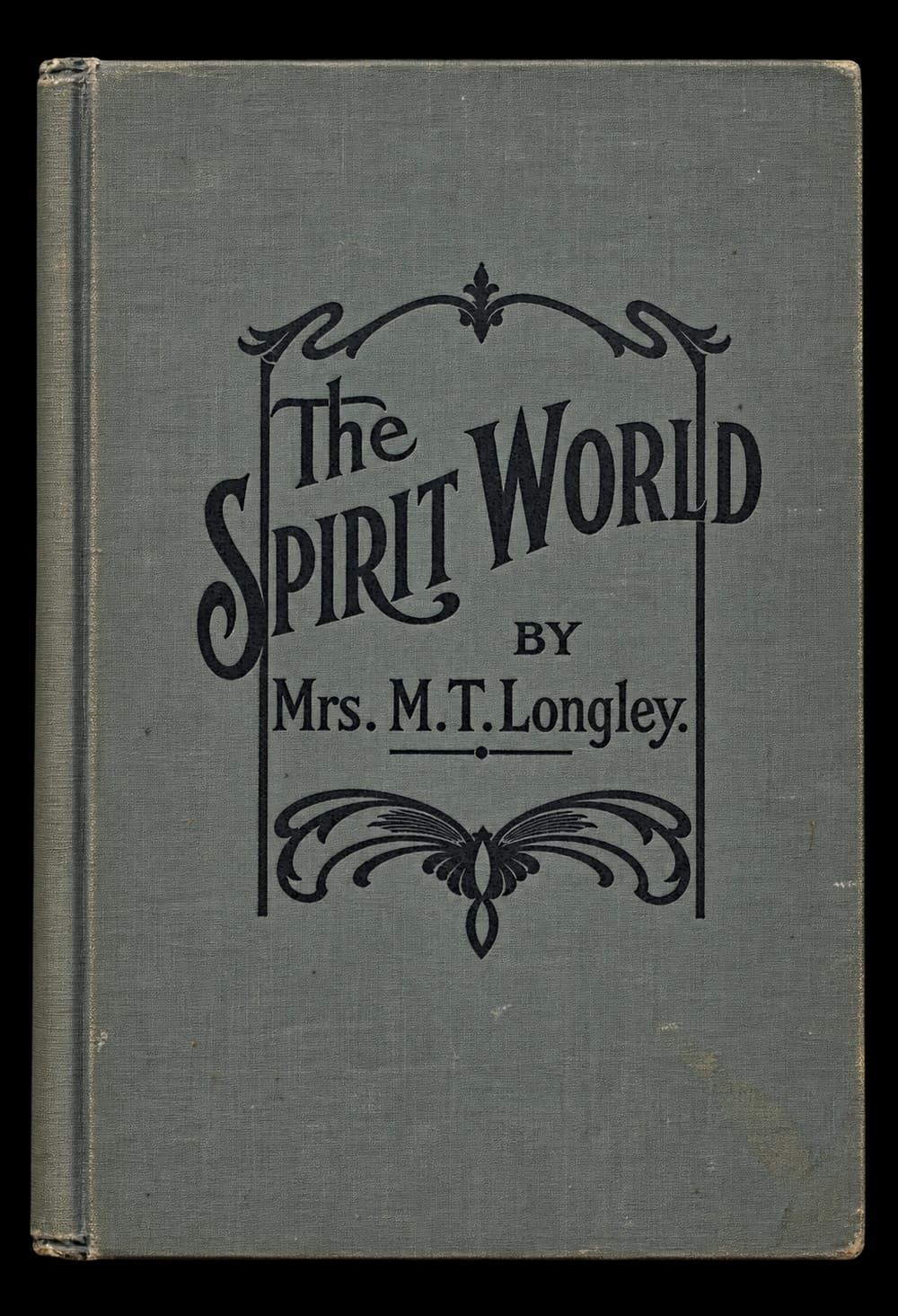
Life and Labour in the Spirit World
Reading note
The separately titled account draws on exact passages in the consulted Library edition.

Life Here and Hereafter
Reading note
The separately titled account draws on exact passages in the consulted Library edition.
Sources
See references (79)
- The Angels’ Diary, Reader page 29The Angels’ Diary (1903), attributed to Effie M. Shirey and Charles SamsonRead this page in The Angels’ Diary and Celestion Study of Man ↗Return to text ↑
- The Angels’ Diary, Reader page 59The Angels’ Diary (1903), attributed to Effie M. Shirey and Charles SamsonRead this page in The Angels’ Diary and Celestion Study of Man ↗Return to text ↑
- The Angels’ Diary, Reader page 60The Angels’ Diary (1903), attributed to Effie M. Shirey and Charles SamsonRead this page in The Angels’ Diary and Celestion Study of Man ↗Return to text ↑
- The Angels’ Diary, Reader page 33Effie M. Shirey and Charles Samson, The Angels’ Diary and Celestion Study of Man (1903), communicated through Elizabeth Maud Weatherhead according to the acknowledgment.Read this page in The Angels’ Diary and Celestion Study of Man ↗Return to text ↑
- The Angels’ Diary, Reader page 36Effie M. Shirey and Charles Samson, The Angels’ Diary and Celestion Study of Man (1903), communicated through Elizabeth Maud Weatherhead according to the acknowledgment.Read this page in The Angels’ Diary and Celestion Study of Man ↗Return to text ↑
- The Angels’ Diary, Reader page 37Effie M. Shirey and Charles Samson, The Angels’ Diary and Celestion Study of Man (1903), communicated through Elizabeth Maud Weatherhead according to the acknowledgment.Read this page in The Angels’ Diary and Celestion Study of Man ↗Return to text ↑
- The Angels’ Diary, Reader page 41Effie M. Shirey and Charles Samson, The Angels’ Diary and Celestion Study of Man (1903), communicated through Elizabeth Maud Weatherhead according to the acknowledgment.Read this page in The Angels’ Diary and Celestion Study of Man ↗Return to text ↑
- The Angels’ Diary, Reader page 42Effie M. Shirey and Charles Samson, The Angels’ Diary and Celestion Study of Man (1903), communicated through Elizabeth Maud Weatherhead according to the acknowledgment.Read this page in The Angels’ Diary and Celestion Study of Man ↗Return to text ↑
- The Angels’ Diary, Reader page 68Effie M. Shirey and Charles Samson, The Angels’ Diary and Celestion Study of Man (1903), communicated through Elizabeth Maud Weatherhead according to the acknowledgment.Read this page in The Angels’ Diary and Celestion Study of Man ↗Return to text ↑
- The Angels’ Diary, Reader page 69Effie M. Shirey and Charles Samson, The Angels’ Diary and Celestion Study of Man (1903), communicated through Elizabeth Maud Weatherhead according to the acknowledgment.Read this page in The Angels’ Diary and Celestion Study of Man ↗Return to text ↑
- The Angels’ Diary, Reader page 70Effie M. Shirey and Charles Samson, The Angels’ Diary and Celestion Study of Man (1903), communicated through Elizabeth Maud Weatherhead according to the acknowledgment.Read this page in The Angels’ Diary and Celestion Study of Man ↗Return to text ↑
- Thomas Cole, The Voyage of Life: Old Age, 1842. ↗National Gallery of Art, Washington. Ailsa Mellon Bruce Fund, 1971.16.4. Public Domain.
- A Subaltern in Spirit Land, printed p. 1, Reader page 16J. S. M. Ward, A Subaltern in Spirit Land: A Sequel to Gone West, William Rider & Son, 1920.Read this page in A Subaltern in Spirit Land: A Sequel to Gone West ↗Return to text ↑
- A Subaltern in Spirit Land, printed p. 2, Reader page 17J. S. M. Ward, A Subaltern in Spirit Land: A Sequel to Gone West, William Rider & Son, 1920.Read this page in A Subaltern in Spirit Land: A Sequel to Gone West ↗Return to text ↑
- A Subaltern in Spirit Land, printed p. 3, Reader page 18J. S. M. Ward, A Subaltern in Spirit Land: A Sequel to Gone West, William Rider & Son, 1920.Read this page in A Subaltern in Spirit Land: A Sequel to Gone West ↗Return to text ↑
- A Subaltern in Spirit Land, printed p. 4, Reader page 19J. S. M. Ward, A Subaltern in Spirit Land: A Sequel to Gone West, William Rider & Son, 1920.Read this page in A Subaltern in Spirit Land: A Sequel to Gone West ↗Return to text ↑
- A Subaltern in Spirit Land, printed p. 5, Reader page 20J. S. M. Ward, A Subaltern in Spirit Land: A Sequel to Gone West, William Rider & Son, 1920.Read this page in A Subaltern in Spirit Land: A Sequel to Gone West ↗Return to text ↑
- A Subaltern in Spirit Land, printed p. 8, Reader page 23J. S. M. Ward, A Subaltern in Spirit Land: A Sequel to Gone West, William Rider & Son, 1920.Read this page in A Subaltern in Spirit Land: A Sequel to Gone West ↗Return to text ↑
- A Subaltern in Spirit Land, printed p. 9, Reader page 24J. S. M. Ward, A Subaltern in Spirit Land: A Sequel to Gone West, William Rider & Son, 1920.Read this page in A Subaltern in Spirit Land: A Sequel to Gone West ↗Return to text ↑
- A Subaltern in Spirit Land, printed p. 34, Reader page 49J. S. M. Ward, A Subaltern in Spirit Land: A Sequel to Gone West, William Rider & Son, 1920.Read this page in A Subaltern in Spirit Land: A Sequel to Gone West ↗Return to text ↑
- A Subaltern in Spirit Land, printed p. 35, Reader page 50J. S. M. Ward, A Subaltern in Spirit Land: A Sequel to Gone West, William Rider & Son, 1920.Read this page in A Subaltern in Spirit Land: A Sequel to Gone West ↗Return to text ↑
- A Subaltern in Spirit Land, printed p. 50, Reader page 65J. S. M. Ward, A Subaltern in Spirit Land: A Sequel to Gone West, William Rider & Son, 1920.Read this page in A Subaltern in Spirit Land: A Sequel to Gone West ↗Return to text ↑
- A Subaltern in Spirit Land, printed p. 51, Reader page 66J. S. M. Ward, A Subaltern in Spirit Land: A Sequel to Gone West, William Rider & Son, 1920.Read this page in A Subaltern in Spirit Land: A Sequel to Gone West ↗Return to text ↑
- A Subaltern in Spirit Land, frontispiece, Reader page 3J. S. M. Ward, A Subaltern in Spirit Land: A Sequel to Gone West, William Rider & Son, 1920.Read this page in A Subaltern in Spirit Land: A Sequel to Gone West ↗
- A Subaltern in Spirit Land, printed p. 130, Reader page 145J. S. M. Ward, A Subaltern in Spirit Land: A Sequel to Gone West, William Rider & Son, 1920.Read this page in A Subaltern in Spirit Land: A Sequel to Gone West ↗Return to text ↑
- A Subaltern in Spirit Land, printed p. 131, Reader page 146J. S. M. Ward, A Subaltern in Spirit Land: A Sequel to Gone West, William Rider & Son, 1920.Read this page in A Subaltern in Spirit Land: A Sequel to Gone West ↗Return to text ↑
- A Subaltern in Spirit Land, printed p. 132, Reader page 147J. S. M. Ward, A Subaltern in Spirit Land: A Sequel to Gone West, William Rider & Son, 1920.Read this page in A Subaltern in Spirit Land: A Sequel to Gone West ↗Return to text ↑
- A Subaltern in Spirit Land, printed p. 250, Reader page 265J. S. M. Ward, A Subaltern in Spirit Land: A Sequel to Gone West, William Rider & Son, 1920.Read this page in A Subaltern in Spirit Land: A Sequel to Gone West ↗Return to text ↑
- A Subaltern in Spirit Land, printed p. 251, Reader page 266J. S. M. Ward, A Subaltern in Spirit Land: A Sequel to Gone West, William Rider & Son, 1920.Read this page in A Subaltern in Spirit Land: A Sequel to Gone West ↗Return to text ↑
- A Subaltern in Spirit Land, printed p. 296, Reader page 311J. S. M. Ward, A Subaltern in Spirit Land: A Sequel to Gone West, William Rider & Son, 1920.Read this page in A Subaltern in Spirit Land: A Sequel to Gone West ↗Return to text ↑
- A Subaltern in Spirit Land, printed p. 297, Reader page 312J. S. M. Ward, A Subaltern in Spirit Land: A Sequel to Gone West, William Rider & Son, 1920.Read this page in A Subaltern in Spirit Land: A Sequel to Gone West ↗Return to text ↑
- The Encyclopaedia of Death and Life in Spirit-World, Volume I, printed p. 29, Reader page 28J. R. Francis (compiler), The Encyclopaedia of Death and Life in Spirit-World, Volume I, fourth edition, Progressive Thinker Publishing House, Chicago, 1903. Individual contributors identified in the text.Read this page in The Encyclopaedia of Death and Life in the Spirit-World, Volume I ↗Return to text ↑
- The Encyclopaedia of Death and Life in Spirit-World, Volume I, printed p. 30, Reader page 29J. R. Francis (compiler), The Encyclopaedia of Death and Life in Spirit-World, Volume I, fourth edition, Progressive Thinker Publishing House, Chicago, 1903. Individual contributors identified in the text.Read this page in The Encyclopaedia of Death and Life in the Spirit-World, Volume I ↗Return to text ↑
- The Encyclopaedia of Death and Life in Spirit-World, Volume I, printed p. 46, Reader page 45J. R. Francis (compiler), The Encyclopaedia of Death and Life in Spirit-World, Volume I, fourth edition, Progressive Thinker Publishing House, Chicago, 1903. Individual contributors identified in the text.Read this page in The Encyclopaedia of Death and Life in the Spirit-World, Volume I ↗Return to text ↑
- The Encyclopaedia of Death and Life in Spirit-World, Volume I, printed p. 47, Reader page 46J. R. Francis (compiler), The Encyclopaedia of Death and Life in Spirit-World, Volume I, fourth edition, Progressive Thinker Publishing House, Chicago, 1903. Individual contributors identified in the text.Read this page in The Encyclopaedia of Death and Life in the Spirit-World, Volume I ↗Return to text ↑
- The Encyclopaedia of Death and Life in Spirit-World, Volume I, printed p. 48, Reader page 47J. R. Francis (compiler), The Encyclopaedia of Death and Life in Spirit-World, Volume I, fourth edition, Progressive Thinker Publishing House, Chicago, 1903. Individual contributors identified in the text.Read this page in The Encyclopaedia of Death and Life in the Spirit-World, Volume I ↗Return to text ↑
- The Encyclopaedia of Death and Life in Spirit-World, Volume I, printed p. 50, Reader page 49J. R. Francis (compiler), The Encyclopaedia of Death and Life in Spirit-World, Volume I, fourth edition, Progressive Thinker Publishing House, Chicago, 1903. Individual contributors identified in the text.Read this page in The Encyclopaedia of Death and Life in the Spirit-World, Volume I ↗Return to text ↑
- The Encyclopaedia of Death and Life in Spirit-World, Volume I, printed p. 51, Reader page 50J. R. Francis (compiler), The Encyclopaedia of Death and Life in Spirit-World, Volume I, fourth edition, Progressive Thinker Publishing House, Chicago, 1903. Individual contributors identified in the text.Read this page in The Encyclopaedia of Death and Life in the Spirit-World, Volume I ↗Return to text ↑
- The Encyclopaedia of Death and Life in Spirit-World, Volume I, printed p. 54, Reader page 53J. R. Francis (compiler), The Encyclopaedia of Death and Life in Spirit-World, Volume I, fourth edition, Progressive Thinker Publishing House, Chicago, 1903. Individual contributors identified in the text.Read this page in The Encyclopaedia of Death and Life in the Spirit-World, Volume I ↗Return to text ↑
- Purgatory and Paradise, Purgatory II, Reader page 13Dante Alighieri, Purgatory, translated by Henry Francis Cary, in Purgatory and Paradise, New Edition, Thompson & Thomas, Chicago, 1901; designs by Gustave Doré.Read this page in Purgatory and Paradise: The Vision of Dante ↗Return to text ↑
- Purgatory and Paradise, Purgatory II, Reader page 14Dante Alighieri, Purgatory, translated by Henry Francis Cary, in Purgatory and Paradise, New Edition, Thompson & Thomas, Chicago, 1901; designs by Gustave Doré.Read this page in Purgatory and Paradise: The Vision of Dante ↗Return to text ↑
- Purgatory and Paradise, Purgatory II, Reader page 15Dante Alighieri, Purgatory, translated by Henry Francis Cary, in Purgatory and Paradise, New Edition, Thompson & Thomas, Chicago, 1901; designs by Gustave Doré.Read this page in Purgatory and Paradise: The Vision of Dante ↗Return to text ↑
- A Wanderer in the Spirit Lands, Reader page 101Franchezzo (source attribution), A Wanderer in the Spirit Lands, transcribed by A. Farnese. W. J. Sinkins, London, 1896. Date confirmed on the consulted title-page facsimile.Read this page in A Wanderer in the Spirit Lands ↗Return to text ↑
- A Wanderer in the Spirit Lands, Reader page 102Franchezzo (source attribution), A Wanderer in the Spirit Lands, transcribed by A. Farnese. W. J. Sinkins, London, 1896. Date confirmed on the consulted title-page facsimile.Read this page in A Wanderer in the Spirit Lands ↗Return to text ↑
- A Wanderer in the Spirit Lands, Reader page 103Franchezzo (source attribution), A Wanderer in the Spirit Lands, transcribed by A. Farnese. W. J. Sinkins, London, 1896. Date confirmed on the consulted title-page facsimile.Read this page in A Wanderer in the Spirit Lands ↗Return to text ↑
- A Wanderer in the Spirit Lands, Reader page 219Franchezzo (source attribution), A Wanderer in the Spirit Lands, transcribed by A. Farnese. W. J. Sinkins, London, 1896. Date confirmed on the consulted title-page facsimile.Read this page in A Wanderer in the Spirit Lands ↗Return to text ↑
- A Wanderer in the Spirit Lands, Reader page 285Franchezzo (source attribution), A Wanderer in the Spirit Lands, transcribed by A. Farnese. W. J. Sinkins, London, 1896. Date confirmed on the consulted title-page facsimile.Read this page in A Wanderer in the Spirit Lands ↗Return to text ↑
- A Wanderer in the Spirit Lands, Reader page 288Franchezzo (source attribution), A Wanderer in the Spirit Lands, transcribed by A. Farnese. W. J. Sinkins, London, 1896. Date confirmed on the consulted title-page facsimile.Read this page in A Wanderer in the Spirit Lands ↗Return to text ↑
- A Wanderer in the Spirit Lands, Reader page 289Franchezzo (source attribution), A Wanderer in the Spirit Lands, transcribed by A. Farnese. W. J. Sinkins, London, 1896. Date confirmed on the consulted title-page facsimile.Read this page in A Wanderer in the Spirit Lands ↗Return to text ↑
- A Wanderer in the Spirit Lands, Reader page 296Franchezzo (source attribution), A Wanderer in the Spirit Lands, transcribed by A. Farnese. W. J. Sinkins, London, 1896. Date confirmed on the consulted title-page facsimile.Read this page in A Wanderer in the Spirit Lands ↗Return to text ↑
- A Wanderer in the Spirit Lands, Reader page 297Franchezzo (source attribution), A Wanderer in the Spirit Lands, transcribed by A. Farnese. W. J. Sinkins, London, 1896. Date confirmed on the consulted title-page facsimile.Read this page in A Wanderer in the Spirit Lands ↗Return to text ↑
- A Wanderer in the Spirit Lands, Reader page 315Franchezzo (source attribution), A Wanderer in the Spirit Lands, transcribed by A. Farnese. W. J. Sinkins, London, 1896. Date confirmed on the consulted title-page facsimile.Read this page in A Wanderer in the Spirit Lands ↗Return to text ↑
- A Wanderer in the Spirit Lands, Reader page 316Franchezzo (source attribution), A Wanderer in the Spirit Lands, transcribed by A. Farnese. W. J. Sinkins, London, 1896. Date confirmed on the consulted title-page facsimile.Read this page in A Wanderer in the Spirit Lands ↗Return to text ↑
- Heaven and Its Wonders and Hell, printed p. 367, Reader page 374Emanuel Swedenborg, Heaven and Its Wonders and Hell, translated by J. C. Ager. The American Swedenborg Printing and Publishing Society, New York, 1916. Original Latin work first published in 1758.Read this page in Heaven and Its Wonders and Hell ↗Return to text ↑
- Heaven and Its Wonders and Hell, printed p. 368, Reader page 375Emanuel Swedenborg, Heaven and Its Wonders and Hell, translated by J. C. Ager. The American Swedenborg Printing and Publishing Society, New York, 1916. Original Latin work first published in 1758.Read this page in Heaven and Its Wonders and Hell ↗Return to text ↑
- Heaven and Its Wonders and Hell, printed p. 447, Reader page 454Emanuel Swedenborg, Heaven and Its Wonders and Hell, translated by J. C. Ager. The American Swedenborg Printing and Publishing Society, New York, 1916. Original Latin work first published in 1758.Read this page in Heaven and Its Wonders and Hell ↗Return to text ↑
- Heaven and Its Wonders and Hell, printed p. 448, Reader page 455Emanuel Swedenborg, Heaven and Its Wonders and Hell, translated by J. C. Ager. The American Swedenborg Printing and Publishing Society, New York, 1916. Original Latin work first published in 1758.Read this page in Heaven and Its Wonders and Hell ↗Return to text ↑
- Heaven and Its Wonders and Hell, printed p. 450, Reader page 457Emanuel Swedenborg, Heaven and Its Wonders and Hell, translated by J. C. Ager. The American Swedenborg Printing and Publishing Society, New York, 1916. Original Latin work first published in 1758.Read this page in Heaven and Its Wonders and Hell ↗Return to text ↑
- Heaven and Its Wonders and Hell, printed p. 451, Reader page 458Emanuel Swedenborg, Heaven and Its Wonders and Hell, translated by J. C. Ager. The American Swedenborg Printing and Publishing Society, New York, 1916. Original Latin work first published in 1758.Read this page in Heaven and Its Wonders and Hell ↗Return to text ↑
- Life and Labor in the Spirit World, printed p. 48, Reader page 49Members of the Spirit-Band of Miss M. T. Shelhamer, Life and Labor in the Spirit World, Second Thousand, Boston: Colby & Rich, 1885. Exact Library edition IMJ-0202-E001. Parts I, II and III are respectively attributed to Spirit Violet, Spirit May and John Critchley Prince. Original metadata and retained Library PageRefs verified; consequential passages checked against actual Library facsimiles. Original Library PDF bytes remain unavailable.Read this page in Life and Labour in the Spirit World ↗Return to text ↑
- Life and Labor in the Spirit World, printed p. 49, Reader page 50Members of the Spirit-Band of Miss M. T. Shelhamer, Life and Labor in the Spirit World, Second Thousand, Boston: Colby & Rich, 1885. Exact Library edition IMJ-0202-E001. Parts I, II and III are respectively attributed to Spirit Violet, Spirit May and John Critchley Prince. Original metadata and retained Library PageRefs verified; consequential passages checked against actual Library facsimiles. Original Library PDF bytes remain unavailable.Read this page in Life and Labour in the Spirit World ↗Return to text ↑
- Life and Labor in the Spirit World, printed p. 50, Reader page 51Members of the Spirit-Band of Miss M. T. Shelhamer, Life and Labor in the Spirit World, Second Thousand, Boston: Colby & Rich, 1885. Exact Library edition IMJ-0202-E001. Parts I, II and III are respectively attributed to Spirit Violet, Spirit May and John Critchley Prince. Original metadata and retained Library PageRefs verified; consequential passages checked against actual Library facsimiles. Original Library PDF bytes remain unavailable.Read this page in Life and Labour in the Spirit World ↗Return to text ↑
- Life and Labor in the Spirit World, printed p. 51, Reader page 52Members of the Spirit-Band of Miss M. T. Shelhamer, Life and Labor in the Spirit World, Second Thousand, Boston: Colby & Rich, 1885. Exact Library edition IMJ-0202-E001. Parts I, II and III are respectively attributed to Spirit Violet, Spirit May and John Critchley Prince. Original metadata and retained Library PageRefs verified; consequential passages checked against actual Library facsimiles. Original Library PDF bytes remain unavailable.Read this page in Life and Labour in the Spirit World ↗Return to text ↑
- Life and Labor in the Spirit World, printed p. 52, Reader page 53Members of the Spirit-Band of Miss M. T. Shelhamer, Life and Labor in the Spirit World, Second Thousand, Boston: Colby & Rich, 1885. Exact Library edition IMJ-0202-E001. Parts I, II and III are respectively attributed to Spirit Violet, Spirit May and John Critchley Prince. Original metadata and retained Library PageRefs verified; consequential passages checked against actual Library facsimiles. Original Library PDF bytes remain unavailable.Read this page in Life and Labour in the Spirit World ↗Return to text ↑
- Life and Labor in the Spirit World, printed p. 53, Reader page 54Members of the Spirit-Band of Miss M. T. Shelhamer, Life and Labor in the Spirit World, Second Thousand, Boston: Colby & Rich, 1885. Exact Library edition IMJ-0202-E001. Parts I, II and III are respectively attributed to Spirit Violet, Spirit May and John Critchley Prince. Original metadata and retained Library PageRefs verified; consequential passages checked against actual Library facsimiles. Original Library PDF bytes remain unavailable.Read this page in Life and Labour in the Spirit World ↗Return to text ↑
- Life and Labor in the Spirit World, printed p. 363, Reader page 364Members of the Spirit-Band of Miss M. T. Shelhamer, Life and Labor in the Spirit World, Second Thousand, Boston: Colby & Rich, 1885. Exact Library edition IMJ-0202-E001. Parts I, II and III are respectively attributed to Spirit Violet, Spirit May and John Critchley Prince. Original metadata and retained Library PageRefs verified; consequential passages checked against actual Library facsimiles. Original Library PDF bytes remain unavailable.Read this page in Life and Labour in the Spirit World ↗Return to text ↑
- Life and Labor in the Spirit World, printed p. 364, Reader page 365Members of the Spirit-Band of Miss M. T. Shelhamer, Life and Labor in the Spirit World, Second Thousand, Boston: Colby & Rich, 1885. Exact Library edition IMJ-0202-E001. Parts I, II and III are respectively attributed to Spirit Violet, Spirit May and John Critchley Prince. Original metadata and retained Library PageRefs verified; consequential passages checked against actual Library facsimiles. Original Library PDF bytes remain unavailable.Read this page in Life and Labour in the Spirit World ↗Return to text ↑
- Life and Labor in the Spirit World, printed p. 365, Reader page 366Members of the Spirit-Band of Miss M. T. Shelhamer, Life and Labor in the Spirit World, Second Thousand, Boston: Colby & Rich, 1885. Exact Library edition IMJ-0202-E001. Parts I, II and III are respectively attributed to Spirit Violet, Spirit May and John Critchley Prince. Original metadata and retained Library PageRefs verified; consequential passages checked against actual Library facsimiles. Original Library PDF bytes remain unavailable.Read this page in Life and Labour in the Spirit World ↗Return to text ↑
- Life and Labor in the Spirit World, printed p. 366, Reader page 367Members of the Spirit-Band of Miss M. T. Shelhamer, Life and Labor in the Spirit World, Second Thousand, Boston: Colby & Rich, 1885. Exact Library edition IMJ-0202-E001. Parts I, II and III are respectively attributed to Spirit Violet, Spirit May and John Critchley Prince. Original metadata and retained Library PageRefs verified; consequential passages checked against actual Library facsimiles. Original Library PDF bytes remain unavailable.Read this page in Life and Labour in the Spirit World ↗Return to text ↑
- Life Here and Hereafter, Reader page 55Charlotte E. Dresser and Fred Rafferty, Life Here and Hereafter, edited by Fred Rafferty. Modern transcription reproducing the Author’s Edition, San Jose, California, 1927. Exact selected Library edition IMJ-0447-E001; original PageIDs and current Reader positions verified. Communications and their claimed spiritual origins remain attributed to this source.Read this page in Life Here and Hereafter ↗Return to text ↑
- Life Here and Hereafter, Reader page 56Charlotte E. Dresser and Fred Rafferty, Life Here and Hereafter, edited by Fred Rafferty. Modern transcription reproducing the Author’s Edition, San Jose, California, 1927. Exact selected Library edition IMJ-0447-E001; original PageIDs and current Reader positions verified. Communications and their claimed spiritual origins remain attributed to this source.Read this page in Life Here and Hereafter ↗Return to text ↑
- Life Here and Hereafter, Reader page 159Charlotte E. Dresser and Fred Rafferty, Life Here and Hereafter, edited by Fred Rafferty. Modern transcription reproducing the Author’s Edition, San Jose, California, 1927. Exact selected Library edition IMJ-0447-E001; original PageIDs and current Reader positions verified. Communications and their claimed spiritual origins remain attributed to this source.Read this page in Life Here and Hereafter ↗Return to text ↑
- Life Here and Hereafter, Reader page 160Charlotte E. Dresser and Fred Rafferty, Life Here and Hereafter, edited by Fred Rafferty. Modern transcription reproducing the Author’s Edition, San Jose, California, 1927. Exact selected Library edition IMJ-0447-E001; original PageIDs and current Reader positions verified. Communications and their claimed spiritual origins remain attributed to this source.Read this page in Life Here and Hereafter ↗Return to text ↑
- Life Here and Hereafter, Reader page 66Charlotte E. Dresser and Fred Rafferty, Life Here and Hereafter, edited by Fred Rafferty. Modern transcription reproducing the Author’s Edition, San Jose, California, 1927. Exact selected Library edition IMJ-0447-E001; original PageIDs and current Reader positions verified. Communications and their claimed spiritual origins remain attributed to this source.Read this page in Life Here and Hereafter ↗Return to text ↑
- Life Here and Hereafter, Reader page 67Charlotte E. Dresser and Fred Rafferty, Life Here and Hereafter, edited by Fred Rafferty. Modern transcription reproducing the Author’s Edition, San Jose, California, 1927. Exact selected Library edition IMJ-0447-E001; original PageIDs and current Reader positions verified. Communications and their claimed spiritual origins remain attributed to this source.Read this page in Life Here and Hereafter ↗Return to text ↑
- Life Here and Hereafter, Reader page 68Charlotte E. Dresser and Fred Rafferty, Life Here and Hereafter, edited by Fred Rafferty. Modern transcription reproducing the Author’s Edition, San Jose, California, 1927. Exact selected Library edition IMJ-0447-E001; original PageIDs and current Reader positions verified. Communications and their claimed spiritual origins remain attributed to this source.Read this page in Life Here and Hereafter ↗Return to text ↑
- Life Here and Hereafter, Reader page 34Charlotte E. Dresser and Fred Rafferty, Life Here and Hereafter, edited by Fred Rafferty. Modern transcription reproducing the Author’s Edition, San Jose, California, 1927. Exact selected Library edition IMJ-0447-E001; original PageIDs and current Reader positions verified. Communications and their claimed spiritual origins remain attributed to this source.Read this page in Life Here and Hereafter ↗Return to text ↑
- Life Here and Hereafter, Reader page 35Charlotte E. Dresser and Fred Rafferty, Life Here and Hereafter, edited by Fred Rafferty. Modern transcription reproducing the Author’s Edition, San Jose, California, 1927. Exact selected Library edition IMJ-0447-E001; original PageIDs and current Reader positions verified. Communications and their claimed spiritual origins remain attributed to this source.Read this page in Life Here and Hereafter ↗Return to text ↑
- Life Here and Hereafter, Reader page 54Charlotte E. Dresser and Fred Rafferty, Life Here and Hereafter, edited by Fred Rafferty. Modern transcription reproducing the Author’s Edition, San Jose, California, 1927. Exact selected Library edition IMJ-0447-E001; original PageIDs and current Reader positions verified. Communications and their claimed spiritual origins remain attributed to this source.Read this page in Life Here and Hereafter ↗Return to text ↑