The Four Archangels: Michael, Gabriel, Raphael and Uriel
Compare Michael, Gabriel, Raphael and Uriel by source. See how Daniel, Luke, Tobit and 1 Enoch name them and why tradition counts them differently.
In this article
Find the names in their sources
Open the passage attached to each name. Then compare the accounts that mention several angels together.
Where each angel is named
| Name | Passage | What the passage says |
|---|---|---|
| Michael | Jude 9 | Named as an archangel in the dispute over Moses. |
| Gabriel | Luke 1:11–38 | Brings separate announcements to Zechariah and Mary. |
| Raphael | Tobit 12:6–22 | Discloses his name and identifies himself as one of seven. |
| Uriel | 2 Esdras 4:1–11 | Answers Ezra’s questions with a series of challenges. |
Who are the four archangels?
Michael, Gabriel, Raphael and Uriel appear together in R. H. Charles’s rendering of 1 Enoch 9. They look down on violence on earth and bring the case before God. The episode provides a clear place to read the four names together. Their appearances elsewhere belong to separate stories, and the rank or office each source gives them can differ. [10][3][7][9][12]
The label archangel is explicit for Michael in Jude 9. Daniel describes Michael as a prince, Luke presents Gabriel as a messenger sent by God, Tobit calls Raphael one of seven and 2 Esdras introduces Uriel as the angel sent to answer Ezra. The source matrix gives you a passage to open for each title or role. [3][1][7][9][12]
Michael in Daniel, Jude and Revelation
Daniel 10 introduces Michael as one of the chief princes who comes to help the angelic speaker. The closing verses associate him with Daniel’s people, and Daniel 12 returns to him at a time of distress. The setting makes protection a specific responsibility within the vision. [1][2]
Jude calls Michael an archangel in a dispute over Moses’s body. Michael appeals to the Lord’s rebuke. Revelation gives him a different scene, leading angels in battle against the dragon. Read the three accounts for the different activities they describe before using a single label such as warrior or protector. [3][4][2]
Gabriel in Daniel and Luke
Daniel 8 calls on Gabriel to explain the vision of the ram and goat. Daniel 9 places another visit after Daniel’s prayer and identifies Gabriel as the figure seen previously. In both passages, Gabriel makes the meaning of an encounter intelligible to the person receiving it. [5][6]
Luke 1 names the messenger in two announcements. He identifies himself to Zechariah while announcing the birth of John, and the narrative names him as the angel sent to Mary. The same chapter preserves both names and both settings. Reading them together makes clear who receives each message and how each answers it. [7]
Raphael, Tobias and the fish
Raphael travels with Tobias in Tobit. The encounter with the fish explains an attribute familiar from paintings of the pair. At the end, Raphael identifies himself as one of seven angels who stand before God, and explains his part in the family’s prayers and healing. The disclosure comes after the journey, which gives an artist a choice of episodes to depict. [8][9][16]
In the Florentine panel the fish identifies the journey. Kunz’s The Magic of Jewels and Charms reproduces a different Raphael and Tobit scene. Open the exact Reader page to compare the illustration with the family’s offer of gifts and Raphael’s reply at the end of Tobit. [16][17][9]
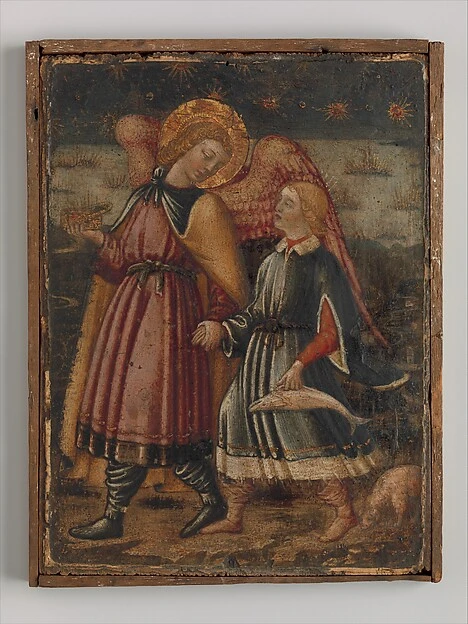
The fish and young traveller identify Raphael’s story in this Florentine panel. Compare Tobias catching the fish during the journey in Tobit 6 and Raphael revealing his name in Tobit 12.
Workshop of Neri di Bicci, The Archangel Raphael and Tobias, mid- to late 1460s. The Metropolitan Museum of Art, Robert Lehman Collection, 1975, 1975.1.72. Open Access. · Image source ↗ · Public Domain
Uriel in 2 Esdras and 1 Enoch
Read 2 Esdras 4 for Uriel’s exchange with Ezra. The angel answers Ezra’s questioning by asking him to do things beyond his knowledge, including weighing fire and measuring wind. The questions set the scale of the problem. The same Jewish apocalypse is often called 4 Ezra in scholarly discussion, while the King James Apocrypha places it within 2 Esdras. [12]
In Charles’s 1 Enoch 9, Uriel is among the four who call attention to bloodshed and lawlessness. In chapter 20, he heads a longer list of named angels. These passages give different frames for his role. Compare the chapter and the edition before carrying a name or office across lists. [10][11]
Why do some traditions count three, four or seven?
Read Tobit 12 and 1 Enoch 20 together. Raphael gives a number in Tobit, and the text identifies him by name. The Enoch passage gives a roster and assigns offices. That roster includes Uriel, Raphael, Raguel, Michael, Saraqâêl, Gabriel and Remiel in this edition. Their appearance in one list does not supply the unspoken names in a different book. [9][11]
The Roman Catholic feast on September 29 commemorates Michael, Gabriel and Raphael together. The Orthodox Church in America’s account of its November Synaxis names a broader group, including Uriel, and notes that seven or eight are named in its tradition. Passeri’s drawing is a visual example of the three-figure grouping. The Enoch scene instead preserves a four-figure gathering within a particular story. [13][14][15][10]
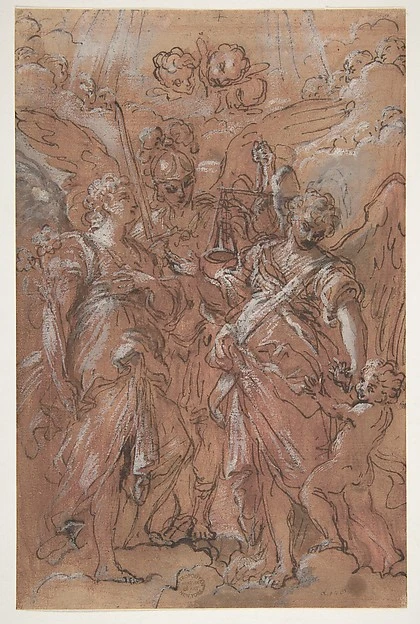
Giuseppe Passeri’s drawing brings Gabriel, Michael and Raphael together. Read the museum’s title alongside the Roman Catholic feast that commemorates the same three.
Giuseppe Passeri, The Archangels Gabriel, Michael and Raphael, recto, 1654–1714. The Metropolitan Museum of Art, Rogers Fund, 1908, 08.227.37. Open Access. · Image source ↗ · Public Domain
See references (6)
Read further in the library
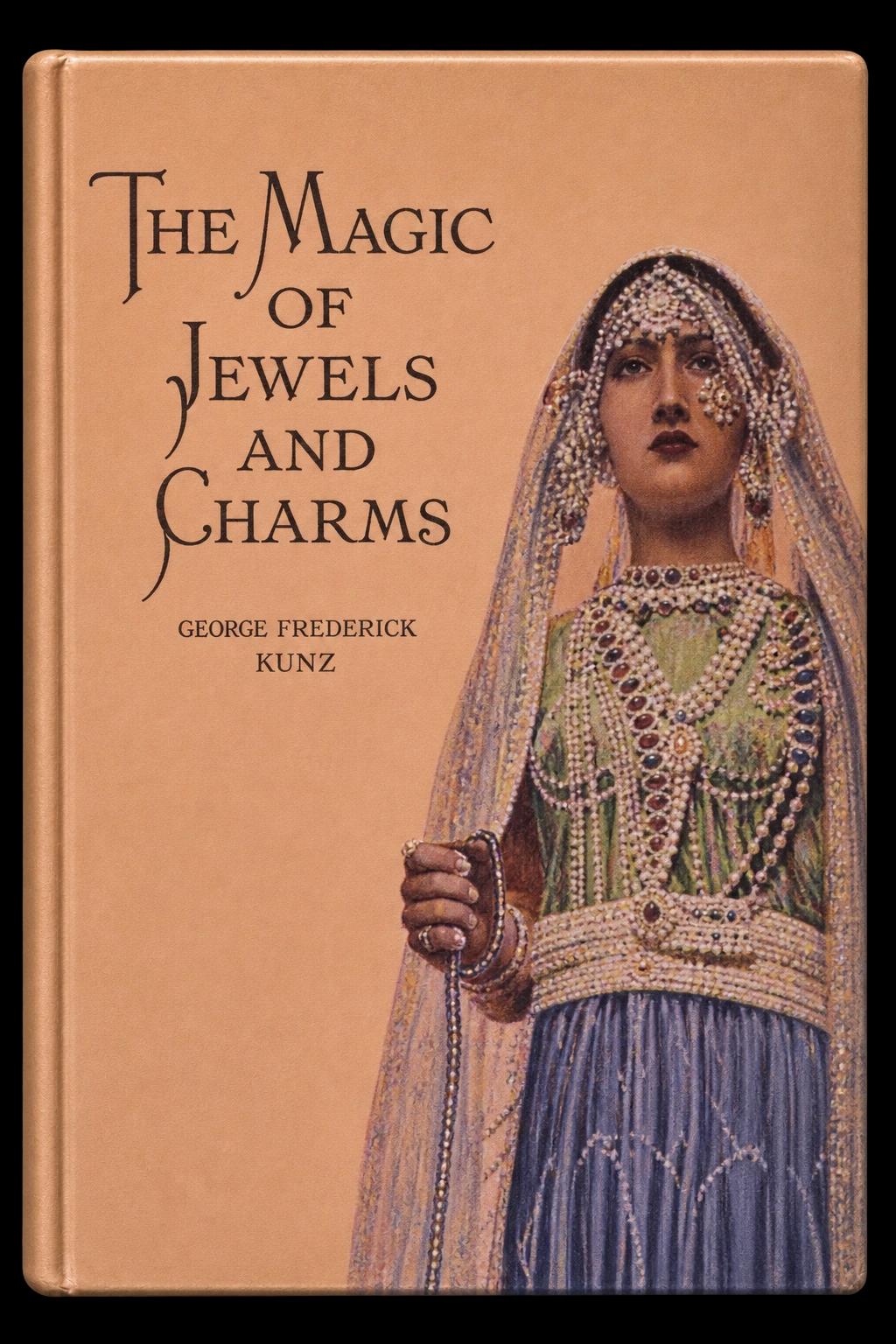
The Magic of Jewels and Charms
Reading note
See a historical Raphael and Tobit illustration in Kunz’s exact Reader edition.
Sources
See references (17)
- Daniel 10:13, 21 · Michael as chief prince and ally ↗New American Bible, Revised Edition, United States Conference of Catholic Bishops.Return to text ↑
- Daniel 12:1 · Michael and Daniel’s people ↗New American Bible, Revised Edition, United States Conference of Catholic Bishops.Return to text ↑
- Jude 9 · Michael explicitly called archangel ↗New American Bible, Revised Edition, United States Conference of Catholic Bishops.Return to text ↑
- Revelation 12:7–9 · Michael and his angels ↗New American Bible, Revised Edition, United States Conference of Catholic Bishops.Return to text ↑
- Daniel 8:15–19 · Gabriel interprets a vision ↗New American Bible, Revised Edition, United States Conference of Catholic Bishops.Return to text ↑
- Daniel 9:20–23 · Gabriel’s second appearance ↗New American Bible, Revised Edition, United States Conference of Catholic Bishops.Return to text ↑
- Luke 1:11–38 · Gabriel, Zechariah and Mary ↗New American Bible, Revised Edition, United States Conference of Catholic Bishops.Return to text ↑
- Tobit 6:1–9 · Tobias and the fish ↗New American Bible, Revised Edition, United States Conference of Catholic Bishops.Return to text ↑
- Tobit 12:6–22 · Raphael discloses his name ↗New American Bible, Revised Edition, United States Conference of Catholic Bishops.Return to text ↑
- 1 Enoch 9:1–11 · Four angels report what they see ↗R. H. Charles’s English translation, Internet Sacred Text Archive.Return to text ↑
- 1 Enoch 20 · The named angels and their offices ↗R. H. Charles’s English edition, transcribed at Wikisource.Return to text ↑
- 2 Esdras 4:1–11 · Uriel answers Ezra’s questions ↗1611 King James Version, Apocrypha, scan and transcription.Return to text ↑
- Roman Catholic feast of Michael, Gabriel and Raphael ↗United States Conference of Catholic Bishops, September 29 readings.Return to text ↑
- The Synaxis of Michael and the Other Bodiless Powers ↗Orthodox Church in America, Metropolitan Tikhon’s November 8 reflection.Return to text ↑
- The Archangels Gabriel, Michael and Raphael ↗Giuseppe Passeri, The Archangels Gabriel, Michael and Raphael, recto, 1654–1714. The Metropolitan Museum of Art, Rogers Fund, 1908, 08.227.37. Open Access.Return to text ↑
- The Archangel Raphael and Tobias ↗Workshop of Neri di Bicci, The Archangel Raphael and Tobias, mid- to late 1460s. The Metropolitan Museum of Art, Robert Lehman Collection, 1975, 1975.1.72. Open Access.Return to text ↑
- Kunz, The Magic of Jewels and Charms · Raphael and Tobit illustrationGeorge Frederick Kunz, The Magic of Jewels and Charms, Lumitheca Library edition IMJ-0600-E001, source leaf 293.Read this page in The Magic of Jewels and Charms ↗Return to text ↑