Anubis vs. Osiris in the Egyptian Afterlife
Who weighs the heart and who presides over judgment? Find Anubis and Osiris on two Egyptian papyri and trace their roles from burial to the afterlife.
In this article
Read Nauny’s judgment scene
Begin at the left with Nauny, then compare the figures at the balance and on the throne.
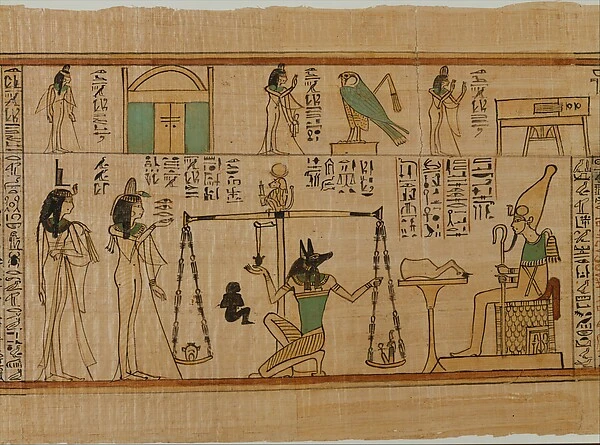
Nauny · before the balance
Nauny stands in front of Isis, with the mouth and eyes the scene promises to restore.
Anubis · at the balance
The canid-headed figure kneels and works at the scales where Nauny’s heart is weighed.
Thoth · on the beam
The baboon represents Thoth and is placed on the beam above Anubis. It records the outcome.
Osiris · on the throne
The wrapped and crowned Osiris receives the verdict and accepts Nauny among the justified dead.
Who weighs the heart and who presides?
Anubis tends the balance. Osiris presides over the judgment and receives the vindicated dead. In the painted judgment of Nauny, these are two jobs in one scene. Anubis kneels under the balance in the middle. Osiris sits at the right, crowned and wrapped, with an offering on the table before him. [1][5]
The Egyptian sources give several figures roles in the ceremony. Thoth records or reports the outcome. Maat supplies the standard of right order. Some versions give the judges a conspicuous place, and a papyrus can depict a different arrangement while keeping Anubis and Osiris recognisable. Read a figure’s action, its attributes and the surrounding text together. [1][2][6]
Anubis at the mummy and at the balance
Anubis is associated with embalming and with the care of the dead during burial. In funerary imagery he can stand over a wrapped body as a protective and ritual figure. The Met’s account of the coffin of Nedjemankh places him beside Isis and Nephthys. The sisters mourn and protect the body while Anubis performs rites. [7][6]
A coffin could invoke both Anubis and Osiris by name. The painted coffin of Khnumnakht brings them into the burial itself through inscriptions concerning death and rebirth. Spence’s account then supplies a historical telling of their connection. On printed page 104 he describes Anubis embalming Osiris. On page 105 the same god tends the balance used for the dead person’s heart. [3][9][10]
A canid head is a strong clue to Anubis in the weighing scene, where his action confirms the identification. A reclining canid on its own leaves more room for interpretation. The Met distinguishes Anubis and Wepwawet as deities who could both be represented in this form. Look at the action and any inscription before naming an isolated figure. [1][8]
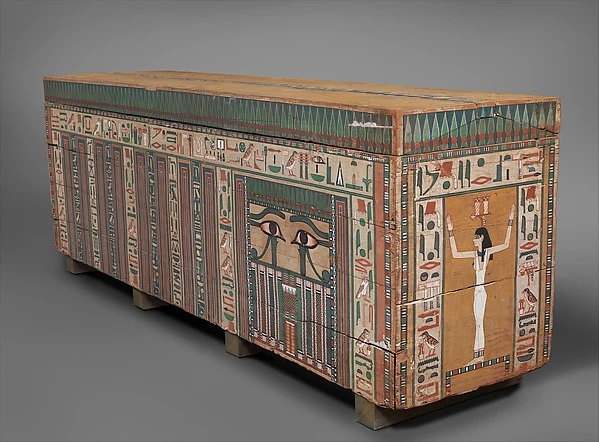
Khnumnakht’s coffin names both gods in its inscriptions. Their roles belonged to the burial equipment as well as the judgment scene.
Coffin of Khnumnakht, ca. 1850–1750 B.C.. The Metropolitan Museum of Art, Rogers Fund, 1915, 15.2.2a, b. Open Access. · Image source ↗ · Public Domain
See references (7)
- The Met · Book of the Dead for the Chantress of Amun, Nauny
- The Met · Coffin of Khnumnakht
- UCL Digital Egypt · Book of the Dead chapters
- The Met · Nedjemankh exhibition gallery
- The Met · Figure of a jackal
- Lewis Spence, printed page 104 · Anubis and the embalming of Osiris
- Lewis Spence, printed page 105 · Anubis at the balance
Osiris receives the dead
In Nauny’s scene Osiris is enthroned at the end of the sequence. His white crown, curved beard, wrappings and crook distinguish him from Anubis at the balance. The account in the museum record turns the difference into an exchange. Anubis attests to Nauny’s heart and Osiris orders her eyes and mouth returned, restoring the faculties pictured in her hand. [1]
A funerary inscription can also give the deceased the name Osiris. A shabti placed in Nauny’s burial calls her Osiris and describes her as vindicated. Tirard’s printed page 124 discusses the same pattern of identification and then describes Osiris as the judge whom the dead must face. The god in the scene and the name in Nauny’s inscription illuminate two different uses of Osiris in her funerary equipment. [4][11]
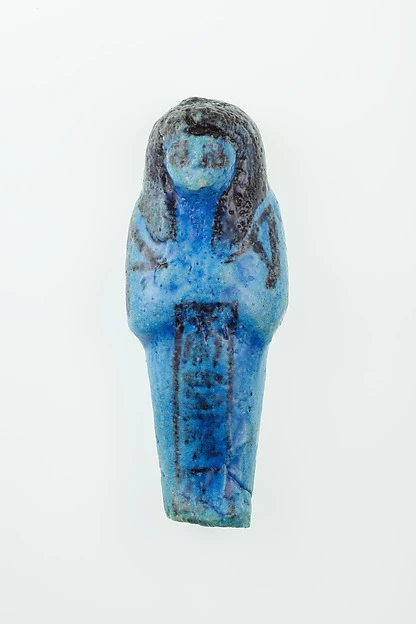
Nauny’s worker shabti calls her Osiris and describes her as vindicated. It comes from the same burial as her papyrus.
Worker Shabti of Nauny, ca. 1051–1002 BCE. The Metropolitan Museum of Art, Rogers Fund, 1930, 30.3.28.38. Open Access. · Image source ↗ · Public Domain
Follow Nauny through the painted scene
Begin at the left with Nauny holding her mouth and eyes, with Isis behind her. The balance divides the scene. The heart is weighed against a tiny figure of Maat, recognisable by her feather. Anubis attends the balance below the beam, and the baboon on the beam represents Thoth. The level beam is part of the image’s account of her successful judgment. [1]
Continue to the right, from the balance to Osiris. The painted scene links a visible result to a new condition for the deceased. Nauny’s burial also included a hollow wooden Osiris figure that held the scroll. The same association is present in the painted judgment, the container for the scroll and the inscription on her shabti. [1][4]
What changes in the later papyrus?
In a fragment painted many centuries later, Osiris sits on the left inside a small shrine. Two forms of Maat lead the deceased into the hall, and the panel of forty-two judges fills two upper rows. The scale still stands near the centre. Follow the figures by what they hold or do, because their positions and surroundings change across the two objects. [2][1]
The later image depicts Thoth with an ibis head, carrying writing equipment as he presents the favourable result to Osiris. Nauny’s central scene shows Thoth as a baboon on the balance. Spell 125 also survives in words. UCL’s translation of Nu’s papyrus begins with the deceased addressing the lord of the hall and describes a formal declaration. A painted fragment and a translated text preserve different evidence for the same ritual setting. [2][1][5]
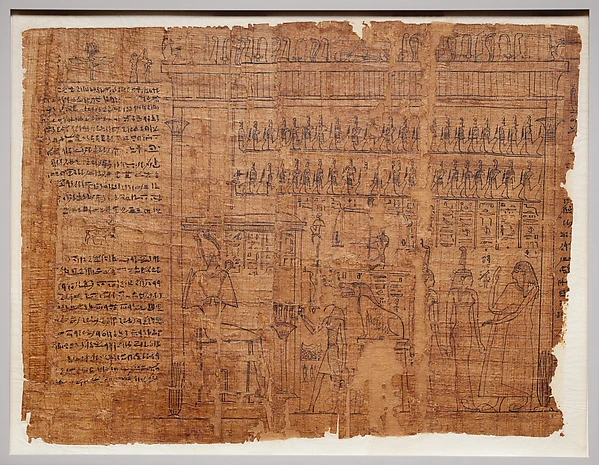
A Ptolemaic judgment scene, about 230–150 BCE. This version places Osiris at the left and shows judges in two rows.
Part of a funerary papyrus showing the judgment before Osiris, ca. 230–150 BCE. The Metropolitan Museum of Art, Purchase, Fletcher Fund and The Guide Foundation Inc. Gift, 1966, 66.99.142. Open Access. · Image source ↗ · Public Domain
- Anubis
- Both images place him at the balance, where the heart is weighed.
- Osiris
- He presides from the right in Nauny’s papyrus and from a shrine at the left in the later fragment.
- Thoth
- Nauny’s Thoth appears as a baboon on the beam. In the later fragment an ibis-headed Thoth reports to Osiris.
- Maat
- The small figure is the standard on the scales. Two further forms of Maat lead the deceased into the hall on the later fragment.
Read the sources beside the images
Open Spence’s printed pages 104 and 105 to read the account of Anubis at the embalming and at the scales. Follow with Tirard’s printed page 124 for why the dead are identified with Osiris and go before him. These are historical explanations. Pair them with the papyri and the translation of Chapter 125A when you want to separate an author’s interpretation from the object and its inscriptions. [9][10][11][5]
Read further in the library
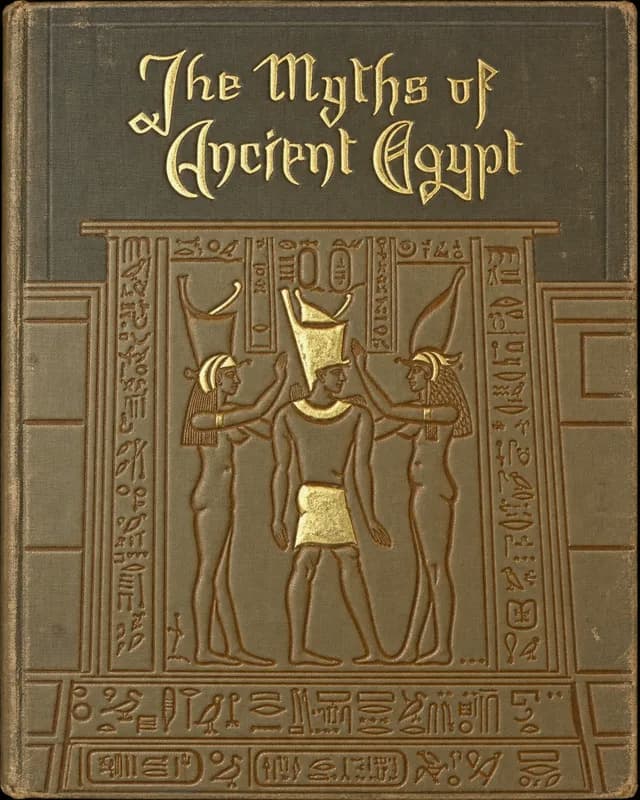
Myths and Legends of Ancient Egypt
Reading note
Compare Anubis’s roles at the mummy and at the scales in Spence.
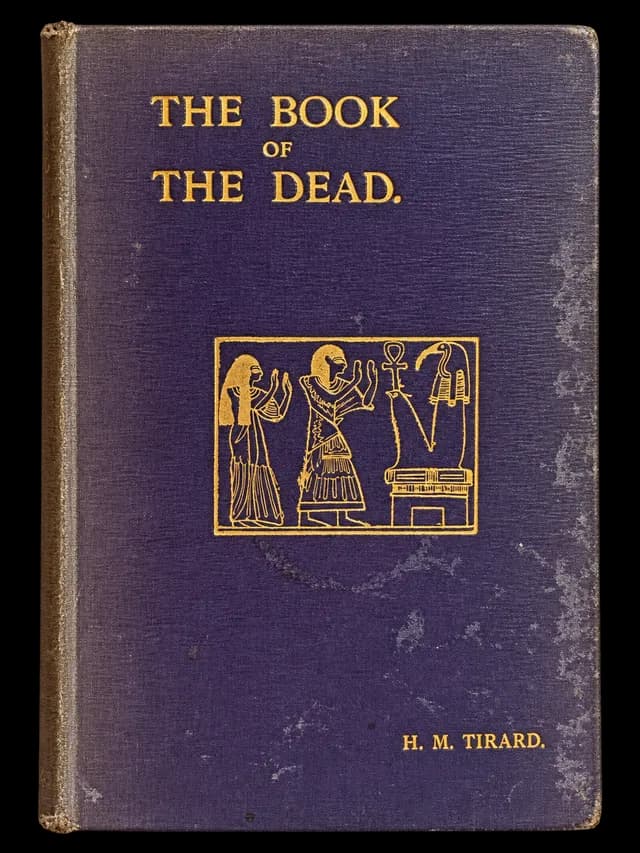
The Book of the Dead
Reading note
Read Tirard’s explanation of the identity of the dead with Osiris and his place in the judgment scene.
Sources
See references (11)
- The Met · Book of the Dead for the Chantress of Amun, Nauny ↗Book of the Dead for the Chantress of Amun, Nauny, ca. 1050 BCE. The Metropolitan Museum of Art, Rogers Fund, 1930, 30.3.31. Open Access.Return to text ↑
- The Met · Part of a funerary papyrus showing the judgment before Osiris ↗Part of a funerary papyrus showing the judgment before Osiris, ca. 230–150 BCE. The Metropolitan Museum of Art, Purchase, Fletcher Fund and The Guide Foundation Inc. Gift, 1966, 66.99.142. Open Access.Return to text ↑
- The Met · Coffin of Khnumnakht ↗Coffin of Khnumnakht, ca. 1850–1750 B.C.. The Metropolitan Museum of Art, Rogers Fund, 1915, 15.2.2a, b. Open Access.Return to text ↑
- The Met · Worker Shabti of Nauny ↗Worker Shabti of Nauny, ca. 1051–1002 BCE. The Metropolitan Museum of Art, Rogers Fund, 1930, 30.3.28.38. Open Access.Return to text ↑
- UCL Digital Egypt · Book of the Dead, Chapter 125A ↗Translation and transliteration from the funerary papyrus of Nu, British Museum EA10477.Return to text ↑
- UCL Digital Egypt · Book of the Dead chapters ↗University College London. Entries for Chapters 125 and 151 and a note on variation in illustrations.Return to text ↑
- The Met · Nedjemankh exhibition gallery ↗Curatorial account of Anubis performing rites and Isis and Nephthys mourning and protecting the mummy.Return to text ↑
- The Met · Figure of a jackal ↗Collection record distinguishing two funerary deities who can appear as canids.Return to text ↑
- Lewis Spence, printed page 104 · Anubis and the embalming of OsirisLewis Spence, Myths and Legends of Ancient Egypt, printed page 104.Read this page in Myths and Legends of Ancient Egypt ↗Return to text ↑
- Lewis Spence, printed page 105 · Anubis at the balanceLewis Spence, Myths and Legends of Ancient Egypt, printed page 105.Read this page in Myths and Legends of Ancient Egypt ↗Return to text ↑
- H. M. Tirard, printed page 124 · Why Osiris presides over judgmentH. M. Tirard, The Book of the Dead, printed page 124.Read this page in The Book of the Dead ↗Return to text ↑