How Ancient Egyptian Mummification Worked
Follow ancient Egyptian mummification through natron, linen and burial objects. Compare Herodotus’s account with modern archaeological evidence.
In this article
Follow four stages through surviving objects
Each object opens an explanation of part of the process, from the materials of the embalming cache to the layer inside a coffin.
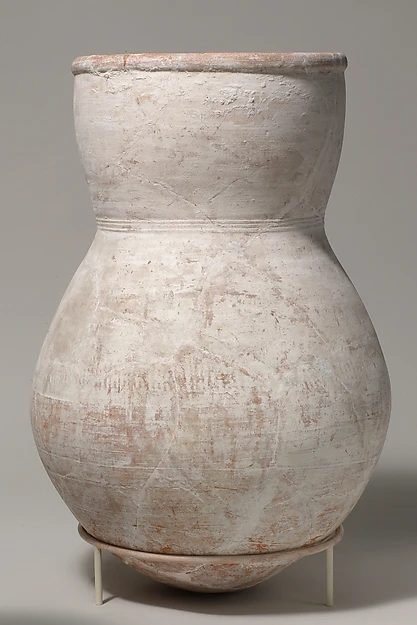
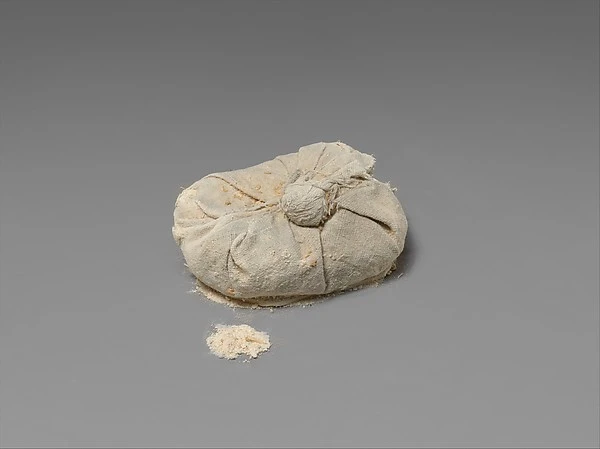
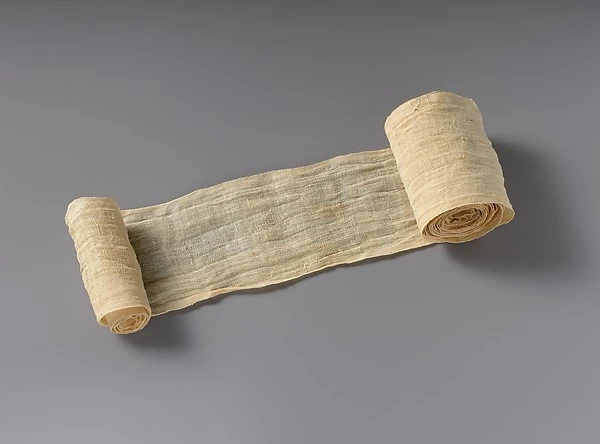
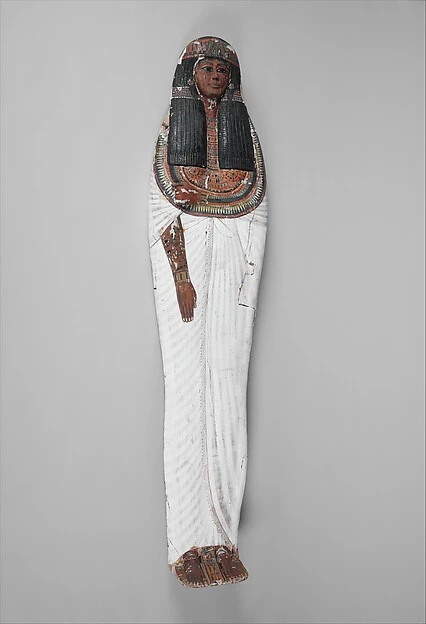
How did ancient Egyptians preserve the dead?
In many ancient Egyptian burials, embalmers prepared the body, dried it with natron and wrapped it in linen before burial. Treatment of the internal organs, the materials used in wrapping and the equipment provided for burial changed with place, period and resources. Museum objects let us follow several of these stages while preserving those differences. [1][6][7][12]
Preserving the body had a place in Egyptian funerary beliefs, alongside provisions, written spells and rites for the dead. A sealed jar from an embalming cache tells us what supplies survived. A heart scarab carries words meant for judgment. Each object can answer a different question about what was done and what it was meant to achieve. [1][13][15]
See references (6)
- British Museum · What is mummification?
- Rageot and others · Biomolecular analyses enable new insights into ancient Egyptian embalming
- Wade and Nelson · Radiological evaluation of Egyptian evisceration
- Mummy bandage from Tutankhamun’s embalming cache
- Large storage jar from Tutankhamun’s embalming cache
- Heart scarab inscribed for Gautsoshen
What happened during preparation?
Herodotus describes several levels of service offered by specialist embalmers. In his most elaborate account, organs are removed and the body is prepared before the long drying stage. Ancient Egyptian containers provide a different line of evidence. The liver, lungs, stomach and intestines could receive separate treatment and be placed in jars associated with the Sons of Horus. [5][2]
A jar’s presence can speak to protection without proving that an organ was inside it. The Met’s solid Duamutef jar comes from a period when wrapped organs could instead be returned to the body. Radiological research also cautions against treating the retention of the heart as universal. The role of the heart in funerary belief and the survival of an organ in a particular burial call for different evidence. [3][7][15]
Why did embalmers use natron?
Natron is a naturally occurring mixture of salts. It acts as a drying agent and reduces moisture in tissue. The Met’s small linen bag still contains material from the cache associated with Tutankhamun. With the sealed storage jars and other supplies, it provides a physical example of what can otherwise sound like an abstract step in a written account. [1][13][11][4]
The cache is identified through the togetherness of its finds. In addition to natron and linen, it held pottery, floral collars and mud sealings. Pieces of linen and sealings carried royal identifying marks. The combination helped connect the pit to Tutankhamun’s funeral, while the form and contents of a particular bag help explain one material the embalmers used. [13][14][4]
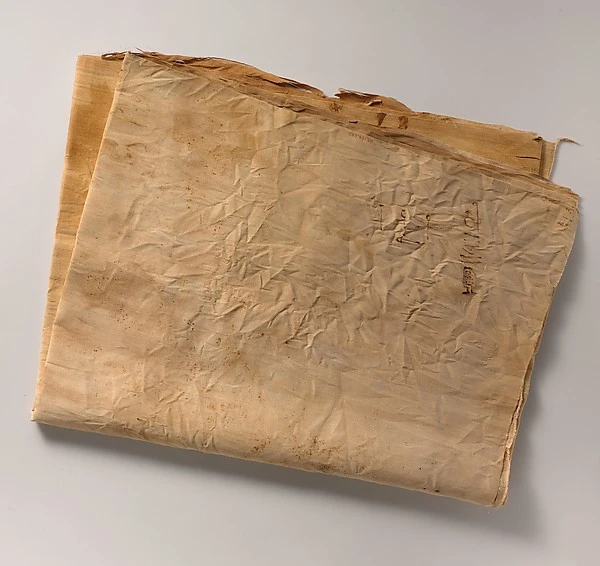
Linen marks from the sealed jars helped identify the cache with Tutankhamun.
Inscribed linen from Tutankhamun’s embalming cache, ca. 1328–1318 BCE. The Metropolitan Museum of Art, Gift of Theodore M. Davis, 1909, 09.184.693. Open Access. · Image source ↗ · Public Domain
How was the body wrapped and protected?
Herodotus describes fine linen strips attached with a gum. The actual strip from KV 54 has finished edges along both sides, which the Met uses to distinguish cloth woven as a bandage from strips torn from larger sheets. The surviving textile can tell a reader something the general term linen leaves out: the makers sometimes planned the dimensions of an individual strip. [5][12]
Wrappings could also enclose objects with a protective or ritual role. The scarab of Gautsoshen comes from within her wrappings, over her chest. Its inscription is Spell 30B, a request that her heart refrain from testifying against her at judgment. The position and the inscription together explain more than the beetle outline alone. [15]
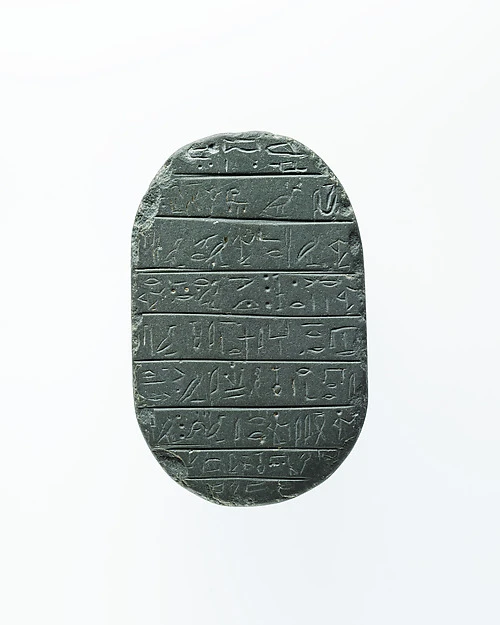
This view shows the spell on the underside. The scarab lay inside Gautsoshen’s wrappings over her chest.
Heart scarab inscribed for Gautsoshen, ca. 1080–945 BCE. The Metropolitan Museum of Art, Rogers Fund, 1925, 25.3.163. Open Access. · Image source ↗ · Public Domain
What happened at the coffin and tomb?
Iineferty’s burial board portrays her in a white garment and was placed over her wrapped body inside the coffin. The board is an image and a physical layer in the burial. Funerary objects from other periods can serve different purposes even when they appear together in a modern display. [16][1]
The Opening of the Mouth was intended to restore the dead person’s ability to speak and receive offerings. A small vessel from Perneb’s burial gives one material example associated with that rite. Spence’s printed page 30 describes the ceremony as performed at the tomb. Read it as a historical description alongside the museum’s evidence. [1][17][10]
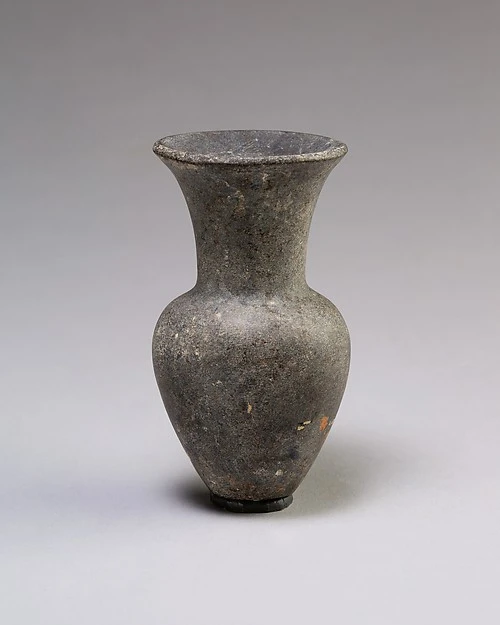
This vessel from Perneb’s burial belongs to the equipment associated with the Opening of the Mouth.
Opening of the Mouth vessel from Perneb’s tomb, ca. 2381–2323 BCE. The Metropolitan Museum of Art, Gift of Edward S. Harkness, 1914, 14.7.92. Open Access. · Image source ↗ · Public Domain
What does Herodotus tell us about the timing?
In Histories 2.86, Herodotus gives seventy days for treatment with natron in his description of the most elaborate option. The British Museum teaching notes describe roughly seventy days for an overall process and a shorter drying stage. These accounts count time differently. An object such as a bag of natron can confirm the use of the material without telling us how many days a particular body spent in it. [5][1][11]
The Saqqara study analysed organic residues in labelled vessels from a workshop and burial context. It identified mixtures of substances rather than a single embalming preparation. Some labels referred to the part of the body or stage for which a preparation was used. Chemical evidence can narrow what a named substance meant in this context. It belongs alongside, and can complicate, the account of a Greek writer. [6][5]
- Herodotus’s account
- A later writer’s description of the services and timing he reports.
- The Theban cache
- Dated surviving supplies and objects associated with one royal funeral.
- The Saqqara workshop
- Labelled uses and substances identified through residue analysis in one context.
- Radiological study
- Remains of organ treatment and variation across the burials examined.
See references (5)
Read the preparation, wrapping and funeral in Spence
The exact Reader pages show how an early twentieth-century account connects preparation, natron and linen before turning to the rites at the tomb. Start with printed pages 27 and 28, then open page 30. His statement about a seventy-day natron treatment resembles Herodotus’s timing. The modern object records above let readers compare that inherited description with evidence from individual burials. [8][9][10][5][11]
Read further in the library
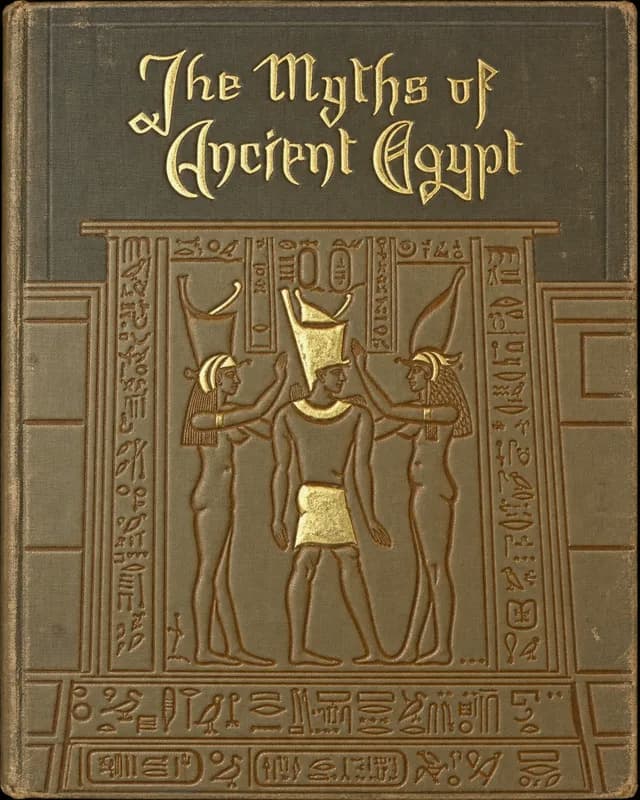
Myths and Legends of Ancient Egypt
Reading note
Trace preparation, wrapping and burial rites across three exact pages in Spence.
Sources
See references (17)
- British Museum · What is mummification? ↗Ancient Egypt teaching notes, including embalming, burial and the Opening of the Mouth.Return to text ↑
- Egypt’s Ministry of Tourism and Antiquities · Canopic Jars ↗National collection portal on organs and their protectors.Return to text ↑
- The Met · Solid canopic jar of Duamutef ↗Object record 28.3.60 and the return of organs to the body in some burials.Return to text ↑
- The Met · Tutankhamun’s Funeral ↗Egyptian Art Department essay on KV 54 and associated funerary objects.Return to text ↑
- Herodotus, Histories 2.85–88 · Accounts of embalming ↗A. D. Godley translation, University of Chicago LacusCurtius.Return to text ↑
- Rageot and others · Biomolecular analyses enable new insights into ancient Egyptian embalming ↗Nature 614 (2023), 287–293, residue and inscription study from Saqqara.Return to text ↑
- Wade and Nelson · Radiological evaluation of Egyptian evisceration ↗HOMO 64 (2013), 1–28, radiological and published evidence on organ treatment.Return to text ↑
- Spence, printed page 27 · Preparation and older accounts of embalmingLewis Spence, Myths and Legends of Ancient Egypt, 1923 Harrap reprint. Lumitheca source leaf 49.Read this page in Myths and Legends of Ancient Egypt ↗Return to text ↑
- Spence, printed page 28 · Drying, wrapping and the coffinLewis Spence, Myths and Legends of Ancient Egypt, 1923 Harrap reprint. Lumitheca source leaf 50.Read this page in Myths and Legends of Ancient Egypt ↗Return to text ↑
- Spence, printed page 30 · The Opening of the MouthLewis Spence, Myths and Legends of Ancient Egypt, 1923 Harrap reprint. Lumitheca source leaf 52.Read this page in Myths and Legends of Ancient Egypt ↗Return to text ↑
- Bag of natron from Tutankhamun’s embalming cache ↗Bag of natron from Tutankhamun’s embalming cache, ca. 1328–1318 BCE. The Metropolitan Museum of Art, Gift of Joseph Veach Noble, 1988, 1988.437.2. Open Access.Return to text ↑
- Mummy bandage from Tutankhamun’s embalming cache ↗Mummy bandage from Tutankhamun’s embalming cache, ca. 1328–1318 BCE. The Metropolitan Museum of Art, Gift of Theodore M. Davis, 1909, 09.184.797. Open Access.Return to text ↑
- Large storage jar from Tutankhamun’s embalming cache ↗Large storage jar from Tutankhamun’s embalming cache, ca. 1328–1318 BCE. The Metropolitan Museum of Art, Gift of Theodore M. Davis, 1909, 09.184.1. Open Access.Return to text ↑
- Inscribed linen from Tutankhamun’s embalming cache ↗Inscribed linen from Tutankhamun’s embalming cache, ca. 1328–1318 BCE. The Metropolitan Museum of Art, Gift of Theodore M. Davis, 1909, 09.184.693. Open Access.Return to text ↑
- Heart scarab inscribed for Gautsoshen ↗Heart scarab inscribed for Gautsoshen, ca. 1080–945 BCE. The Metropolitan Museum of Art, Rogers Fund, 1925, 25.3.163. Open Access.Return to text ↑
- Mummy board of Iineferty ↗Mummy board of Iineferty, ca. 1290–1224 BCE. The Metropolitan Museum of Art, Funds from various donors, 1886, 86.1.5c. Open Access.Return to text ↑
- Opening of the Mouth vessel from Perneb’s tomb ↗Opening of the Mouth vessel from Perneb’s tomb, ca. 2381–2323 BCE. The Metropolitan Museum of Art, Gift of Edward S. Harkness, 1914, 14.7.92. Open Access.Return to text ↑