Osiris
Explore Osiris through the story of Isis and Horus, funerary judgment, grain rituals and the relationship between the god and the deceased in Egyptian religion.
In this article
Who is Osiris?
Osiris is an Egyptian god associated with the dead, restored life and judgment. The Australian Museum introduces him as a former divine king who becomes ruler and chief judge of the otherworld. His death and renewal give the hope of life beyond death a personal divine history. Vegetation and fertility also belong to his religious associations. [1]
The relationship between death and renewed existence is central. Osiris has himself undergone death, while the deceased hope to enter a continuing life in his presence. This connects his story with funerary preparations, the judgment of a person’s conduct and images of a fertile afterlife. [1]
Divine history and judgment
Isis, Horus and the restoration of Osiris
Mark Smith’s study assembles a narrative from Egyptian sources of different dates and places. Seth kills Osiris; Isis finds his body and restores him through mummification and her potent words. She conceives Horus, who later vindicates his father and succeeds to kingship. Osiris becomes ruler of the underworld. [2]
Smith emphasizes two connected kinds of restoration. Reconstituting the body repairs the bodily rupture of death. Vindication and the establishment of a rightful heir restore Osiris’s standing among the gods. Renewed life therefore concerns relationships and recognition as well as an intact body. [2]
Coming before the judge of the dead
The Australian Museum’s account places Osiris at the destination of the deceased’s journey through the otherworld. Declarations before divine judges and the weighing of the heart concern a person’s conduct. The heart is weighed against Maat’s feather, an image of truth and justice. A successful outcome leads to acceptance before Osiris. [1]
This setting joins preparation for the journey with the question of righteousness. Funerary knowledge and ritual speech belong beside the moral assessment of a life. [1]
Grain and the renewal of life
A pottery object at the Met gives renewal a material form. Catalogued as a Germinating Osiris Brick, it preserves the recessed shape of a mummiform Osiris. The museum connects such objects with the Khoiak festival, when soil and grain in the god’s form could be moistened to germinate. [3]
The sprouting plant made life emerging from an apparently inert form visible. This particular brick was found empty; the museum’s explanation draws on other examples containing soil, cereal grains and linen. Keeping that distinction prevents the surviving object from being made to contain evidence it does not preserve. The figure’s crown and royal emblems connect the regenerative image with Osiris’s kingship. [3]
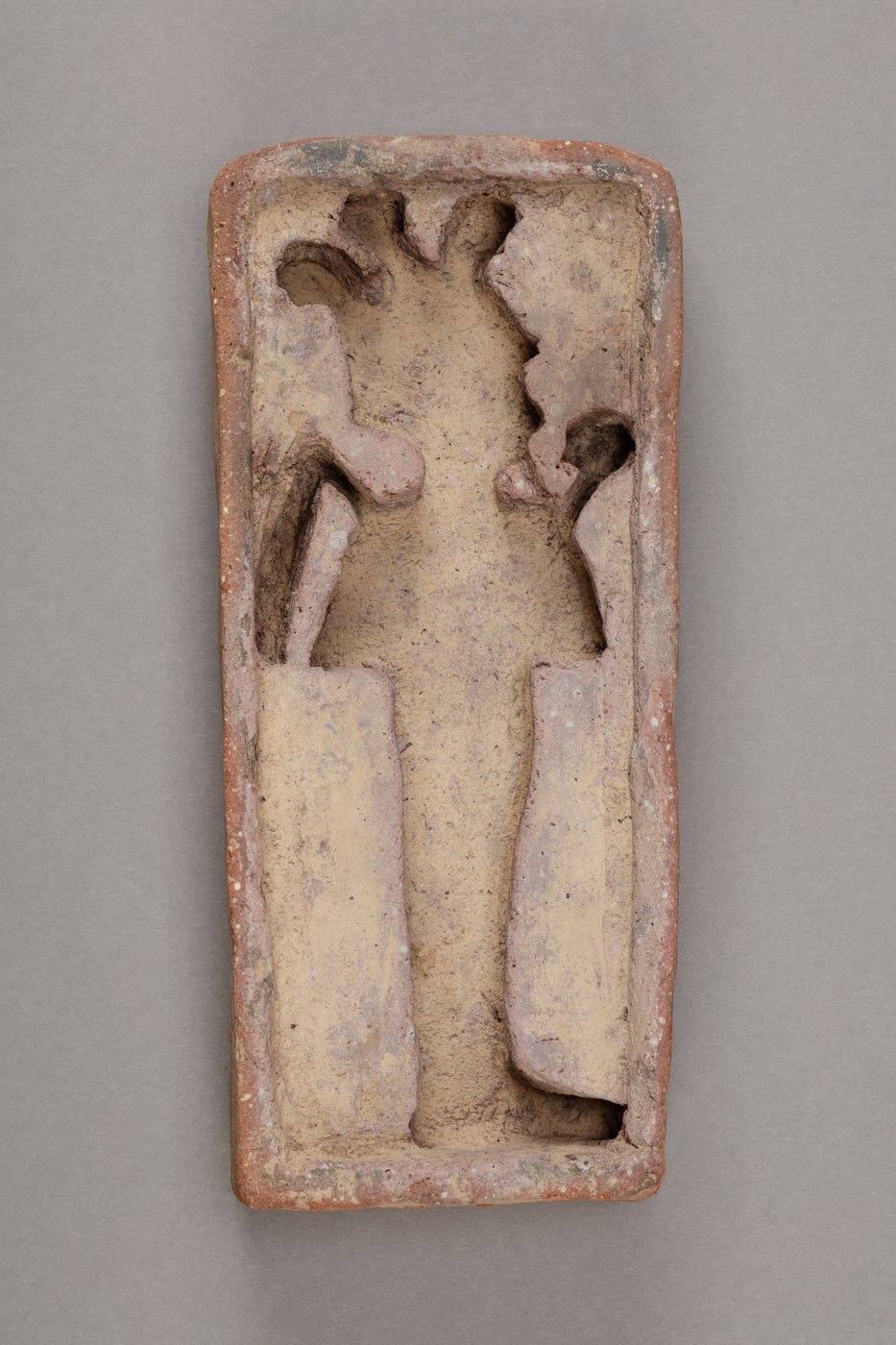
Germinating Osiris Brick, Egypt, ca. 1100–300 BCE. Pottery. This surviving example was found empty.
The Metropolitan Museum of Art. Rogers Fund, 1920. Accession 20.2.30. Public Domain (CC0). · Museum record ↗ · CC0
Historical reading and interpretation
Tirard’s account in the Library
The Library’s 1910 Book of the Dead by H. M. Tirard gives a connected retelling of Osiris’s death and the search for his body. On the checked page, Isis seeks the scattered limbs, and the narrative connects the god with several burial places. Tirard presents these traditions within the Egyptological scholarship of her period. [4]
The book remains useful as a historical reading of funerary religion. Its narrative and proposed explanations should be distinguished from a single ancient manuscript and from later scholarly interpretation. The exact original leaf is available beside the citation. [4]
Restoration and identification in an older interpretation
On the second checked Library page, Tirard describes rites intended to restore the deceased’s faculties and bodily integrity. She explains the dead as identified with Osiris and links that identification to renewed life. Her discussion then turns to Osiris as judge. Restoration and moral assessment are held together in her account. [5]
How should the relationship be understood?
Smith offers a more specific interpretation of acquiring an Osirian aspect through funerary rites. He distinguishes it from becoming personally identical with the god: the deceased enters Osiris’s following and belongs to a community around him. This reads the relationship through ritual membership and restored social ties. [2]
The distinction matters when a funerary text joins the name Osiris to a deceased person. Such wording needs interpretation within its ritual setting. It should not automatically be treated as a simple declaration that person and god have become the same individual. [2]
Read further in the library
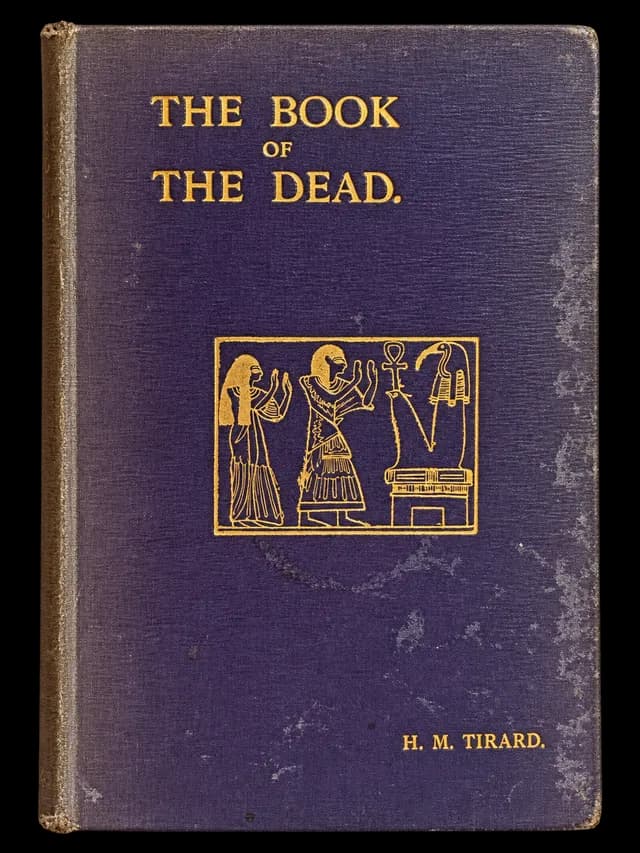
The Book of the Dead
Reading note
Tirard’s historical account provides the two checked Library passages. Read its explanation of restoration and identification beside the modern scholarship and surviving ritual object discussed above.
Sources
- The Underworld and the Afterlife in Ancient Egypt ↗Australian Museum; introductory account of Osiris, judgment and the afterlifeReturn to text ↑
- Osiris and the Deceased ↗Mark Smith, UCLA Encyclopedia of Egyptology, 2008; inspected discussion of restoration and the Osirian aspectReturn to text ↑
- Germinating Osiris Brick ↗The Metropolitan Museum of Art; ca. 1100–300 BCE, accession 20.2.30Return to text ↑
- The Book of the Dead: printed page 120H. M. Tirard, 1910; historical narrative and Egyptological interpretationReturn to text ↑
Examine the original Library page
Exact inherited citation retained. Original page image inspected again. The historical author’s account remains distinct from the primary, museum and scholarly sources used in the expanded entry.
Isis then voyages forth in a boat to find the limbs of Osiris
Open the original page in The Book of the Dead ↗Scan leaf 146 · H. M. Tirard
- The Book of the Dead: printed page 124H. M. Tirard, 1910; historical account of funerary restoration and judgmentReturn to text ↑
Examine the original Library page
Exact inherited citation retained. Original page image inspected again. The historical author’s account remains distinct from the primary, museum and scholarly sources used in the expanded entry.
as his judge in the netherworld. Osiris is the appointed judge of mankind, not only because he is the divine king of the nether-world, but also because
Open the original page in The Book of the Dead ↗Scan leaf 150 · H. M. Tirard
About this article & its sources
Ancient Egyptian narratives and funerary interpretations across different sources, with a surviving ritual object and the Library’s historical Tirard account. Variants and modern scholarly interpretation remain explicit.
Passage attributions
Who is Osiris?
Passage 1: Australian Museum; introductory account of Osiris, judgment and the afterlife.
Passage 2: Australian Museum; introductory account of Osiris, judgment and the afterlife.
Isis, Horus and the restoration of Osiris
Passage 1: Mark Smith, UCLA Encyclopedia of Egyptology, 2008; inspected discussion of restoration and the Osirian aspect.
Passage 2: Mark Smith, UCLA Encyclopedia of Egyptology, 2008; inspected discussion of restoration and the Osirian aspect.
Coming before the judge of the dead
Passage 1: Australian Museum; introductory account of Osiris, judgment and the afterlife.
Passage 2: Australian Museum; introductory account of Osiris, judgment and the afterlife.
Grain and the renewal of life
Passage 1: The Metropolitan Museum of Art; ca. 1100–300 BCE, accession 20.2.30.
Passage 2: The Metropolitan Museum of Art; ca. 1100–300 BCE, accession 20.2.30.
Tirard’s account in the Library
Passage 1: H. M. Tirard, 1910; historical narrative and Egyptological interpretation.
Passage 2: H. M. Tirard, 1910; historical narrative and Egyptological interpretation.
Restoration and identification in an older interpretation
Passage 1: H. M. Tirard, 1910; historical account of funerary restoration and judgment.