Isis
Explore Isis through protection, sacred speech, the stories of Osiris and Horus, Egyptian ritual and the spread of her worship around the Mediterranean.
In this article
Who is Isis?
Isis is an Egyptian goddess closely associated with protection, motherhood and royal continuity. As the wife of Osiris and mother of Horus, she belongs to a divine family whose relationships connect death, renewed life and legitimate kingship. The Met traces her name to the Pyramid Texts and notes the growing popularity of her worship in the Late Period. [1]
Speech, protection and kingship
Words that act
In Martin Bommas’s study, Isis’s power is especially visible in speech. With Nephthys she seeks and mourns Osiris, while words of protection accompany the treatment of his body. Egyptian sources preserve these events through dispersed references and ritual texts, rather than through one complete ancient biography. [2]
The relationship between speech and physical care gives the story a funerary setting. Lamentation, naming and protective utterance help restore a place for the deceased among the gods. Isis’s agency includes finding, defending and addressing the one who can no longer answer. [2]
The mother and the future king
The child Horus makes protection intimate as well as royal. The National Archaeological Museum’s account describes a vulnerable child whom Isis shelters from danger. After Osiris’s killing, the goddess raises Horus in the marshes so that he may later claim his father’s throne. Care for a child becomes care for the future of kingship. [3]
The museum connects nursing images with the nourishment of the ruler by a goddess. Milk conveys life, strength and legitimacy. People also offered statuettes at temples and shrines in hope of blessings for health, prosperity and long life. The family image could therefore carry personal hopes alongside its royal meaning. [3]
An image of life and protection
In the Met’s metal statuette, Isis sits with Horus across her lap and supports him as he nurses. The horned crown and vulture headdress connect her with forms of divine and royal motherhood. The child wears an amulet on his chest. [1]
The object makes a relationship visible through posture and touch. Its scale allows the act of feeding to hold the viewer’s attention: the protector is also the giver of life. [1]
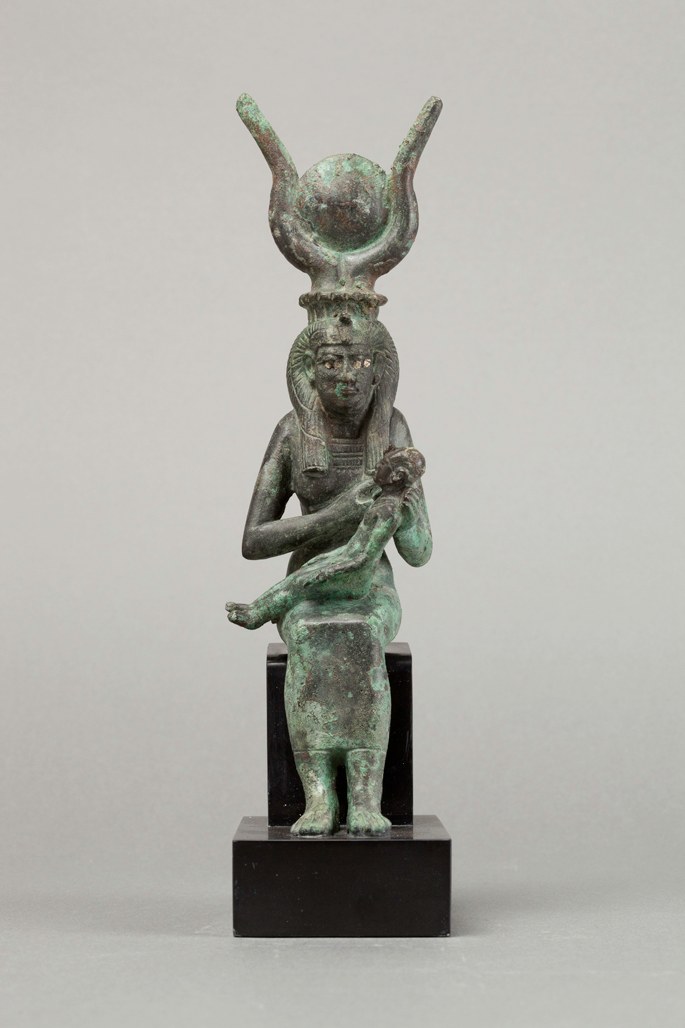
Isis and Horus, Egypt, 664–30 BCE. Cupreous metal with precious-metal inlay.
The Metropolitan Museum of Art. Gift of David Dows, 1945. Accession 45.4.4. Public Domain (CC0). · Museum record ↗ · CC0
Isis around the Mediterranean
Bommas follows a changing goddess into the Greek-speaking Mediterranean. Self-praising accounts known as aretalogies announce her powers in the first person, while new cultural settings reshape her relationships and responsibilities. Serapis becomes an important consort in this wider religious world. [2]
The continuity of a name did not leave the cult unchanged. Language, sanctuary settings and divine partnerships helped worshippers encounter Isis in new ways. Reading Egyptian and Hellenistic evidence together reveals adaptation as well as inheritance. [2]
Reading the Library account
The search in Tirard’s retelling
Tirard’s historical account follows Isis to Byblos and back to Egypt, then describes her search for Osiris’s scattered body. The linked original page preserves this connected retelling and its explanation of the god’s several burial places. [4]
Horus and the appeal for help
Another checked leaf tells of Isis appealing for help when Horus is bitten, with Thoth bringing a healing formula. This is a religious narrative about protection and divine assistance, presented through Tirard’s early twentieth-century interpretation. [5]
Read further in the library
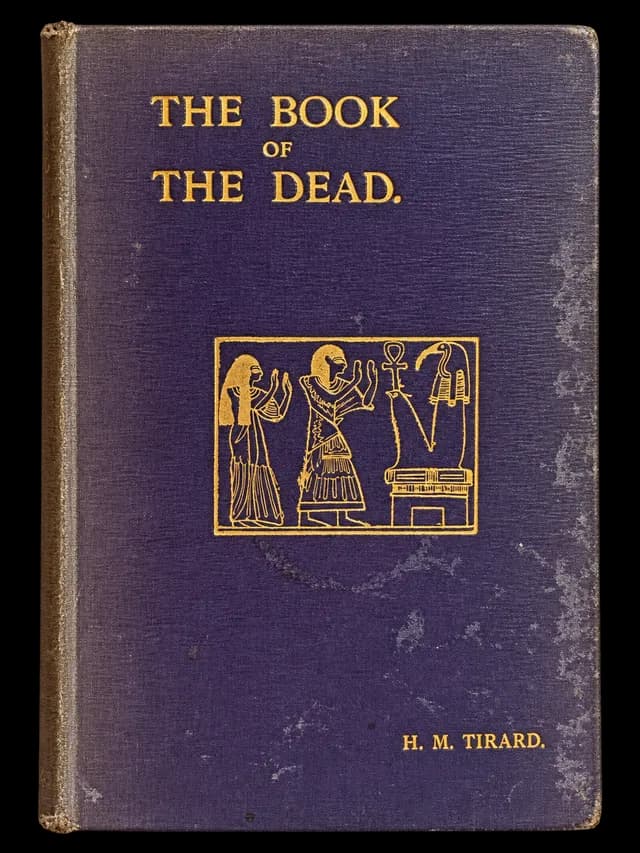
The Book of the Dead
Reading note
Tirard’s historical explanation supplies the two retained original-page citations. Read it beside the Egyptian objects and modern scholarship discussed here.
Sources
- Isis and Horus ↗The Metropolitan Museum of Art; Egyptian statuette, 664–30 BCE, accession 45.4.4Return to text ↑
- “I Am Isis”: The Role of Speech in the Cult of Isis ↗Martin Bommas, Egypt and the Classical World, Getty; selected Egyptian and Hellenistic passagesReturn to text ↑
- A goddess with her son! ↗National Archaeological Museum, Athens; Egyptian collection, April 2023Return to text ↑
- The Book of the Dead: printed page 120H. M. Tirard, 1910; historical retellingReturn to text ↑
Examine the original Library page
Inherited edition and original-page identity preserved. Original scan inspected. Historical retelling remains distinct from broader primary, scholarly, museum and community sources.
goes forth, protected by Anubis, to seek the body of Osiris
Open the original page in The Book of the Dead ↗Scan leaf 146 · H. M. Tirard
- The Book of the Dead: printed page 98H. M. Tirard, 1910; historical account of Isis, Horus and ThothReturn to text ↑
Examine the original Library page
Inherited edition and original-page identity preserved. Original scan inspected. Historical retelling remains distinct from broader primary, scholarly, museum and community sources.
Isis in her grief and distress prays to Ra to heal the child
Open the original page in The Book of the Dead ↗Scan leaf 120 · H. M. Tirard
About this article & its sources
Ancient Egyptian religious texts and objects, selected Mediterranean developments and a historical Library retelling. The changing cult and its modern interpretations remain distinct.
Passage attributions
Who is Isis?
Passage 1: The Metropolitan Museum of Art; Egyptian statuette, 664–30 BCE, accession 45.4.4.
Words that act
Passage 1: Martin Bommas, Egypt and the Classical World, Getty; selected Egyptian and Hellenistic passages.
Passage 2: Martin Bommas, Egypt and the Classical World, Getty; selected Egyptian and Hellenistic passages.
The mother and the future king
Passage 1: National Archaeological Museum, Athens; Egyptian collection, April 2023.
Passage 2: National Archaeological Museum, Athens; Egyptian collection, April 2023.
An image of life and protection
Passage 1: The Metropolitan Museum of Art; Egyptian statuette, 664–30 BCE, accession 45.4.4.
Passage 2: The Metropolitan Museum of Art; Egyptian statuette, 664–30 BCE, accession 45.4.4.
Isis around the Mediterranean
Passage 1: Martin Bommas, Egypt and the Classical World, Getty; selected Egyptian and Hellenistic passages.
Passage 2: Martin Bommas, Egypt and the Classical World, Getty; selected Egyptian and Hellenistic passages.
The search in Tirard’s retelling
Passage 1: H. M. Tirard, 1910; historical retelling.
Horus and the appeal for help
Passage 1: H. M. Tirard, 1910; historical account of Isis, Horus and Thoth.