Thelema
Explore Thelema’s understanding of True Will, its sacred text and divine figures, with Aleister Crowley’s history, ritual practice and the distinct roles of O.T.O. and A∴A∴.
In this article
Origins, Will and the sacred text
What is Thelema?
Thelema is a modern religious and esoteric movement founded by Aleister Crowley in 1904. Its central concern is the discovery and fulfilment of individual Will. Adherents are called Thelemites. The movement includes philosophical reflection, sacred texts, ritual and practices commonly described as magick, with considerable variety in how people understand and pursue its aims. [1]
The U.S. Grand Lodge of O.T.O. emphasizes that even the word religion does not fit every Thelemite’s understanding equally well. Some approach Thelema as a way of life or philosophy, while others participate in organized religious observance. This variety makes a useful distinction at the outset: Crowley’s writings, an organization’s account of its teachings and an individual’s interpretation are related sources of meaning, without being interchangeable. [1]
Crowley and the events of 1904
Crowley grew up in the Plymouth Brethren and later joined the Hermetic Order of the Golden Dawn. Hedenborg White identifies ceremonial magic and the yogic practices he studied during travel as formative parts of his developing system. Thelema emerged from that modern setting, with its arguments about religion, sexuality, freedom and spiritual development. [2]
During a visit to Cairo with his wife Rose in 1904, Crowley wrote the Book of the Law over three days in April. He claimed that a discarnate intelligence called Aiwass dictated it to him. Historical scholarship can describe the text, the account of its reception and its subsequent influence. The supernatural identity of the claimed speaker belongs to the revelation narrative. The book’s announcement of a new spiritual epoch became central to Crowley’s religious project. [2]
The later Abbey of Thelema at Cefalù was established in 1920 with Leah Hirsig. It became an experiment in communal practice before Crowley’s expulsion from Italy in 1923. The episode places Thelema’s early development in an actual social setting, where ideas about spiritual freedom were tested through demanding relationships and shared life. [2]
What does True Will mean?
True Will is understood as a person’s distinctive purpose or course of fulfilment. O.T.O.’s explanation distinguishes it from the indulgence of every passing desire. Discovering it requires effort and discernment. The corresponding respect for other people’s Will gives the teaching a social dimension: one person’s spiritual task does not remove another person’s freedom. [7]
This is why the best-known Thelemic maxim is easy to misunderstand in isolation. In the institutional account, will names something to be discovered and accomplished, rather than whatever someone happens to want at a particular moment. Fellowship and instruction may assist that work, but the organization insists that it ultimately depends on the person’s own efforts. O.T.O. offers one organized setting for pursuing those aims, alongside the wider movement. [7]
Reading the Book of the Law
The Book of the Law is a short, densely symbolic text in three chapters. Its opening presents Nuit and Hadit, while the third chapter speaks through Ra-Hoor-Khuit. It combines declarations about will and love with visionary images, numerical riddles, ritual language and commands. The image of each person as a star expresses the importance of distinct individual lives within its religious universe. [4]
The text also contains harsh polemic and violent imagery. Those passages belong in any honest account of the book, alongside its language of joy and liberation. Interpretation therefore involves real tensions, rather than a collection of reassuring slogans. A primary text, Crowley’s later explanations and a contemporary ethical reading may emphasize different things. The book should be encountered with those differences visible and without treating religious authority as permission to harm another person. [4]
For example, the first chapter connects pure will with freedom from preoccupation with results. That offers a more demanding reading than an instruction simply to satisfy desire. The star imagery likewise places individuality inside a larger cosmological picture. A careful reading moves between these particular passages and the text’s more difficult declarations, keeping both in view. [4]
Theology and personal practice
Nuit, Hadit and Ra-Hoor-Khuit
O.T.O.’s theological outline describes Nuit through infinite space, Hadit through an individually expressed principle of life and wisdom, and Ra-Hoor-Khuit through consciousness arising from their interplay. These figures use Egyptian divine names within Thelema’s own cosmological account. Their roles cannot simply be substituted for the meanings they held in every ancient Egyptian setting. [5]
The same outline describes successive aeons associated with Isis, Osiris and Horus. In this scheme, Horus expresses the sovereignty and growth of the individual. These are Thelemic interpretations of spiritual history, rather than established archaeological periods. The outline also discusses the Holy Guardian Angel, which can be understood as a higher self or a distinct divine being. It explicitly stops short of claiming to be a definitive statement of what every Thelemite believes. [5]
The outline also describes a Body of Light and a continuing spiritual life beyond the physical body. Some of its explanations use reincarnation and spiritual development across lives. These are Thelemic teachings expressed through a particular synthesis of religious vocabulary. A comparison with Buddhist rebirth, for example, should preserve the differences in how each tradition understands the person and the goal of practice. [5]
Practice, the magical diary and the number 93
The magical diary gives practice a written memory. O.T.O.’s account describes recording exercises and their results, the adoption of magical mottoes and the use of daily observances such as Liber Resh. Practitioners may work alone, join group rituals or combine different forms of study and devotion. The source describes common customs, rather than one compulsory routine for every adherent. [6]
The number 93 is a familiar abbreviated greeting. It links the Greek words for will and love through numerical interpretation. Such conventions make theological ideas part of everyday community language. The same account connects practice with an ethic of non-interference: people are still discovering their own Will and should avoid presuming to know another person’s path better than that person can. Its ideal of harmony coexists with an acknowledgment of actual disagreement. [6]
A diary can preserve which exercise was attempted, the conditions surrounding it and the practitioner’s interpretation afterwards. That record allows experiences to be compared across time. Its role helps explain the combination of discipline and experimentation in this strand of esotericism: private impressions become material for sustained reflection, even though a personal record alone cannot establish a supernatural cause. [6]
Initiation and organized religious life
What does O.T.O. do?
Ordo Templi Orientis is an initiatory order. Its staged ceremonies use allegory and symbol to teach about nature and personal identity. The published structure distinguishes the Man of Earth, Lover and Hermit triads and includes an introductory Minerval degree. These are organizational and ritual roles, not a universal ranking of everyone who identifies as Thelemic. [9]
O.T.O. describes initiation as a physical ceremony performed by a properly authorized initiator. The introductory degree gives an aspirant an opportunity to decide whether to continue. A reader should therefore distinguish an account of Thelema’s broad ideas from an application to join this particular order. Reading Crowley, accepting a religious philosophy and entering a formal initiatory relationship are different activities, each with its own expectations and commitments. [9]
How is A∴A∴ different?
A∴A∴ is a system of teaching, testing and initiation directed towards individual spiritual advancement. O.T.O.’s description emphasizes personal training and the absence of social activities within that system. It also states that its services are given without charge. The two organizations have a history of cooperation, including work connected with The Equinox. [8]
They remain distinct: neither includes the other, and neither is subordinate to it. This distinction prevents a common confusion in introductions to Thelema. A local O.T.O. body can offer fellowship and group religious life, while A∴A∴ is described through a different training relationship. The existence of these two influential structures also does not mean that every Thelemite belongs to either one. Institutional membership should be identified when it is relevant, rather than inferred from the label alone. [8]
The Gnostic Mass and religious community
The Gnostic Mass, written by Crowley in 1913 as Liber XV, is the central ceremony of Ecclesia Gnostica Catholica, the ecclesiastical arm of O.T.O. The official account describes public and private celebrations, clerical roles and forms of lay membership. It gives an example of Thelema as communal religious life, alongside solitary magical or contemplative practice. [10]
The name can mislead readers approaching it from ancient Gnosticism or Christianity. E.G.C. identifies its theology and rites as Thelemic and distinguishes them from Christian sacraments. Its modern history includes the French Gnostic revival, but the ceremony is not an unchanged survival of an ancient Gnostic liturgy. Looking at the text’s date and the institution’s stated identity clarifies how a religious movement can adopt old names while developing a distinctive modern ritual. [10]
Holy days and the Thelemic calendar
The Thelemic calendar counts from 1904 and begins its year at the northern spring equinox. Its characteristic notation combines cycles of twenty-two years with the year’s position inside that cycle. Astrological notation for the sun and moon may further specify a date. The civil calendar is often marked e.v., an abbreviation of era vulgaris, or common era. [11]
The calendar also makes founding events part of recurring religious remembrance. The writing of the Book of the Law is commemorated on April 8, 9 and 10. Equinoxes, solstices and personal passages through birth and death have places in the account. An event that belongs to the movement’s historical narrative thereby becomes something observed again in communal and individual time. Local participation and emphasis can vary. [11]
Books, history and further exploration
Crowley as a writer and later influence
Crowley’s bibliography extends beyond Thelemic doctrine. It includes poetry, drama, fiction, autobiography and works of magical instruction. An early poem, a novel and a later explanatory letter address different audiences and purposes. His posthumously published Magick Without Tears is one route into the discursive, explanatory side of his writing. [3]
That variety matters when using the Library. Diary of a Drug Fiend and Moonchild are works of fiction, with narratives and characters through which ideas are explored. They should be read as novels rather than as straightforward manuals. The institution’s biographical account is also a sympathetic interpretation of its founder. It belongs beside historical scholarship, allowing the reader to distinguish literary influence, religious commitment and the making of a public reputation. [3]
Thelema among modern esoteric movements
Modern scholarship places Crowley within the history of Western esotericism, rather than explaining him only through sensational biography. The Oxford volume edited by Bogdan and Starr brings together themes including magical discipline, Indic sources, sexuality and the development of a new religion. This wider setting makes both his borrowings and his innovations easier to recognize. [12]
Connections with Hermeticism, yoga or ancient divine names are therefore starting points for comparison. They do not make these traditions identical, nor establish that Crowley represents all of them. Thelema’s distinctive centre is its account of Will, expressed through a particular modern body of texts and religious practices. Reading across traditions becomes more informative when each term retains the setting in which it is actually being used. [12]
Read further in the library
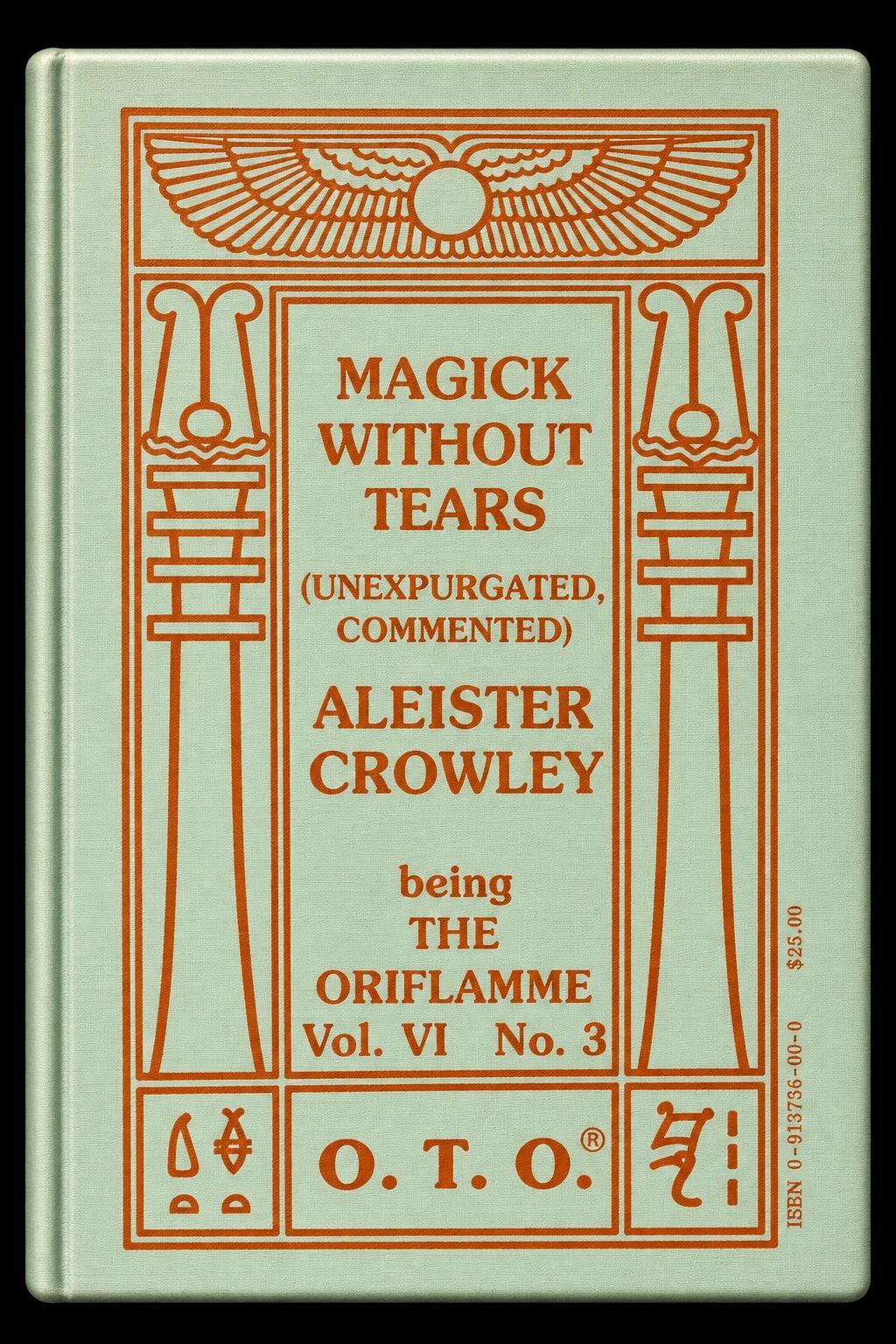
Magick Without Tears
Reading note
Crowley’s letters explain magical training, interpretation and the aims of his work in a conversational form.
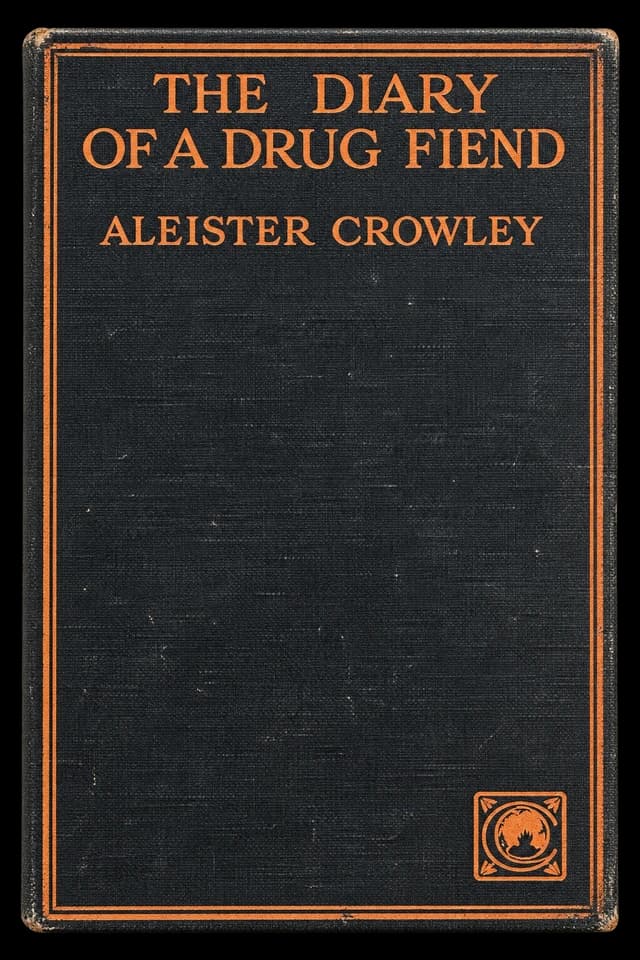
The Diary of a Drug Fiend
Reading note
A novel exploring will and addiction through fiction. Its story is a literary encounter with Crowley’s ideas, rather than a guide to treatment.
Sources
- Thelema ↗U.S. Grand Lodge, Ordo Templi OrientisReturn to text ↑
- Rethinking Aleister Crowley and Thelema: New Perspectives ↗Manon Hedenborg White, Aries 21, 2021, pp. 1–11Return to text ↑
- Aleister Crowley ↗Hymenaeus Beta, U.S. Grand Lodge, Ordo Templi OrientisReturn to text ↑
- The Book of the Law, Liber AL vel Legis ↗Aleister Crowley; Internet Sacred Text ArchiveReturn to text ↑
- Theology ↗U.S. Grand Lodge, Ordo Templi Orientis; account based on Crowley’s writingsReturn to text ↑
- Customs ↗U.S. Grand Lodge, Ordo Templi OrientisReturn to text ↑
- O.T.O. ↗U.S. Grand Lodge, Ordo Templi OrientisReturn to text ↑
- A∴A∴ ↗U.S. Grand Lodge, Ordo Templi OrientisReturn to text ↑
- Initiation ↗U.S. Grand Lodge, Ordo Templi OrientisReturn to text ↑
- Ecclesia Gnostica Catholica ↗U.S. Grand Lodge, Ordo Templi OrientisReturn to text ↑
- Calendar ↗U.S. Grand Lodge, Ordo Templi OrientisReturn to text ↑
- Aleister Crowley and Western Esotericism ↗Henrik Bogdan and Martin P. Starr, editors, Oxford University Press, 2012; publisher overviewReturn to text ↑
About this article & its sources
An introduction to modern Thelema, distinguishing Crowley’s claims of revelation, named institutional explanations, individual practice and historical scholarship. A∴A∴ and O.T.O. are separate organizations.
Passage attributions
What is Thelema?
Passage 1: U.S. Grand Lodge, Ordo Templi Orientis.
Passage 2: U.S. Grand Lodge, Ordo Templi Orientis.
Crowley and the events of 1904
Passage 1: Manon Hedenborg White, Aries 21, 2021, pp. 1–11.
Passage 2: Manon Hedenborg White, Aries 21, 2021, pp. 1–11.
Passage 3: Manon Hedenborg White, Aries 21, 2021, pp. 1–11.
What does True Will mean?
Passage 1: U.S. Grand Lodge, Ordo Templi Orientis.
Passage 2: U.S. Grand Lodge, Ordo Templi Orientis.
Reading the Book of the Law
Passage 1: Aleister Crowley; Internet Sacred Text Archive.
Passage 2: Aleister Crowley; Internet Sacred Text Archive.
Passage 3: Aleister Crowley; Internet Sacred Text Archive.
Nuit, Hadit and Ra-Hoor-Khuit
Passage 1: U.S. Grand Lodge, Ordo Templi Orientis; account based on Crowley’s writings.
Passage 2: U.S. Grand Lodge, Ordo Templi Orientis; account based on Crowley’s writings.
Passage 3: U.S. Grand Lodge, Ordo Templi Orientis; account based on Crowley’s writings.
Practice, the magical diary and the number 93
Passage 1: U.S. Grand Lodge, Ordo Templi Orientis.
Passage 2: U.S. Grand Lodge, Ordo Templi Orientis.
Passage 3: U.S. Grand Lodge, Ordo Templi Orientis.
What does O.T.O. do?
Passage 1: U.S. Grand Lodge, Ordo Templi Orientis.
Passage 2: U.S. Grand Lodge, Ordo Templi Orientis.
How is A∴A∴ different?
Passage 1: U.S. Grand Lodge, Ordo Templi Orientis.
Passage 2: U.S. Grand Lodge, Ordo Templi Orientis.
The Gnostic Mass and religious community
Passage 1: U.S. Grand Lodge, Ordo Templi Orientis.
Passage 2: U.S. Grand Lodge, Ordo Templi Orientis.
Holy days and the Thelemic calendar
Passage 1: U.S. Grand Lodge, Ordo Templi Orientis.
Passage 2: U.S. Grand Lodge, Ordo Templi Orientis.