Gnosticism
Understand gnosis, Sophia, the demiurge and the Nag Hammadi writings through distinct ancient texts, their Christian settings and the debate over Gnosticism.
In this article
The name and the surviving books
What is Gnosticism?
Gnosticism is a modern umbrella term for diverse ancient religious teachings that place special importance on gnosis, a Greek word for knowledge or insight. In many of the writings associated with the term, salvation involves discovering humanity’s divine origin and escaping ignorance about God, the world and the self. Elaborate stories of creation explain why the human condition can feel estranged from its ultimate source. [1]
The term is useful as a starting point, with limits. It does not identify one church, one founder or one agreed set of scriptures. Teachers and texts developed different accounts of divine powers, Christ, the body and salvation. Their worlds overlapped with early Christianity, Jewish scriptural interpretation and Greek philosophy. An introduction becomes clearer when it moves from the general label to named works and the questions each one asks. [1]
Why scholars question the name
The category carries a history of argument. Ancient Christian opponents described teachings they regarded as false; later scholarship often gathered very different materials under a single Gnostic identity. Linjamaa discusses how these inherited classifications can obscure the texts themselves. He also questions the reverse romantic picture of one uniformly progressive, suppressed alternative to Christianity. [2]
This debate does not make the writings disappear. It asks us to describe them more precisely. A claim about the Apocryphon of John may be clear and well supported even where a statement about what all Gnostics believed is impossible. Differences over fate, sexuality, ethics and religious belonging need to remain visible. The label is used here to help readers find a field of study, with individual texts carrying the actual explanations. [2]
The Nag Hammadi writings
The Nag Hammadi collection transformed access to ancient religious literature. Its codices preserve works in Coptic, including the Apocryphon of John, Gospel of Truth, Gospel of Philip and many other texts. The scholarly inventory distinguishes the physical manuscript, the work copied in it and different surviving versions. These distinctions prevent a collection of books from being mistaken for one continuous scripture. [3]
The contents also extend beyond a neat Gnostic canon. Codex VI contains Hermetic works and an adaptation of a passage from Plato’s Republic. The Gospel of Judas belongs to the separate Codex Tchacos. A familiar title can therefore be associated with the wider field without coming from Nag Hammadi. Reading a reliable edition means checking the work, its manuscript witness and the translation, rather than relying on a modern anthology’s cover title. [3]
Knowledge, creation and salvation
Sophia and the demiurge in the Apocryphon of John
The Apocryphon of John presents a revelation to John concerning the invisible divine source and the origins of the world. Sophia, whose name means wisdom, brings forth an imperfect being without the agreement described in the higher divine realm. This offspring, called Yaltabaoth in Wisse’s translation, becomes a ruler and generates further powers. [4]
The ruler claims exclusive divine status while remaining ignorant of the source of his own power. The narrative makes that ignorance central: authority over the visible world does not equal knowledge of ultimate reality. Sophia recognizes the deficiency and repents. Divine assistance and the recovery of understanding form part of the response. This is one particular sacred narrative about creation, ignorance and restoration. Its characters and sequence should not be assigned automatically to every text called Gnostic. [4]
The work’s polemical reuse of biblical language belongs to ancient disputes about the creator and revelation. It should be described as that text’s interpretation, rather than adopted as a factual judgment about Judaism or Jewish people. The history of religious disagreement requires recognizing the voice and purpose of the speaker. [4]
Gnosis as awakening in the Gospel of Truth
The Gospel of Truth develops another register of religious language. Ignorance of the Father is compared to fear, confusion and troubled dreaming. Knowledge brings awakening. Jesus makes the Father known, and the text describes the discovery as joy. Its movement is less a catalogue of cosmic rulers than a meditation on estrangement and recognition. [5]
The ethical instructions are equally important. Those who understand are urged to support the stumbling, nourish the hungry and comfort people in distress. Knowledge is expressed through care for others. The imagery of awakening therefore should not be reduced to collecting secret information or feeling superior to outsiders. Within this text, insight concerns a changed relation to the divine and a changed manner of living among other people. [5]
Aeons, the Pleroma and scriptural interpretation
Pleroma means fullness, and aeons can name divine realities within the account of that fullness. A passage attributed to Ptolemy interprets the opening of John’s Gospel through the relationships among the Father, the Son, Word, Life, Human Being and Church. Scriptural words become the basis for describing a divine order. [7]
The passage arranges these names in relationships and pairs. Word and Life give rise to Human Being and Church, while the Father, Grace, the Only-Begotten and Truth form another group. The explanation joins scriptural exegesis with an account of divine generation. These are the details of a particular interpretation, rather than a universal inventory of supernatural beings. Looking at the reasoning behind the names makes the system more intelligible than memorizing a detached list. [7]
Ritual, images and transformation
The Gospel of Philip brings together sayings and reflections about salvation, names, images and sacred action. Its opening contrasts slavery with inheritance, and the merely worldly use of religious names with understanding what those names signify. Words such as Father, Son, resurrection and Church require interpretation; hearing the sound alone does not guarantee recognition. [6]
The text explicitly brings together baptism, anointing, eucharist, redemption and bridal-chamber imagery. These forms of sacred action participate in its account of transformation. The bridal chamber belongs to a larger language of union and restored wholeness; its mention alone does not establish one recoverable ceremony shared by every community. Fragments and gaps in the manuscript also limit reconstruction. A translator’s brackets can mark uncertainty, leaving a real boundary between the surviving words and a modern interpretation. [6]
Why the Gospel of Thomas needs its own reading
The Gospel of Thomas presents sayings attributed to the living Jesus, introduced through the figure of Didymos Judas Thomas. Its opening promises that finding their interpretation overcomes death. The early sayings connect seeking with discovery, astonishment and self-knowledge. One contrasts looking for the kingdom in the sky or sea with recognizing it within and outside oneself. [12]
These passages explain why readers often bring Thomas into discussions of gnosis. Yet its sayings format differs markedly from the elaborate creation narrative of the Apocryphon of John. Reading the opening does not require first assigning it Sophia’s story or Yaltabaoth’s genealogy. Thomas can be studied through its own questions about interpretation, the kingdom and recognition. Its presence in the Nag Hammadi collection invites comparison while leaving those differences intact. [12]
Thunder, Perfect Mind: a different voice
Thunder, Perfect Mind addresses the hearer through a sequence of paradoxical self-descriptions. The speaker joins identities normally held apart: honoured and scorned, wife and virgin, mother and daughter. Speech and silence, knowledge and ignorance become part of the same challenging voice. Its demand is to attend, recognize and avoid rejecting the speaker in socially despised forms. [13]
The work shows how much literary variety the collection contains. It is neither a continuous life of Jesus nor another version of the creator’s genealogy. Its repeated reversals ask the reader to reconsider the judgments attached to names and appearances. Assigning the speaker a single identity too quickly can flatten the very tensions through which the text speaks. [13]
Disputes and neighbouring traditions
What can we learn from opponents?
Irenaeus’ Against Heresies is a major witness to the disputes surrounding these teachings. His preface announces a programme of exposing and refuting opponents. He says that he read writings associated with disciples of Valentinus and spoke with some of them. That makes the work valuable evidence, alongside its unmistakably argumentative purpose. [8]
The first book describes divine genealogies, scriptural interpretations and disagreements among teachers. Its reports need to be read as reports by a critic. The hostile framing is evidence for the boundary he wished to defend, while a surviving work from the other side can reveal what a teaching looked like in its own language. Neither dismissing every hostile report nor treating every accusation as transparent description gives an adequate history. [8]
His account of Valentinian teaching describes thirty aeons and their grouping within the Pleroma. Names such as Mind, Truth, Word and Life appear in related pairs. That report gives a concrete example of the structured divine genealogies that he opposed. It also helps explain why identifying a teaching as Valentinian can be more informative than simply calling it Gnostic. [8]
Was Gnosticism separate from Christianity?
Many works discussed in this field interpret Christ, Christian scriptures and salvation. The question of whether to place them inside or outside Christianity was itself part of ancient religious conflict. A classification inherited from anti-heresy writing can reproduce one side’s answer before historical investigation has begun. [11]
The Cambridge Companion’s account of the category recommends examining particular themes and features in individual sources. This makes room for a more accurate question: how did a given author understand Christ, creation or revelation, and how did that account compare with a contemporary opponent’s? The relationship then becomes a study of actual texts and disputes. It avoids imagining two entirely uniform religions confronting one another across an unchanging boundary. [11]
Gnosticism and Hermeticism
Hermeticism provides a useful comparison. The Poimandres describes humanity’s divine origin, a descent into embodied life and an ascent through the planetary spheres. Its language of knowledge and transformation overlaps with themes in other late antique writings. Yet its precise account of creation and the divine powers has to be read on its own terms. [10]
Similar imagery does not establish that two works express the same religion. Comparing a passage about the creator in the Apocryphon of John with a passage about the cosmos in a Hermetic dialogue can reveal a real difference beneath shared vocabulary. The manuscript neighbourhood is also significant: Hermetic works occur among the Nag Hammadi books, but proximity in a collection is not proof of a single doctrine. [14]
Reading ancient sources and modern interpretations
G. R. S. Mead’s Fragments of a Faith Forgotten offers an influential early twentieth-century encounter with this material. Its discussion of aeons attempts to reconstruct complex religious systems from the sources then available. Mead writes as a sympathetic interpreter, interested in the spiritual significance of the teachings as well as their history. [9]
Such books remain worth reading as authored interpretations. They also belong to the history of reception: the information available to an early twentieth-century writer differs from the manuscript evidence and editions available now. Lumitheca’s historical Library titles can be read beside the ancient passages and modern scholarship cited here. The rewarding question is how an interpretation works, what evidence supports it and where a surviving text allows more than one answer. [9]
Read further in the library
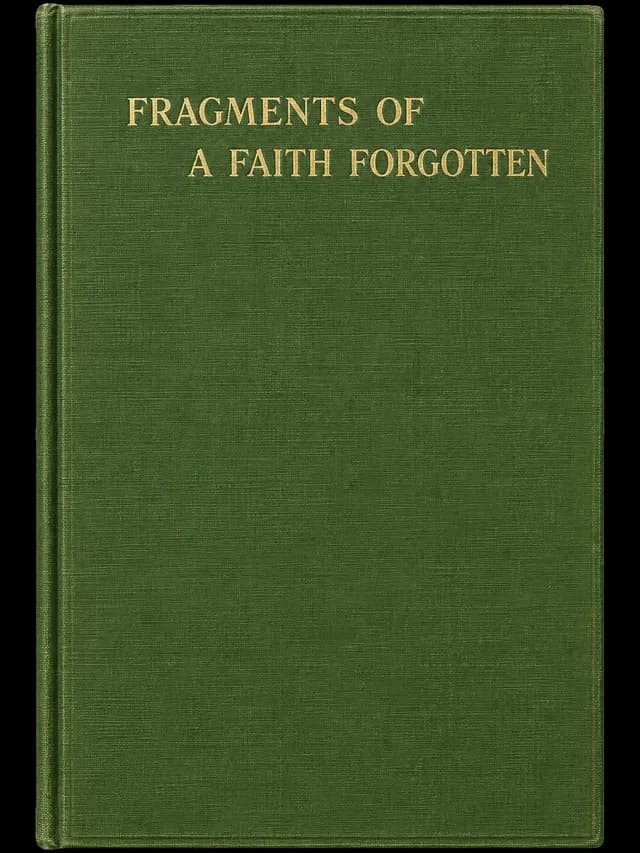
Fragments of a Faith Forgotten
Reading note
Mead’s sympathetic reconstruction predates the Nag Hammadi discovery. Read it as an important historical interpretation, alongside the ancient works and current scholarship cited here.
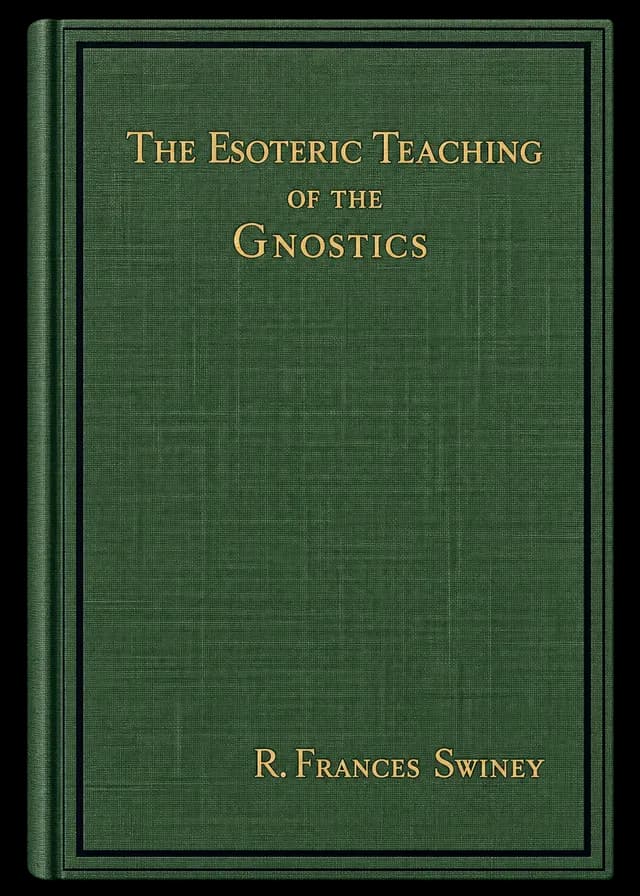
The Esoteric Teaching of the Gnostics
Reading note
Frances Swiney’s work belongs to modern esoteric reception. It offers a later interpretation of Gnostic themes, rather than a translation of an ancient Gnostic scripture.
Sources
- Gnosticism ↗Edward Moore, Internet Encyclopedia of PhilosophyReturn to text ↑
- Christian Book Culture, New Philology and Gnosticism ↗Paul Linjamaa, The Nag Hammadi Codices and their Ancient Readers, Cambridge University Press, 2024Return to text ↑
- Coptic Gnostic Library Online ↗Brill Scholarly Editions; editions under the general editorship of James M. RobinsonReturn to text ↑
- Apocryphon of John ↗Ancient text, translated by Frederik Wisse; Early Christian WritingsReturn to text ↑
- Gospel of Truth ↗Ancient text, translated by Robert M. Grant; Early Christian WritingsReturn to text ↑
- Gospel of Philip ↗Ancient text, translated by Wesley W. Isenberg; Early Christian WritingsReturn to text ↑
- Ptolemy: Interpretation of the prologue of John ↗Ptolemy, interpretation of John’s prologue, preserved through the ancient heresiological tradition; Early Christian WritingsReturn to text ↑
- Against Heresies, Book I ↗Irenaeus of Lyons, Roberts–Donaldson translation; Early Christian WritingsReturn to text ↑
- Some Outlines of Aeonology ↗G. R. S. Mead, Fragments of a Faith Forgotten; Internet Sacred Text ArchiveReturn to text ↑
- Corpus Hermeticum I ↗Matthew Andrews, Center for the Study of World Religions, Harvard Divinity School, 2026Return to text ↑
- Gnosticism ↗The Cambridge Companion to Christian Heresy, Cambridge University Press; chapter summaryReturn to text ↑
- Gospel of Thomas ↗Ancient text, translated by Thomas O. Lambdin; Early Christian WritingsReturn to text ↑
- Thunder, Perfect Mind ↗Ancient text, translated by George W. MacRae; Early Christian WritingsReturn to text ↑
- Corpus Hermeticum XI: Mind Unto Hermes ↗Ancient Hermetic text, translated by G. R. S. Mead; Internet Sacred Text ArchiveReturn to text ↑
About this article & its sources
A text-led introduction to ancient traditions commonly grouped as Gnostic. The contested modern category is distinguished from individual writings, schools and modern religious reception.
Passage attributions
What is Gnosticism?
Passage 1: Edward Moore, Internet Encyclopedia of Philosophy.
Passage 2: Edward Moore, Internet Encyclopedia of Philosophy.
Why scholars question the name
Passage 1: Paul Linjamaa, The Nag Hammadi Codices and their Ancient Readers, Cambridge University Press, 2024.
Passage 2: Paul Linjamaa, The Nag Hammadi Codices and their Ancient Readers, Cambridge University Press, 2024.
The Nag Hammadi writings
Passage 1: Brill Scholarly Editions; editions under the general editorship of James M. Robinson.
Passage 2: Brill Scholarly Editions; editions under the general editorship of James M. Robinson.
Sophia and the demiurge in the Apocryphon of John
Passage 1: Ancient text, translated by Frederik Wisse; Early Christian Writings.
Passage 2: Ancient text, translated by Frederik Wisse; Early Christian Writings.
Passage 3: Ancient text, translated by Frederik Wisse; Early Christian Writings.
Gnosis as awakening in the Gospel of Truth
Passage 1: Ancient text, translated by Robert M. Grant; Early Christian Writings.
Passage 2: Ancient text, translated by Robert M. Grant; Early Christian Writings.
Aeons, the Pleroma and scriptural interpretation
Passage 1: Ptolemy, passage concerning John’s prologue; Early Christian Writings, under a misleading Letter to Flora heading.
Passage 2: Ptolemy, interpretation of John’s prologue, preserved through the ancient heresiological tradition; Early Christian Writings.
Ritual, images and transformation
Passage 1: Ancient text, translated by Wesley W. Isenberg; Early Christian Writings.
Passage 2: Ancient text, translated by Wesley W. Isenberg; Early Christian Writings.
Why the Gospel of Thomas needs its own reading
Passage 1: Ancient text, translated by Thomas O. Lambdin; Early Christian Writings.
Passage 2: Ancient text, translated by Thomas O. Lambdin; Early Christian Writings.
Thunder, Perfect Mind: a different voice
Passage 1: Ancient text, translated by George W. MacRae; Early Christian Writings.
Passage 2: Ancient text, translated by George W. MacRae; Early Christian Writings.
What can we learn from opponents?
Passage 1: Irenaeus of Lyons, Roberts–Donaldson translation; Early Christian Writings.
Passage 2: Irenaeus of Lyons, Roberts–Donaldson translation; Early Christian Writings.
Passage 3: Irenaeus of Lyons, Roberts–Donaldson translation; Early Christian Writings.
Was Gnosticism separate from Christianity?
Passage 1: The Cambridge Companion to Christian Heresy, Cambridge University Press; chapter summary.
Passage 2: The Cambridge Companion to Christian Heresy, Cambridge University Press; chapter summary.