Samsara
Saṃsāra is the cycle of birth and death. Explore how Hindu, Buddhist and Jain teachings explain rebirth, heavenly life and release.
In this article
What is saṃsāra?
Saṃsāra is the continuing cycle of birth and death in Hindu, Buddhist and Jain traditions. Even a heavenly life can be temporary within it. Each tradition has its own account of what keeps the cycle going and what would bring it to an end. [1][2][4]
Reincarnation is a broader term for accounts of taking another body. Saṃsāra makes the cycle itself a condition from which release is sought. [3][4][6]
Return and release in Bhagavad Gita 8.16
Bhagavad Gita 8.16 says that beings return from even Brahmā’s high world. In Swami Mukundananda’s translation, Krishna distinguishes attaining him as the state after which there is no further birth. [1]
Buddhist discourses on wandering and not-self
In the Assu Sutta (SN 15.3), translated by Thanissaro Bhikkhu, the Buddha compares the tears shed across repeated lives with the water in the oceans. The wandering has no discernible beginning, and ignorance and craving keep it going. The recollection of loss is meant to lead towards dispassion and release. [2]
In SN 22.59, the Buddha asks whether the changing aggregates of experience can be taken as self. The two discourses address continuity and release without positing the permanent Self described in Mackenzie’s Upanishadic account. [3]
Individual souls in JAINpedia’s Jain account
Jasmine Kelly’s JAINpedia account explains how karma binds individual living souls to successive births. A soul born in heaven is still bound. In liberation the soul is free of karma and retains its individuality. [4]
Indian Myth and Legend by Donald A. Mackenzie
In Indian Myth and Legend, Donald A. Mackenzie gathers several accounts of rebirth. In one, former conduct shapes the next life. In another, the departed reach the moon and may return through rain. He also connects a dying person’s final thoughts with a future condition and interprets release as absorption in the World Soul. [7][8][9][10]
His Gita excerpts give attaining Krishna as the ending of return, in a discussion that also takes up knowledge, action without attachment and devotion. [6][11]
Mackenzie describes Buddhism in the language of extinction and nihilism. The Assu Sutta gives its own explanation of what ends: wandering sustained by ignorance and craving. [12][13]
See references (8)
- Indian Myth and Legend, Reader page 200
- Indian Myth and Legend, Reader page 187
- Indian Myth and Legend, Reader page 188
- Indian Myth and Legend, Reader page 189
- Indian Myth and Legend, Reader page 190
- Indian Myth and Legend, Reader page 201
- Indian Myth and Legend, Reader page 205
- Indian Myth and Legend, Reader page 207
The cycle in a Buddhist wheel of life
The Wellcome painting shows Yama holding the wheel. Within it are different conditions of rebirth. The image is a Buddhist way of putting the whole cycle before the viewer. [5]
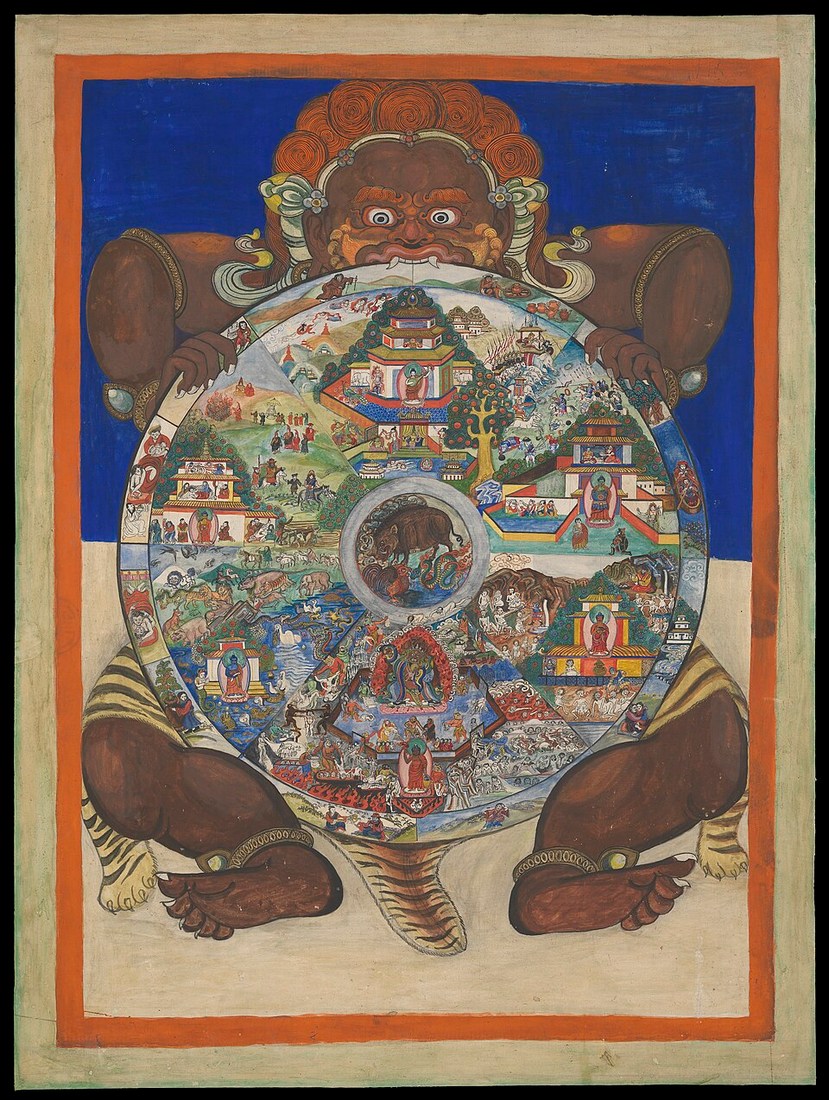
Yama holds the Wheel of Life, with the realms of rebirth shown inside. Undated gouache, Wellcome Collection.
Wellcome Collection, 45157i, image L0069380, via Wikimedia Commons. CC BY 4.0; resized and converted to JPEG. · Image source ↗ · CC BY 4.0
Why a better rebirth is still a rebirth
A heavenly birth can end in another life in both the Gita and the Jain account. They describe release differently. The Gita speaks of attaining Krishna, the Jain account of an individual soul freed from karma, and the Assu Sutta of the end of wandering sustained by ignorance and craving. [10][4][9][1][12][13][2]
See references (7)
- Bhagavad Gita 8.16, translated by Swami Mukundananda
- Assu Sutta, Samyutta Nikaya 15.3, translated by Thanissaro Bhikkhu
- Jasmine Kelly, Cycle of rebirth, JAINpedia
- Indian Myth and Legend, Reader page 189
- Indian Myth and Legend, Reader page 190
- Indian Myth and Legend, Reader page 205
- Indian Myth and Legend, Reader page 207
Read further in the library
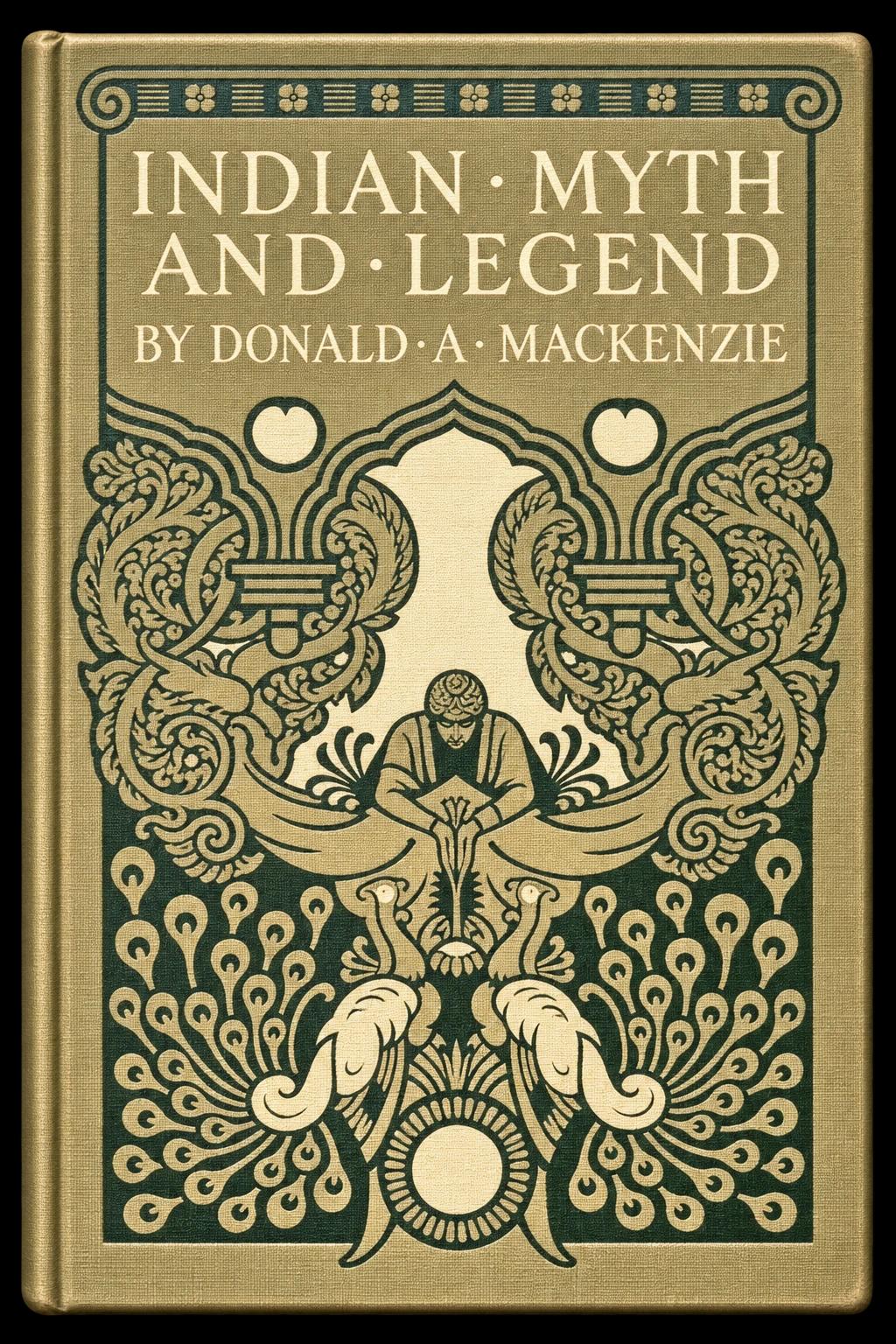
Indian Myth and Legend
Reading note
The separately titled account draws on exact passages in the consulted Library edition.
Sources
See references (13)
- Bhagavad Gita 8.16, translated by Swami Mukundananda ↗The verse itself is used for repeated birth in worlds up to Brahma’s abode and release upon attaining Krishna. The commentary’s particular classification of lower worlds is not adopted as a universal map.Return to text ↑
- Assu Sutta, Samyutta Nikaya 15.3, translated by Thanissaro Bhikkhu ↗Complete main discourse directly read: ignorance, craving, repeated loss and release. The ocean comparison is a rhetorical measure of suffering, not a calculable historical chronology.Return to text ↑
- Panca Sutta, Samyutta Nikaya 22.59, translated by Thanissaro Bhikkhu ↗Main discourse directly read, including the five aggregates and concluding release. The translator’s separate note on consciousness outside the aggregates is not treated as part of the spoken discourse.Return to text ↑
- Jasmine Kelly, Cycle of rebirth, JAINpedia ↗The Jain-specific introduction, Endless cycle and Rebirths sections were consulted, with the statement that perfected souls retain individuality. Comparative claims about Buddhism and Hinduism on the same page are not used as primary accounts of those traditions.Return to text ↑
- Yama holding the Bhavacakra or Wheel of life, undated gouache ↗Wellcome Collection, 45157i, image L0069380, via Wikimedia Commons. CC BY 4.0; resized and converted to JPEG.Return to text ↑
- Indian Myth and Legend, Reader page 200Donald A. Mackenzie, Indian Myth and Legend, Gresham Publishing Company Limited, London, undated consulted impression. Library edition IMJ-0649-E001. Persistent PageIDs and current Reader positions verified against the supplied PDF and cached Reader manifest. Embedded translations are Mackenzie’s presentation unless a separately consulted primary text is named.Read this page in Indian Myth and Legend ↗Return to text ↑
- Indian Myth and Legend, Reader page 187Donald A. Mackenzie, Indian Myth and Legend, Gresham Publishing Company Limited, London, undated consulted impression. Library edition IMJ-0649-E001. Persistent PageIDs and current Reader positions verified against the supplied PDF and cached Reader manifest. Embedded translations are Mackenzie’s presentation unless a separately consulted primary text is named.Read this page in Indian Myth and Legend ↗Return to text ↑
- Indian Myth and Legend, Reader page 188Donald A. Mackenzie, Indian Myth and Legend, Gresham Publishing Company Limited, London, undated consulted impression. Library edition IMJ-0649-E001. Persistent PageIDs and current Reader positions verified against the supplied PDF and cached Reader manifest. Embedded translations are Mackenzie’s presentation unless a separately consulted primary text is named.Read this page in Indian Myth and Legend ↗Return to text ↑
- Indian Myth and Legend, Reader page 189Donald A. Mackenzie, Indian Myth and Legend, Gresham Publishing Company Limited, London, undated consulted impression. Library edition IMJ-0649-E001. Persistent PageIDs and current Reader positions verified against the supplied PDF and cached Reader manifest. Embedded translations are Mackenzie’s presentation unless a separately consulted primary text is named.Read this page in Indian Myth and Legend ↗Return to text ↑
- Indian Myth and Legend, Reader page 190Donald A. Mackenzie, Indian Myth and Legend, Gresham Publishing Company Limited, London, undated consulted impression. Library edition IMJ-0649-E001. Persistent PageIDs and current Reader positions verified against the supplied PDF and cached Reader manifest. Embedded translations are Mackenzie’s presentation unless a separately consulted primary text is named.Read this page in Indian Myth and Legend ↗Return to text ↑
- Indian Myth and Legend, Reader page 201Donald A. Mackenzie, Indian Myth and Legend, Gresham Publishing Company Limited, London, undated consulted impression. Library edition IMJ-0649-E001. Persistent PageIDs and current Reader positions verified against the supplied PDF and cached Reader manifest. Embedded translations are Mackenzie’s presentation unless a separately consulted primary text is named.Read this page in Indian Myth and Legend ↗Return to text ↑
- Indian Myth and Legend, Reader page 205Donald A. Mackenzie, Indian Myth and Legend, Gresham Publishing Company Limited, London, undated consulted impression. Library edition IMJ-0649-E001. Persistent PageIDs and current Reader positions verified against the supplied PDF and cached Reader manifest. Embedded translations are Mackenzie’s presentation unless a separately consulted primary text is named.Read this page in Indian Myth and Legend ↗Return to text ↑
- Indian Myth and Legend, Reader page 207Donald A. Mackenzie, Indian Myth and Legend, Gresham Publishing Company Limited, London, undated consulted impression. Library edition IMJ-0649-E001. Persistent PageIDs and current Reader positions verified against the supplied PDF and cached Reader manifest. Embedded translations are Mackenzie’s presentation unless a separately consulted primary text is named.Read this page in Indian Myth and Legend ↗Return to text ↑