Rosicrucianism
Rosicrucianism grew from early modern manifestos about the Rosy Cross. Read the Fama, the Confessio and later accounts of what the fraternity taught.
In this article
What is Rosicrucianism?
Rosicrucianism is the tradition of spiritual reform and fellowship associated with the Rosy Cross. It took its public form in early seventeenth-century manifestos about a hidden brotherhood and its founder, Christian Rosenkreutz. Later writers and orders gave the fraternity different teachings, histories and forms of membership. [1][2][3][4]
The printed manifestos show what early readers were told about the brotherhood. Later accounts show how authors and orders claimed that inheritance. The gaps between those records matter when someone claims an unbroken lineage. [1][3]
See references (4)
- Fama Fraternitatis: opening and the travels of C. R. C., in A. E. Waite’s The Real History of the Rosicrucians
- Confessio Fraternitatis, chapters I–II, X–XI, in A. E. Waite’s The Real History of the Rosicrucians
- Evolution of Immortality, printed p. 130, Reader page 129
- Evolution of Immortality, printed p. 131, Reader page 130
Fama Fraternitatis
The Fama Fraternitatis, first printed in 1614, tells of Brother C. R. C.’s travels and his attempt to renew learning in Europe. He encounters wisdom abroad and returns with a plan to bring knowledge into a common order. The story gives the little human world a correspondence with the greater world, joining the study of nature to a religious vision of harmony. It asks readers to imagine cooperation where rivalry and attachment to established authority have obstructed discovery. These are the manifesto’s narrative and programme; they do not by themselves establish the biography of its founder. [1]
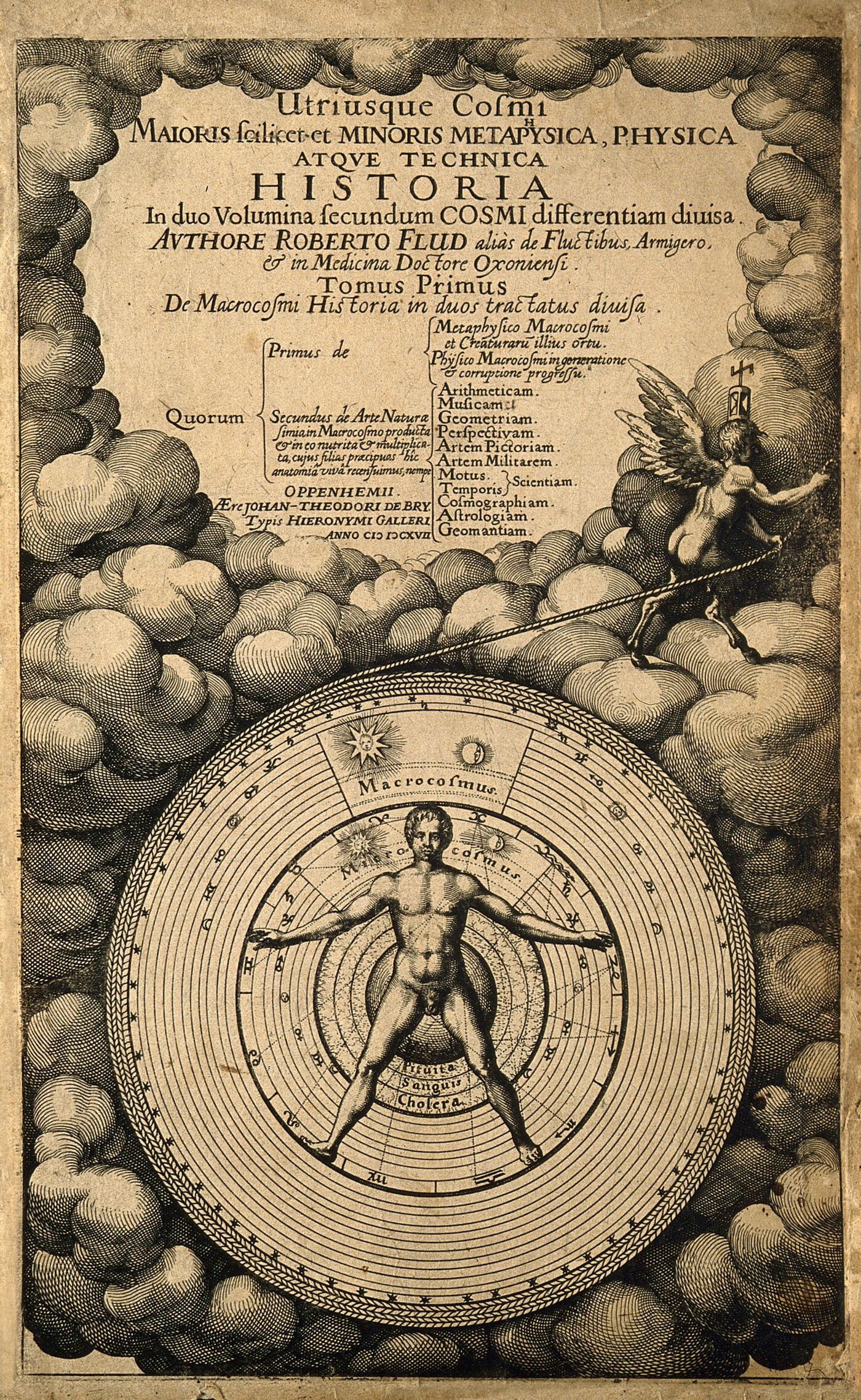
Title page for Robert Fludd’s Utriusque cosmi historia, 1617. Human and cosmic orders appear together. Rosicruciæ later names Fludd among the figures in the literature of the Rosy Cross.
Wellcome Collection, 2989i. Public Domain Mark. · Image source ↗ · Public Domain
Confessio Fraternitatis
The Confessio Fraternitatis followed in 1615. Its second chapter ties the renewal of philosophy to theology, medicine and the human microcosm. Chapter X makes sustained study and practice of scripture central to the fraternity’s laws. Chapter XI values knowledge of nature above the pursuit of metallic transmutation. Together they outline a Christian programme of reform. [2]
Evolution of Immortality
Freeman Benjamin Dowd, writing as Rosicruciæ in Evolution of Immortality, presents the Rosy Cross as a spiritual fraternity extending beyond visible membership. The appendix describes quiet work, inward discipline and sympathetic people who might live close to one another without recognising their connection. Although it acknowledges lodges, signs and passwords, it locates genuine membership in the development of the principles within the person. [3][4]
The fraternity’s principles include divine fatherhood, human fellowship and release from successive earthly embodiments. Happiness depends on the elevation of all souls, rather than the private security of a fortunate individual. Rosicruciæ connects this ideal with practical help and the prevention of harm, giving his account of inward transformation a social purpose. [5][6]
Its unseen organisation is described through spiritual spaces and societies with which a person can develop an affinity. The book also describes councils involving embodied and disembodied members. These claims form part of its esoteric account of how the fraternity works, alongside its visible activities. They are not records that independently establish the existence or proceedings of invisible assemblies. [7][8][6][9]
The appendix claims roots as old as the Egyptian mysteries and names Christian Rosenkreutz, Robert Fludd and Francis Bacon in its literature. That is the fraternity’s account of its inheritance. It supplies no continuous documentary history connecting ancient Egypt, the seventeenth-century manifestos and the organisation described in 1900. Its distinctive teachings about reincarnation, spiritual spaces and monogamy should likewise remain attributed to this book. [3][5][10]
Rosicruciæ, catalogued as Freeman Benjamin Dowd, makes immortality in Evolution of Immortality inseparable from cultivating the whole person. In the appendix, a human trinity of Intelligence, Will and Love is supposed to develop an inward flame. Christ-union and an alleged seal of immortality give this practice its particular religious meaning. [12][13]
The same appendix rejects an achievement purchased at the cost of ordinary capacities. Body, mind and will are to develop together. Finding the centre does not mean ignoring selfhood or abandoning the use of bodily and mental functions. The text’s language of rhythmic self-poise qualifies a reading based on withdrawal alone. [14]
Its final image is a lamp which must shine by its own light. The fraternity can point towards a path and offer organised instruction, but the individual cannot borrow another person’s spiritual attainment. The proposed bureau of instruction gives the closing appeal a visible organisational setting. [14][15][16]
These statements also expose a tension between solitary effort and universal fellowship. No one can perform another’s inner work, yet the book says private happiness cannot be complete while other souls remain oppressed. Its immortality programme combines personal responsibility with a social aspiration. [17][18][19][16]
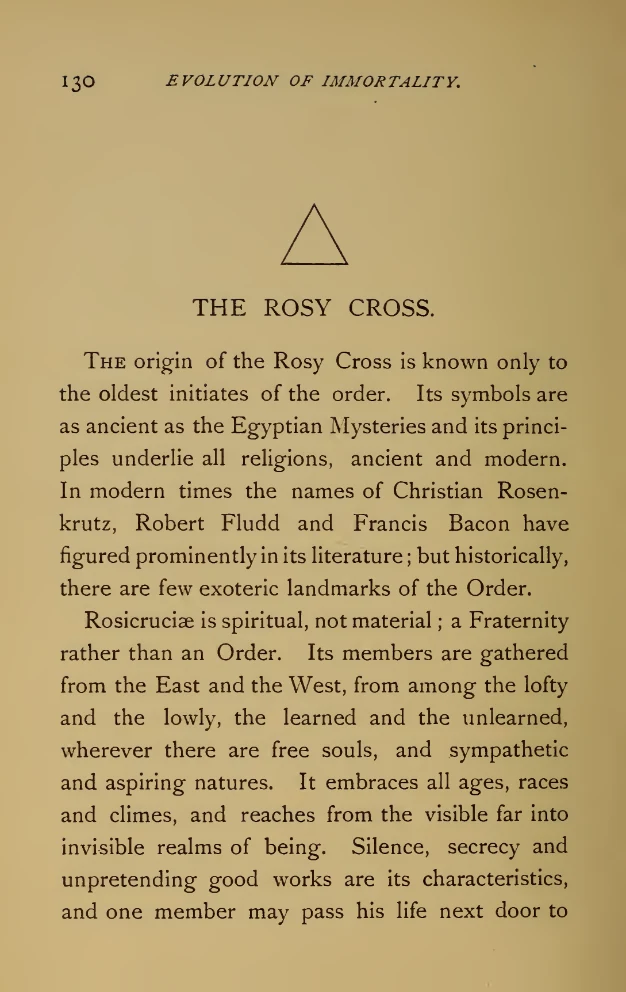
Source facsimile: Evolution of Immortality (1900), printed p. 130, Reader page 129.
Rosicruciæ (catalogued as Freeman Benjamin Dowd), Evolution of Immortality, copyright 1900. Public-domain historical page from the checksum-verified Library PDF. · Image source ↗ · Public Domain
See references (16)
- Evolution of Immortality, printed p. 130, Reader page 129
- Evolution of Immortality, printed p. 131, Reader page 130
- Evolution of Immortality, printed p. 132, Reader page 131
- Evolution of Immortality, printed p. 139, Reader page 138
- Evolution of Immortality, printed p. 135, Reader page 134
- Evolution of Immortality, printed p. 136, Reader page 135
- Evolution of Immortality, printed p. 140, Reader page 139
- Evolution of Immortality, printed p. 141, Reader page 140
- Evolution of Immortality, printed p. 137, Reader page 136
- Evolution of Immortality, printed p. 138, Reader page 137
- Evolution of Immortality, printed p. 142, Reader page 141
- Evolution of Immortality, printed p. 143, Reader page 142
- Evolution of Immortality, printed p. 145, Reader page 144
- Evolution of Immortality, printed p. 132, Reader page 131
- Evolution of Immortality, printed p. 133, Reader page 132
- Evolution of Immortality, printed p. 139, Reader page 138
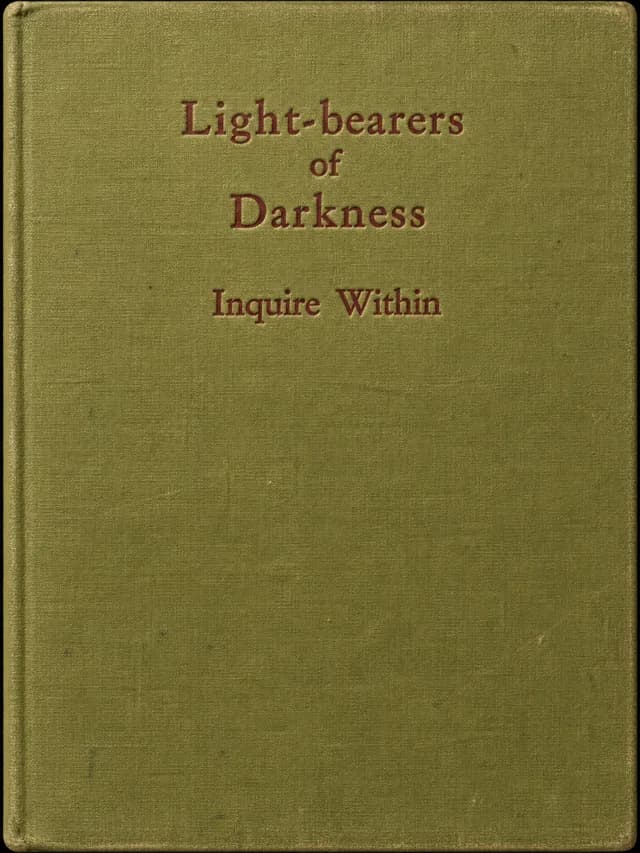
Light-Bearers of Darkness: Inquire Within
Inquire Within’s Light-Bearers of Darkness describes Rosicrucianism chiefly through the Stella Matutina and its inner R.R. et A.C. rites. The writer claims former office in the order on the title page. The account combines reproduced obligations and ceremonies with reports of messages and disputed spiritual authority. These different kinds of material need to remain distinguishable. [27][28][29][30]
The historical connections are more qualified than a single continuous lineage would suggest. A report reproduced in the book says Rudolf Steiner instructed Robert William Felkin but did not give him grades or grant the requested appointment as his representative in England. The same passage sets this beside other claims about continental authority. Contact, instruction, initiation and authorisation are separate claims. [31][32]
The inner obligation contains an ethical programme as well as secrecy. Its clauses call for an unselfish life, fair treatment of candidates, forbearance, equality between the sexes and study of the mysteries of nature. The critic reads the order through the danger of hidden domination, but the stated duties must remain visible beside that hostile interpretation. [29][30]
This evidence concerns the order and documents as represented by a particular critic. The book’s antisemitic theory of worldwide control does not turn a shared Rosicrucian name into proof that every fraternity belongs to one organisation, nor does it establish the claimed ancient transmission of a rite. [33][34][31][32]
See references (8)
- Light-Bearers of Darkness, Reader page 2
- Light-Bearers of Darkness, printed p. 151, Reader page 154
- Light-Bearers of Darkness, Reader page 157
- Light-Bearers of Darkness, printed p. 155, Reader page 158
- Light-Bearers of Darkness, Reader page 95
- Light-Bearers of Darkness, Reader page 96
- Light-Bearers of Darkness, printed p. 3, Reader page 6
- Light-Bearers of Darkness, printed p. 10, Reader page 13
A Wanderer in the Spirit Lands: Franchezzo, transcribed by A. Farnese
The Brotherhood of Hope in A Wanderer in the Spirit Lands offers care, lectures and rescue work. Franchezzo, whose account A. Farnese transcribed, describes its unclosed door and its advanced lecture-hall image of a relatively perfect person still facing further growth. Members can learn through the work of helping others. [22][23][24][25][26]
See references (5)
- A Wanderer in the Spirit Lands, printed p. 28, Reader page 37
- A Wanderer in the Spirit Lands, printed p. 29, Reader page 38
- A Wanderer in the Spirit Lands, printed p. 33, Reader page 42
- A Wanderer in the Spirit Lands, printed p. 304, Reader page 313
- A Wanderer in the Spirit Lands, printed p. 305, Reader page 314
Fellowship, authority and inner work
Evolution of Immortality makes its final lamp image a demand that the individual shine by their own light: instruction cannot replace personal attainment. The obligations reproduced in Light-Bearers of Darkness likewise include ethical self-development, while its message pledge demands acceptance of an appointed channel. The comparison brings a real question into view: how does a fraternity reconcile independent inner work with institutional authority? Neither a promise of independence nor a critic’s accusation settles how every group answers it. [14][15][16][35][29][30]
Dowd’s appendix claims ancient origins and describes an invisible membership. Those claims belong to the particular fraternity he presents. [20][21][12][13]
The text also gives illness and bodily transformation religious meanings as part of Dowd’s account of immortality. [12][13][14]
The two fraternities give personal development a social setting, but describe different organisations and goals. Dowd’s Rosy Cross spans living and invisible members and seeks a transformed whole-person immortality. Franchezzo’s Brotherhood trains and assists people who already inhabit an afterlife. Similar fellowship does not establish that the organisations are identical. [22][23][24][25][26][17][12][13][14][16]
See references (16)
- Evolution of Immortality, printed p. 137, Reader page 136
- Evolution of Immortality, printed p. 138, Reader page 137
- Evolution of Immortality, printed p. 142, Reader page 141
- Evolution of Immortality, printed p. 143, Reader page 142
- Evolution of Immortality, printed p. 145, Reader page 144
- Evolution of Immortality, printed p. 132, Reader page 131
- Evolution of Immortality, printed p. 130, Reader page 129
- Evolution of Immortality, printed p. 131, Reader page 130
- A Wanderer in the Spirit Lands, printed p. 28, Reader page 37
- A Wanderer in the Spirit Lands, printed p. 29, Reader page 38
- A Wanderer in the Spirit Lands, printed p. 33, Reader page 42
- A Wanderer in the Spirit Lands, printed p. 304, Reader page 313
- A Wanderer in the Spirit Lands, printed p. 305, Reader page 314
- Light-Bearers of Darkness, Reader page 157
- Light-Bearers of Darkness, printed p. 155, Reader page 158
- Light-Bearers of Darkness, printed p. 89, Reader page 92
Read further in the library
Evolution of Immortality
Reading note
The Rosy Cross appendix sets out this author’s account of an inward fraternity, its principles and its unseen organisation.
A Wanderer in the Spirit Lands
Reading note
Separately attributed comparison with exact previously researched Library passages.
Light-Bearers of Darkness
Reading note
The separately titled account draws on exact passages in the consulted Library edition.
Sources
See references (35)
- Fama Fraternitatis: opening and the travels of C. R. C., in A. E. Waite’s The Real History of the Rosicrucians ↗Anonymous manifesto, first printed in 1614; English text reproduced in A. E. Waite’s 1887 collection. The narrative’s claims are attributed to the manifesto.Return to text ↑
- Confessio Fraternitatis, chapters I–II, X–XI, in A. E. Waite’s The Real History of the Rosicrucians ↗Anonymous manifesto, first printed in Latin in 1615; English text revised by A. E. Waite from the version accredited to Thomas Vaughan.Return to text ↑
- Evolution of Immortality, printed p. 130, Reader page 129Rosicruciæ (catalogued as Freeman Benjamin Dowd), Evolution of Immortality. Eulian Publishing Company, Salem, 1900.Read this page in Evolution of Immortality ↗Return to text ↑
- Evolution of Immortality, printed p. 131, Reader page 130Rosicruciæ (catalogued as Freeman Benjamin Dowd), Evolution of Immortality. Eulian Publishing Company, Salem, 1900.Read this page in Evolution of Immortality ↗Return to text ↑
- Evolution of Immortality, printed p. 132, Reader page 131Rosicruciæ (catalogued as Freeman Benjamin Dowd), Evolution of Immortality. Eulian Publishing Company, Salem, 1900.Read this page in Evolution of Immortality ↗Return to text ↑
- Evolution of Immortality, printed p. 139, Reader page 138Rosicruciæ (catalogued as Freeman Benjamin Dowd), Evolution of Immortality. Eulian Publishing Company, Salem, 1900.Read this page in Evolution of Immortality ↗Return to text ↑
- Evolution of Immortality, printed p. 135, Reader page 134Rosicruciæ (catalogued as Freeman Benjamin Dowd), Evolution of Immortality. Eulian Publishing Company, Salem, 1900.Read this page in Evolution of Immortality ↗Return to text ↑
- Evolution of Immortality, printed p. 136, Reader page 135Rosicruciæ (catalogued as Freeman Benjamin Dowd), Evolution of Immortality. Eulian Publishing Company, Salem, 1900.Read this page in Evolution of Immortality ↗Return to text ↑
- Evolution of Immortality, printed p. 140, Reader page 139Rosicruciæ (catalogued as Freeman Benjamin Dowd), Evolution of Immortality. Eulian Publishing Company, Salem, 1900.Read this page in Evolution of Immortality ↗Return to text ↑
- Evolution of Immortality, printed p. 141, Reader page 140Rosicruciæ (catalogued as Freeman Benjamin Dowd), Evolution of Immortality. Eulian Publishing Company, Salem, 1900.Read this page in Evolution of Immortality ↗Return to text ↑
- The microcosm (man) and the macrocosm (the world), 1617: Wellcome Collection 2989i ↗Wellcome Collection, 2989i. Engraving credited to T. de Bry, 1617; associated with Robert Fludd. Public Domain Mark.
- Evolution of Immortality, printed p. 137, Reader page 136Rosicruciæ, catalogued as Freeman Benjamin Dowd, Evolution of Immortality. Eulian Publishing Company, Salem, Mass., copyright 1900; title page undated. The book’s metaphysical and scientific assertions remain attributed. The separately reproduced Higher Thought of Sex address has no speaker named in this edition.Read this page in Evolution of Immortality ↗Return to text ↑
- Evolution of Immortality, printed p. 138, Reader page 137Rosicruciæ, catalogued as Freeman Benjamin Dowd, Evolution of Immortality. Eulian Publishing Company, Salem, Mass., copyright 1900; title page undated. The book’s metaphysical and scientific assertions remain attributed. The separately reproduced Higher Thought of Sex address has no speaker named in this edition.Read this page in Evolution of Immortality ↗Return to text ↑
- Evolution of Immortality, printed p. 142, Reader page 141Rosicruciæ, catalogued as Freeman Benjamin Dowd, Evolution of Immortality. Eulian Publishing Company, Salem, Mass., copyright 1900; title page undated. The book’s metaphysical and scientific assertions remain attributed. The separately reproduced Higher Thought of Sex address has no speaker named in this edition.Read this page in Evolution of Immortality ↗Return to text ↑
- Evolution of Immortality, printed p. 143, Reader page 142Rosicruciæ, catalogued as Freeman Benjamin Dowd, Evolution of Immortality. Eulian Publishing Company, Salem, Mass., copyright 1900; title page undated. The book’s metaphysical and scientific assertions remain attributed. The separately reproduced Higher Thought of Sex address has no speaker named in this edition.Read this page in Evolution of Immortality ↗Return to text ↑
- Evolution of Immortality, printed p. 145, Reader page 144Rosicruciæ, catalogued as Freeman Benjamin Dowd, Evolution of Immortality. Eulian Publishing Company, Salem, Mass., copyright 1900; title page undated. The book’s metaphysical and scientific assertions remain attributed. The separately reproduced Higher Thought of Sex address has no speaker named in this edition.Read this page in Evolution of Immortality ↗Return to text ↑
- Evolution of Immortality, printed p. 132, Reader page 131Rosicruciæ, catalogued as Freeman Benjamin Dowd, Evolution of Immortality. Eulian Publishing Company, Salem, Mass., copyright 1900; title page undated. The book’s metaphysical and scientific assertions remain attributed. The separately reproduced Higher Thought of Sex address has no speaker named in this edition.Read this page in Evolution of Immortality ↗Return to text ↑
- Evolution of Immortality, printed p. 133, Reader page 132Rosicruciæ, catalogued as Freeman Benjamin Dowd, Evolution of Immortality. Eulian Publishing Company, Salem, Mass., copyright 1900; title page undated. The book’s metaphysical and scientific assertions remain attributed. The separately reproduced Higher Thought of Sex address has no speaker named in this edition.Read this page in Evolution of Immortality ↗Return to text ↑
- Evolution of Immortality, printed p. 139, Reader page 138Rosicruciæ, catalogued as Freeman Benjamin Dowd, Evolution of Immortality. Eulian Publishing Company, Salem, Mass., copyright 1900; title page undated. The book’s metaphysical and scientific assertions remain attributed. The separately reproduced Higher Thought of Sex address has no speaker named in this edition.Read this page in Evolution of Immortality ↗Return to text ↑
- Evolution of Immortality, printed p. 130, Reader page 129Rosicruciæ, catalogued as Freeman Benjamin Dowd, Evolution of Immortality. Eulian Publishing Company, Salem, Mass., copyright 1900; title page undated. The book’s metaphysical and scientific assertions remain attributed. The separately reproduced Higher Thought of Sex address has no speaker named in this edition.Read this page in Evolution of Immortality ↗Return to text ↑
- Evolution of Immortality, printed p. 131, Reader page 130Rosicruciæ, catalogued as Freeman Benjamin Dowd, Evolution of Immortality. Eulian Publishing Company, Salem, Mass., copyright 1900; title page undated. The book’s metaphysical and scientific assertions remain attributed. The separately reproduced Higher Thought of Sex address has no speaker named in this edition.Read this page in Evolution of Immortality ↗Return to text ↑
- A Wanderer in the Spirit Lands, printed p. 28, Reader page 37A Wanderer in the Spirit Lands, attributed to the spirit Franchezzo and transcribed by A. Farnese. W. J. Sinkins, London. Title page undated; preface dated 1896. The narrator’s experiences and the guides’ explanations are reported claims, not independently established observations.Read this page in A Wanderer in the Spirit Lands ↗Return to text ↑
- A Wanderer in the Spirit Lands, printed p. 29, Reader page 38A Wanderer in the Spirit Lands, attributed to the spirit Franchezzo and transcribed by A. Farnese. W. J. Sinkins, London. Title page undated; preface dated 1896. The narrator’s experiences and the guides’ explanations are reported claims, not independently established observations.Read this page in A Wanderer in the Spirit Lands ↗Return to text ↑
- A Wanderer in the Spirit Lands, printed p. 33, Reader page 42A Wanderer in the Spirit Lands, attributed to the spirit Franchezzo and transcribed by A. Farnese. W. J. Sinkins, London. Title page undated; preface dated 1896. The narrator’s experiences and the guides’ explanations are reported claims, not independently established observations.Read this page in A Wanderer in the Spirit Lands ↗Return to text ↑
- A Wanderer in the Spirit Lands, printed p. 304, Reader page 313A Wanderer in the Spirit Lands, attributed to the spirit Franchezzo and transcribed by A. Farnese. W. J. Sinkins, London. Title page undated; preface dated 1896. The narrator’s experiences and the guides’ explanations are reported claims, not independently established observations.Read this page in A Wanderer in the Spirit Lands ↗Return to text ↑
- A Wanderer in the Spirit Lands, printed p. 305, Reader page 314A Wanderer in the Spirit Lands, attributed to the spirit Franchezzo and transcribed by A. Farnese. W. J. Sinkins, London. Title page undated; preface dated 1896. The narrator’s experiences and the guides’ explanations are reported claims, not independently established observations.Read this page in A Wanderer in the Spirit Lands ↗Return to text ↑
- Light-Bearers of Darkness, Reader page 2Inquire Within, Light-Bearers of Darkness (first printed 1930; supplied facsimile reprinted 2001), exact selected Library edition IMJ-0032-E002. Quotations and reported documents are read through this polemical source, unless a separately titled account states otherwise. Original source leaf 206 is absent; original PageIDs and current Reader positions are verified.Read this page in Light-Bearers of Darkness ↗Return to text ↑
- Light-Bearers of Darkness, printed p. 151, Reader page 154Inquire Within, Light-Bearers of Darkness (first printed 1930; supplied facsimile reprinted 2001), exact selected Library edition IMJ-0032-E002. Quotations and reported documents are read through this polemical source, unless a separately titled account states otherwise. Original source leaf 206 is absent; original PageIDs and current Reader positions are verified.Read this page in Light-Bearers of Darkness ↗Return to text ↑
- Light-Bearers of Darkness, Reader page 157Inquire Within, Light-Bearers of Darkness (first printed 1930; supplied facsimile reprinted 2001), exact selected Library edition IMJ-0032-E002. Quotations and reported documents are read through this polemical source, unless a separately titled account states otherwise. Original source leaf 206 is absent; original PageIDs and current Reader positions are verified.Read this page in Light-Bearers of Darkness ↗Return to text ↑
- Light-Bearers of Darkness, printed p. 155, Reader page 158Inquire Within, Light-Bearers of Darkness (first printed 1930; supplied facsimile reprinted 2001), exact selected Library edition IMJ-0032-E002. Quotations and reported documents are read through this polemical source, unless a separately titled account states otherwise. Original source leaf 206 is absent; original PageIDs and current Reader positions are verified.Read this page in Light-Bearers of Darkness ↗Return to text ↑
- Light-Bearers of Darkness, Reader page 95Inquire Within, Light-Bearers of Darkness (first printed 1930; supplied facsimile reprinted 2001), exact selected Library edition IMJ-0032-E002. Quotations and reported documents are read through this polemical source, unless a separately titled account states otherwise. Original source leaf 206 is absent; original PageIDs and current Reader positions are verified.Read this page in Light-Bearers of Darkness ↗Return to text ↑
- Light-Bearers of Darkness, Reader page 96Inquire Within, Light-Bearers of Darkness (first printed 1930; supplied facsimile reprinted 2001), exact selected Library edition IMJ-0032-E002. Quotations and reported documents are read through this polemical source, unless a separately titled account states otherwise. Original source leaf 206 is absent; original PageIDs and current Reader positions are verified.Read this page in Light-Bearers of Darkness ↗Return to text ↑
- Light-Bearers of Darkness, printed p. 3, Reader page 6Inquire Within, Light-Bearers of Darkness (first printed 1930; supplied facsimile reprinted 2001), exact selected Library edition IMJ-0032-E002. Quotations and reported documents are read through this polemical source, unless a separately titled account states otherwise. Original source leaf 206 is absent; original PageIDs and current Reader positions are verified.Read this page in Light-Bearers of Darkness ↗Return to text ↑
- Light-Bearers of Darkness, printed p. 10, Reader page 13Inquire Within, Light-Bearers of Darkness (first printed 1930; supplied facsimile reprinted 2001), exact selected Library edition IMJ-0032-E002. Quotations and reported documents are read through this polemical source, unless a separately titled account states otherwise. Original source leaf 206 is absent; original PageIDs and current Reader positions are verified.Read this page in Light-Bearers of Darkness ↗Return to text ↑
- Light-Bearers of Darkness, printed p. 89, Reader page 92Inquire Within, Light-Bearers of Darkness (first printed 1930; supplied facsimile reprinted 2001), exact selected Library edition IMJ-0032-E002. Quotations and reported documents are read through this polemical source, unless a separately titled account states otherwise. Original source leaf 206 is absent; original PageIDs and current Reader positions are verified.Read this page in Light-Bearers of Darkness ↗Return to text ↑