Immortality of the Soul
Immortality of the soul is the belief that personal life can endure bodily death. Compare Dante, Flammarion, Ward and Dowd on what survives.
In this article
What is immortality of the soul?
Immortality of the soul is the belief that the soul can live beyond bodily death without a further ending. Some writers ground that belief in God. Others ask whether a continuing person needs self-awareness, memory or the ability to act. [4][5][2]
The question is what endures through change. Dante can give the separated soul memory and will while still awaiting resurrection. Other books ask whether developing new powers after death changes what it means to be the same person. [7][1][2]
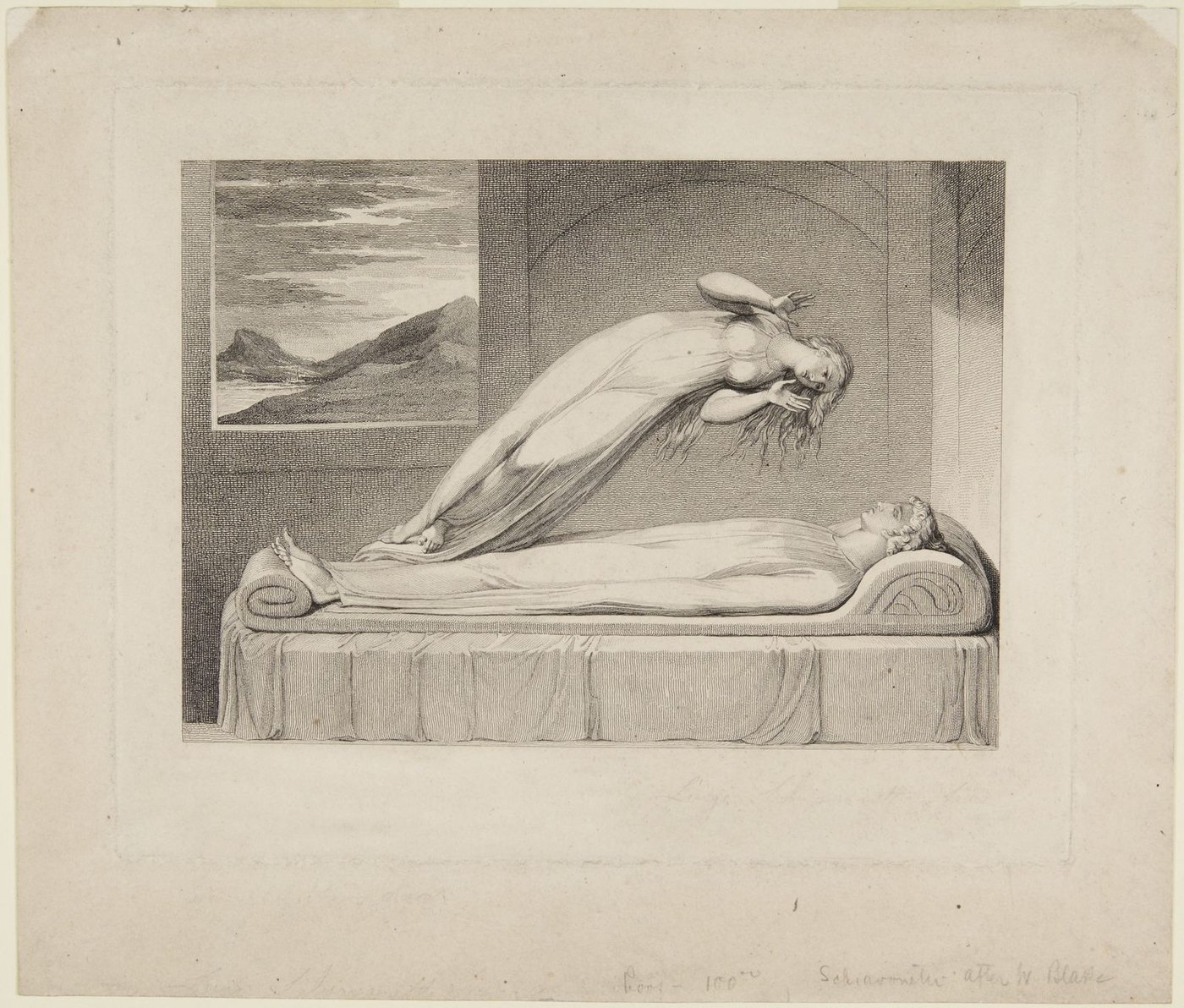
Luigi Schiavonetti after William Blake, The Soul Hovering over the Body Reluctantly Parting with Life, 1805–08. Made for Robert Blair’s The Grave, the image pictures a personal form separating from the body. It is an artistic treatment of survival, rather than proof that this surviving life has no end.
Princeton University Art Museum. Gift of Frank Jewett Mather Jr., x1947-85. Public Domain. · Image source ↗ · Public Domain
See references (5)
- The Angels’ Diary and Celestion Study of Man, Reader page 167
- The Angels’ Diary and Celestion Study of Man, Reader page 168
- The Angels’ Diary and Celestion Study of Man, Reader page 162
- The Angels’ Diary and Celestion Study of Man, Reader page 163
- The Angels’ Diary and Celestion Study of Man, Reader page 153
Accounts from the Library
Lumen by Camille Flammarion
In Lumen, Camille Flammarion sets the finite life of an organism beside a soul capable of thought and moral activity. The contrast opens a question that his later conversation makes sharper: under what conditions does a distinct, conscious person persist? [46][47]
The second conversation introduces a substantial condition. Lumen says that an independent soul must already know itself as existing if it is to preserve its identity and qualify for immortality. Without that self-awareness, he says, it falls back into the cosmos as an unconscious force. The distinction is between a continuing centre of force and a consciously enduring individual. [48][49]
The narrator applies this condition sharply, denying immortality to those he describes as living without thought or spiritual awareness. An account of the book should retain that exclusion, even though it complicates the confidence of its opening pages. It is the dialogue’s judgement about spiritual development, not an established test by which a reader can determine another person’s future. [48][49]
Does a longer life guarantee happiness? A later planetary episode answers a different question from the survival of the soul. Lumen describes organisms whose bodily rhythms permit extremely long lives, yet whose mental activity makes that duration burdensome. The episode includes a disturbing account of widespread self-destruction. It unsettles the assumption that more embodied years necessarily amount to a better life. [50][51]
Long bodily duration, survival after death and self-conscious immortality consequently remain distinct. The first can become oppressive in one of the book’s imagined worlds, while the last is associated with developed spiritual life and an inexhaustible field of discovery. Those are different conditions of existence, rather than interchangeable descriptions of living for ever. [48][49][50][51][52]
The Angels’ Diary
Celestion Study of Man, attributed to Charles Samson within the volume, begins its explicit discussion of immortality with dependence upon God. A soul endures because its life comes from an eternal divine principle. Its continuation is presented as an expression of that source. [3][4][5]
The author also appeals to the continued existence of families in the spirit world. If souls perished, he reasons, some long-standing family ties would have been broken. Within this communicated account, the people said to have survived provide evidence for a claim about the future. The argument extends from reported continuance to an assurance of immortality. [5]
He interprets biblical language about a soul dying through the image of dormancy. A person whose spiritual capacities remain asleep has failed to develop them. The seed that can wait for years before sending up a green shoot supplies another picture of life that is present before its expression becomes apparent. [5][6]
The winter lilac makes this idea especially tangible. Removing a bud’s brown covering reveals tiny leaves wrapped around the beginnings of a flower. The author treats those hidden parts as an analogy for faculties already present in the soul. Immortality opens a future in which they can unfold. [1][2]
The promised future preserves individuality and moves onward through spiritual development. The author rejects reincarnation and objects to the prospect of returning in a lower form. This is his stated position within a Spiritualist argument. Its account of endless growth needs to retain that commitment when compared with books that understand survival through rebirth. [7][8][9][10]
Growth therefore has two aspects in the volume. A divine life is said to be enduring already, while the person has capacities still to discover. In the closing Christmas address the same promise appears beside the hope that the departed continue to hold their individuality. What survives is meant to include someone a family can love and recognise. [2][11]
See references (11)
- The Angels’ Diary and Celestion Study of Man, Reader page 167
- The Angels’ Diary and Celestion Study of Man, Reader page 168
- The Angels’ Diary and Celestion Study of Man, Reader page 114
- The Angels’ Diary and Celestion Study of Man, Reader page 162
- The Angels’ Diary and Celestion Study of Man, Reader page 163
- The Angels’ Diary and Celestion Study of Man, Reader page 164
- The Angels’ Diary and Celestion Study of Man, Reader page 153
- The Angels’ Diary and Celestion Study of Man, Reader page 159
- The Angels’ Diary and Celestion Study of Man, Reader page 160
- The Angels’ Diary and Celestion Study of Man, Reader page 161
- The Angels’ Diary and Celestion Study of Man, Reader page 219
Gone West by J. S. M. Ward
J. S. M. Ward’s Gone West gives survival an argument through a classroom dialogue. H. J. L., one of its spirit contributors, asks why he still appears to possess a body. The teacher asks what happens to matter, force and form, leading towards the claim that personal form can continue after the physical body changes. [12][13]
H. J. L. then asks what kind of creator a human being can be. A thought has a form that can influence others, but a person can think different thoughts. The teacher traces that wider capacity back to God. Within the dialogue, divine creation explains why a person has possibilities beyond those of any one thought. [13][14][15]
The introductory discussion of the Wall of Fire extends continuity beyond another transition. It calls this a second death in one usage and says the personal being survives a change affecting its form. Ward distinguishes what he has been told from what he can explain, acknowledging that the state beyond remains largely unknown to him. [16][17][18]
This creates a limit within the assurance of survival. The contributors describe continued personal being while withholding a detailed picture of its later condition. The book’s argument for endurance therefore accompanies an admission about the reach of its knowledge. [17][14]
The Officer later argues against the soul’s annihilation. Asked whether a persistently unrepentant person could cease to exist, he reasons that a soul understood as part of God cannot be destroyed. He expects it eventually to turn towards God, even after immense periods. This is the contributor’s theological argument for endurance, expressed through the same hope that shapes his account of leaving hell. [19]
See references (8)
- Gone West, printed p. 15, Reader page 28
- Gone West, printed p. 24, Reader page 37
- Gone West, printed p. 25, Reader page 38
- Gone West, printed p. 26, Reader page 39
- Gone West, Introduction, Reader page 9
- Gone West, Introduction, Reader page 10
- Gone West, printed p. 18, Reader page 31
- Gone West, printed p. 95, Reader page 108
The Divine Comedy by Dante Alighieri
Dante Alighieri’s Divine Comedy portrays personal life continuing between bodily death and resurrection. In Purgatory XXV, Statius says that the soul retains memory, intelligence and will when separated from the body. Its formative power subsequently shapes the surrounding air into a visible shade. That form allows the traveller to encounter a continuing person through speech, expression and recognition. [20][21]
Beatrice gives this endurance a theological basis in Paradise VII. What comes immediately from divine creation bears an imperishable character; human life is directly inspired by the eternal good. The argument belongs to the poem’s Christian account of creation and redemption. It differs from an inference that conservation of material or physical force proves that a person cannot cease to exist. [22][23][24]
Survival apart from the body does not complete Dante’s account. Paradise XIV anticipates restored flesh, greater completeness and a strengthened capacity for blessed vision. Later, John corrects the pilgrim’s attempt to see his already-risen body: it remains on earth while the final gathering is awaited. The distinction allows the poem to affirm both a surviving soul and a future bodily resurrection. [25][26]
See references (7)
- Purgatory and Paradise, Purgatory XXV, printed p. 114, Reader page 152
- Purgatory and Paradise, Purgatory XXV, printed p. 115, Reader page 153
- Purgatory and Paradise, Paradise VII, printed p. 186, Reader page 236
- Purgatory and Paradise, Paradise VII, printed p. 187, Reader page 237
- Purgatory and Paradise, Paradise VII, printed p. 188, Reader page 238
- Purgatory and Paradise, Paradise XIV, printed p. 217, Reader page 269
- Purgatory and Paradise, Paradise XXV, printed p. 268, Reader page 328
A Wanderer in the Spirit Lands
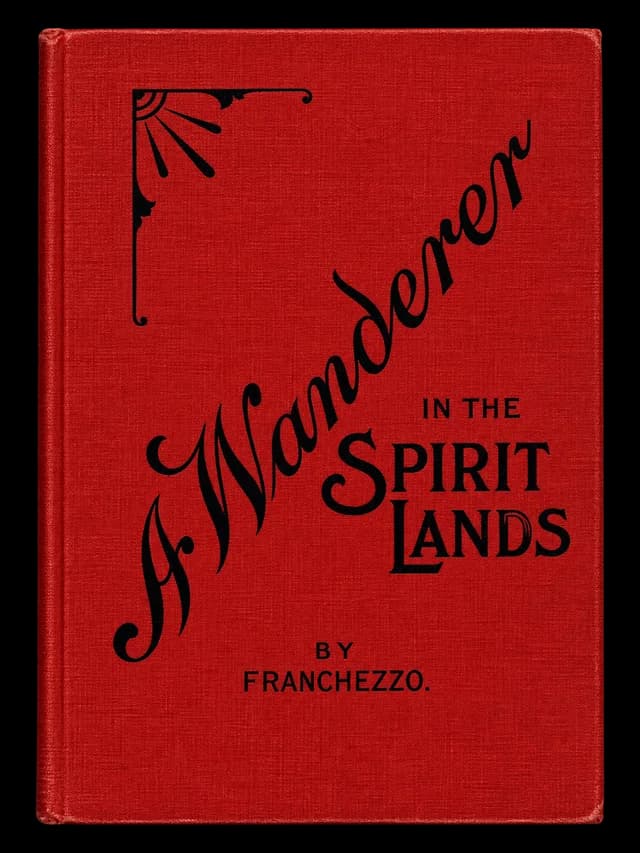
In A Wanderer in the Spirit Lands, attributed to Franchezzo and transcribed by A. Farnese, immortality means the endurance of a distinct individual. Hassein, the narrator’s guide, says that a being endowed with soul-life can discard successive envelopes without losing that individuality. The claim extends to animals as well as human beings, although he assigns them different kinds and degrees of development. [28][29]
The closing discourse in Hell denies that any individual soul is finally annihilated or condemned to unending misery. Long periods of suffering can precede a change, but the speaker insists that the capacity for better things remains. The book’s assurance of survival therefore includes the souls it portrays in the worst condition, not only its peaceful or virtuous inhabitants. [30][31][32]
Later, Franchezzo asks whether joining the wider spheres of a solar system would dissolve personal identity. Hassein answers that a soul remains a distinct unit, just as membership of a brotherhood does not erase the member. This is the book’s metaphysical explanation of immortality; its imagined changes of body and planetary community leave a continuing person to learn and act. [33][34]
See references (7)
- A Wanderer in the Spirit Lands, Reader page 116
- A Wanderer in the Spirit Lands, Reader page 117
- A Wanderer in the Spirit Lands, Reader page 230
- A Wanderer in the Spirit Lands, Reader page 231
- A Wanderer in the Spirit Lands, Reader page 233
- A Wanderer in the Spirit Lands, Reader page 266
- A Wanderer in the Spirit Lands, Reader page 267
Evolution of Immortality
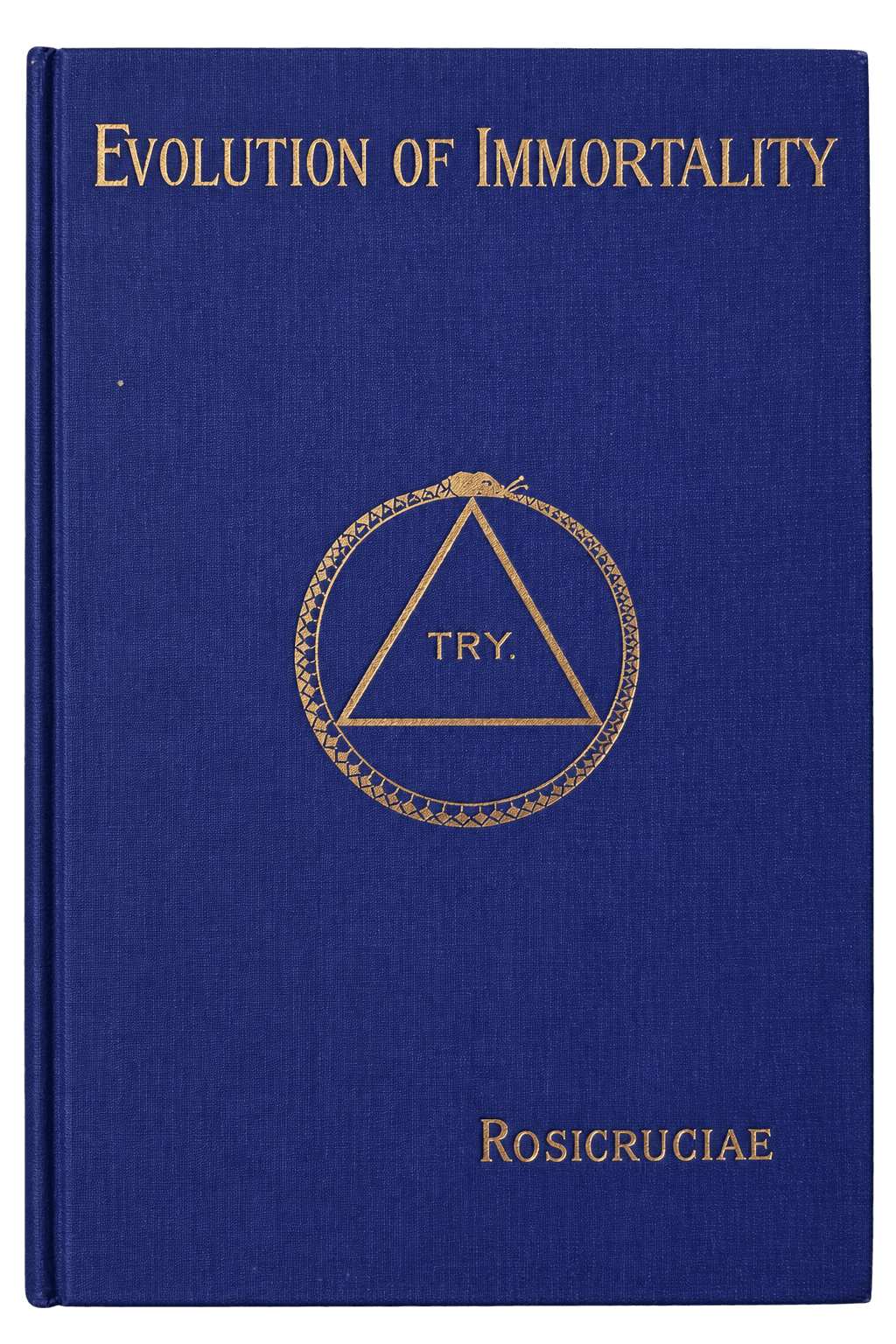
Freeman Benjamin Dowd, publishing as Rosicruciæ, gives immortality a demanding meaning in Evolution of Immortality. Continuing after physical death is only part of the argument. He accepts Spiritualist survival while saying that a person can remain on an invisible material plane with much the same character. The change of visibility does not by itself produce the freedom he calls spiritual life. [37][38][39]
Achieved immortality involves the whole person. Love, truth and disciplined will are said to develop an incorruptible fire body, capable of taking on forms without being imprisoned in one. The book distinguishes this body from an astral counterpart that can already travel apart from the physical form. Its ideal is mastery and transformation, extending to the circumstances of embodied life. [35][36][40][41][42][43]
This is not a doctrine that only an accomplished initiate possesses any surviving spirit. Near the end, Rosicruciæ declares that the divine breath cannot die. The appendix instead defines salvation as freedom from successive earthly embodiments. Continuing life and perfected immortality therefore name different conditions in the book’s argument, which it presents through religious interpretation and speculative accounts of energy. [44][45]
See references (11)
- Evolution of Immortality, printed p. 20, Reader page 17
- Evolution of Immortality, printed p. 21, Reader page 18
- Evolution of Immortality, printed p. 36, Reader page 33
- Evolution of Immortality, printed p. 37, Reader page 34
- Evolution of Immortality, printed p. 38, Reader page 35
- Evolution of Immortality, printed p. 74, Reader page 71
- Evolution of Immortality, printed p. 75, Reader page 72
- Evolution of Immortality, printed p. 125, Reader page 124
- Evolution of Immortality, printed p. 126, Reader page 125
- Evolution of Immortality, printed p. 129, Reader page 128
- Evolution of Immortality, printed p. 132, Reader page 131
Survival, individuality and perfection
Samson grounds endurance in an eternal divine source. Ward’s Officer also argues that a soul belonging to God cannot be annihilated. Franchezzo’s guide links endurance to identity through changes of form and community. [3][4][5][19][33][34]
Dante distinguishes the surviving soul from the body’s future resurrection. Dowd speaks of continuing life while giving the word immortality a fuller sense of spiritual freedom. These are different ways of describing what remains to happen after bodily death. [25][26][37][38][39][44][45]
Flammarion makes conscious endurance conditional on self-awareness. Ward’s Officer starts instead from the assurance of divine origin. Dowd says divine breath cannot die, while also asking what must change for a person to attain spiritual freedom. [19][37][38][39][44][45][48][49]
See references (15)
- The Angels’ Diary and Celestion Study of Man, Reader page 114
- The Angels’ Diary and Celestion Study of Man, Reader page 162
- The Angels’ Diary and Celestion Study of Man, Reader page 163
- Gone West, printed p. 95, Reader page 108
- Purgatory and Paradise, Paradise XIV, printed p. 217, Reader page 269
- Purgatory and Paradise, Paradise XXV, printed p. 268, Reader page 328
- A Wanderer in the Spirit Lands, Reader page 266
- A Wanderer in the Spirit Lands, Reader page 267
- Evolution of Immortality, printed p. 36, Reader page 33
- Evolution of Immortality, printed p. 37, Reader page 34
- Evolution of Immortality, printed p. 38, Reader page 35
- Evolution of Immortality, printed p. 129, Reader page 128
- Evolution of Immortality, printed p. 132, Reader page 131
- Lumen, printed p. 103, Reader page 109
- Lumen, printed p. 104, Reader page 110
Read further in the library
The Angels’ Diary and Celestion Study of Man
Reading note
The winter lilac. Read the original passage in the 1903 edition.
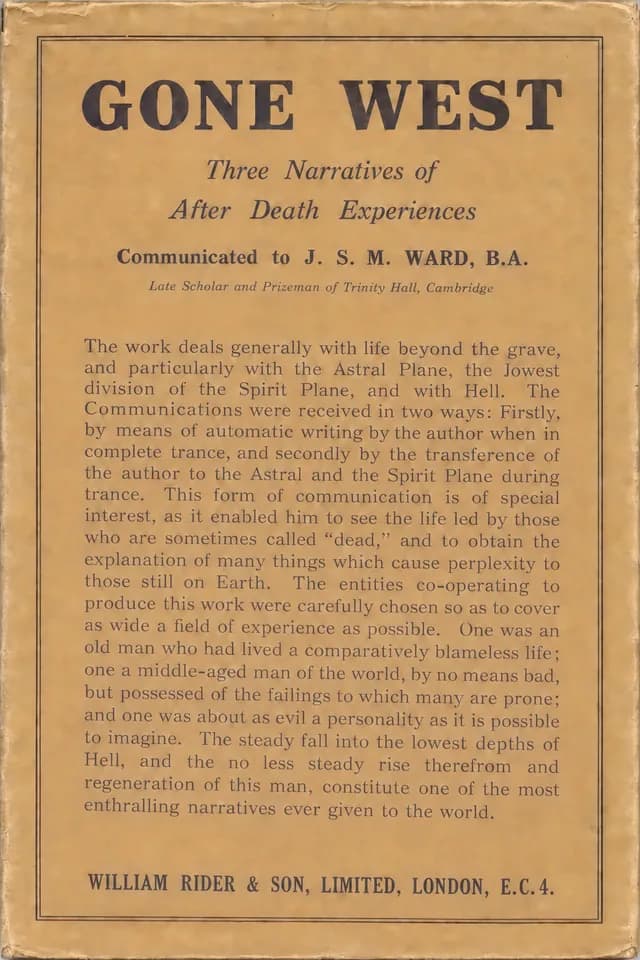
Gone West
Reading note
Ward’s communicated accounts supply the separately cited comparison in this entry.
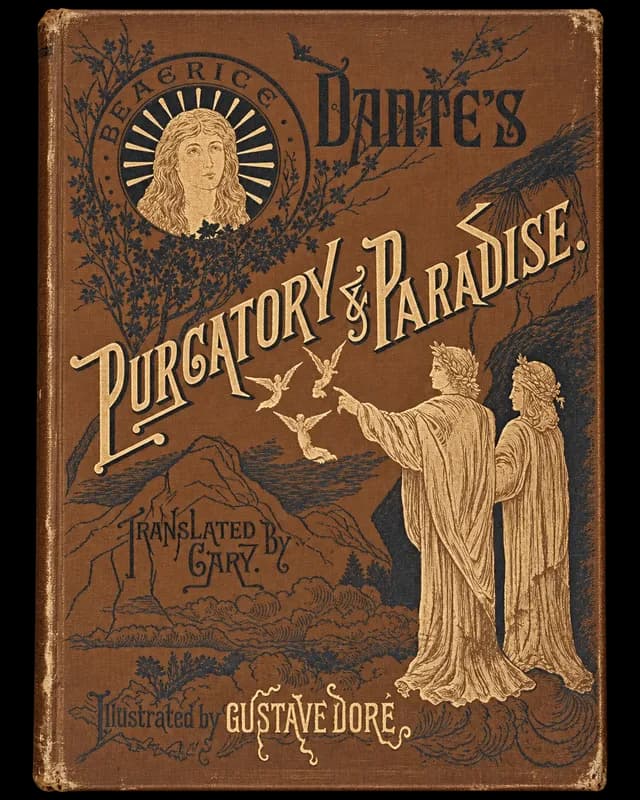
Purgatory and Paradise: The Vision of Dante
Reading note
Dante’s distinct literary account, linked to exact leaves of the consulted Cary translation.
A Wanderer in the Spirit Lands
Reading note
Individual identity is said to endure changes of spiritual body and the eventual joining of wider communities.
Evolution of Immortality
Reading note
An account that distinguishes surviving death from attaining immortality of the whole person.

Lumen
Reading note
The separately titled account draws on exact passages in the consulted Library edition.
Sources
See references (52)
- The Angels’ Diary and Celestion Study of Man, Reader page 167Charles Samson, Celestion Study of Man, in the 1903 volume.Read this page in The Angels’ Diary and Celestion Study of Man ↗Return to text ↑
- The Angels’ Diary and Celestion Study of Man, Reader page 168Charles Samson, Celestion Study of Man, in the 1903 volume.Read this page in The Angels’ Diary and Celestion Study of Man ↗Return to text ↑
- The Angels’ Diary and Celestion Study of Man, Reader page 114Charles Samson, Celestion Study of Man, in the 1903 volume.Read this page in The Angels’ Diary and Celestion Study of Man ↗Return to text ↑
- The Angels’ Diary and Celestion Study of Man, Reader page 162Charles Samson, Celestion Study of Man, in the 1903 volume.Read this page in The Angels’ Diary and Celestion Study of Man ↗Return to text ↑
- The Angels’ Diary and Celestion Study of Man, Reader page 163Charles Samson, Celestion Study of Man, in the 1903 volume.Read this page in The Angels’ Diary and Celestion Study of Man ↗Return to text ↑
- The Angels’ Diary and Celestion Study of Man, Reader page 164Charles Samson, Celestion Study of Man, in the 1903 volume.Read this page in The Angels’ Diary and Celestion Study of Man ↗Return to text ↑
- The Angels’ Diary and Celestion Study of Man, Reader page 153Charles Samson, Celestion Study of Man, in the 1903 volume.Read this page in The Angels’ Diary and Celestion Study of Man ↗Return to text ↑
- The Angels’ Diary and Celestion Study of Man, Reader page 159Charles Samson, Celestion Study of Man, in the 1903 volume.Read this page in The Angels’ Diary and Celestion Study of Man ↗Return to text ↑
- The Angels’ Diary and Celestion Study of Man, Reader page 160Charles Samson, Celestion Study of Man, in the 1903 volume.Read this page in The Angels’ Diary and Celestion Study of Man ↗Return to text ↑
- The Angels’ Diary and Celestion Study of Man, Reader page 161Charles Samson, Celestion Study of Man, in the 1903 volume.Read this page in The Angels’ Diary and Celestion Study of Man ↗Return to text ↑
- The Angels’ Diary and Celestion Study of Man, Reader page 219Effie M. Shirey and Charles Samson, The Angels’ Diary and Celestion Study of Man (1903).Read this page in The Angels’ Diary and Celestion Study of Man ↗Return to text ↑
- Gone West, printed p. 15, Reader page 28J. S. M. Ward, Gone West, 1920 third impression as reproduced in the 2009 Geoff Cutler digital transcription.Read this page in Gone West ↗Return to text ↑
- Gone West, printed p. 24, Reader page 37J. S. M. Ward, Gone West, 1920 third impression as reproduced in the 2009 Geoff Cutler digital transcription.Read this page in Gone West ↗Return to text ↑
- Gone West, printed p. 25, Reader page 38J. S. M. Ward, Gone West, 1920 third impression as reproduced in the 2009 Geoff Cutler digital transcription.Read this page in Gone West ↗Return to text ↑
- Gone West, printed p. 26, Reader page 39J. S. M. Ward, Gone West, 1920 third impression as reproduced in the 2009 Geoff Cutler digital transcription.Read this page in Gone West ↗Return to text ↑
- Gone West, Introduction, Reader page 9J. S. M. Ward, Gone West, 1920 third impression as reproduced in the 2009 Geoff Cutler digital transcription.Read this page in Gone West ↗Return to text ↑
- Gone West, Introduction, Reader page 10J. S. M. Ward, Gone West, 1920 third impression as reproduced in the 2009 Geoff Cutler digital transcription.Read this page in Gone West ↗Return to text ↑
- Gone West, printed p. 18, Reader page 31J. S. M. Ward, Gone West, 1920 third impression as reproduced in the 2009 Geoff Cutler digital transcription.Read this page in Gone West ↗Return to text ↑
- Gone West, printed p. 95, Reader page 108J. S. M. Ward, Gone West, 1920 third impression in the 2009 Geoff Cutler digital transcription.Read this page in Gone West ↗Return to text ↑
- Purgatory and Paradise, Purgatory XXV, printed p. 114, Reader page 152Dante Alighieri, The Divine Comedy, translated by Henry Francis Cary, designs by Gustave Doré. Inferno: Thompson & Thomas, Chicago, undated New Edition; Purgatory and Paradise: Thompson & Thomas, Chicago, 1901.Read this page in Purgatory and Paradise: The Vision of Dante ↗Return to text ↑
- Purgatory and Paradise, Purgatory XXV, printed p. 115, Reader page 153Dante Alighieri, The Divine Comedy, translated by Henry Francis Cary, designs by Gustave Doré. Inferno: Thompson & Thomas, Chicago, undated New Edition; Purgatory and Paradise: Thompson & Thomas, Chicago, 1901.Read this page in Purgatory and Paradise: The Vision of Dante ↗Return to text ↑
- Purgatory and Paradise, Paradise VII, printed p. 186, Reader page 236Dante Alighieri, The Divine Comedy, translated by Henry Francis Cary, designs by Gustave Doré. Inferno: Thompson & Thomas, Chicago, undated New Edition; Purgatory and Paradise: Thompson & Thomas, Chicago, 1901.Read this page in Purgatory and Paradise: The Vision of Dante ↗Return to text ↑
- Purgatory and Paradise, Paradise VII, printed p. 187, Reader page 237Dante Alighieri, The Divine Comedy, translated by Henry Francis Cary, designs by Gustave Doré. Inferno: Thompson & Thomas, Chicago, undated New Edition; Purgatory and Paradise: Thompson & Thomas, Chicago, 1901.Read this page in Purgatory and Paradise: The Vision of Dante ↗Return to text ↑
- Purgatory and Paradise, Paradise VII, printed p. 188, Reader page 238Dante Alighieri, The Divine Comedy, translated by Henry Francis Cary, designs by Gustave Doré. Inferno: Thompson & Thomas, Chicago, undated New Edition; Purgatory and Paradise: Thompson & Thomas, Chicago, 1901.Read this page in Purgatory and Paradise: The Vision of Dante ↗Return to text ↑
- Purgatory and Paradise, Paradise XIV, printed p. 217, Reader page 269Dante Alighieri, The Divine Comedy, translated by Henry Francis Cary, designs by Gustave Doré. Inferno: Thompson & Thomas, Chicago, undated New Edition; Purgatory and Paradise: Thompson & Thomas, Chicago, 1901.Read this page in Purgatory and Paradise: The Vision of Dante ↗Return to text ↑
- Purgatory and Paradise, Paradise XXV, printed p. 268, Reader page 328Dante Alighieri, The Divine Comedy, translated by Henry Francis Cary, designs by Gustave Doré. Inferno: Thompson & Thomas, Chicago, undated New Edition; Purgatory and Paradise: Thompson & Thomas, Chicago, 1901.Read this page in Purgatory and Paradise: The Vision of Dante ↗Return to text ↑
- Luigi Schiavonetti after William Blake, The Soul Hovering over the Body Reluctantly Parting with Life, 1805–08. ↗Princeton University Art Museum. Gift of Frank Jewett Mather Jr., x1947-85. Public Domain.
- A Wanderer in the Spirit Lands, Reader page 116Franchezzo (source attribution), A Wanderer in the Spirit Lands, transcribed by A. Farnese. W. J. Sinkins, London, 1896. Date confirmed on the consulted title-page facsimile.Read this page in A Wanderer in the Spirit Lands ↗Return to text ↑
- A Wanderer in the Spirit Lands, Reader page 117Franchezzo (source attribution), A Wanderer in the Spirit Lands, transcribed by A. Farnese. W. J. Sinkins, London, 1896. Date confirmed on the consulted title-page facsimile.Read this page in A Wanderer in the Spirit Lands ↗Return to text ↑
- A Wanderer in the Spirit Lands, Reader page 230Franchezzo (source attribution), A Wanderer in the Spirit Lands, transcribed by A. Farnese. W. J. Sinkins, London, 1896. Date confirmed on the consulted title-page facsimile.Read this page in A Wanderer in the Spirit Lands ↗Return to text ↑
- A Wanderer in the Spirit Lands, Reader page 231Franchezzo (source attribution), A Wanderer in the Spirit Lands, transcribed by A. Farnese. W. J. Sinkins, London, 1896. Date confirmed on the consulted title-page facsimile.Read this page in A Wanderer in the Spirit Lands ↗Return to text ↑
- A Wanderer in the Spirit Lands, Reader page 233Franchezzo (source attribution), A Wanderer in the Spirit Lands, transcribed by A. Farnese. W. J. Sinkins, London, 1896. Date confirmed on the consulted title-page facsimile.Read this page in A Wanderer in the Spirit Lands ↗Return to text ↑
- A Wanderer in the Spirit Lands, Reader page 266Franchezzo (source attribution), A Wanderer in the Spirit Lands, transcribed by A. Farnese. W. J. Sinkins, London, 1896. Date confirmed on the consulted title-page facsimile.Read this page in A Wanderer in the Spirit Lands ↗Return to text ↑
- A Wanderer in the Spirit Lands, Reader page 267Franchezzo (source attribution), A Wanderer in the Spirit Lands, transcribed by A. Farnese. W. J. Sinkins, London, 1896. Date confirmed on the consulted title-page facsimile.Read this page in A Wanderer in the Spirit Lands ↗Return to text ↑
- Evolution of Immortality, printed p. 20, Reader page 17Rosicruciæ (catalogued as Freeman Benjamin Dowd), Evolution of Immortality. Eulian Publishing Company, Salem, 1900.Read this page in Evolution of Immortality ↗Return to text ↑
- Evolution of Immortality, printed p. 21, Reader page 18Rosicruciæ (catalogued as Freeman Benjamin Dowd), Evolution of Immortality. Eulian Publishing Company, Salem, 1900.Read this page in Evolution of Immortality ↗Return to text ↑
- Evolution of Immortality, printed p. 36, Reader page 33Rosicruciæ (catalogued as Freeman Benjamin Dowd), Evolution of Immortality. Eulian Publishing Company, Salem, 1900.Read this page in Evolution of Immortality ↗Return to text ↑
- Evolution of Immortality, printed p. 37, Reader page 34Rosicruciæ (catalogued as Freeman Benjamin Dowd), Evolution of Immortality. Eulian Publishing Company, Salem, 1900.Read this page in Evolution of Immortality ↗Return to text ↑
- Evolution of Immortality, printed p. 38, Reader page 35Rosicruciæ (catalogued as Freeman Benjamin Dowd), Evolution of Immortality. Eulian Publishing Company, Salem, 1900.Read this page in Evolution of Immortality ↗Return to text ↑
- Evolution of Immortality, printed p. 74, Reader page 71Rosicruciæ (catalogued as Freeman Benjamin Dowd), Evolution of Immortality. Eulian Publishing Company, Salem, 1900.Read this page in Evolution of Immortality ↗Return to text ↑
- Evolution of Immortality, printed p. 75, Reader page 72Rosicruciæ (catalogued as Freeman Benjamin Dowd), Evolution of Immortality. Eulian Publishing Company, Salem, 1900.Read this page in Evolution of Immortality ↗Return to text ↑
- Evolution of Immortality, printed p. 125, Reader page 124Rosicruciæ (catalogued as Freeman Benjamin Dowd), Evolution of Immortality. Eulian Publishing Company, Salem, 1900.Read this page in Evolution of Immortality ↗Return to text ↑
- Evolution of Immortality, printed p. 126, Reader page 125Rosicruciæ (catalogued as Freeman Benjamin Dowd), Evolution of Immortality. Eulian Publishing Company, Salem, 1900.Read this page in Evolution of Immortality ↗Return to text ↑
- Evolution of Immortality, printed p. 129, Reader page 128Rosicruciæ (catalogued as Freeman Benjamin Dowd), Evolution of Immortality. Eulian Publishing Company, Salem, 1900.Read this page in Evolution of Immortality ↗Return to text ↑
- Evolution of Immortality, printed p. 132, Reader page 131Rosicruciæ (catalogued as Freeman Benjamin Dowd), Evolution of Immortality. Eulian Publishing Company, Salem, 1900.Read this page in Evolution of Immortality ↗Return to text ↑
- Lumen, Reader page 14Camille Flammarion, Lumen, authorised English translation by A. A. M. and R. M., Dodd, Mead and Company, New York, 1897. Exact selected Library edition IMJ-0398-E001. Lumen and Quaerens are speakers in the dialogue; claims made by the narrator are attributed to this text. Original PageIDs and current Reader positions are verified separately from printed pagination.Read this page in Lumen ↗Return to text ↑
- Lumen, Reader page 15Camille Flammarion, Lumen, authorised English translation by A. A. M. and R. M., Dodd, Mead and Company, New York, 1897. Exact selected Library edition IMJ-0398-E001. Lumen and Quaerens are speakers in the dialogue; claims made by the narrator are attributed to this text. Original PageIDs and current Reader positions are verified separately from printed pagination.Read this page in Lumen ↗Return to text ↑
- Lumen, printed p. 103, Reader page 109Camille Flammarion, Lumen, authorised English translation by A. A. M. and R. M., Dodd, Mead and Company, New York, 1897. Exact selected Library edition IMJ-0398-E001. Lumen and Quaerens are speakers in the dialogue; claims made by the narrator are attributed to this text. Original PageIDs and current Reader positions are verified separately from printed pagination.Read this page in Lumen ↗Return to text ↑
- Lumen, printed p. 104, Reader page 110Camille Flammarion, Lumen, authorised English translation by A. A. M. and R. M., Dodd, Mead and Company, New York, 1897. Exact selected Library edition IMJ-0398-E001. Lumen and Quaerens are speakers in the dialogue; claims made by the narrator are attributed to this text. Original PageIDs and current Reader positions are verified separately from printed pagination.Read this page in Lumen ↗Return to text ↑
- Lumen, Reader page 219Camille Flammarion, Lumen, authorised English translation by A. A. M. and R. M., Dodd, Mead and Company, New York, 1897. Exact selected Library edition IMJ-0398-E001. Lumen and Quaerens are speakers in the dialogue; claims made by the narrator are attributed to this text. Original PageIDs and current Reader positions are verified separately from printed pagination.Read this page in Lumen ↗Return to text ↑
- Lumen, Reader page 220Camille Flammarion, Lumen, authorised English translation by A. A. M. and R. M., Dodd, Mead and Company, New York, 1897. Exact selected Library edition IMJ-0398-E001. Lumen and Quaerens are speakers in the dialogue; claims made by the narrator are attributed to this text. Original PageIDs and current Reader positions are verified separately from printed pagination.Read this page in Lumen ↗Return to text ↑
- Lumen, Reader page 221Camille Flammarion, Lumen, authorised English translation by A. A. M. and R. M., Dodd, Mead and Company, New York, 1897. Exact selected Library edition IMJ-0398-E001. Lumen and Quaerens are speakers in the dialogue; claims made by the narrator are attributed to this text. Original PageIDs and current Reader positions are verified separately from printed pagination.Read this page in Lumen ↗Return to text ↑