Lucifer
Understand how Lucifer moved from a Latin word for the morning star into Christian interpretations of Satan, and why the same word can also refer to Christ.
In this article
What does Lucifer mean?
Lucifer is a Latin word associated with the morning star and the bearing of light. In familiar Christian usage it became a name for Satan before his fall, but that meaning does not exhaust the word’s history. Anthony Maas’s historical Catholic Encyclopedia entry describes its use for Venus and for several images of brilliance. [1]
The distinction matters whenever the word appears in a text. A Latin term for a bright celestial appearance can be used as an image, a title or a later personal name. It does not refer to the devil in every context. The setting and the history of interpretation determine which sense is intended. [1]
Translation and interpretation
How did the word enter an English Bible?
Ángel Manuel Rodríguez traces a sequence of translation: Hebrew helel, a Greek rendering connected with the morning star, and Latin lucifer. The King James Version retains Lucifer in Isaiah 14:12, whereas many more recent English translations use descriptive language. Rodríguez distinguishes the Hebrew epithet from a proper name. [2]
That explains why a reader can know the name well and still fail to find it in a particular Bible translation. Familiarity with later Christian usage may shape expectations about what the earlier wording must contain. A translation can preserve an inherited term while another renders its descriptive sense. [2]
Isaiah and the fallen-angel reading
Maas identifies the image in Isaiah with the king of Babylon, then describes its Christian reception as language about the principal fallen angel and the loss of former glory. Those are related but distinguishable readings. The royal image has a setting in the prophetic text; the angelic fall belongs to a theological interpretation of it. Treating both levels explicitly allows readers to understand how the association developed without presenting a later name as the sole meaning of the original passage. [1]
One modern Christian interpretation
Rodríguez goes beyond translation history to offer a Seventh-day Adventist theological reading. He interprets the shining figure through a celestial leader’s ambition and fall, contrasting that pursuit of exaltation with Christ’s humility. This is an argument about the passage’s religious meaning. His explanation of how the name reached English and his account of what the text reveals should be assessed as two parts of the article, rather than treated as the same kind of claim. [2]
Why can lucifer refer to Christ?
The Latin Easter proclamation provides a striking example of the word’s positive use. On page 14 of the Vatican’s 2026 Easter Vigil service book, lucifer occurs in a passage that explicitly identifies its referent as Christ. The surrounding prayer concerns light overcoming the darkness of night and Christ returning from the dead. [3]
There is no need to invent a connection between Christ and the devil to explain this wording. The ordinary light-bearing and morning-star imagery makes the passage intelligible. Its meaning follows from its liturgical context. The later use of Lucifer as a personal name does not cancel every other use of the Latin word. This makes the term a useful lesson in reading religious language through context, translation and reception together. [3]
Dante’s frozen Lucifer
In the closing canto of Inferno, Dante pictures an enormous three-faced figure fixed in ice. His batlike wings generate the winds that keep Cocytus frozen. The image turns movement into part of the confinement itself. Lucifer and the Freezing Wings follows this scene in the Library’s Cary translation. It is a particular poetic vision of the fallen figure, distinct from the history of the Latin word and from a common doctrine binding all Christians. [4]
Read further in the library
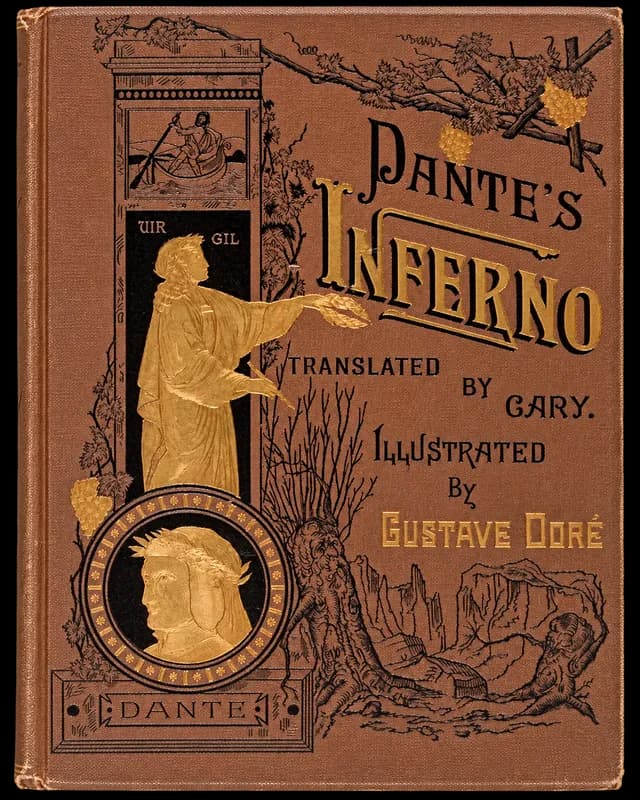
Dante's Inferno
Reading note
Dante’s Inferno gives the fallen figure a powerful literary form. The checked final-canto leaf shows his wings maintaining the frozen lake; read this as the poem’s vision in Cary’s translation.
Sources
- Lucifer ↗Anthony Maas, Catholic Encyclopedia, 1910; historical Catholic referenceReturn to text ↑
- Where Did We Get Lucifer? ↗Ángel Manuel Rodríguez, Biblical Research Institute; Seventh-day Adventist interpretationReturn to text ↑
- Easter Vigil, 4 April 2026: Exsultet, printed page 14 ↗Vatican liturgical service book; Latin Easter proclamation, exact page inspectedReturn to text ↑
- Dante's Inferno: Inferno XXXIV, printed page 160Dante Alighieri; historical literary account, exact Library leaf inspectedReturn to text ↑
Examine the original Library page
Original page image and public verified citation checked before this use. Literary vision is distinguished from general religious doctrine.
Three winds, wherewith Cocytus to its depth Was frozen. At six eyes he wept: the tears Adown three chins distill'd with bloody foam, At every mouth
Open the original page in Dante's Inferno ↗Scan leaf 240 · Dante Alighieri
About this article & its sources
The Latin term, its translation history and selected Christian uses. The original poetic setting, later theological interpretation and liturgical language remain distinct. This is not an account of every modern movement using the name.
Passage attributions
What does Lucifer mean?
Passage 1: Anthony Maas, Catholic Encyclopedia, 1910; historical Catholic reference.
Passage 2: Anthony Maas, Catholic Encyclopedia, 1910; historical Catholic reference.
How did the word enter an English Bible?
Passage 1: Ángel Manuel Rodríguez, Biblical Research Institute; Seventh-day Adventist interpretation.
Passage 2: Ángel Manuel Rodríguez, Biblical Research Institute; Seventh-day Adventist interpretation.
Isaiah and the fallen-angel reading
Passage 1: Anthony Maas, Catholic Encyclopedia, 1910; historical Catholic reference.
One modern Christian interpretation
Passage 1: Ángel Manuel Rodríguez, Biblical Research Institute; Seventh-day Adventist interpretation.
Why can lucifer refer to Christ?
Passage 1: Vatican liturgical service book; Latin Easter proclamation, exact page inspected.
Passage 2: Vatican liturgical service book; Latin Easter proclamation, exact page inspected.
Dante’s frozen Lucifer
Passage 1: Dante Alighieri; literary interpretation.