Hawaiian religion
Explore Native Hawaiian religion through akua, ancestors and ʻāina, from household prayers and heiau to the chiefly changes of 1819 and living practices.
In this article
Akua, ancestors and ʻāina
Native Hawaiian religious traditions connect people to akua, ancestors and ʻāina, the land that sustains them. Families could call on powers associated with their work. Aliʻi, or chiefs, carried religious responsibilities tied to rank. At a heiau, the purpose of a rite depended on the place and its dedication. [1][2]
Kapu governed conduct around sacred people, times and places. A chief’s person and belongings could carry kapu. Restrictions could apply to eating, a path or a fishing ground. Someone pursued for a violation could seek protection at a place of refuge. [10][11][3]
Kāne, Kū, Lono and Kanaloa recur across Hawaiian accounts. Individual places also have their own sacred associations. At Hōnaunau, the sacred standing of Hale o Keawe is bound up with the chiefly ancestors whose remains were kept there. [1][4]
In 1819, Keōpūolani, Kaʻahumanu and Liholiho helped end the chiefly enforcement of eating restrictions. The change to ʻai noa disrupted the authority of major temples. People still leave offerings at Hōnaunau, and mele and hula continue to carry knowledge of earlier generations. [5][4][6]
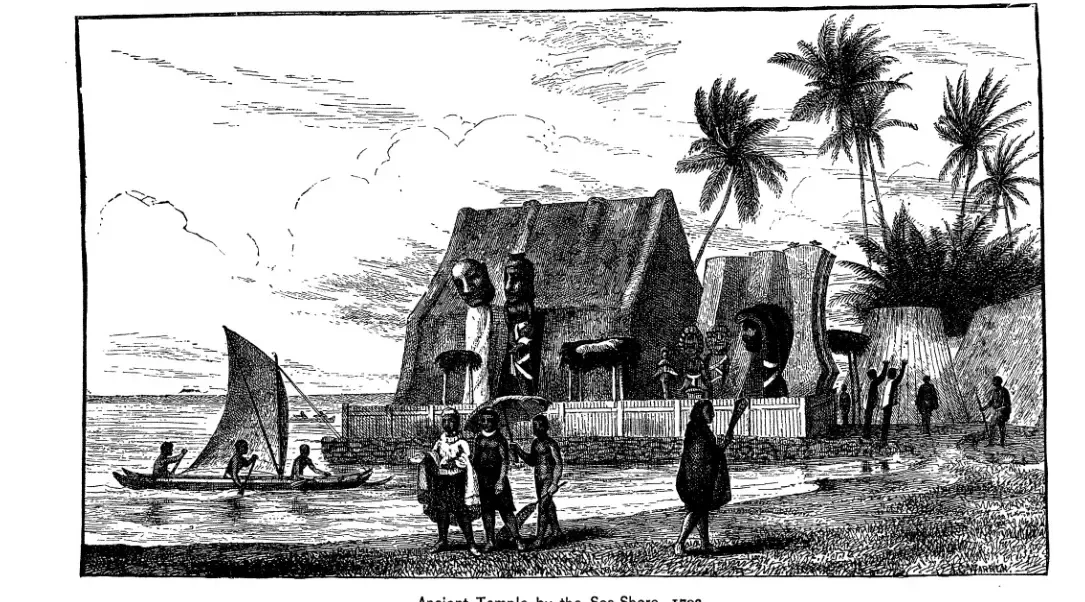
Ancient Temple by the Sea-Shore, a historical illustration reproduced in the 1888 volume published under Kalākaua’s name.
The Legends and Myths of Hawaii, Charles L. Webster & Company, 1888. Public domain. Cropped from the Library scan. · Image source ↗ · Public Domain
See references (8)
- David Malo, Hawaiian Antiquities, chapter XXIII, §§ 1–7, printed pp. 112–113
- Echoing Wahi Kūpuna
- Puʻuhonua o Hōnaunau National Historical Park Foundation Document
- Hale o Keawe and the Great Wall in the park collections
- A Life of Kapu, Keōpūolani
- Ka Hulina Au: The Changing Time
- The Legends and Myths of Hawaii, printed p. 32, Reader page 33
- The Legends and Myths of Hawaii, printed p. 33, Reader page 34
Worship in Hawaiian Antiquities by David Malo
In Hawaiian Antiquities, chapter XXIII, David Malo distinguishes worship by rank and occupation. People appeal to akua who preside over particular kinds of work. He also describes the worship of women and female chiefs, with their own deities and restrictions. [1]
The Legends and Myths of Hawaii by David Kalākaua
Rollin Mallory Daggett wrote the introduction to The Legends and Myths of Hawaii, published in 1888 under David Kalākaua’s name. He describes prayers and rites associated with crafts and livelihoods such as fishing, navigation, healing and hula, as well as the ceremonies led by the high priest. [12][13][14][15]
Daggett reads some stories of creation and descent through biblical parallels. The volume itself records different beginnings, including a genealogy that links Papa and Wākea to the birth of islands. [11][16][17][18]
In the chapter The Destruction of the Temples, Liholiho eats at the women’s table and orders follow against major temples. The chapter also records people who saved images or kept their old allegiances, including the resistance led by Kekuaokalani and Manono. [19][20][21][22][23]
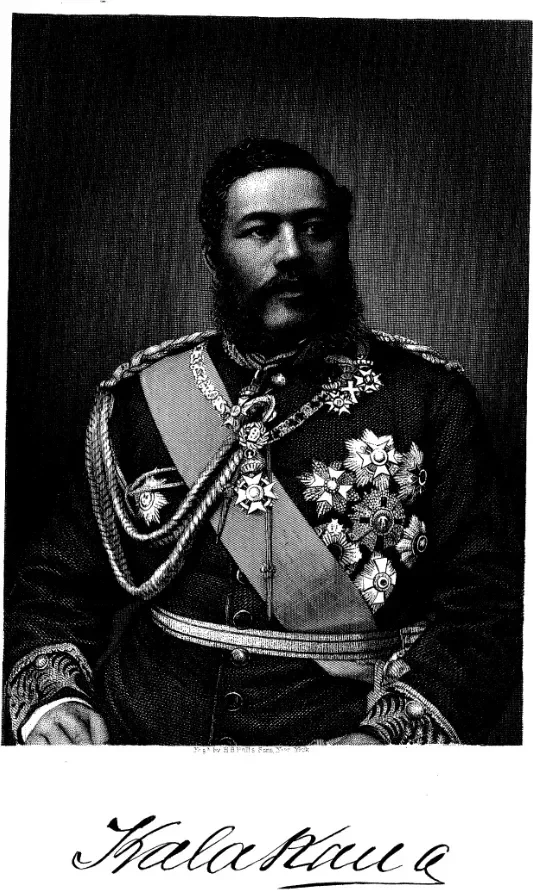
The portrait of David Kalākaua that opens the 1888 edition of The Legends and Myths of Hawaii.
The Legends and Myths of Hawaii, Charles L. Webster & Company, 1888. Public domain. Cropped from the Library scan. · Image source ↗ · Public Domain
See references (13)
- The Legends and Myths of Hawaii, printed p. 33, Reader page 34
- The Legends and Myths of Hawaii, Reader page 40
- The Legends and Myths of Hawaii, printed p. 40, Reader page 41
- The Legends and Myths of Hawaii, Reader page 42
- The Legends and Myths of Hawaii, Reader page 45
- The Legends and Myths of Hawaii, Reader page 36
- The Legends and Myths of Hawaii, Reader page 37
- The Legends and Myths of Hawaii, Reader page 39
- The Legends and Myths of Hawaii, Reader page 439
- The Legends and Myths of Hawaii, printed p. 437, Reader page 440
- The Legends and Myths of Hawaii, Reader page 441
- The Legends and Myths of Hawaii, Reader page 449
- The Legends and Myths of Hawaii, Reader page 450
Who prays and what a sacred object carries
Malo describes commoners speaking their own prayers and priests speaking during rites for aliʻi. Daggett’s introduction also records worship outside the large temples, including appeals to powers associated with work. [12][14][1]
Mary Kawena Pukui’s account of featherwork gives another view of chiefly worship. Before a kāhili, or feather standard, was moved, prayers and an offering acknowledged the sacred responsibilities attached to it. [10][7]
Read further in the library
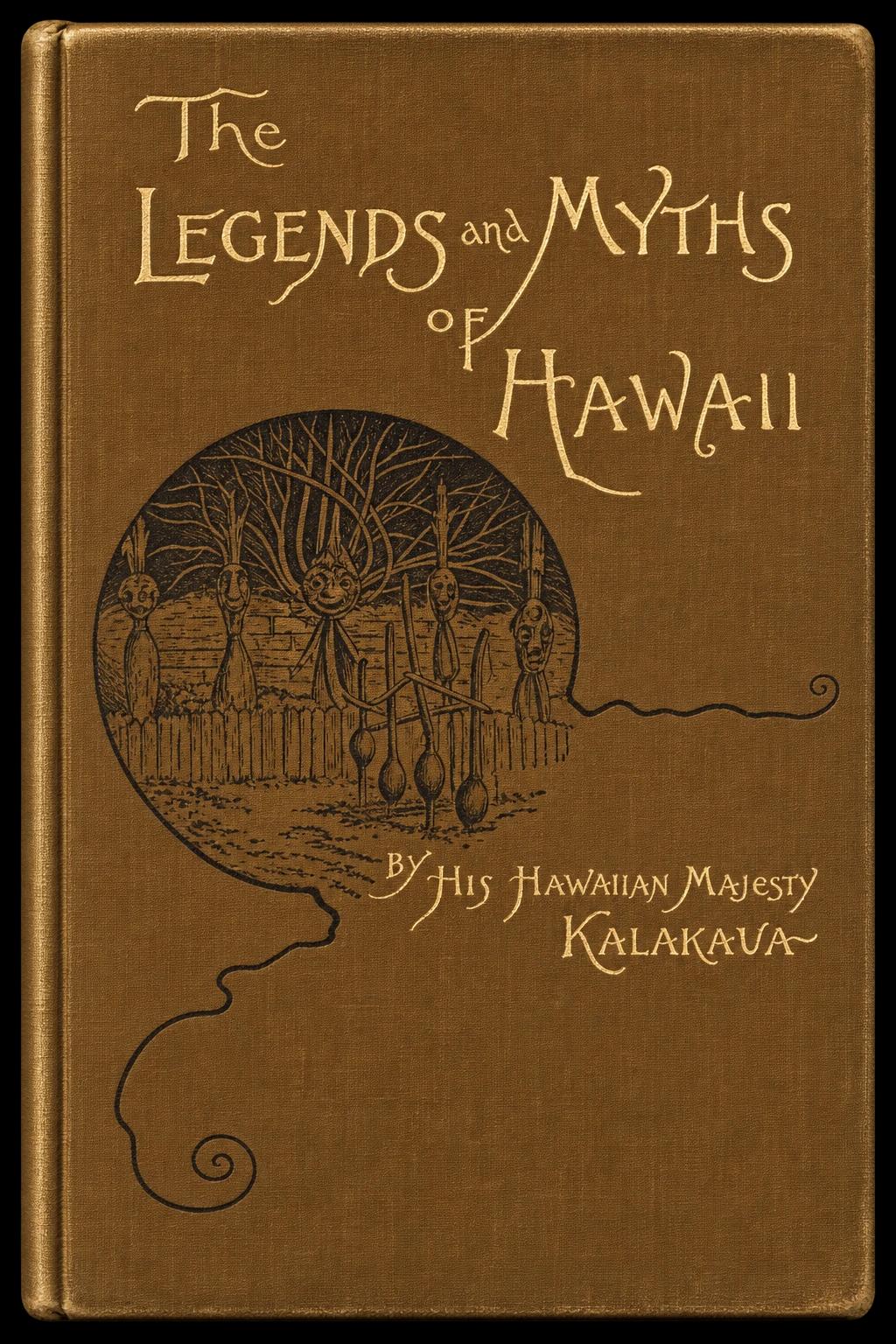
The Legends and Myths of Hawaii
Reading note
The separately titled account draws on exact passages in the consulted Library edition.
Sources
See references (23)
- David Malo, Hawaiian Antiquities, chapter XXIII, §§ 1–7, printed pp. 112–113 ↗David Malo, Hawaiian Antiquities (Moolelo Hawaii), translated by N. B. Emerson, Hawaiian Gazette, 1903. “The Worship of Idols,” sections 1–7. The chapter title is that of the consulted English translation.Return to text ↑
- Echoing Wahi Kūpuna ↗Kaʻiwakīloumoku, Hawaiian Cultural Center, account of Keolonāhihi based on Henry P. Kekahuna’s records and local kūpuna knowledge.Return to text ↑
- Puʻuhonua o Hōnaunau National Historical Park Foundation Document ↗National Park Service, park significance statements concerning sanctuary, cultural continuity and the stone wall.Return to text ↑
- Hale o Keawe and the Great Wall in the park collections ↗National Park Service, “Hale o Keawe” and “The Great Wall” sections.Return to text ↑
- A Life of Kapu, Keōpūolani ↗Kamehameha Schools, History Makers of Hawaiʻi, the sections on chiefly kapu and “Huliau – Transformation.”Return to text ↑
- Ka Hulina Au: The Changing Time ↗University of Hawaiʻi at Mānoa, Hawaiʻinuiākea School of Hawaiian Knowledge’s 2019 bicentenary programme and its account of the ending of ʻaikapu.Return to text ↑
- Mary Kawena Pukui, Featherwork ↗Mary Kawena Pukui Collection, presented by Kaʻiwakīloumoku, the Hawaiian Cultural Center at Kamehameha Schools.Return to text ↑
- Ancient Temple by the Sea-Shore, 1793 ↗The Legends and Myths of Hawaii, Charles L. Webster & Company, 1888. Public domain. Cropped from the Library scan.
- Frontispiece portrait of Kalākaua ↗The Legends and Myths of Hawaii, Charles L. Webster & Company, 1888. Public domain. Cropped from the Library scan.
- The Legends and Myths of Hawaii, printed p. 32, Reader page 33David Kalākaua, The Legends and Myths of Hawaii, edited with an introduction by Rollin Mallory Daggett, Charles L. Webster & Company, 1888. Exact Library edition IMJ-0646-E001. When the introduction or a signed editorial passage is used, its author is identified in the article.Read this page in The Legends and Myths of Hawaii ↗Return to text ↑
- The Legends and Myths of Hawaii, printed p. 33, Reader page 34David Kalākaua, The Legends and Myths of Hawaii, edited with an introduction by Rollin Mallory Daggett, Charles L. Webster & Company, 1888. Exact Library edition IMJ-0646-E001. When the introduction or a signed editorial passage is used, its author is identified in the article.Read this page in The Legends and Myths of Hawaii ↗Return to text ↑
- The Legends and Myths of Hawaii, Reader page 40David Kalākaua, The Legends and Myths of Hawaii, edited with an introduction by Rollin Mallory Daggett, Charles L. Webster & Company, 1888. Exact Library edition IMJ-0646-E001. When the introduction or a signed editorial passage is used, its author is identified in the article.Read this page in The Legends and Myths of Hawaii ↗Return to text ↑
- The Legends and Myths of Hawaii, printed p. 40, Reader page 41David Kalākaua, The Legends and Myths of Hawaii, edited with an introduction by Rollin Mallory Daggett, Charles L. Webster & Company, 1888. Exact Library edition IMJ-0646-E001. When the introduction or a signed editorial passage is used, its author is identified in the article.Read this page in The Legends and Myths of Hawaii ↗Return to text ↑
- The Legends and Myths of Hawaii, Reader page 42David Kalākaua, The Legends and Myths of Hawaii, edited with an introduction by Rollin Mallory Daggett, Charles L. Webster & Company, 1888. Exact Library edition IMJ-0646-E001. When the introduction or a signed editorial passage is used, its author is identified in the article.Read this page in The Legends and Myths of Hawaii ↗Return to text ↑
- The Legends and Myths of Hawaii, Reader page 45David Kalākaua, The Legends and Myths of Hawaii, edited with an introduction by Rollin Mallory Daggett, Charles L. Webster & Company, 1888. Exact Library edition IMJ-0646-E001. When the introduction or a signed editorial passage is used, its author is identified in the article.Read this page in The Legends and Myths of Hawaii ↗Return to text ↑
- The Legends and Myths of Hawaii, Reader page 36David Kalākaua, The Legends and Myths of Hawaii, edited with an introduction by Rollin Mallory Daggett, Charles L. Webster & Company, 1888. Exact Library edition IMJ-0646-E001. When the introduction or a signed editorial passage is used, its author is identified in the article.Read this page in The Legends and Myths of Hawaii ↗Return to text ↑
- The Legends and Myths of Hawaii, Reader page 37David Kalākaua, The Legends and Myths of Hawaii, edited with an introduction by Rollin Mallory Daggett, Charles L. Webster & Company, 1888. Exact Library edition IMJ-0646-E001. When the introduction or a signed editorial passage is used, its author is identified in the article.Read this page in The Legends and Myths of Hawaii ↗Return to text ↑
- The Legends and Myths of Hawaii, Reader page 39David Kalākaua, The Legends and Myths of Hawaii, edited with an introduction by Rollin Mallory Daggett, Charles L. Webster & Company, 1888. Exact Library edition IMJ-0646-E001. When the introduction or a signed editorial passage is used, its author is identified in the article.Read this page in The Legends and Myths of Hawaii ↗Return to text ↑
- The Legends and Myths of Hawaii, Reader page 439David Kalākaua, The Legends and Myths of Hawaii, edited with an introduction by Rollin Mallory Daggett, Charles L. Webster & Company, 1888. Exact Library edition IMJ-0646-E001. When the introduction or a signed editorial passage is used, its author is identified in the article.Read this page in The Legends and Myths of Hawaii ↗Return to text ↑
- The Legends and Myths of Hawaii, printed p. 437, Reader page 440David Kalākaua, The Legends and Myths of Hawaii, edited with an introduction by Rollin Mallory Daggett, Charles L. Webster & Company, 1888. Exact Library edition IMJ-0646-E001. When the introduction or a signed editorial passage is used, its author is identified in the article.Read this page in The Legends and Myths of Hawaii ↗Return to text ↑
- The Legends and Myths of Hawaii, Reader page 441David Kalākaua, The Legends and Myths of Hawaii, edited with an introduction by Rollin Mallory Daggett, Charles L. Webster & Company, 1888. Exact Library edition IMJ-0646-E001. When the introduction or a signed editorial passage is used, its author is identified in the article.Read this page in The Legends and Myths of Hawaii ↗Return to text ↑
- The Legends and Myths of Hawaii, Reader page 449David Kalākaua, The Legends and Myths of Hawaii, edited with an introduction by Rollin Mallory Daggett, Charles L. Webster & Company, 1888. Exact Library edition IMJ-0646-E001. When the introduction or a signed editorial passage is used, its author is identified in the article.Read this page in The Legends and Myths of Hawaii ↗Return to text ↑
- The Legends and Myths of Hawaii, Reader page 450David Kalākaua, The Legends and Myths of Hawaii, edited with an introduction by Rollin Mallory Daggett, Charles L. Webster & Company, 1888. Exact Library edition IMJ-0646-E001. When the introduction or a signed editorial passage is used, its author is identified in the article.Read this page in The Legends and Myths of Hawaii ↗Return to text ↑