ʻAi noa
ʻAi noa means eating free of restriction. Read how Keōpūolani, Kaʻahumanu and Liholiho ended the eating kapu in 1819 and how others responded.
In this article
What happened in 1819?
ʻAi noa means eating free of restriction. It also names the change of 1819, after Kamehameha I died, when Keōpūolani, Kaʻahumanu and Liholiho openly ended the ʻai kapu, which separated men and women at meals and reserved some foods by sex. [1][2]
The meal carried political weight because the people eating together had the authority to uphold the previous rules. Hewahewa, the high priest, took part in the changes that followed, including the destruction of images at major temples. [1][3]
Kekuaokalani and Manono resisted and died at Kuamoʻo. The events began before the first American Protestant mission reached Hawaiʻi in 1820. The people involved made their own decisions about ʻai noa, temple worship and, later, Christianity. [1][2]
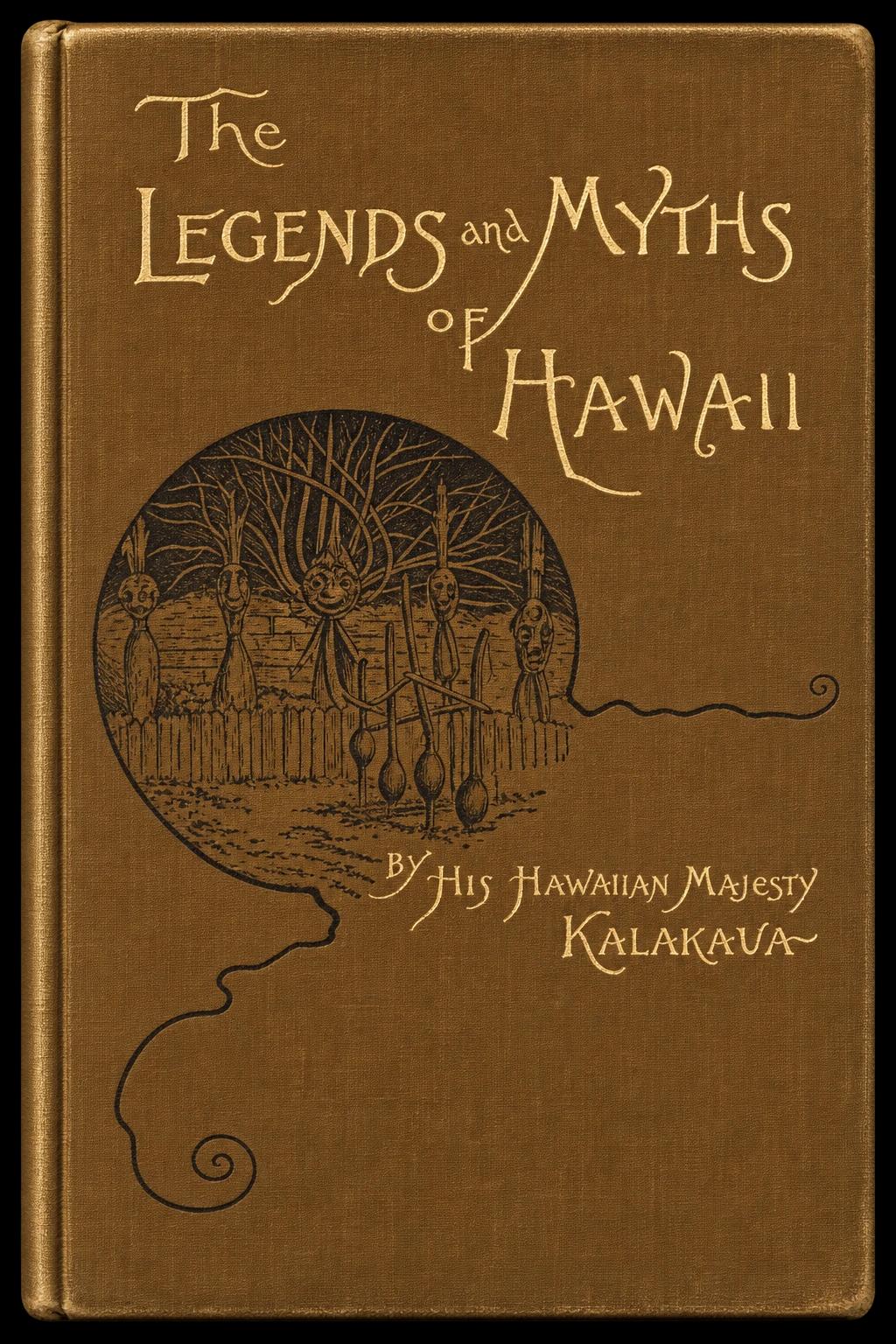
The Legends and Myths of Hawaii by David Kalākaua
The 1888 volume published under David Kalākaua’s name sets the public feast in Kailua. It first describes Keōpūolani eating food that had been forbidden to women. At the feast Hewahewa speaks, Liholiho sits and eats beside his mother, and other chiefs follow. [5][6]
The following pages describe orders against the temples and Hewahewa’s participation. Some people protect images or reject the king’s authority to end their worship. The narrative follows Kekuaokalani and Manono through negotiations to the battle at Kuamoʻo. [7][8][9][10][11][12]
Published decades after the feast, the book reconstructs dialogue and gives Liholiho detailed motives. Those details are the narrator’s account of what people may have thought as these public events unfolded. [13][14][5][6]
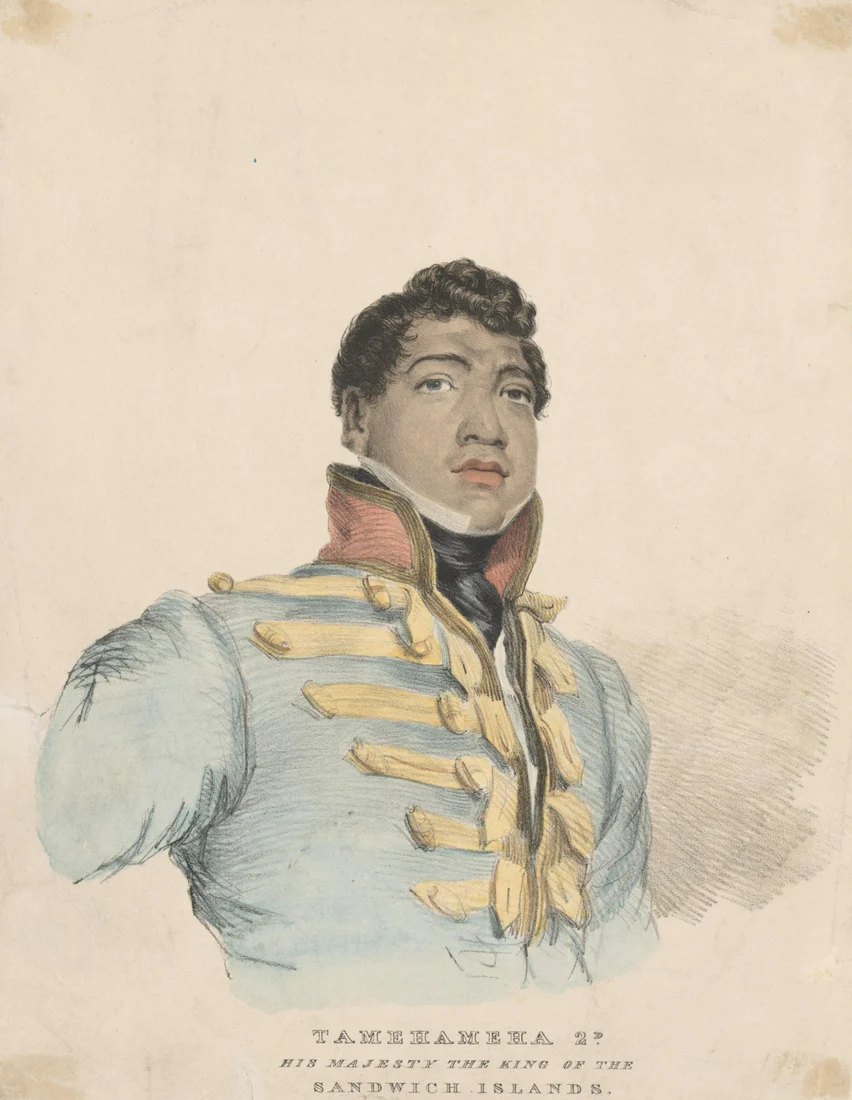
John Hayter drew Liholiho, Kamehameha II, from life in 1824.
John Hayter, hand-coloured lithograph, published by R. Ackermann in London, June 1824. National Library of Australia, via Wikimedia Commons. Public domain. · Image source ↗ · Public Domain
See references (10)
- The Legends and Myths of Hawaii, Reader page 439
- The Legends and Myths of Hawaii, printed p. 437, Reader page 440
- The Legends and Myths of Hawaii, Reader page 441
- The Legends and Myths of Hawaii, Reader page 443
- The Legends and Myths of Hawaii, Reader page 447
- The Legends and Myths of Hawaii, Reader page 448
- The Legends and Myths of Hawaii, Reader page 449
- The Legends and Myths of Hawaii, Reader page 450
- The Legends and Myths of Hawaii, Reader page 436
- The Legends and Myths of Hawaii, Reader page 437
What changed, and what people carried forward
Kamehameha Schools places Keōpūolani’s actions alongside those of Kaʻahumanu and explains the exceptional kapu of her rank. Her authority helps explain how sitting down to eat could bring others into a change of practice. [5][6][1]
The 1888 chapter places ʻai noa and the burning of major heiau in one sequence. Its account of saved images also shows the continuing life of Hawaiian religion. The 2019 commemoration brought the events into the present through mele and hula. [7][2]
Read further in the library
The Legends and Myths of Hawaii
Reading note
The separately titled account draws on exact passages in the consulted Library edition.
Sources
See references (14)
- A Life of Kapu, Keōpūolani ↗Kamehameha Schools, History Makers of Hawaiʻi, the sections on chiefly kapu and “Huliau – Transformation.”Return to text ↑
- Ka Hulina Au: The Changing Time ↗University of Hawaiʻi at Mānoa, Hawaiʻinuiākea School of Hawaiian Knowledge’s 2019 bicentenary programme and its account of the ending of ʻaikapu.Return to text ↑
- David Malo, Hawaiian Antiquities, chapter XI, §§ 1–7, printed pp. 50–51 ↗David Malo, Hawaiian Antiquities (Moolelo Hawaii), translated by N. B. Emerson, Hawaiian Gazette, 1903. “Eating Under the Kapu System,” sections 1–7.Return to text ↑
- Liholiho, Kamehameha II ↗John Hayter, hand-coloured lithograph, published by R. Ackermann in London, June 1824. National Library of Australia, via Wikimedia Commons. Public domain.
- The Legends and Myths of Hawaii, Reader page 439David Kalākaua, The Legends and Myths of Hawaii, edited with an introduction by Rollin Mallory Daggett, Charles L. Webster & Company, 1888. Exact Library edition IMJ-0646-E001. When the introduction or a signed editorial passage is used, its author is identified in the article.Read this page in The Legends and Myths of Hawaii ↗Return to text ↑
- The Legends and Myths of Hawaii, printed p. 437, Reader page 440David Kalākaua, The Legends and Myths of Hawaii, edited with an introduction by Rollin Mallory Daggett, Charles L. Webster & Company, 1888. Exact Library edition IMJ-0646-E001. When the introduction or a signed editorial passage is used, its author is identified in the article.Read this page in The Legends and Myths of Hawaii ↗Return to text ↑
- The Legends and Myths of Hawaii, Reader page 441David Kalākaua, The Legends and Myths of Hawaii, edited with an introduction by Rollin Mallory Daggett, Charles L. Webster & Company, 1888. Exact Library edition IMJ-0646-E001. When the introduction or a signed editorial passage is used, its author is identified in the article.Read this page in The Legends and Myths of Hawaii ↗Return to text ↑
- The Legends and Myths of Hawaii, Reader page 443David Kalākaua, The Legends and Myths of Hawaii, edited with an introduction by Rollin Mallory Daggett, Charles L. Webster & Company, 1888. Exact Library edition IMJ-0646-E001. When the introduction or a signed editorial passage is used, its author is identified in the article.Read this page in The Legends and Myths of Hawaii ↗Return to text ↑
- The Legends and Myths of Hawaii, Reader page 447David Kalākaua, The Legends and Myths of Hawaii, edited with an introduction by Rollin Mallory Daggett, Charles L. Webster & Company, 1888. Exact Library edition IMJ-0646-E001. When the introduction or a signed editorial passage is used, its author is identified in the article.Read this page in The Legends and Myths of Hawaii ↗Return to text ↑
- The Legends and Myths of Hawaii, Reader page 448David Kalākaua, The Legends and Myths of Hawaii, edited with an introduction by Rollin Mallory Daggett, Charles L. Webster & Company, 1888. Exact Library edition IMJ-0646-E001. When the introduction or a signed editorial passage is used, its author is identified in the article.Read this page in The Legends and Myths of Hawaii ↗Return to text ↑
- The Legends and Myths of Hawaii, Reader page 449David Kalākaua, The Legends and Myths of Hawaii, edited with an introduction by Rollin Mallory Daggett, Charles L. Webster & Company, 1888. Exact Library edition IMJ-0646-E001. When the introduction or a signed editorial passage is used, its author is identified in the article.Read this page in The Legends and Myths of Hawaii ↗Return to text ↑
- The Legends and Myths of Hawaii, Reader page 450David Kalākaua, The Legends and Myths of Hawaii, edited with an introduction by Rollin Mallory Daggett, Charles L. Webster & Company, 1888. Exact Library edition IMJ-0646-E001. When the introduction or a signed editorial passage is used, its author is identified in the article.Read this page in The Legends and Myths of Hawaii ↗Return to text ↑
- The Legends and Myths of Hawaii, Reader page 436David Kalākaua, The Legends and Myths of Hawaii, edited with an introduction by Rollin Mallory Daggett, Charles L. Webster & Company, 1888. Exact Library edition IMJ-0646-E001. When the introduction or a signed editorial passage is used, its author is identified in the article.Read this page in The Legends and Myths of Hawaii ↗Return to text ↑
- The Legends and Myths of Hawaii, Reader page 437David Kalākaua, The Legends and Myths of Hawaii, edited with an introduction by Rollin Mallory Daggett, Charles L. Webster & Company, 1888. Exact Library edition IMJ-0646-E001. When the introduction or a signed editorial passage is used, its author is identified in the article.Read this page in The Legends and Myths of Hawaii ↗Return to text ↑