Kapu
Kapu are sacred restrictions and obligations in Hawaiʻi. Explore their role in chiefly authority, daily meals, ceremony and places of refuge.
In this article
What does kapu mean?
Kapu are sacred restrictions and obligations. In historical Hawaiʻi, they could govern what someone ate, how one approached an aliʻi, or when work could take place. A restriction might last only for a ceremony or remain in force whenever someone approached a sacred person or place. [6][7][8][9][4]
A pūloʻuloʻu could mark a protected entrance or boundary. Springs or fishing grounds could also be reserved. At Hōnaunau, the rules of the refuge gave protection to someone who reached it while being pursued for a violation. [7][3][4]
The eating rules, or ʻai kapu, separated men and women at meals and reserved certain foods. In 1819, leading aliʻi challenged these rules publicly in the change known as ʻai noa. [2][1]
See references (8)
- David Malo, Hawaiian Antiquities, chapter XI, §§ 1–7, printed pp. 50–51
- A Life of Kapu, Keōpūolani
- Nanea Armstrong-Wassel, Coat of Arms of the Kingdom of Hawaiʻi
- Puʻuhonua o Hōnaunau National Historical Park Foundation Document
- The Legends and Myths of Hawaii, printed p. 32, Reader page 33
- The Legends and Myths of Hawaii, printed p. 33, Reader page 34
- The Legends and Myths of Hawaii, Reader page 307
- The Legends and Myths of Hawaii, Reader page 308
Eating rules in Hawaiian Antiquities by David Malo
In Hawaiian Antiquities, chapter XI, David Malo follows the work of preparing a meal. Separate ovens, poi vessels and eating places kept the rules in force in daily life. He also records the additional burdens borne by women during periods of religious restriction. [1]
The Legends and Myths of Hawaii by David Kalākaua
In the introduction to David Kalākaua’s The Legends and Myths of Hawaii, Rollin Mallory Daggett distinguishes standing kapu from restrictions announced for a limited time. A herald might announce an observance. A staff could mark a boundary. Some restrictions applied to crossing a chief’s shadow or entering a reserved place. [6][7]
In the story of ʻUmi, a high priest declares a strict kapu for the presentation of garlands to Akuapaao. Gates close, fires go out and people withdraw from midday to sunset. The duration of the restriction belongs to that particular ceremony and its place in ʻUmi’s claim to rule. [8][9][10]
In The Destruction of the Temples, separate tables are laid at a royal feast. Liholiho crosses to the women’s table where other chiefs can see him. As they join him, the meal becomes a public change to the practice. [11][12]
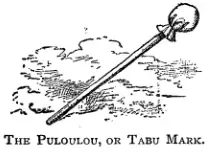
A pūloʻuloʻu, or staff marking kapu, illustrated on printed page 32 of the 1888 edition.
The Legends and Myths of Hawaii, Charles L. Webster & Company, 1888. Public domain. Cropped from the Library scan. · Image source ↗ · Public Domain
See references (7)
- The Legends and Myths of Hawaii, printed p. 32, Reader page 33
- The Legends and Myths of Hawaii, printed p. 33, Reader page 34
- The Legends and Myths of Hawaii, Reader page 307
- The Legends and Myths of Hawaii, Reader page 308
- The Legends and Myths of Hawaii, Reader page 309
- The Legends and Myths of Hawaii, Reader page 439
- The Legends and Myths of Hawaii, printed p. 437, Reader page 440
Sacred limits in daily life and at the refuge
Malo describes a rule renewed in the work of every meal. The ʻUmi story describes a few hours when ordinary activity stopped for a ceremony. The different lengths show how many kinds of responsibility could be called kapu. [8][9][1]
The National Park Service’s account of Hōnaunau gives another view of what a sacred boundary could do. A person who crossed into the refuge could escape the punishment that awaited them outside. [6][7][13][4]
See references (7)
- David Malo, Hawaiian Antiquities, chapter XI, §§ 1–7, printed pp. 50–51
- Puʻuhonua o Hōnaunau National Historical Park Foundation Document
- The Legends and Myths of Hawaii, printed p. 32, Reader page 33
- The Legends and Myths of Hawaii, printed p. 33, Reader page 34
- The Legends and Myths of Hawaii, Reader page 307
- The Legends and Myths of Hawaii, Reader page 308
- The Legends and Myths of Hawaii, Reader page 47
Read further in the library
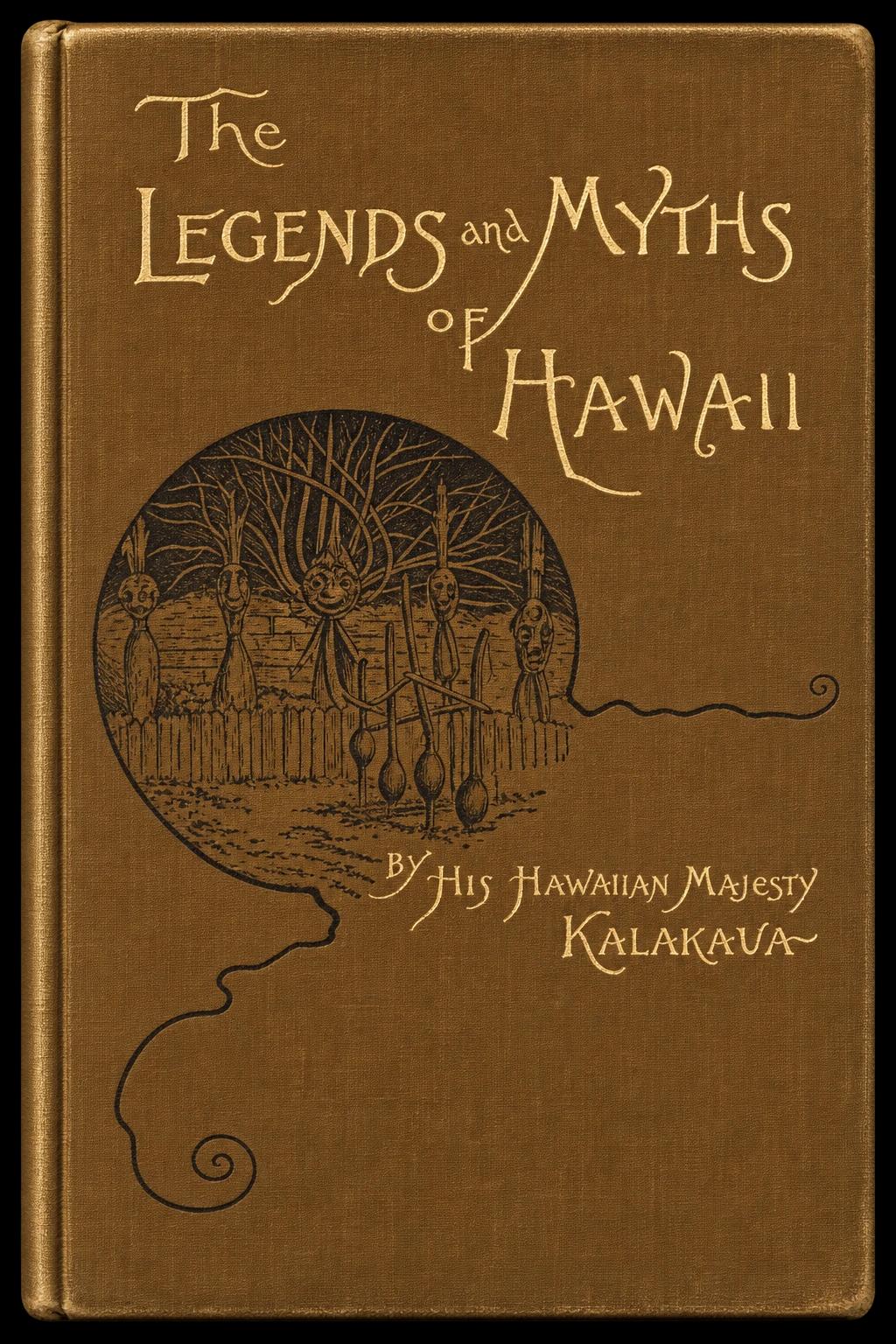
The Legends and Myths of Hawaii
Reading note
The separately titled account draws on exact passages in the consulted Library edition.
Sources
See references (13)
- David Malo, Hawaiian Antiquities, chapter XI, §§ 1–7, printed pp. 50–51 ↗David Malo, Hawaiian Antiquities (Moolelo Hawaii), translated by N. B. Emerson, Hawaiian Gazette, 1903. “Eating Under the Kapu System,” sections 1–7.Return to text ↑
- A Life of Kapu, Keōpūolani ↗Kamehameha Schools, History Makers of Hawaiʻi, the sections on chiefly kapu and “Huliau – Transformation.”Return to text ↑
- Nanea Armstrong-Wassel, Coat of Arms of the Kingdom of Hawaiʻi ↗Nanea Armstrong-Wassel, Hoʻokahua, Kaʻiwakīloumoku Hawaiian Cultural Center.Return to text ↑
- Puʻuhonua o Hōnaunau National Historical Park Foundation Document ↗National Park Service, park significance statements concerning sanctuary, cultural continuity and the stone wall.Return to text ↑
- Pūloʻuloʻu, printed page 32 ↗The Legends and Myths of Hawaii, Charles L. Webster & Company, 1888. Public domain. Cropped from the Library scan.
- The Legends and Myths of Hawaii, printed p. 32, Reader page 33David Kalākaua, The Legends and Myths of Hawaii, edited with an introduction by Rollin Mallory Daggett, Charles L. Webster & Company, 1888. Exact Library edition IMJ-0646-E001. When the introduction or a signed editorial passage is used, its author is identified in the article.Read this page in The Legends and Myths of Hawaii ↗Return to text ↑
- The Legends and Myths of Hawaii, printed p. 33, Reader page 34David Kalākaua, The Legends and Myths of Hawaii, edited with an introduction by Rollin Mallory Daggett, Charles L. Webster & Company, 1888. Exact Library edition IMJ-0646-E001. When the introduction or a signed editorial passage is used, its author is identified in the article.Read this page in The Legends and Myths of Hawaii ↗Return to text ↑
- The Legends and Myths of Hawaii, Reader page 307David Kalākaua, The Legends and Myths of Hawaii, edited with an introduction by Rollin Mallory Daggett, Charles L. Webster & Company, 1888. Exact Library edition IMJ-0646-E001. When the introduction or a signed editorial passage is used, its author is identified in the article.Read this page in The Legends and Myths of Hawaii ↗Return to text ↑
- The Legends and Myths of Hawaii, Reader page 308David Kalākaua, The Legends and Myths of Hawaii, edited with an introduction by Rollin Mallory Daggett, Charles L. Webster & Company, 1888. Exact Library edition IMJ-0646-E001. When the introduction or a signed editorial passage is used, its author is identified in the article.Read this page in The Legends and Myths of Hawaii ↗Return to text ↑
- The Legends and Myths of Hawaii, Reader page 309David Kalākaua, The Legends and Myths of Hawaii, edited with an introduction by Rollin Mallory Daggett, Charles L. Webster & Company, 1888. Exact Library edition IMJ-0646-E001. When the introduction or a signed editorial passage is used, its author is identified in the article.Read this page in The Legends and Myths of Hawaii ↗Return to text ↑
- The Legends and Myths of Hawaii, Reader page 439David Kalākaua, The Legends and Myths of Hawaii, edited with an introduction by Rollin Mallory Daggett, Charles L. Webster & Company, 1888. Exact Library edition IMJ-0646-E001. When the introduction or a signed editorial passage is used, its author is identified in the article.Read this page in The Legends and Myths of Hawaii ↗Return to text ↑
- The Legends and Myths of Hawaii, printed p. 437, Reader page 440David Kalākaua, The Legends and Myths of Hawaii, edited with an introduction by Rollin Mallory Daggett, Charles L. Webster & Company, 1888. Exact Library edition IMJ-0646-E001. When the introduction or a signed editorial passage is used, its author is identified in the article.Read this page in The Legends and Myths of Hawaii ↗Return to text ↑
- The Legends and Myths of Hawaii, Reader page 47David Kalākaua, The Legends and Myths of Hawaii, edited with an introduction by Rollin Mallory Daggett, Charles L. Webster & Company, 1888. Exact Library edition IMJ-0646-E001. When the introduction or a signed editorial passage is used, its author is identified in the article.Read this page in The Legends and Myths of Hawaii ↗Return to text ↑