Wu Xing: The Five Phases and Their Cycles
Read the Five Phases of Wu Xing through two labelled diagrams for generation and overcoming, passages from Chinese writings, and historical art.
In this article
Follow the two Five Phase cycles
Read clockwise from Wood. Each diagram uses the same five phases, with a different relation between neighbours.
Generation 相生
- Wood generates Fire.
- Fire generates Earth.
- Earth generates Metal.
- Metal generates Water.
- Water generates Wood.
Overcoming 相勝
- Wood overcomes Earth.
- Earth overcomes Water.
- Water overcomes Fire.
- Fire overcomes Metal.
- Metal overcomes Wood.
What are the five phases?
Wuxing groups change into five phases or agents. Their names are wood, fire, earth, metal and water. In the Great Plan of the Book of Documents, the names tell you what to watch for. Water tends downward, fire rises, and earth is where people sow and harvest. [1]
One common sequence describes generation. Wood generates fire, fire generates earth, earth generates metal, metal generates water, and water generates wood. A second describes overcoming. Wood overcomes earth, earth overcomes water, water overcomes fire, fire overcomes metal, and metal overcomes wood. The sequences make different relationships visible within the same fivefold scheme. [2][3]
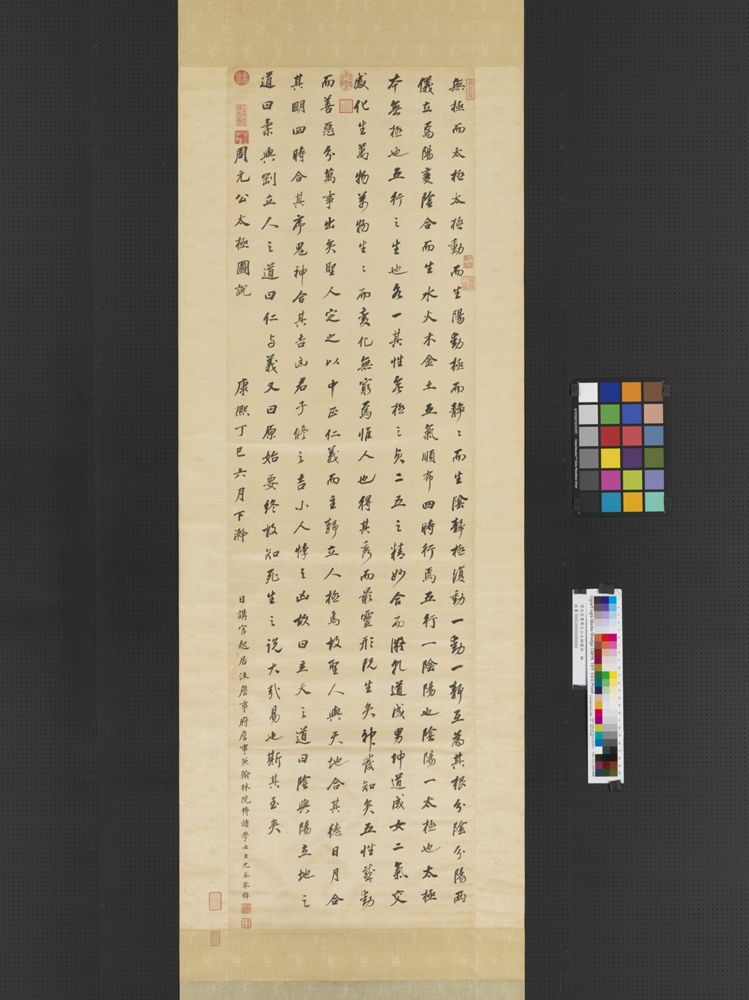
Shen Quan’s 1677 transcription of Zhou Dunyi’s Explanation of the Taiji Diagram connects the five phases to yin and yang and the seasons.
Shen Quan. Shen Quan transcription of Explanation of the Taiji Diagram. 1677. The National Palace Museum, Taipei. The National Palace Museum, Taipei, CC BY 4.0 @ www.npm.gov.tw. CC BY 4.0. · Image source ↗ · CC BY 4.0
How the Great Plan describes the phases
The Great Plan introduces Water, Fire, Wood, Metal and Earth in that order. It associates Water with moistening and descending, and Fire with blazing and rising. Wood can bend or straighten, Metal can take a changed form, and Earth is where sowing and harvesting happen. The passage asks how each phase acts. Its order differs from both rings above, which answer questions about how one phase relates to another. [1][9][10]
How the generation cycle works
Read clockwise from Wood in the first ring. Wood generates Fire, and the sequence eventually returns through Water to Wood. The Discussion of the Five Phases in the Chunqiu fanlu calls the paired relationships those of parent and child. This supplies a way to read a phase both as receiving from its predecessor and as providing for its successor. [9][3]
How the overcoming cycle works
Start at Wood again. This time the next phase is Earth. Water overcomes Fire, even though Water generates Wood in the other diagram. The Chunqiu fanlu uses overcoming to discuss the conduct of offices and the correction of wrongdoing. Its examples show why the second cycle is about checking or constraining a relation, alongside the first cycle’s account of succession. [10][2]
Where the phases appear outside a cycle diagram
Look for the square world inside the circle on the Han mirror. The four animals mark directions. In the Lunheng, Wang Chong links the eastern Azure Dragon with Wood and the western White Tiger with Metal, then uses those familiar correspondences to question a simple theory of what animals ought to overcome. Read the mirror for the arrangement of space. Read Wang Chong for what an author could do with the directional associations. [13][12]
In the Suwen, another kind of correspondence connects east, wind, Wood, sourness and the liver. The passage moves among direction, climate, taste and the body. These terms belong to a historical medical text with its own questions. The governing offices in the Chunqiu fanlu and the figures on the mirror use related vocabulary for different work. [11][10][13]
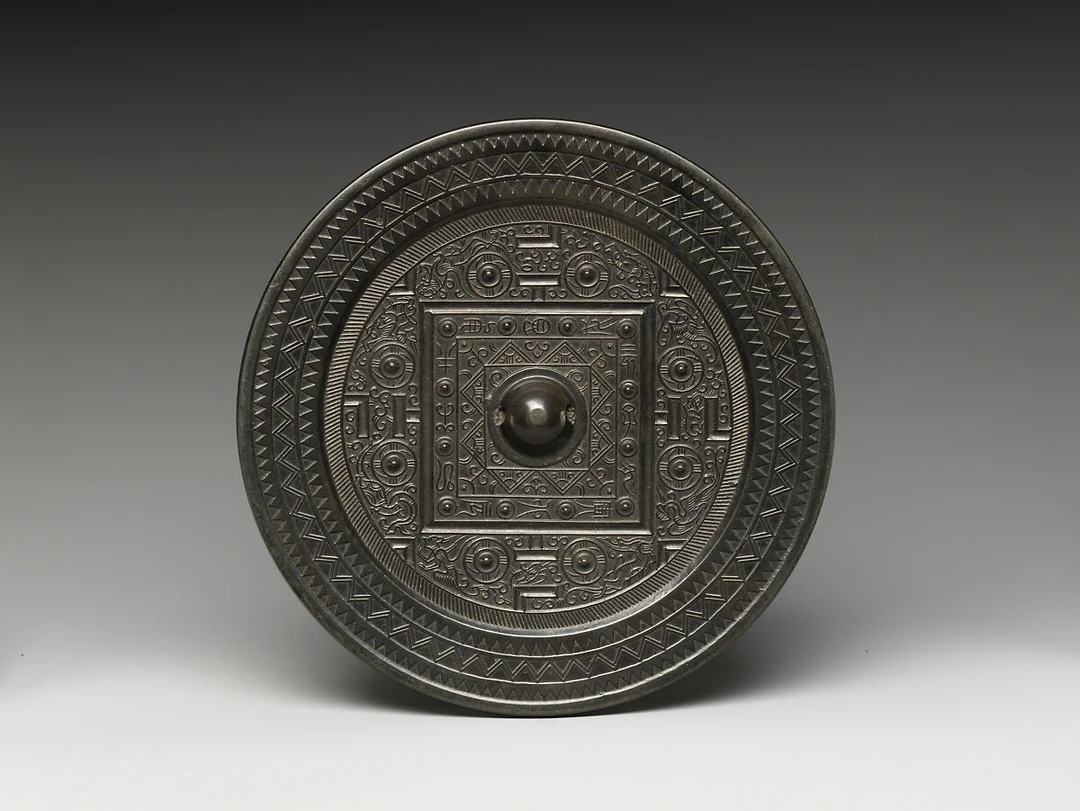
Read the square and circle first. The Met identifies the surrounding animals as markers of the four directions. The bands organise space differently from the cycle diagrams above.
China, Han dynasty, 1st–2nd century. Bronze with black patina. The Metropolitan Museum of Art, 17.118.42. Public domain. · Image source ↗ · Public Domain
In The Chinese Fairy Book
In Richard Wilhelm’s The Chinese Fairy Book, translated by Frederick H. Martens, the creation tale gives the five powers the bodies and names of the Five Ancients. The Yellow Ancient rules earth, the Red Lord fire, the Dark Lord water, the Wood Prince wood and the Mother of Metals metal. They help bring the heavens, land and living things into being. [5][6]
In the Monkey King’s story the Buddha makes a mountain out of the five phases and traps Sun Wukong beneath it. The oven where the Monkey King was held earlier follows a different scheme. It bears eight signs around its rim, and Sun Wukong finds shelter under the sign for wind. [7][8]
The five phases in a text on the Taiji
In the text copied by Shen Quan in 1677, the five phases arise through yin and yang and are linked to the seasons. In the creation tale, those same powers have names, homes and duties. The Yellow Ancient, for instance, does the work of earth. [4][5][6]
In the library
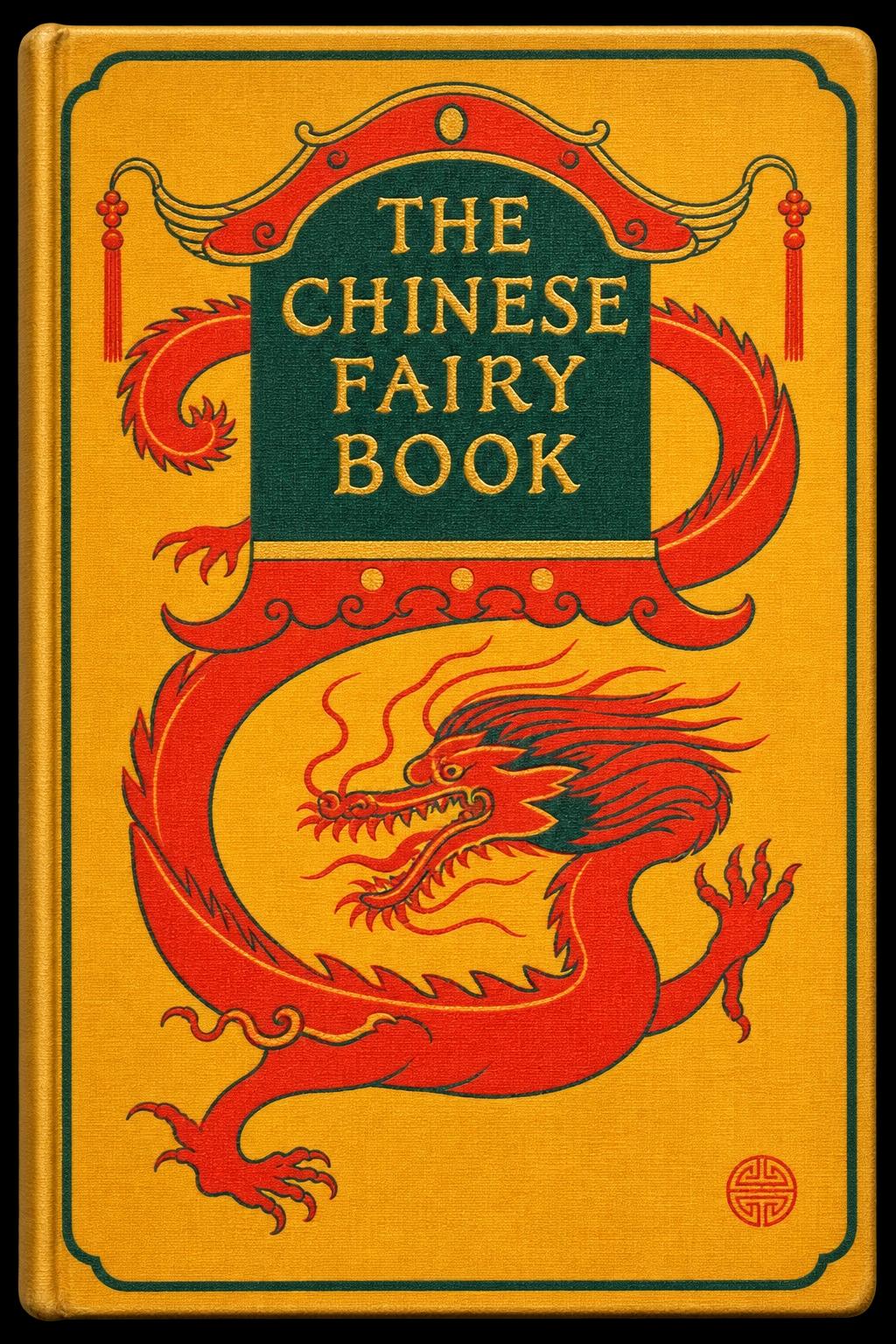
The Chinese Fairy Book
Reading note
Find the five phases as named figures in the creation tale, then see how they appear in the mountain that holds the Monkey King.
Sources
See references (13)
- Book of Documents, The Great Plan, section 3 ↗Chinese Text Project
- Ornamentation Anomaly in Early China, p. 11 ↗Rebecca Doran, Asia Major
- Tianzhong ji, volume 6, entry 151 ↗Chinese Text Project
- Shen Quan transcription of Explanation of the Taiji Diagram ↗Shen Quan. Shen Quan transcription of Explanation of the Taiji Diagram. 1677. The National Palace Museum, Taipei. The National Palace Museum, Taipei, CC BY 4.0 @ www.npm.gov.tw. CC BY 4.0.
- The Chinese Fairy Book, Library Reader page 47Richard Wilhelm, editor. Frederick H. Martens, translator. The Chinese Fairy Book. Frederick A. Stokes Company, New York, 1921. Lumitheca Library edition IMJ-0478-E002.Read this page in The Chinese Fairy Book ↗
- The Chinese Fairy Book, Library Reader page 48Richard Wilhelm, editor. Frederick H. Martens, translator. The Chinese Fairy Book. Frederick A. Stokes Company, New York, 1921. Lumitheca Library edition IMJ-0478-E002.Read this page in The Chinese Fairy Book ↗
- The Chinese Fairy Book, Library Reader page 348Richard Wilhelm, editor. Frederick H. Martens, translator. The Chinese Fairy Book. Frederick A. Stokes Company, New York, 1921. Lumitheca Library edition IMJ-0478-E002.Read this page in The Chinese Fairy Book ↗
- The Chinese Fairy Book, Library Reader page 350Richard Wilhelm, editor. Frederick H. Martens, translator. The Chinese Fairy Book. Frederick A. Stokes Company, New York, 1921. Lumitheca Library edition IMJ-0478-E002.Read this page in The Chinese Fairy Book ↗
- Chunqiu fanlu · A Discussion of the Five Phases ↗The Chinese text of Chunqiu fanlu, traditionally associated with Dong Zhongshu.
- Chunqiu fanlu · The Five Phases Overcome One Another ↗The Chinese text of Chunqiu fanlu, traditionally associated with Dong Zhongshu.
- Huangdi neijing, Suwen · The great discourse on the responses of yin and yang ↗Chinese Text Project, a parallel passage on east, wind, Wood, sourness and the liver.
- Lunheng · Wu shi, on the directional animals ↗Wang Chong’s Lunheng, Chinese text at the Chinese Text Project.
- Han mirror with animals of the four directions ↗China, Han dynasty, 1st–2nd century. Bronze with black patina. The Metropolitan Museum of Art, 17.118.42. Public domain.