Sun Wukong
Follow Sun Wukong’s staff, seventy-two transformations, rebellion against Heaven and turn toward pilgrimage through original chapters and historical art.
In this article
Follow the Monkey King’s powers through the novel
Use the chapter timeline for the order of events, then compare the novel with the illustrated Library retelling.
Who is Sun Wukong?
In the Chinese novel Journey to the West, a stone gives birth to a monkey who rises to challenge Heaven. Sun Wukong learns to change shape, leap across the sky and evade death. Those powers cause trouble for the gods long before they help a Buddhist pilgrim bring back sacred texts. [1][2][5][6]
Sun Wukong calls himself the Great Sage Equal to Heaven. The court formally grants him the title and gives him a residence in the hope that it will keep him quiet. [7][8]
From Flower-Fruit Mountain to the pilgrimage
Read the early chapters as the story of a ruler who keeps crossing boundaries. Wukong leaves his mountain to learn how to avoid death, then takes that freedom into the dragon palace, the underworld and the court of Heaven. Chapter fourteen changes who asks him to use it and what happens when he does. [21][23][27][28]
- Chapter 1
The monkey becomes king
He passes through the waterfall and finds a home for the troop. The thought of death sends him away in search of instruction. [21]
- Chapter 2
Subodhi teaches him
He learns transformations and a separate cloud somersault. Showing off one of the transformations costs him his place among the disciples. [22]
- Chapter 3
He takes the staff
The treasure of the Eastern Sea changes scale to suit him. His visit to the underworld challenges a different kind of authority. [23]
- Chapters 4–5
- Chapter 6
Erlang turns disguise against him
Every new form invites a counter. Even a shrine can give him away. [26]
- Chapter 7
The Buddha ends the rebellion
The furnace fails to destroy him. The Buddha contains the leap within his palm and pins Wukong under a mountain. [27]
- Chapter 14
The pilgrim releases him
Tang Sanzang gains a protector. The dispute over six bandits immediately tests what protection is supposed to mean. [28]
See references (8)
- Journey to the West 1 · Flower-Fruit Mountain and the Water Curtain Cave
- Journey to the West 2 · The transformations and cloud somersault
- Journey to the West 3 · The Dragon King’s treasure and the register of death
- Journey to the West 4 · The office of the stables and the title Great Sage
- Journey to the West 5 · The peaches, banquet and elixir
- Journey to the West 6 · Erlang and the contest of disguises
- Journey to the West 7 · The furnace, the Buddha’s palm and Five Phases Mountain
- Journey to the West 14 · The release, the bandits and the headband
What is the Monkey King’s staff?
The Ruyi Jingu Bang is the gold-banded iron staff Wukong obtains from the Eastern Sea Dragon King. Other weapons offered to him feel too light. The treasure in the palace responds when he wishes it smaller, and later he keeps it in his ear at the size of a needle. The change in scale is part of the joke: the heaviest thing in the room becomes something nobody can see him carrying. [23][12]
In Gakutei’s woodblock print the staff remains full-sized while small monkey figures stream from Wukong’s raised hand. The novel already shows him producing helpers from his hairs in chapter two. The print gives readers two details to look for while keeping the Edo-period portrayal distinct from the Chinese novel. [22][29]
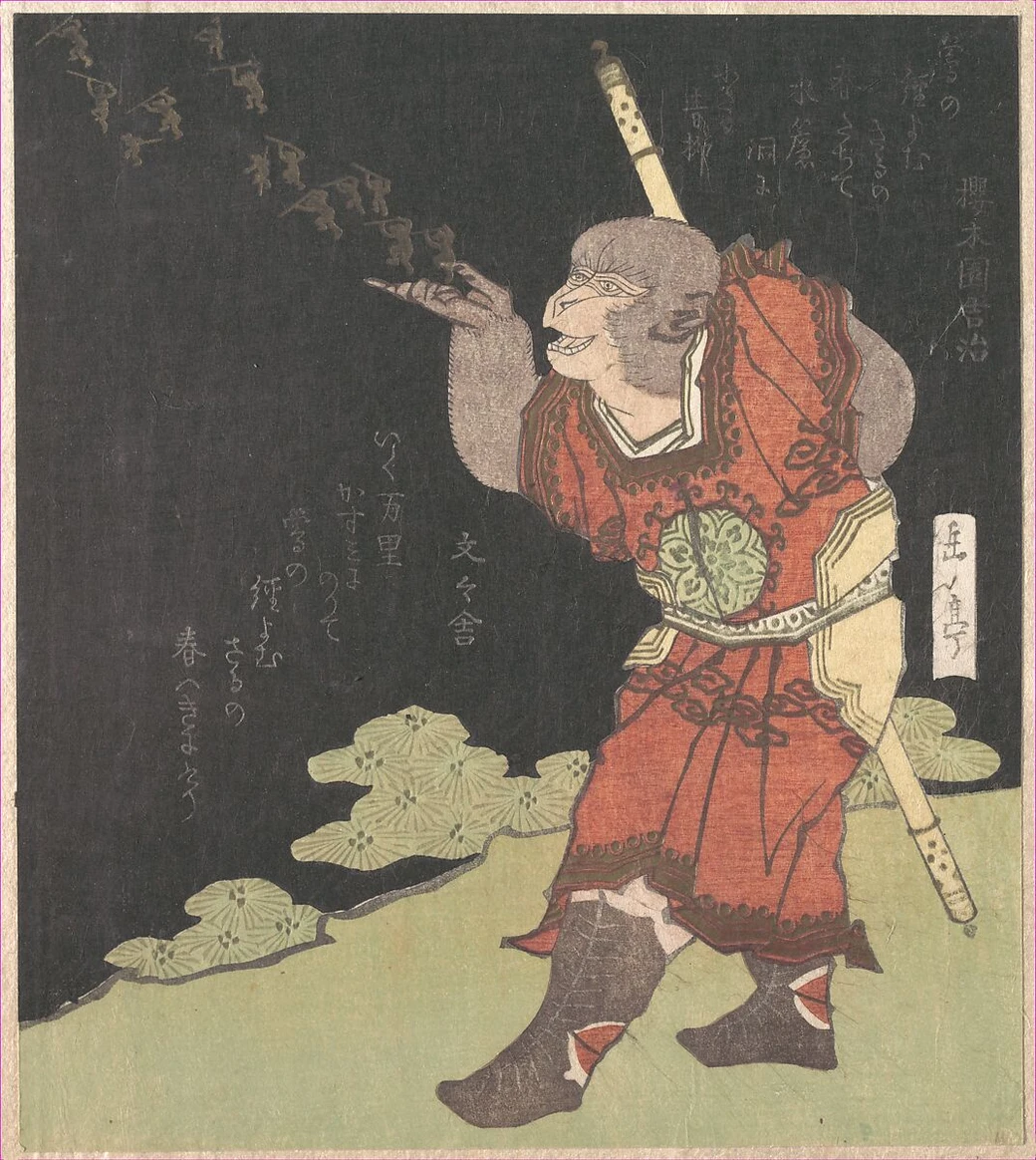
Gakutei’s Japanese surimono shows Songokū with a full-sized staff and a trail of miniature monkeys. The two forms of magic can be read side by side.
Yashima Gakutei, probably 1824, Edo Japan. Woodblock print. The Metropolitan Museum of Art, JP2047. Public domain. · Image source ↗ · Public Domain
Why transformations can fail
Subodhi teaches Wukong transformations after explaining dangers that still threaten someone who has learned longevity. Learning the cloud somersault comes separately. A demonstration before the disciples shows the difference between having a power and knowing when to use it. Wukong becomes a pine tree, his companions cheer, and the teacher sends him away for showing off. [22][16][17]
The duel with Erlang is a contest in reading clues. A bird is met by a hunting bird. A fish is betrayed by how it behaves. Wukong’s last disguise in this sequence is a small shrine, with his mouth as the entrance and his tail as a flagpole. Erlang spots the flagpole behind the building. The comedy comes from a body detail surviving an otherwise convincing change. [26][18][20]
See references (6)
- The Chinese Fairy Book, Library Reader page 322
- The Chinese Fairy Book, Library Reader page 323
- The Chinese Fairy Book, Library Reader page 343
- The Chinese Fairy Book, Library Reader page 344
- Journey to the West 2 · The transformations and cloud somersault
- Journey to the West 6 · Erlang and the contest of disguises
How Heaven loses control of the Great Sage
The court first gives Wukong the office of tending the horses. He quits when he learns its low rank. It later acknowledges his title of Great Sage Equal to Heaven and eventually makes him keeper of the peach orchard. There is a difference between granting the title and treating him as an equal: he discovers the banquet is being prepared without him. [24][25][7][8]
The register of death, the peaches and Laozi’s elixir are separate episodes. Each gives him a way to resist a particular claim on his life. By the time he faces the Buddha, speed is the power he relies on. He marks what he thinks is the limit of the world. The marks on the Buddha’s fingers reveal that he has misread the whole space of the contest. [23][25][27][19]
See references (7)
- The Chinese Fairy Book, Library Reader page 336
- The Chinese Fairy Book, Library Reader page 338
- The Chinese Fairy Book, Library Reader page 348
- Journey to the West 3 · The Dragon King’s treasure and the register of death
- Journey to the West 4 · The office of the stables and the title Great Sage
- Journey to the West 5 · The peaches, banquet and elixir
- Journey to the West 7 · The furnace, the Buddha’s palm and Five Phases Mountain
From rebel to the pilgrim’s protector
In chapter fourteen Tang Sanzang removes the seal and releases Wukong. When six bandits appear, Wukong kills them and calls that protection. The monk sees a failure of compassion and rebukes him. Guanyin then gives the monk the means to restrain him through the headband. Read the disagreement before the appearance of the band to see the exact problem it answers. [28]
The Library’s Chinese Fairy Book is a separate retelling. It brings the mountain confinement and the assignment to fetch sacred writings together at the close of its account. Compare that closing page with chapter fourteen, where the liberation and first quarrel open a new phase of the novel. [6][28]
In The Chinese Fairy Book
In The Chinese Fairy Book, Richard Wilhelm’s collection translated by Frederick H. Martens calls him Sun Wu Kung. He finds a cave behind a waterfall and earns the allegiance of the other apes. Their life together is comfortable until he recognises that they will grow old and die. That fear sends him in search of a teacher. [5][9][10]
The teacher at the Mountain of the Heart gives him his name. Later he acquires the rod that Great Yu used to measure the waters, then confronts the officials of the underworld and strikes the apes from the Book of Life. The two episodes bring separate complaints before the court of Heaven. [11][12][13]
Sun Wukong eats the Queen Mother’s peaches and later swallows Laotzse’s pills of life. The Buddha asks whether he can jump beyond his palm. What Sun takes for the edge of the world turns out to be the Buddha’s fingers. The Buddha confines him under a mountain, and Guan Yin later releases him to help the Monk of the Yangtze-Kiang fetch sacred writings. [14][15][6]
See references (9)
- The Chinese Fairy Book, Library Reader page 314
- The Chinese Fairy Book, Library Reader page 350
- The Chinese Fairy Book, Library Reader page 315
- The Chinese Fairy Book, Library Reader page 316
- The Chinese Fairy Book, Library Reader page 318
- The Chinese Fairy Book, Library Reader page 329
- The Chinese Fairy Book, Library Reader page 332
- The Chinese Fairy Book, Library Reader page 339
- The Chinese Fairy Book, Library Reader page 341
Why does Sun Wukong have seventy-two transformations?
The Discerner teaches him the transformations after warning that three dangers threaten his pursuit of immortality. The cloud somersault is a separate skill taught soon afterwards. The book gives seventy-two as the number of transformations and shows several examples across the tale. [16][17]
When Erlang pursues him, Sun Wukong becomes a sparrow and flies into a tree. Erlang spots him and changes into a sparrowhawk. Later, when Sun Wukong boasts of his transformations to the Buddha, the Buddha asks what else he can do. [18][20][19]
The Monkey King in opera and art
An opera figure in the Ashmolean’s collection presents the Monkey King with followers from the Water Curtain Cave, the place where the tale makes him a king. The Met identifies the theft of immortality peaches as a subject that travelled from Chinese legend into Japanese decorative art. The jade carving shown here uses the broader motif of monkeys with peaches. [1][3][4][9][14]
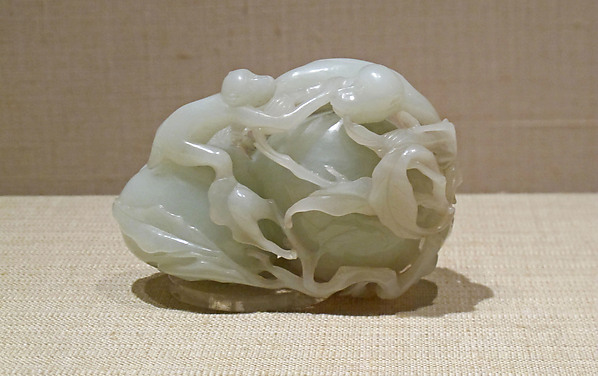
Two monkeys perch on two peaches in this eighteenth-century Qing jade carving. The pairing also appears in works depicting the Monkey King’s raid on Heaven’s orchard.
Two Monkeys on Two Peaches. 18th century. The Metropolitan Museum of Art. Gift of Heber R. Bishop, 1902. Public domain. · Image source ↗ · Public Domain
In the library
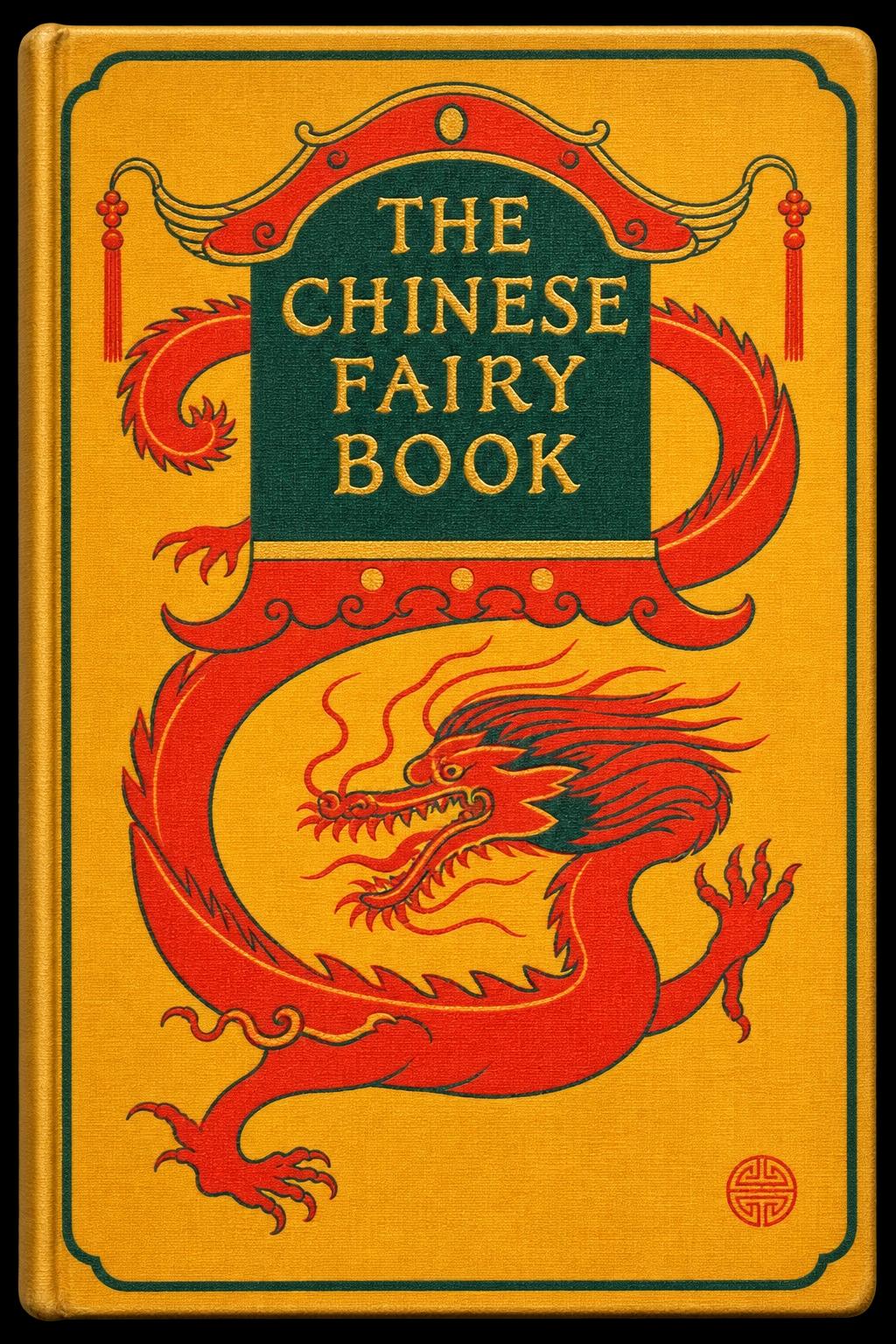
The Chinese Fairy Book
Reading note
Follow the Monkey King from the cave behind the waterfall to his meeting with the Buddha.
Sources
See references (29)
- The Monkey King opera figure ↗Ashmolean Museum
- The Monkey King Sun Wukong ↗Smithsonian National Museum of Asian Art
- Sword Guard Depicting Group of Monkeys in a Peach Tree ↗The Metropolitan Museum of Art
- Two Monkeys on Two Peaches ↗Two Monkeys on Two Peaches. 18th century. The Metropolitan Museum of Art. Gift of Heber R. Bishop, 1902. Public domain.
- The Chinese Fairy Book, Library Reader page 314Richard Wilhelm, editor. Frederick H. Martens, translator. The Chinese Fairy Book. Frederick A. Stokes Company, New York, 1921. Lumitheca Library edition IMJ-0478-E002.Read this page in The Chinese Fairy Book ↗
- The Chinese Fairy Book, Library Reader page 350Richard Wilhelm, editor. Frederick H. Martens, translator. The Chinese Fairy Book. Frederick A. Stokes Company, New York, 1921. Lumitheca Library edition IMJ-0478-E002.Read this page in The Chinese Fairy Book ↗
- The Chinese Fairy Book, Library Reader page 336Richard Wilhelm, editor. Frederick H. Martens, translator. The Chinese Fairy Book. Frederick A. Stokes Company, New York, 1921. Lumitheca Library edition IMJ-0478-E002.Read this page in The Chinese Fairy Book ↗
- The Chinese Fairy Book, Library Reader page 338Richard Wilhelm, editor. Frederick H. Martens, translator. The Chinese Fairy Book. Frederick A. Stokes Company, New York, 1921. Lumitheca Library edition IMJ-0478-E002.Read this page in The Chinese Fairy Book ↗
- The Chinese Fairy Book, Library Reader page 315Richard Wilhelm, editor. Frederick H. Martens, translator. The Chinese Fairy Book. Frederick A. Stokes Company, New York, 1921. Lumitheca Library edition IMJ-0478-E002.Read this page in The Chinese Fairy Book ↗
- The Chinese Fairy Book, Library Reader page 316Richard Wilhelm, editor. Frederick H. Martens, translator. The Chinese Fairy Book. Frederick A. Stokes Company, New York, 1921. Lumitheca Library edition IMJ-0478-E002.Read this page in The Chinese Fairy Book ↗
- The Chinese Fairy Book, Library Reader page 318Richard Wilhelm, editor. Frederick H. Martens, translator. The Chinese Fairy Book. Frederick A. Stokes Company, New York, 1921. Lumitheca Library edition IMJ-0478-E002.Read this page in The Chinese Fairy Book ↗
- The Chinese Fairy Book, Library Reader page 329Richard Wilhelm, editor. Frederick H. Martens, translator. The Chinese Fairy Book. Frederick A. Stokes Company, New York, 1921. Lumitheca Library edition IMJ-0478-E002.Read this page in The Chinese Fairy Book ↗
- The Chinese Fairy Book, Library Reader page 332Richard Wilhelm, editor. Frederick H. Martens, translator. The Chinese Fairy Book. Frederick A. Stokes Company, New York, 1921. Lumitheca Library edition IMJ-0478-E002.Read this page in The Chinese Fairy Book ↗
- The Chinese Fairy Book, Library Reader page 339Richard Wilhelm, editor. Frederick H. Martens, translator. The Chinese Fairy Book. Frederick A. Stokes Company, New York, 1921. Lumitheca Library edition IMJ-0478-E002.Read this page in The Chinese Fairy Book ↗
- The Chinese Fairy Book, Library Reader page 341Richard Wilhelm, editor. Frederick H. Martens, translator. The Chinese Fairy Book. Frederick A. Stokes Company, New York, 1921. Lumitheca Library edition IMJ-0478-E002.Read this page in The Chinese Fairy Book ↗
- The Chinese Fairy Book, Library Reader page 322Richard Wilhelm, editor. Frederick H. Martens, translator. The Chinese Fairy Book. Frederick A. Stokes Company, New York, 1921. Lumitheca Library edition IMJ-0478-E002.Read this page in The Chinese Fairy Book ↗
- The Chinese Fairy Book, Library Reader page 323Richard Wilhelm, editor. Frederick H. Martens, translator. The Chinese Fairy Book. Frederick A. Stokes Company, New York, 1921. Lumitheca Library edition IMJ-0478-E002.Read this page in The Chinese Fairy Book ↗
- The Chinese Fairy Book, Library Reader page 343Richard Wilhelm, editor. Frederick H. Martens, translator. The Chinese Fairy Book. Frederick A. Stokes Company, New York, 1921. Lumitheca Library edition IMJ-0478-E002.Read this page in The Chinese Fairy Book ↗
- The Chinese Fairy Book, Library Reader page 348Richard Wilhelm, editor. Frederick H. Martens, translator. The Chinese Fairy Book. Frederick A. Stokes Company, New York, 1921. Lumitheca Library edition IMJ-0478-E002.Read this page in The Chinese Fairy Book ↗
- The Chinese Fairy Book, Library Reader page 344Richard Wilhelm, editor. Frederick H. Martens, translator. The Chinese Fairy Book. Frederick A. Stokes Company, New York, 1921. Lumitheca Library edition IMJ-0478-E002.Read this page in The Chinese Fairy Book ↗
- Journey to the West 1 · Flower-Fruit Mountain and the Water Curtain Cave ↗Chinese text of Xiyou ji, traditionally attributed to Wu Cheng’en. Chinese Wikisource.
- Journey to the West 2 · The transformations and cloud somersault ↗Chinese text of Xiyou ji, traditionally attributed to Wu Cheng’en. Chinese Wikisource.
- Journey to the West 3 · The Dragon King’s treasure and the register of death ↗Chinese text of Xiyou ji, traditionally attributed to Wu Cheng’en. Chinese Wikisource.
- Journey to the West 4 · The office of the stables and the title Great Sage ↗Chinese text of Xiyou ji, traditionally attributed to Wu Cheng’en. Chinese Wikisource.
- Journey to the West 5 · The peaches, banquet and elixir ↗Chinese text of Xiyou ji, traditionally attributed to Wu Cheng’en. Chinese Wikisource.
- Journey to the West 6 · Erlang and the contest of disguises ↗Chinese text of Xiyou ji, traditionally attributed to Wu Cheng’en. Chinese Wikisource.
- Journey to the West 7 · The furnace, the Buddha’s palm and Five Phases Mountain ↗Chinese text of Xiyou ji, traditionally attributed to Wu Cheng’en. Chinese Wikisource.
- Journey to the West 14 · The release, the bandits and the headband ↗Chinese text of Xiyou ji, traditionally attributed to Wu Cheng’en. Chinese Wikisource.
- The Monkey King Songokū · Yashima Gakutei ↗Yashima Gakutei, probably 1824, Edo Japan. Woodblock print. The Metropolitan Museum of Art, JP2047. Public domain.