The 12 Animals of the Chinese Zodiac, in Order
Find the 12 Chinese zodiac animals in order, check your animal by date from 1901 to 2100, and explore the calendar, folklore and historical art.
In this article
Find your animal in the Chinese zodiac
Check a date against the Lunar New Year boundary, then read the twelve animals in their calendar order.
- Rat 鼠 Zǐ
- Ox 牛 Chǒu
- Tiger 虎 Yín
- Rabbit 兔 Mǎo
- Dragon 龍 Chén
- Snake 蛇 Sì
- Horse 馬 Wǔ
- Goat 羊 Wèi
- Monkey 猴 Shēn
- Rooster 雞 Yǒu
- Dog 狗 Xū
- Pig 豬 Hài
What are the 12 Chinese zodiac animals in order?
The order is Rat, Ox, Tiger, Rabbit, Dragon, Snake, Horse, Goat, Monkey, Rooster, Dog, and Pig. After Pig, the sequence begins again with Rat. The list pairs each animal with an Earthly Branch. The first branch, Zǐ, goes with Rat, and the seventh, Wǔ, goes with Horse. Sheep and Ram are also used in English for the eighth animal because yáng can refer to more than one kind of animal. [5][2]
The animal alone identifies a place in the twelve-year cycle. In the longer system, a branch advances along with one of ten Heavenly Stems. Both return to their starting position together after sixty years. Two Horse years twelve years apart therefore share a branch while having different stems. The full stem–branch pair returns after sixty years. [2]
When does the zodiac animal change?
The Hong Kong Observatory begins the calendrical year on the first day of the first lunar month. This is the convention used by the date lookup. The beginning of a Gregorian year does not tell you whether the lunar year has changed yet. New Year in 2026 falls on 17 February in the Observatory’s tables, so 16 February is still in the Snake year and 17 February begins the Horse year. [2][1][3]
You may find a different answer in a system that uses the solar term Spring Commences, Lìchūn. In the Observatory’s 2018 example, the solar term fell on 4 February and the first day of the first lunar month on 16 February. Someone born between those two dates can receive different answers under the two conventions. Check which boundary a source uses before comparing its result. [2]
What the early texts tell us
Wang Chong’s Lunheng shows the branch–animal associations in use during the Eastern Han. He uses familiar examples such as Tiger for Yín and Rat for Zǐ while questioning an explanation based on the overcoming relations of the Five Phases. The associations matter because readers already know them well enough for the argument to work. The passage belongs to a debate about how nature works. [4][5]
See references (2)
How to read the animals in Tang clay and Qing jade
The Tang figures wear long robes above small bases. Their ears, beaks and muzzles do the work of identification. The Met explains that groups of this kind were placed in tombs, and suggests a connection with renewal. Look at how the repeated bodies and garment folds set off the changing heads. [5]
The Qing set also makes the animals human-bodied, but their poses and objects vary. The horse holds a fan. Set that small difference beside the Tang figures’ more uniform silhouettes. Each set invites you to recognise twelve distinct animals while still seeing them as a group. [5][6]
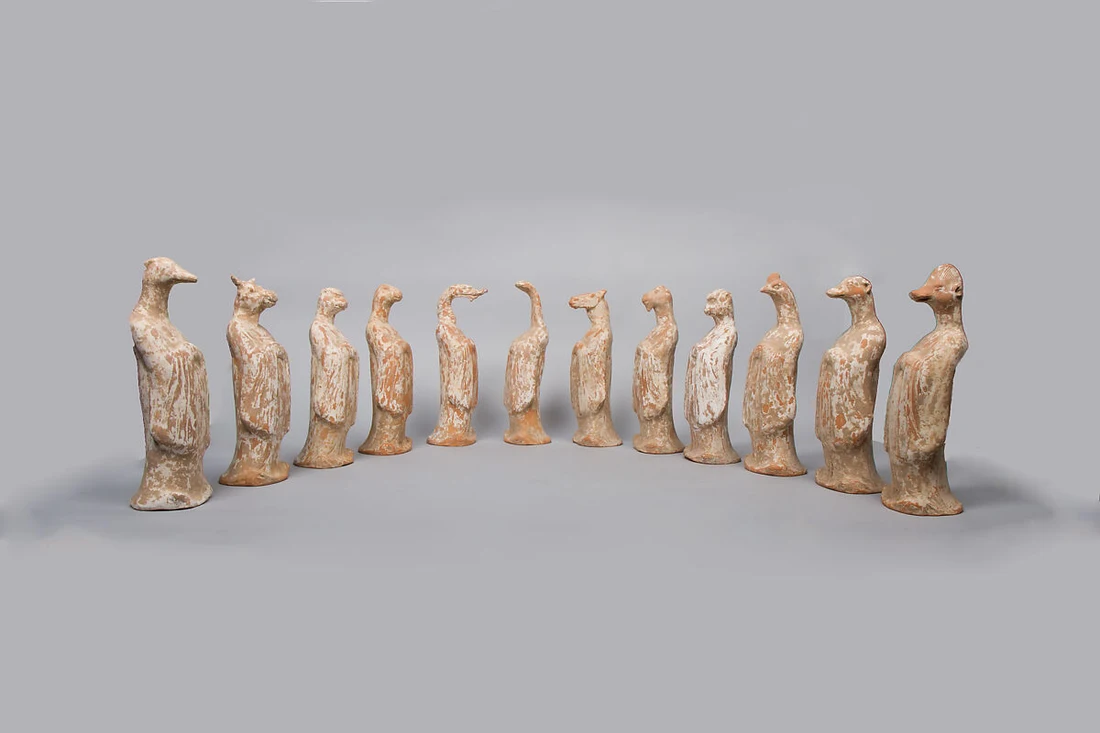
The Tang figures stand in robes that resemble those of officials. Their animal heads identify them as members of the zodiac set.
China, Tang dynasty, eighth century. Earthenware with white slip. The Metropolitan Museum of Art. Public domain. · Image source ↗ · Public Domain
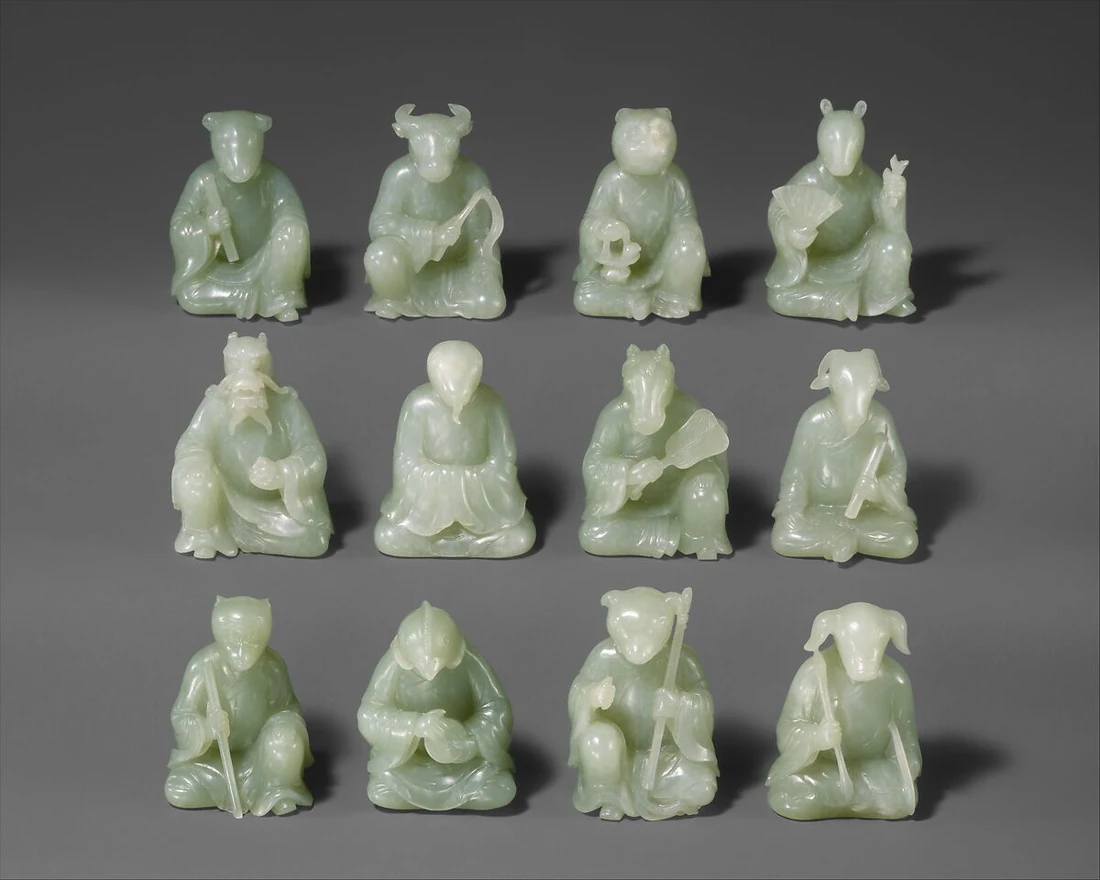
The Qing jade carvers gave the twelve animals distinct poses and objects. Find the horse, seventh in the sequence, with a broad fan.
China, Qing dynasty, eighteenth–nineteenth century. Nephrite jade. The Metropolitan Museum of Art, 02.18.730a–l. Public domain. · Image source ↗ · Public Domain
See references (2)
Why does the Rat come first in the race story?
A popular story turns the order into the result of a contest. In Ed Young’s Cat and Rat, the race explains the pairing of the Rat and Ox and why the Cat is missing from the list. Listen to Young’s retelling alongside the earlier art. The story gives the sequence characters and motives, while the clay set and Wang Chong’s text give different kinds of evidence about the sequence’s history. [7][5][4]
The Horse in a Library folktale
The Chinese Fairy Book offers another way an animal acquires meaning. In the story of the Silkworm Goddess, a white stallion brings a girl’s father home. The story later gives the girl charge of silkworms. On the second printed page, the editor offers a separate interpretation linking the stallion with the season of silk cultivation. Read the tale and the note in sequence to see where the narrator’s story ends and the editor’s zodiac interpretation begins. [8][9]
Read further in the library
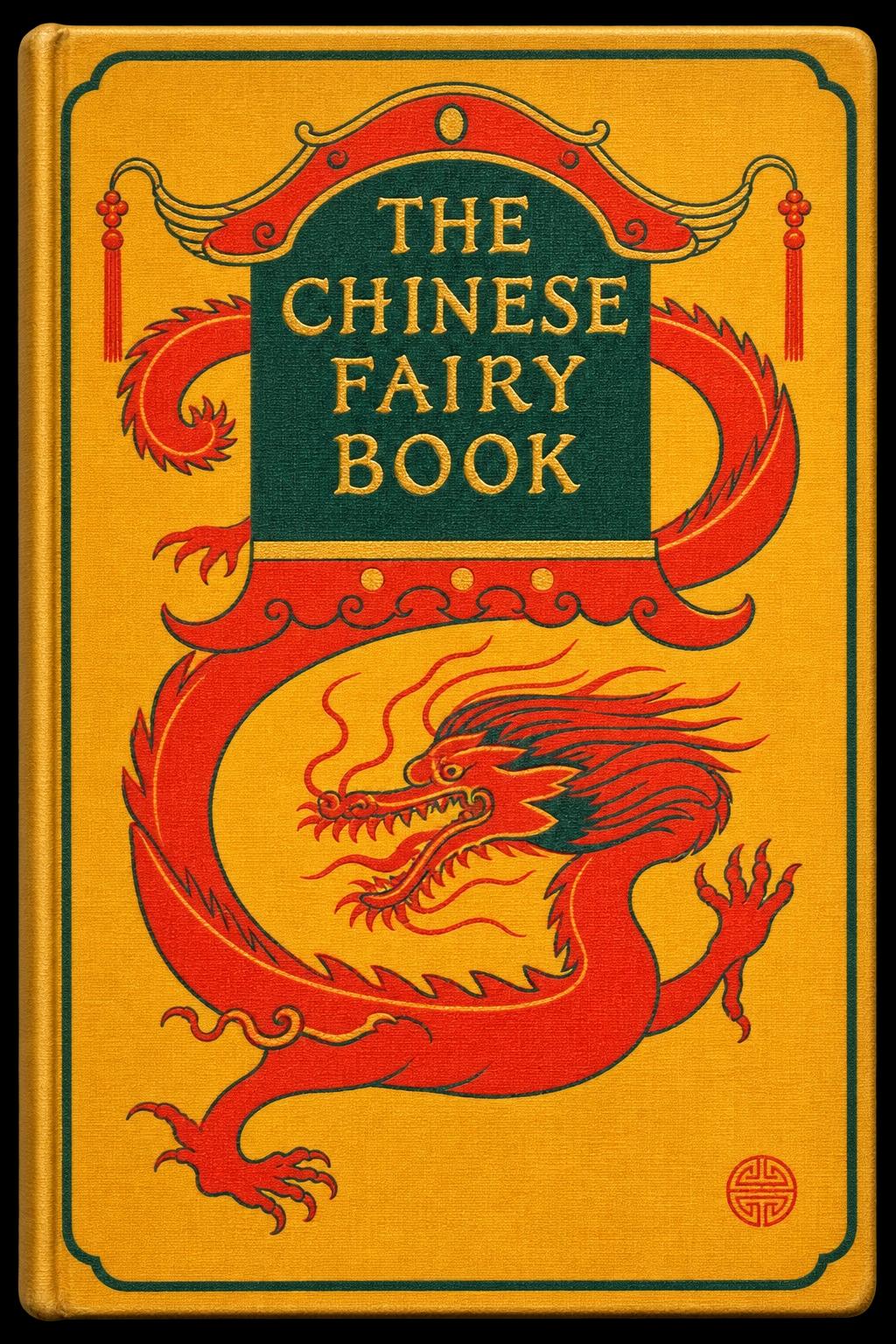
The Chinese Fairy Book
Reading note
Read the Silkworm Goddess story and the editor’s distinct zodiac interpretation on printed pages 56–57.
Sources
See references (9)
- Gregorian–Lunar calendar conversion tables, 1901–2100 ↗Hong Kong Observatory.Return to text ↑
- What year is it today? · New Year and Spring Commences ↗Hui Tai-wai, Hong Kong Observatory, 2018.Return to text ↑
- 2026 calendar · New Year on 17 February ↗Hong Kong Observatory.Return to text ↑
- Lunheng · Wu shi, on branch–animal pairings ↗Wang Chong’s Lunheng, Chinese text at the Chinese Text Project.Return to text ↑
- Set of twelve zodiac animals ↗China, Tang dynasty, eighth century. Earthenware with white slip. The Metropolitan Museum of Art. Public domain.Return to text ↑
- Twelve animals of the Chinese zodiac ↗China, Qing dynasty, eighteenth–nineteenth century. Nephrite jade. The Metropolitan Museum of Art, 02.18.730a–l. Public domain.Return to text ↑
- Ed Young reads Cat and Rat ↗The author and illustrator reads his modern retelling, presented by the Met, 2021.Return to text ↑
- The Chinese Fairy Book · the silkworm goddess story, printed p. 56Richard Wilhelm, editor, and Frederick H. Martens, translator. Frederick A. Stokes, 1921.Read this page in The Chinese Fairy Book ↗Return to text ↑
- The Chinese Fairy Book · the editor’s zodiac note, printed p. 57Richard Wilhelm, editor, and Frederick H. Martens, translator. Frederick A. Stokes, 1921.Read this page in The Chinese Fairy Book ↗Return to text ↑