Soma
Soma is both a sacred drink and a deity in the Rigveda. Explore its hymn of immortality, its association with the moon and its relation to amrita.
In this article
What is Soma?
Soma names both a sacred drink and a divine presence in Vedic poetry. A hymn can praise the drink as something that enters the body and address Soma directly as a deity. Later accounts connect the name with the moon and sometimes with amrita, the nectar of immortality. [1][4][5][6]
Soma in Rigveda 8.48
In Ralph T. H. Griffith’s translation of Rigveda 8.48, verse 3 celebrates reaching light and becoming immortal. Verses 4 and 7 ask Soma to extend the worshippers’ lives. The hymn moves between the exhilaration of the ritual and the wish for continued protection. [1]
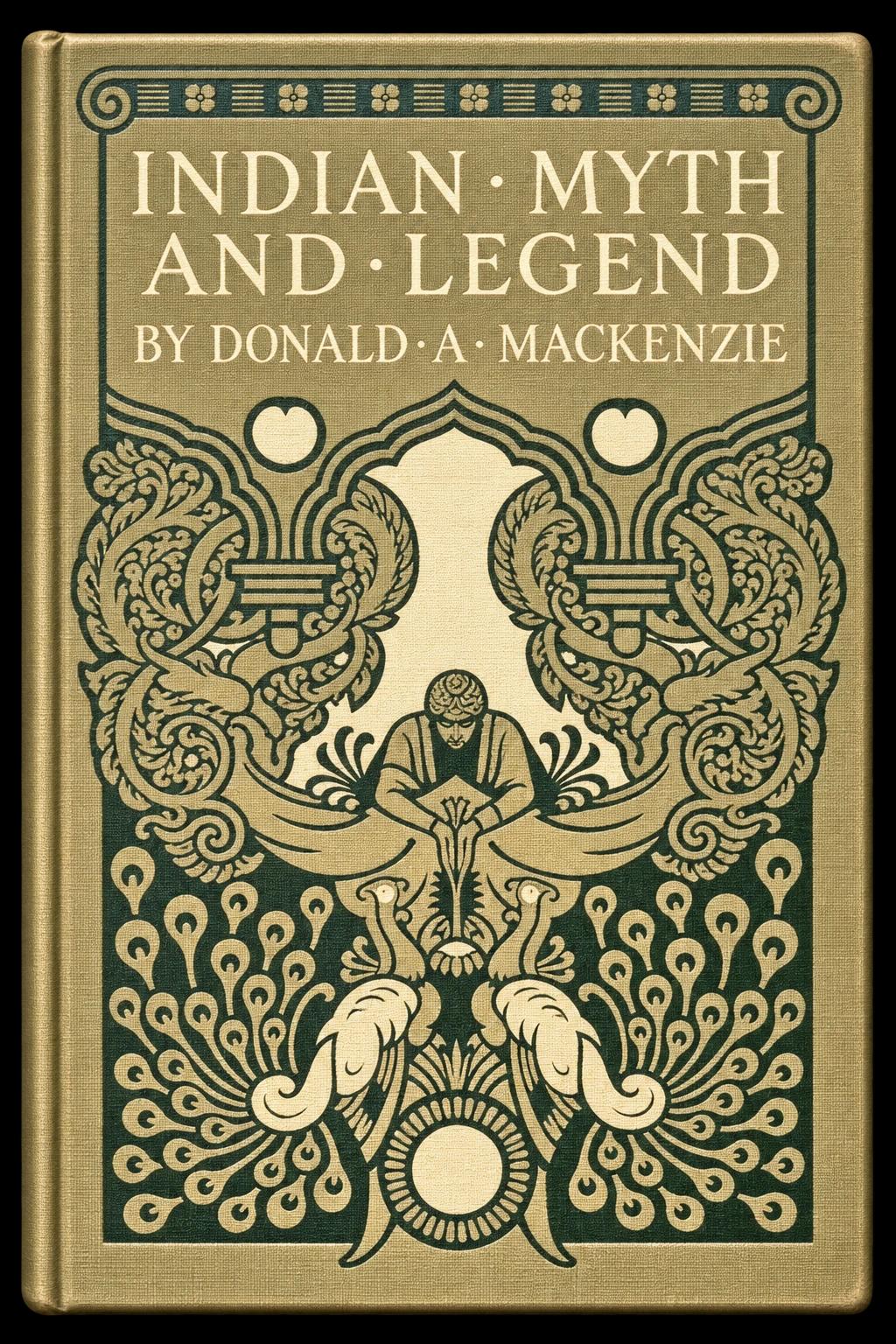
Indian Myth and Legend by Donald A. Mackenzie
In Indian Myth and Legend, Donald A. Mackenzie moves from the moon deity Chandra and his association with moisture to Soma, the juice of a plant he describes as unidentified. His quoted hymn makes the god felt within the drinker, to whom it brings courage, inspiration and a sense of entering the light. [4][5]
Mackenzie describes priests drinking Soma as part of sacrifice and offering it to Agni on the altar. In a hymn he quotes separately, frogs answer one another like priests at their annual rites, giving ritual speech a familiar sound in the rainy season. [5][6]
Mackenzie uses his idea of a life-giving substance to draw a comparison with Germanic mead and wells of wisdom. These are the likenesses he sees across the traditions. [6]
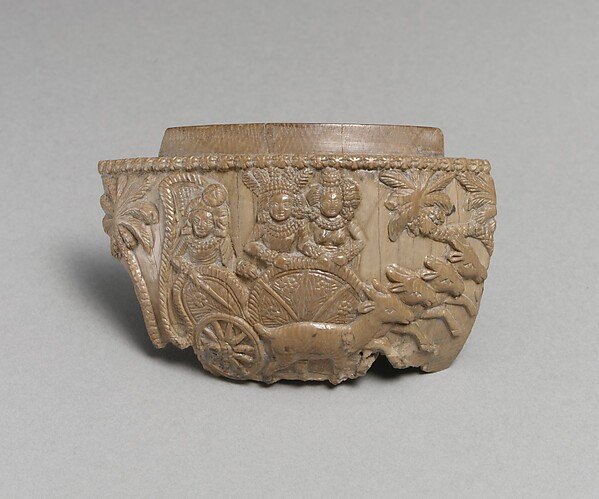
The Met tentatively identifies this West Bengal ivory chariot group as Chandra with a wife and attendant, second to first century BCE.
The Metropolitan Museum of Art, Purchase, John Stewart and Arnold Lieberman, Kurt Berliner, Jann S. and Jane Wenner, Nancy Wiener Gallery, Helene and Philippe Leloup and Anonymous Gifts, and funds from various donors, 2004, 2004.173. Open Access CC0; resized and converted to JPEG. · Image source ↗ · CC0
Soma and Amrita in the Mahabharata
In Ādi Parva, Astika Parva XXXIV of the Mahābhārata, translated by Kisari Mohan Ganguli, Soma is the name used in Garuda’s exchange with Indra. The nectar brought to the snakes is also called Amrita. Both names occur in this telling of the same episode. [2]
Soma as drink, deity and nectar
The Rigveda speaks to Soma as a power active in worship. The epic makes the nectar something Garuda can bargain over and carry away. The vocabulary connects the episodes while leaving open what plant supplied the Vedic drink. [5][1][2]
Read further in the library
Indian Myth and Legend
Reading note
The separately titled account draws on exact passages in the consulted Library edition.
Sources
See references (6)
- Rigveda 8.48, translated by Ralph T. H. Griffith ↗Complete main hymn directly read in the hosted historical translation. Its religious language is distinguished from botanical identification and from a claim that physical immortality was empirically established.Return to text ↑
- Mahabharata, Adi Parva, Astika Parva XXXIV, translated by Kisari Mohan Ganguli ↗Complete main translated section directly read through the public text viewer. The bargain with Indra, release of Garuda’s mother and the snakes’ divided tongues were checked. Site navigation and commercial material are excluded.Return to text ↑
- The Moon God Chandra(?) in His Chariot with Wife and Attendant, 2nd–1st century BCE ↗The Metropolitan Museum of Art, Purchase, John Stewart and Arnold Lieberman, Kurt Berliner, Jann S. and Jane Wenner, Nancy Wiener Gallery, Helene and Philippe Leloup and Anonymous Gifts, and funds from various donors, 2004, 2004.173. Open Access CC0; resized and converted to JPEG.
- Indian Myth and Legend, Reader page 97Donald A. Mackenzie, Indian Myth and Legend, Gresham Publishing Company Limited, London, undated consulted impression. Library edition IMJ-0649-E001. Persistent PageIDs and current Reader positions verified against the supplied PDF and cached Reader manifest. Embedded translations are Mackenzie’s presentation unless a separately consulted primary text is named.Read this page in Indian Myth and Legend ↗Return to text ↑
- Indian Myth and Legend, Reader page 98Donald A. Mackenzie, Indian Myth and Legend, Gresham Publishing Company Limited, London, undated consulted impression. Library edition IMJ-0649-E001. Persistent PageIDs and current Reader positions verified against the supplied PDF and cached Reader manifest. Embedded translations are Mackenzie’s presentation unless a separately consulted primary text is named.Read this page in Indian Myth and Legend ↗Return to text ↑
- Indian Myth and Legend, Reader page 99Donald A. Mackenzie, Indian Myth and Legend, Gresham Publishing Company Limited, London, undated consulted impression. Library edition IMJ-0649-E001. Persistent PageIDs and current Reader positions verified against the supplied PDF and cached Reader manifest. Embedded translations are Mackenzie’s presentation unless a separately consulted primary text is named.Read this page in Indian Myth and Legend ↗Return to text ↑