Ragnarök in Order: What Happens Before and After the Battle?
Follow Ragnarök from the great winter to the renewed earth. Compare the Eddas, see who dies or returns, and read the exact chapters and Reader pages.
In this article
Two encounters on the battlefield
Emil Doepler sets two fights side by side. Use the markers to locate each encounter, then follow the Edda passages for what happens next.
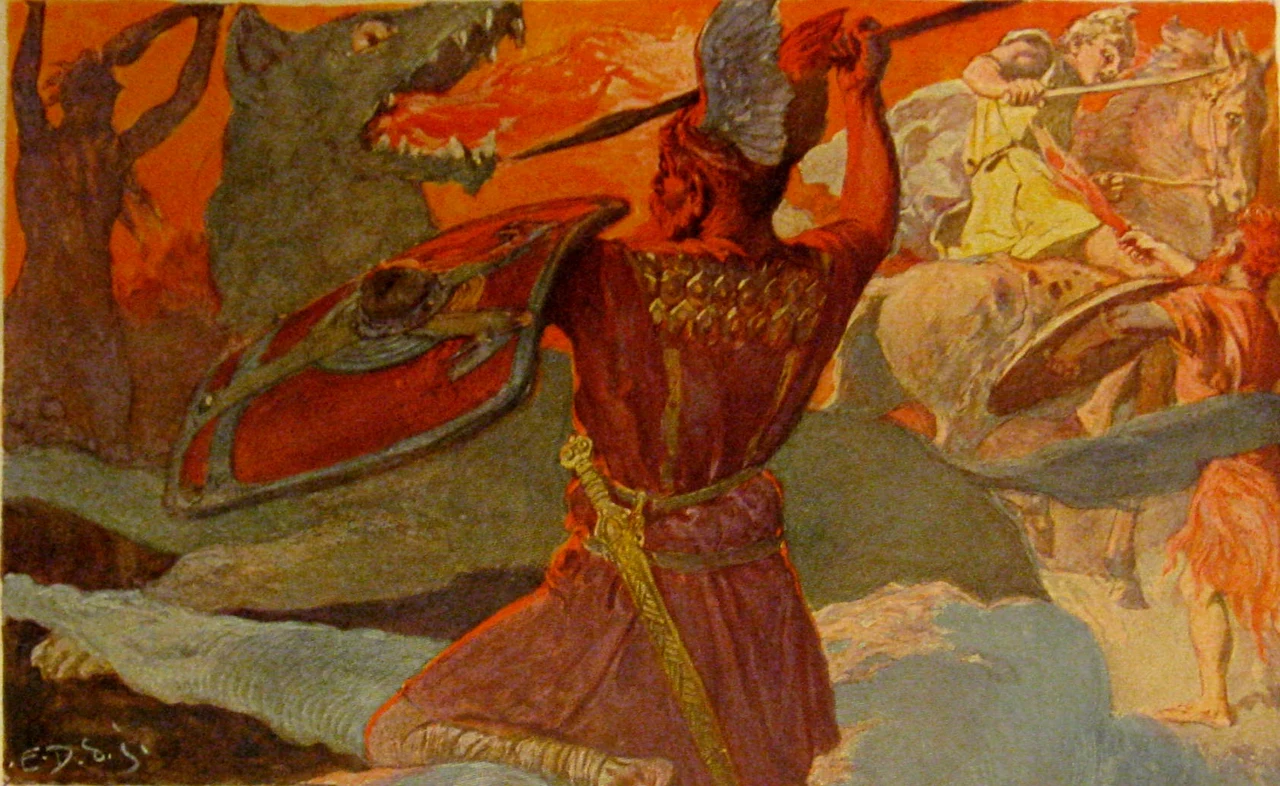

Odin and Fenrir
The wolf’s open jaws frame Odin’s spear. The next encounter with that wolf belongs to Víðarr in both the poem and the prose.
Freyr and Surtr
In the background, the fire giant turns a weapon towards Freyr. Snorri explains Freyr’s defeat through the sword he had already given away.
Ragnarök in order at a glance
Ragnarök is the destruction and renewal of the world in Norse mythology. The stories bring a long winter, the breaking of bonds, the death of Odin and Thor, fire and flood, and a green earth rising out of the sea. Start with Snorri’s order of events, then compare the older poetic accounts at the points where they tell the story differently. A reader can follow the broad sequence across the sources while keeping particular details with the works that give them. [1][2][3][5][6]
- Before the battle
- The warning
- The battle
- The destruction
- The renewal
See references (11)
- Völuspá 44–52 · The signs, the horn and the forces assembling
- Völuspá 53–58 · The wolf, the serpent and the sinking earth
- Völuspá 59–66 · The green earth, Baldr and the closing vision
- Gylfaginning LI · The Awful Winter and the battle on Vígrídr
- Gylfaginning LIII · Survivors, Mjöllnir and the sun’s daughter
- Vafþrúðnismál 44–47 · Líf, Lífþrasir and the new sun
- Colum’s Fimbul Winter
- Heimdall blows his horn
- Thor’s nine paces and Vidar facing Fenrir
- Loki and Heimdall, and Surtur’s fire
- The sons of Odin and Thor, and Baldur’s return
What happens before the battle?
In Gylfaginning, Baldr’s death belongs to the story that precedes Ragnarök. Loki discovers that mistletoe has been left out of the protections around Baldr and directs Höðr to use it. The attempt to bring Baldr back from Hel fails. Loki is later bound. These episodes explain why two figures who vanish before the final fighting still matter when the texts describe who returns and who comes to fight. [4][5][6]
Snorri distinguishes three winters of fighting from the three successive winters without summer that constitute the terrible winter. The prophecy in Völuspá presents violence within families, broken shields, a howling creature and the breaking of bonds as a chain of ominous images. Colum opens his final episode with the winter. Read his first winter page beside Snorri to see how a retelling can give a named phase greater narrative weight. [5][1][10]
The disruption reaches the landscape. The sea rises with the movement of the serpent and Naglfar comes loose. In Snorri, Hrymr steers Naglfar. In Bellows’s Völuspá, a nearby stanza puts Loki at the helm of a ship carrying the people of Hel. Keep the named vessel and each helmsman with the passage that mentions them. Bifröst also breaks in Snorri as the riders from Múspell cross it. The guide to the nine Norse realms gives these places and routes their wider setting. [5][1][12]
See references (6)
- Völuspá 44–52 · The signs, the horn and the forces assembling
- Gylfaginning XLIX–L · Baldr’s death and Loki’s binding
- Gylfaginning LI · The Awful Winter and the battle on Vígrídr
- Gylfaginning LIII · Survivors, Mjöllnir and the sun’s daughter
- Colum’s Fimbul Winter
- The flood, Naglfar and Frey’s encounter with Surtur
Who dies at Ragnarök?
Fenrir swallows Odin in Snorri’s account. Odin’s son Víðarr kills the wolf by holding down its lower jaw with his foot and wrenching the upper one away. The poem marks the same revenge with a different action. In Bellows’s Völuspá, stanza 54 has Víðarr drive his sword into the wolf’s heart. Both accounts place the revenge immediately after Odin’s fall. [5][2][13]
Thor and the Midgard serpent also bring about each other’s deaths. Snorri gives the sequence in full. Thor kills the serpent, walks nine paces and falls from its venom. Völuspá also gives him nine steps before he goes down. The prose expands other fights as well, explaining Freyr’s vulnerability through the sword he gave to Skírnir and naming Garmr as Týr’s opponent. [5][2][13]
- Odin and Fenrir
- Fenrir kills Odin. Víðarr then kills Fenrir.
- Thor and Jörmungandr
- Thor kills the serpent and dies from its venom.
- Freyr and Surtr
- Freyr falls. Surtr goes on to burn the world.
- Týr and Garmr
- Each kills the other.
- Heimdall and Loki
- Each kills the other.
Who survives or returns after Ragnarök?
The seeress in Völuspá sees land rise green again. Waterfalls descend and an eagle fishes below the cliffs. The gods meet at Iðavöllr and remember the world that has passed. Baldr returns and lives with Höðr. The poem goes on to other images, including the hall at Gimlé and the final sight of the dragon carrying bodies. Its closing scene leaves room for more than a simple picture of universal peace. [3][9]
Snorri names Víðarr and Váli among the survivors. Móði and Magni arrive with their father Thor’s hammer, and Baldr and Höðr come from Hel. The renewed assembly can therefore include both people who survived the destruction and people who return from the dead. For human survival, read Vafþrúðnismál 44–45. Líf and Lífþrasir hide in Hoddmímir’s wood and live on morning dew. The following exchange names the daughter of the old sun, who takes up its path. Snorri incorporates both motifs into his account of renewal. [6][7][15]
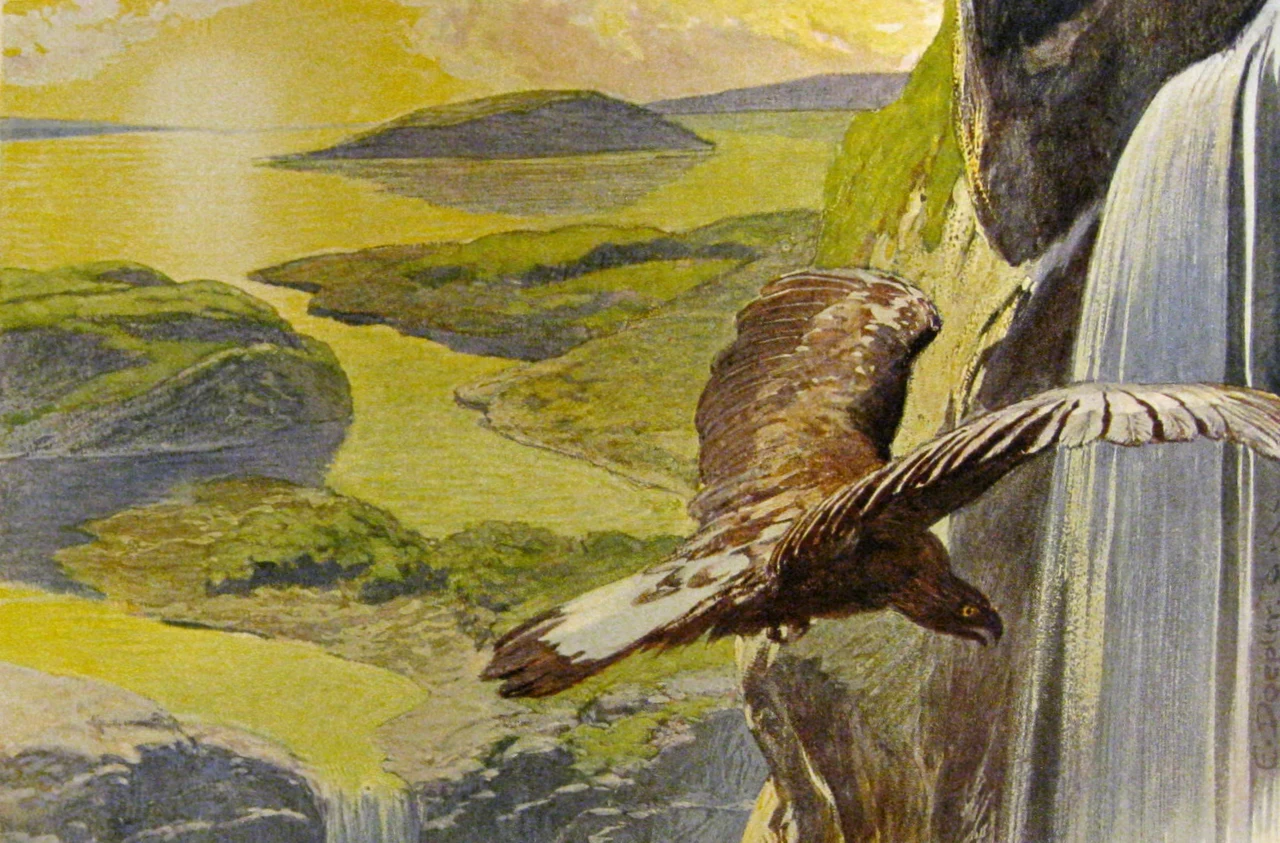
After Ragnarök, by Emil Doepler, ca. 1905. The falling water and eagle follow the opening images of Völuspá’s renewed world.
Emil Doepler, Walhall, die Götterwelt der Germanen, Martin Oldenbourg, Berlin, ca. 1905. Reproduction via Wikimedia Commons. · Image source ↗ · Public Domain
Read Ragnarök in The Children of Odin
Padraic Colum tells the story as a continuous narrative in The Children of Odin. Follow his winter scene to Heimdall’s warning and then to the ship of nails. At the battle, check the leaf with Thor’s nine paces and the beginning of Víðarr’s encounter with Fenrir. Colum’s names may look different if you have just read Snorri in Brodeur’s translation. His Frey is Freyr and his Surtur is Surtr. [10][11][12][13]
Read the fire and renewal on the next two linked leaves. Colum makes the World Tree burn and then brings the younger gods and Baldr into a new scene. Keep those details attached to his retelling. For comparison, return to the Edda passages to see where the poetic and prose accounts put their attention. [14][15][3][6]
See references (8)
- Völuspá 59–66 · The green earth, Baldr and the closing vision
- Gylfaginning LIII · Survivors, Mjöllnir and the sun’s daughter
- Colum’s Fimbul Winter
- Heimdall blows his horn
- The flood, Naglfar and Frey’s encounter with Surtur
- Thor’s nine paces and Vidar facing Fenrir
- Loki and Heimdall, and Surtur’s fire
- The sons of Odin and Thor, and Baldur’s return
Read further in the library
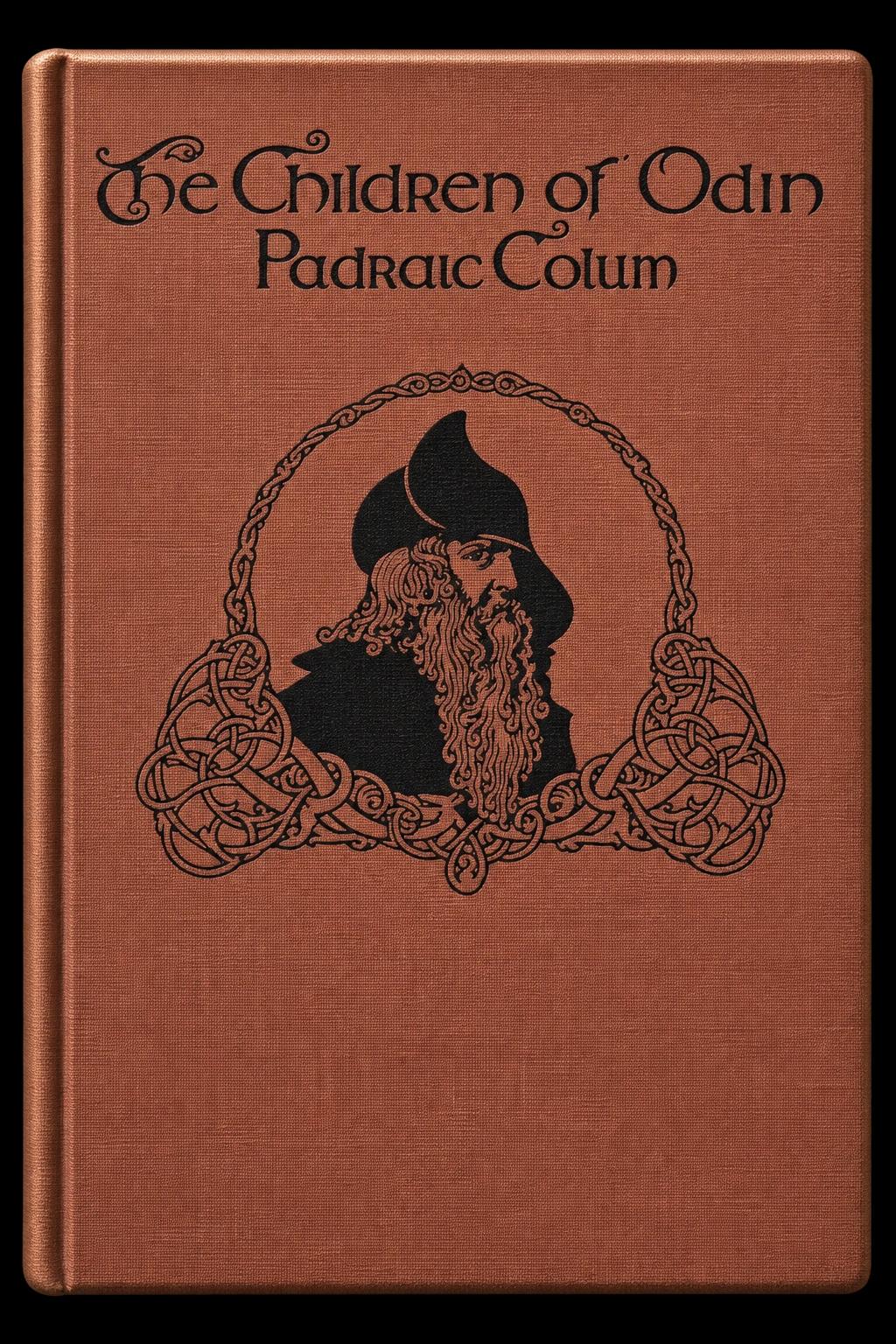
The Children of Odin
Reading note
Read Colum’s retelling of the great winter, the battles and the green earth after the fire.
Sources
See references (15)
- Völuspá 44–52 · The signs, the horn and the forces assembling ↗Poetic Edda, translated by Henry Adams Bellows, 1923. Stanza numbering follows this edition.Return to text ↑
- Völuspá 53–58 · The wolf, the serpent and the sinking earth ↗Poetic Edda, translated by Henry Adams Bellows, 1923. Stanza numbering follows this edition.Return to text ↑
- Völuspá 59–66 · The green earth, Baldr and the closing vision ↗Poetic Edda, translated by Henry Adams Bellows, 1923. Stanza numbering follows this edition.Return to text ↑
- Gylfaginning XLIX–L · Baldr’s death and Loki’s binding ↗Snorri Sturluson, Prose Edda, translated by Arthur Gilchrist Brodeur, 1916.Return to text ↑
- Gylfaginning LI · The Awful Winter and the battle on Vígrídr ↗Snorri Sturluson, Prose Edda, translated by Arthur Gilchrist Brodeur, 1916.Return to text ↑
- Gylfaginning LIII · Survivors, Mjöllnir and the sun’s daughter ↗Snorri Sturluson, Prose Edda, translated by Arthur Gilchrist Brodeur, 1916.Return to text ↑
- Vafþrúðnismál 44–47 · Líf, Lífþrasir and the new sun ↗Poetic Edda, translated by Henry Adams Bellows, 1923. Stanza numbering follows this edition.Return to text ↑
- Emil Doepler · Odin and Fenrir, Freyr and Surtr, p. 55 ↗Emil Doepler, Walhall, die Götterwelt der Germanen, Martin Oldenbourg, Berlin, ca. 1905. Reproduction via Wikimedia Commons.
- Emil Doepler · After Ragnarök, p. 58 ↗Emil Doepler, Walhall, die Götterwelt der Germanen, Martin Oldenbourg, Berlin, ca. 1905. Reproduction via Wikimedia Commons.Return to text ↑
- Colum’s Fimbul WinterPadraic Colum, The Children of Odin, Lumitheca reading edition.Read this page in The Children of Odin ↗Return to text ↑
- Heimdall blows his hornPadraic Colum, The Children of Odin, Lumitheca reading edition.Read this page in The Children of Odin ↗Return to text ↑
- The flood, Naglfar and Frey’s encounter with SurturPadraic Colum, The Children of Odin, Lumitheca reading edition.Read this page in The Children of Odin ↗Return to text ↑
- Thor’s nine paces and Vidar facing FenrirPadraic Colum, The Children of Odin, Lumitheca reading edition.Read this page in The Children of Odin ↗Return to text ↑
- Loki and Heimdall, and Surtur’s firePadraic Colum, The Children of Odin, Lumitheca reading edition.Read this page in The Children of Odin ↗Return to text ↑
- The sons of Odin and Thor, and Baldur’s returnPadraic Colum, The Children of Odin, Lumitheca reading edition.Read this page in The Children of Odin ↗Return to text ↑