Puʻukoholā Heiau
Puʻukoholā Heiau is Kamehameha I’s stone temple at Kawaihae. Read why he built it, which deity he honoured and how Keōua’s death changed Hawaiʻi.
In this article
Why was Puʻukoholā Heiau built?
Puʻukoholā Heiau is a large stone temple above Kawaihae on Hawaiʻi Island. Kamehameha I built it between 1790 and 1791 and dedicated it to his family’s war god, Kūkaʻilimoku. The National Park Service translates Puʻukoholā as Whale Hill. [1]
Kamehameha was still fighting for control of the island. According to a tradition recorded by the National Park Service, a priest from Kauaʻi named Kapoukahi told him he would prevail if he built and dedicated the heiau. Its walls were built by fitting stones together without mortar. [1][2]
Keōua Kūʻahuʻula, Kamehameha’s rival, was killed below the temple at Kawaihae in 1791. Kamehameha consolidated control of Hawaiʻi Island after his death. The unification of the wider archipelago took longer. [2]
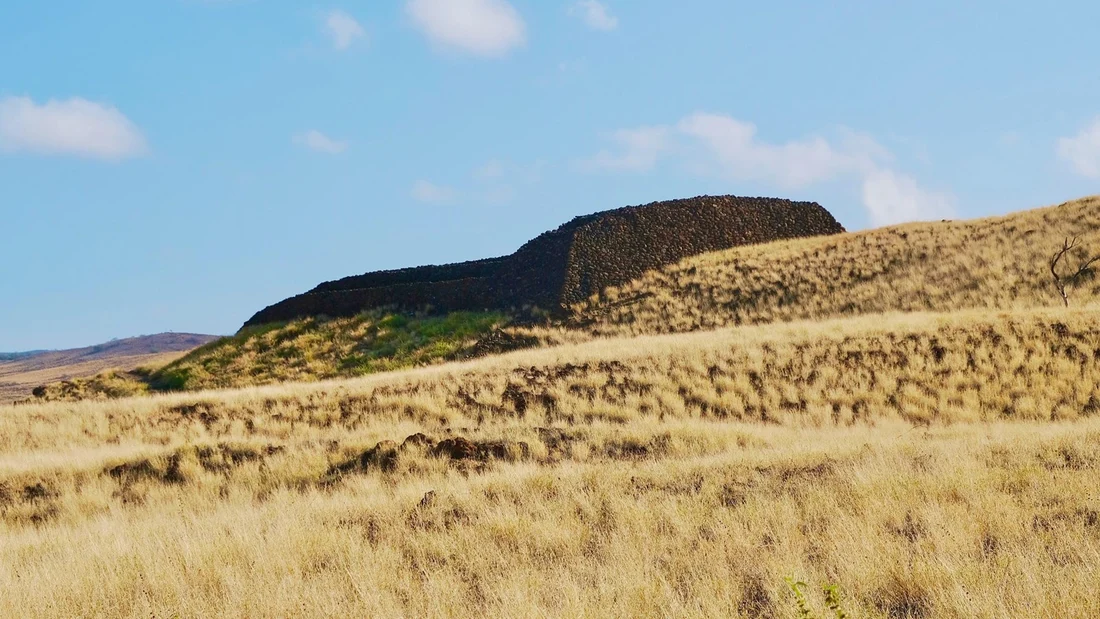
The surviving stone walls of Puʻukoholā Heiau at Kawaihae, photographed by P. Gorman for the National Park Service.
National Park Service / P. Gorman. No claim to the original U.S. Government work. · Image source ↗ · Public Domain
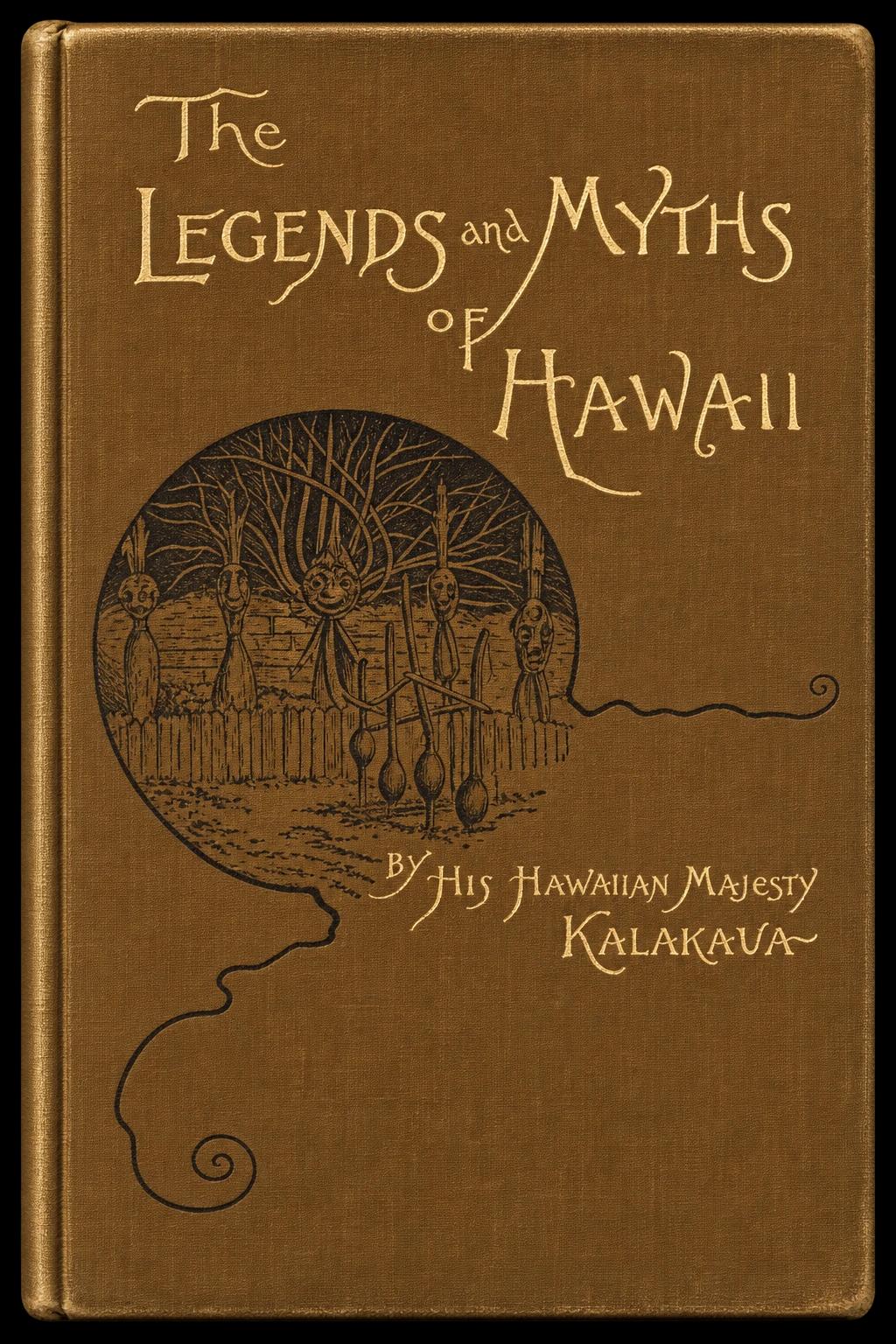
The Legends and Myths of Hawaii by David Kalākaua
David Kalākaua’s The Legends and Myths of Hawaii gives two accounts of the dedication. In “The Prophecies of Keaulumoku,” Kamehameha finishes an earlier temple to fulfil a prediction. The narrator describes the invitation that brings Keōua to Kawaihae as a deception. [4][5]
The chapter on Kaʻiana names Kapoukahi as the priest whose advice reaches Kamehameha from Kauaʻi. It says that people from neighbouring districts were called to work on the temple. [6]
In this second account, Keōua comes by double canoe and is killed at the landing. His body is taken to the temple and offered to the war god, called Kaili in the book. The chapter dates the episode to 1792. [4][5][7]
The date of Keōua’s death and the earlier temple
The National Park Service places Keōua’s death at Pelekane in 1791. Its site history gives different traditions about his arrival, including the possibility that he knew what awaited him. Kalākaua’s account lays the blame on those who invited him. [4][5][6][7][1][2][10]
In a story set generations earlier, the same book places a large heiau near Puʻukoholā in the time of Lonoikamakahiki. The stories refer to worship at or near the place at different times. The National Park Service dates the surviving temple to Kamehameha’s construction. [8][9][1]
See references (9)
- Puʻukoholā Heiau, Kawaihae
- Puʻukoholā Heiau National Historic Site audio tour
- The Legends and Myths of Hawaii, Reader page 369
- The Legends and Myths of Hawaii, Reader page 370
- The Legends and Myths of Hawaii, printed p. 395, Reader page 397
- The Legends and Myths of Hawaii, printed p. 396, Reader page 398
- The Legends and Myths of Hawaii, Reader page 343
- The Legends and Myths of Hawaii, Reader page 344
- Kamehameha Begins His Bid for Power
Read further in the library
The Legends and Myths of Hawaii
Reading note
The separately titled account draws on exact passages in the consulted Library edition.
Sources
See references (10)
- Puʻukoholā Heiau, Kawaihae ↗National Park Service site history, construction dates and the dedication to Kamehameha’s family war god.Return to text ↑
- Puʻukoholā Heiau National Historic Site audio tour ↗National Park Service, audio transcript sections 2, “Heiau,” and 4, “Pelekane.” The tour attributes its account of motives and circumstances to tradition.Return to text ↑
- Puʻukoholā Heiau, Kawaihae ↗National Park Service / P. Gorman. No claim to the original U.S. Government work.
- The Legends and Myths of Hawaii, Reader page 369David Kalākaua, The Legends and Myths of Hawaii, edited with an introduction by Rollin Mallory Daggett, Charles L. Webster & Company, 1888. Exact Library edition IMJ-0646-E001. When the introduction or a signed editorial passage is used, its author is identified in the article.Read this page in The Legends and Myths of Hawaii ↗Return to text ↑
- The Legends and Myths of Hawaii, Reader page 370David Kalākaua, The Legends and Myths of Hawaii, edited with an introduction by Rollin Mallory Daggett, Charles L. Webster & Company, 1888. Exact Library edition IMJ-0646-E001. When the introduction or a signed editorial passage is used, its author is identified in the article.Read this page in The Legends and Myths of Hawaii ↗Return to text ↑
- The Legends and Myths of Hawaii, printed p. 395, Reader page 397David Kalākaua, The Legends and Myths of Hawaii, edited with an introduction by Rollin Mallory Daggett, Charles L. Webster & Company, 1888. Exact Library edition IMJ-0646-E001. When the introduction or a signed editorial passage is used, its author is identified in the article.Read this page in The Legends and Myths of Hawaii ↗Return to text ↑
- The Legends and Myths of Hawaii, printed p. 396, Reader page 398David Kalākaua, The Legends and Myths of Hawaii, edited with an introduction by Rollin Mallory Daggett, Charles L. Webster & Company, 1888. Exact Library edition IMJ-0646-E001. When the introduction or a signed editorial passage is used, its author is identified in the article.Read this page in The Legends and Myths of Hawaii ↗Return to text ↑
- The Legends and Myths of Hawaii, Reader page 343David Kalākaua, The Legends and Myths of Hawaii, edited with an introduction by Rollin Mallory Daggett, Charles L. Webster & Company, 1888. Exact Library edition IMJ-0646-E001. When the introduction or a signed editorial passage is used, its author is identified in the article.Read this page in The Legends and Myths of Hawaii ↗Return to text ↑
- The Legends and Myths of Hawaii, Reader page 344David Kalākaua, The Legends and Myths of Hawaii, edited with an introduction by Rollin Mallory Daggett, Charles L. Webster & Company, 1888. Exact Library edition IMJ-0646-E001. When the introduction or a signed editorial passage is used, its author is identified in the article.Read this page in The Legends and Myths of Hawaii ↗Return to text ↑
- Kamehameha Begins His Bid for Power ↗National Park ServiceReturn to text ↑