Patala
Patala is the lowest of seven subterranean worlds in the Bhāgavata Purāṇa. Explore its serpent rulers and how it differs from Naraka.
In this article
What is Patala?
Patala can refer broadly to a Hindu underworld. In the Bhāgavata Purāṇa it is specifically the lowest of seven subterranean regions, inhabited by serpent rulers. These worlds can be beautiful and prosperous. Texts use Naraka for a separate setting of punishment. [6][7][1][2][3][4][8][9]
See references (8)
- Bhagavata Purana 5.24.7, translated by A. C. Bhaktivedanta Swami Prabhupada
- Bhagavata Purana 5.24.8, translated and explained by A. C. Bhaktivedanta Swami Prabhupada
- Bhagavata Purana 5.24.31, translated by A. C. Bhaktivedanta Swami Prabhupada
- Bhagavata Purana 5.26.37, translated by A. C. Bhaktivedanta Swami Prabhupada
- Indian Myth and Legend, Reader page 131
- Indian Myth and Legend, Reader page 342
- Indian Myth and Legend, Reader page 132
- Indian Myth and Legend, Reader page 414
The lower worlds in Bhagavata Purana 5.24
In A. C. Bhaktivedanta Swami Prabhupada’s translation of Bhāgavata Purāṇa 5.24.7–8, the seven regions are Atala, Vitala, Sutala, Talatala, Mahatala, Rasatala and Patala. The text calls them bila-svarga, subterranean heavens, and describes lives of abundance there. [1][2]
Verse 5.24.31 places Patala below Rasatala. Vāsuki is among its serpent rulers, and the gems on their hoods give light in the darkness. [3]
Indian Myth and Legend by Donald A. Mackenzie
In Indian Myth and Legend, Donald A. Mackenzie describes the gold, gems and gardens in the residences of Daityas and Danavas. He also recounts a fire below the earth that is fed by water and held back until a future catastrophe. He compares that fire to Ragnarök. [6]
In the same chapter, nāgas can give strength-giving nectar to a favoured visitor or appear in love stories between serpent beings and mortals. Mackenzie links Shesha, Vasuki and Karkotaka with one another and with Ravana. The Purāṇa passage names Vāsuki among several nāgas without following that chain of identifications. [6][8]
In the Arjuna story, Mackenzie puts Patala beneath the ocean floor. Arjuna fights there and goes on to Hiranyapura, a separate city that can move through sea, earth and sky. [6][7][10]
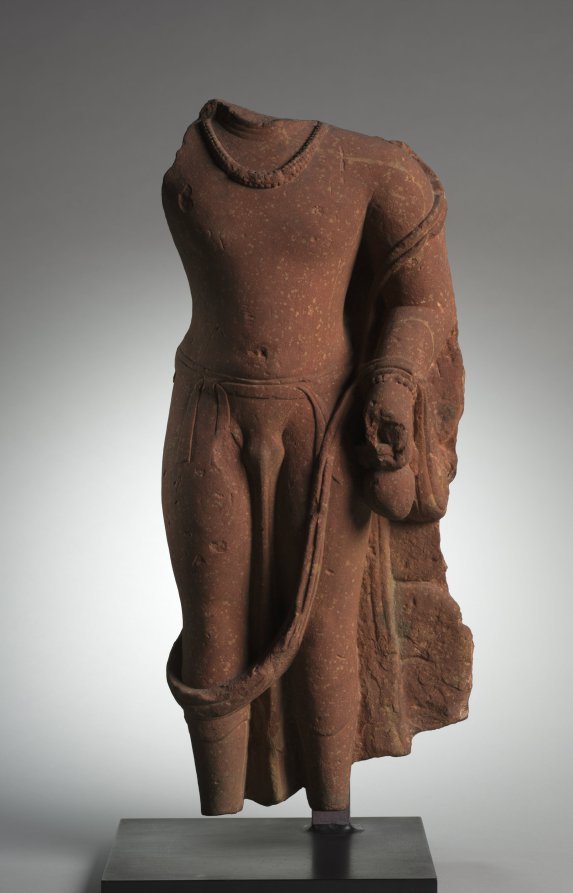
A fourth-century nāga from Mathura. A serpent coil crosses the surviving part of the figure, which holds a small vessel.
Cleveland Museum of Art, Purchase from the J. H. Wade Fund, 1943.661. Public domain image, CC0; resized and converted to JPEG. · Image source ↗ · CC0
A serpent kingdom beneath the earth
The Purāṇa describes brilliant palaces and jewelled serpents below the earth. Its separate account of Naraka connects punishment with a person’s actions and subsequent rebirth. The two passages use location, inhabitants and purpose in different ways. [6][7][1][2][4][3]
See references (6)
- Bhagavata Purana 5.24.7, translated by A. C. Bhaktivedanta Swami Prabhupada
- Bhagavata Purana 5.24.8, translated and explained by A. C. Bhaktivedanta Swami Prabhupada
- Bhagavata Purana 5.24.31, translated by A. C. Bhaktivedanta Swami Prabhupada
- Bhagavata Purana 5.26.37, translated by A. C. Bhaktivedanta Swami Prabhupada
- Indian Myth and Legend, Reader page 131
- Indian Myth and Legend, Reader page 342
Read further in the library
Indian Myth and Legend
Reading note
The separately titled account draws on exact passages in the consulted Library edition.
Sources
See references (10)
- Bhagavata Purana 5.24.7, translated by A. C. Bhaktivedanta Swami Prabhupada ↗Verse directly read in the Bhaktivedanta Book Trust’s Gaudiya Vaishnava translation. Its seven named lower regions are a particular religious cosmology, not measured geology.Return to text ↑
- Bhagavata Purana 5.24.8, translated and explained by A. C. Bhaktivedanta Swami Prabhupada ↗Translation and purport directly consulted for bila-svarga, domestic splendour and the distinction between sense enjoyment and liberation.Return to text ↑
- Bhagavata Purana 5.24.31, translated by A. C. Bhaktivedanta Swami Prabhupada ↗Verse directly consulted for Patala below Rasatala, serpent inhabitants and Vasuki. The named serpents are not collapsed into a single identity.Return to text ↑
- Bhagavata Purana 5.26.37, translated by A. C. Bhaktivedanta Swami Prabhupada ↗Complete verse translation directly read. It gives renewed earthly birth after the relevant consequences of virtuous or harmful acts are exhausted.Return to text ↑
- Naga (Serpent Divinity), 300s CE ↗Cleveland Museum of Art, Purchase from the J. H. Wade Fund, 1943.661. Public domain image, CC0; resized and converted to JPEG.
- Indian Myth and Legend, Reader page 131Donald A. Mackenzie, Indian Myth and Legend, Gresham Publishing Company Limited, London, undated consulted impression. Library edition IMJ-0649-E001. Persistent PageIDs and current Reader positions verified against the supplied PDF and cached Reader manifest. Embedded translations are Mackenzie’s presentation unless a separately consulted primary text is named.Read this page in Indian Myth and Legend ↗Return to text ↑
- Indian Myth and Legend, Reader page 342Donald A. Mackenzie, Indian Myth and Legend, Gresham Publishing Company Limited, London, undated consulted impression. Library edition IMJ-0649-E001. Persistent PageIDs and current Reader positions verified against the supplied PDF and cached Reader manifest. Embedded translations are Mackenzie’s presentation unless a separately consulted primary text is named.Read this page in Indian Myth and Legend ↗Return to text ↑
- Indian Myth and Legend, Reader page 132Donald A. Mackenzie, Indian Myth and Legend, Gresham Publishing Company Limited, London, undated consulted impression. Library edition IMJ-0649-E001. Persistent PageIDs and current Reader positions verified against the supplied PDF and cached Reader manifest. Embedded translations are Mackenzie’s presentation unless a separately consulted primary text is named.Read this page in Indian Myth and Legend ↗Return to text ↑
- Indian Myth and Legend, Reader page 414Donald A. Mackenzie, Indian Myth and Legend, Gresham Publishing Company Limited, London, undated consulted impression. Library edition IMJ-0649-E001. Persistent PageIDs and current Reader positions verified against the supplied PDF and cached Reader manifest. Embedded translations are Mackenzie’s presentation unless a separately consulted primary text is named.Read this page in Indian Myth and Legend ↗Return to text ↑
- Indian Myth and Legend, Reader page 343Donald A. Mackenzie, Indian Myth and Legend, Gresham Publishing Company Limited, London, undated consulted impression. Library edition IMJ-0649-E001. Persistent PageIDs and current Reader positions verified against the supplied PDF and cached Reader manifest. Embedded translations are Mackenzie’s presentation unless a separately consulted primary text is named.Read this page in Indian Myth and Legend ↗Return to text ↑