Meditation
Meditation cultivates attention and awareness. Compare Buddhist mindfulness, the Bhagavad Gita, Cassian’s prayer, Steiner and The Secret of the Golden Flower.
In this article
What is meditation?
Meditation is a family of practices that cultivate attention or awareness. A person might observe a breath, return to an object of devotion or keep a short prayer in mind. What they attend to and why they do it vary by tradition. [1][2][4]
The texts here give concrete examples from Buddhist mindfulness, Hindu yoga, Christian prayer, Daoist cultivation and Rudolf Steiner’s spiritual training. Similar gestures or periods of stillness can serve different purposes. [1][2][4][5]
See references (4)
The Satipaṭṭhāna Sutta: keeping experience in view
In the Satipaṭṭhāna Sutta, MN 10, the Buddha describes practising mindfulness of body, feelings, mind and mental qualities. The opening joins awareness with effort and alertness. The instruction gives the practitioner something specific to observe in experience. [1]
The breathing passage asks the practitioner to recognise a long breath as long and a short breath as short. A following passage extends attention to walking, standing, sitting and lying down. These examples make the object of awareness concrete and show why a meditative discipline need not be confined to seated stillness. [1]
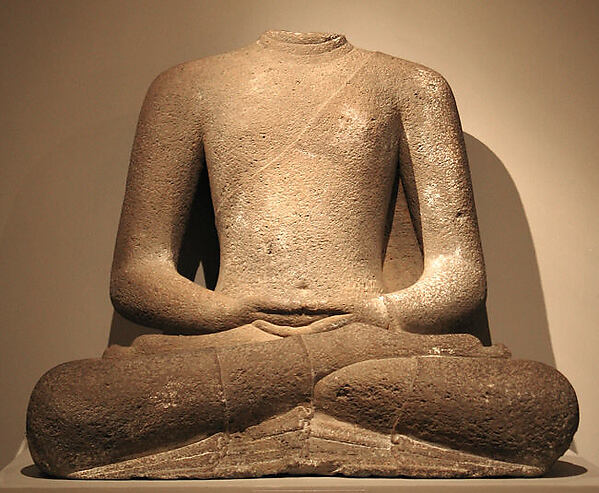
Seated Buddha Amitabha, Java, first half of the ninth century. The figure shows a meditation posture in Buddhist art.
The Metropolitan Museum of Art, Gift of Alexander Götz, 1995 · Image source ↗ · CC0
The Bhagavad Gita: returning the wandering mind
In Bhagavad Gita 6.26, the mind repeatedly wanders and has to be brought back. Swami Mukundananda’s translation understands the return as turning towards God. Concentration here takes its direction from a relationship of devotion. [2]
Verse 6.17 places yoga within regulated eating, recreation, work and sleep. In the context of this comparison, the passage matters because it connects spiritual practice with a pattern of life rather than with an isolated inward performance. Its spiritual claims remain those of the text. [3]
Raja-Yoga by Swami Vivekananda: concentration and meditation
In his commentary on Yoga Sūtras III.1–2, Swami Vivekananda distinguishes placing the mind on an object (dhāraṇā) from the uninterrupted flow of attention towards it (dhyāna). The distinction shows what changes as concentration becomes sustained meditation. [20]
The following aphorisms introduce samādhi and call the three practices applied to one object saṃyama. Vivekananda explains the movement through an example of attention passing from an object’s form towards its meaning. This is another specifically yogic account; its sequence should not be substituted for Cassian’s Christian account of prayer or Steiner’s etheric explanation. [20]
John Cassian’s Conferences: continual recollection of God
In John Cassian’s Conference X, chapter 10, Abbot Isaac teaches a short appeal for God’s help, drawn from Psalm 70:1 (69:2 in the Vulgate numbering). He asks the monk to carry it through ordinary tasks and changing moods. The words make dependence on God part of the practice. [4]
Cassian’s account joins steadiness with humility, gratitude and the need for assistance. Repetition here is not an exercise whose content can be discarded without changing its meaning. A continuing appeal to a divine helper is part of the Christian practice being described. [4]
Knowledge of the Higher Worlds by Rudolf Steiner
Rudolf Steiner distinguishes quiet review of one’s own life from a further contemplation reaching beyond a particular personal situation. In the latter, the student lives attentively within a world of thought. He calls this meditation or contemplative reflection, and presents it as a means of supersensible knowledge. [23][24][25]
Steiner asks for clear and definite thoughts to occupy attention. He recommends writings he understands to come from spiritual experience. The material of an exercise matters in a discipline built around how a thought is formed and held. [25]
His proposed results include an Inner Word, a changed understanding of daily work and knowledge of an enduring spiritual being beyond birth and death. Claims concerning recollection of experiences outside bodily life belong to this account of spiritual knowledge. They are not established simply by the ordinary experience of reflective attention. [24][25][26][27]
The change is intended to strengthen participation in daily life. Steiner recommends experienced guidance as assistance, then clarifies in the Appendix that the book itself provides personal instruction and does not withhold essential points for oral transmission. Both passages matter when describing how he expects a reader to proceed. [26][27][28][29]
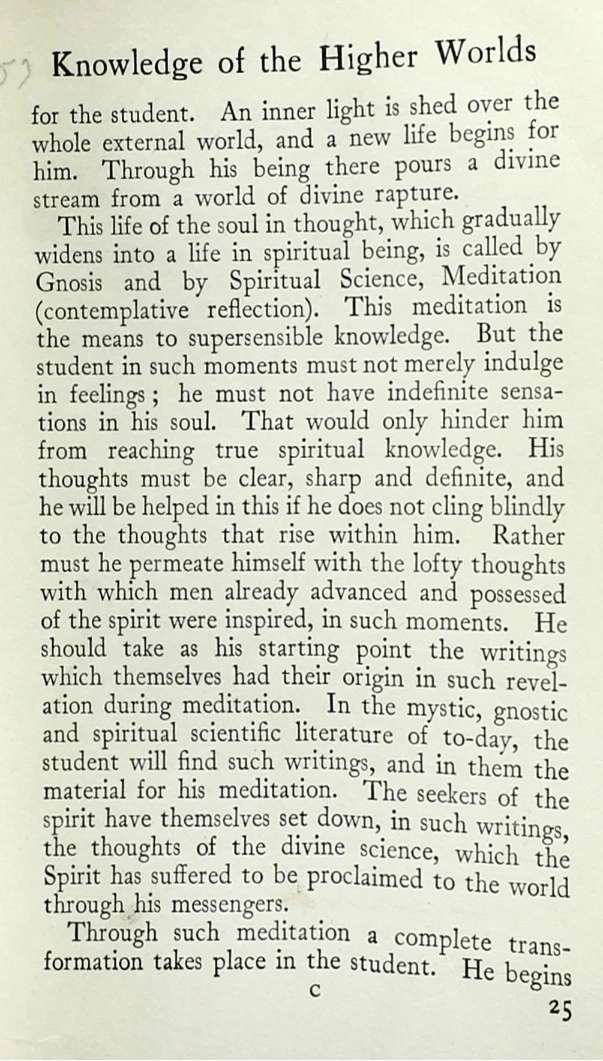
Source facsimile: Knowledge of the Higher Worlds, Reader page 29. Meditation is described through clear, definite thought rather than indefinite sensations.
Rudolf Steiner, G. Metaxa translation, edited by Harry Collison. Historical public-domain source facsimile from the exact checksum-verified Library edition. Repository date 1932; the inspected title page is undated. · Image source ↗ · Public Domain
See references (7)
- Knowledge of the Higher Worlds and Its Attainment, Reader page 27
- Knowledge of the Higher Worlds and Its Attainment, Reader page 28
- Knowledge of the Higher Worlds and Its Attainment, Reader page 29
- Knowledge of the Higher Worlds and Its Attainment, Reader page 30
- Knowledge of the Higher Worlds and Its Attainment, Reader page 31
- Knowledge of the Higher Worlds and Its Attainment, Reader page 223
- Knowledge of the Higher Worlds and Its Attainment, Reader page 224
Initiation and Its Results by Rudolf Steiner
Rudolf Steiner’s Initiation and Its Results distinguishes concentration, the directing of attention towards certain ideas, from meditation, described as living within them. The latter is a sustained inward participation in the content. His account gives both activities a role in the formation of proposed organs of spiritual perception. [5][6]
The book locates these exercises within an education of habits. Thoughtful speech, considered action, tolerance and a readiness to test one’s opinions provide a wider setting. The exercises do not replace how a person lives among other people. [7][8][9][10][11][12][13][14]
In the etheric-body chapter, meditative and concentrative exercises are said to form and relocate a centre of currents. A later exercise places the system’s centre in the heart, accompanying what Steiner calls the Inner Word: things become as if audible in their own nature. [15][16][17][18]
Steiner interprets repetition in the Buddha’s discourses through rhythms he proposes in the etheric body. His account applies his own theory to Buddhist texts. In MN 10, the instructions describe the experience that a practitioner attends to. [18][13]
Steiner reserves some directions for personal instruction. The printed account still specifies a role for clear thinking and conduct in ordinary life. [15][16][5][6][19]
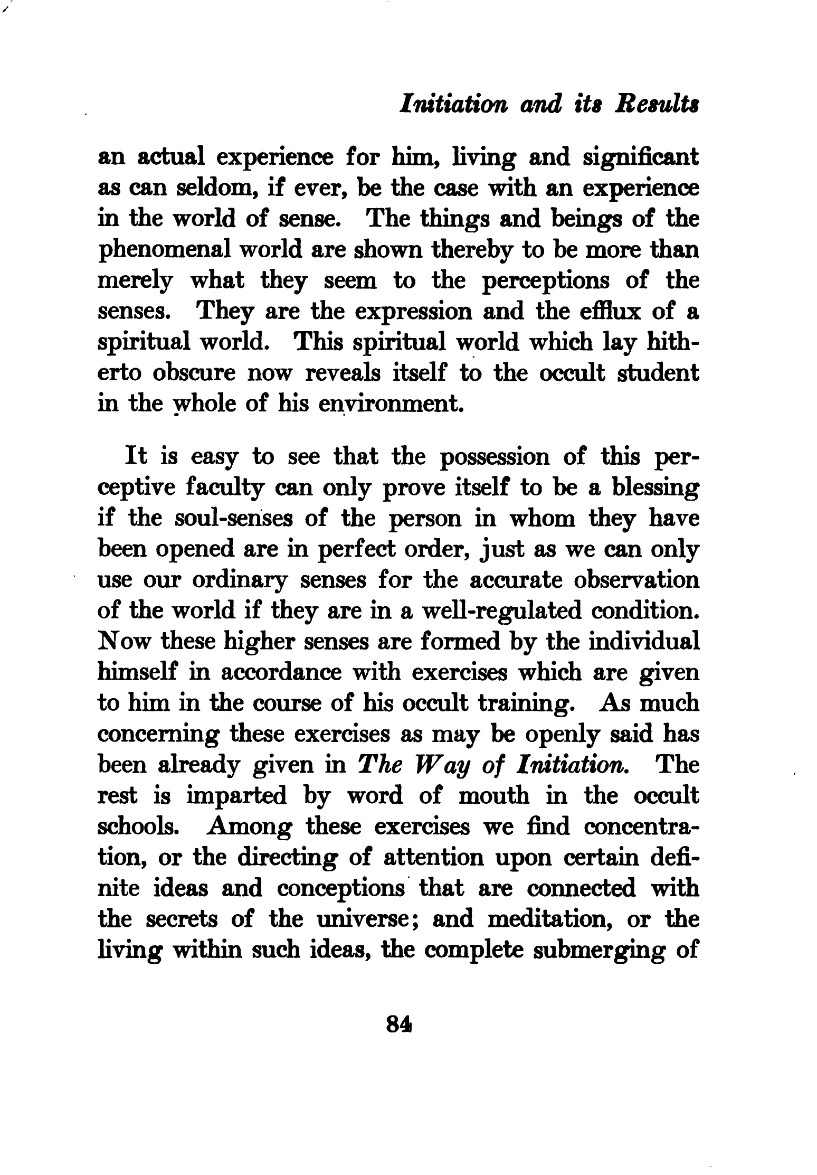
Source facsimile: Initiation and Its Results (1909), printed p. 84, Reader page 82.
Rudolf Steiner, Initiation and Its Results, Clifford Bax translation, First American Edition, 1909. Public-domain historical page from the checksum-verified Library PDF. · Image source ↗ · Public Domain
See references (15)
- Initiation and Its Results, printed p. 84, Reader page 82
- Initiation and Its Results, printed p. 85, Reader page 83
- Initiation and Its Results, printed p. 16, Reader page 16
- Initiation and Its Results, printed p. 17, Reader page 17
- Initiation and Its Results, printed p. 18, Reader page 18
- Initiation and Its Results, printed p. 27, Reader page 27
- Initiation and Its Results, printed p. 28, Reader page 28
- Initiation and Its Results, printed p. 29, Reader page 29
- Initiation and Its Results, printed p. 47, Reader page 46
- Initiation and Its Results, printed p. 48, Reader page 47
- Initiation and Its Results, printed p. 43, Reader page 42
- Initiation and Its Results, printed p. 44, Reader page 43
- Initiation and Its Results, printed p. 45, Reader page 44
- Initiation and Its Results, printed p. 46, Reader page 45
- Initiation and Its Results, printed p. 86, Reader page 84
Breath and attention in The Secret of the Golden Flower
In the text translated by Richard Wilhelm and rendered into English by Cary F. Baynes, the heart affects the breath and the breath gives attention a way to settle. The book compares attentive listening to a hen tending her eggs. What matters in the image is how steadily the hen attends, even when there is no new sound to follow. [30][31][32]
The book distinguishes distraction from a heaviness in which attention grows dim. One explanatory passage uses breath counting as a way to notice wandering. The passage on inward listening describes hearing no sound and seeing no shape, while keeping enough clarity to recognize either difficulty. [33][34][35]
The chapter on mistakes first pictures the settled practitioner as a withered tree. It then pictures dry wood and dead ashes as a warning when stillness becomes cold and dull. Spring on the earth supplies the contrasting image of life. The distinction is between outward quiet with clear attention and a withdrawal in which clarity is lost. [36][37][38]
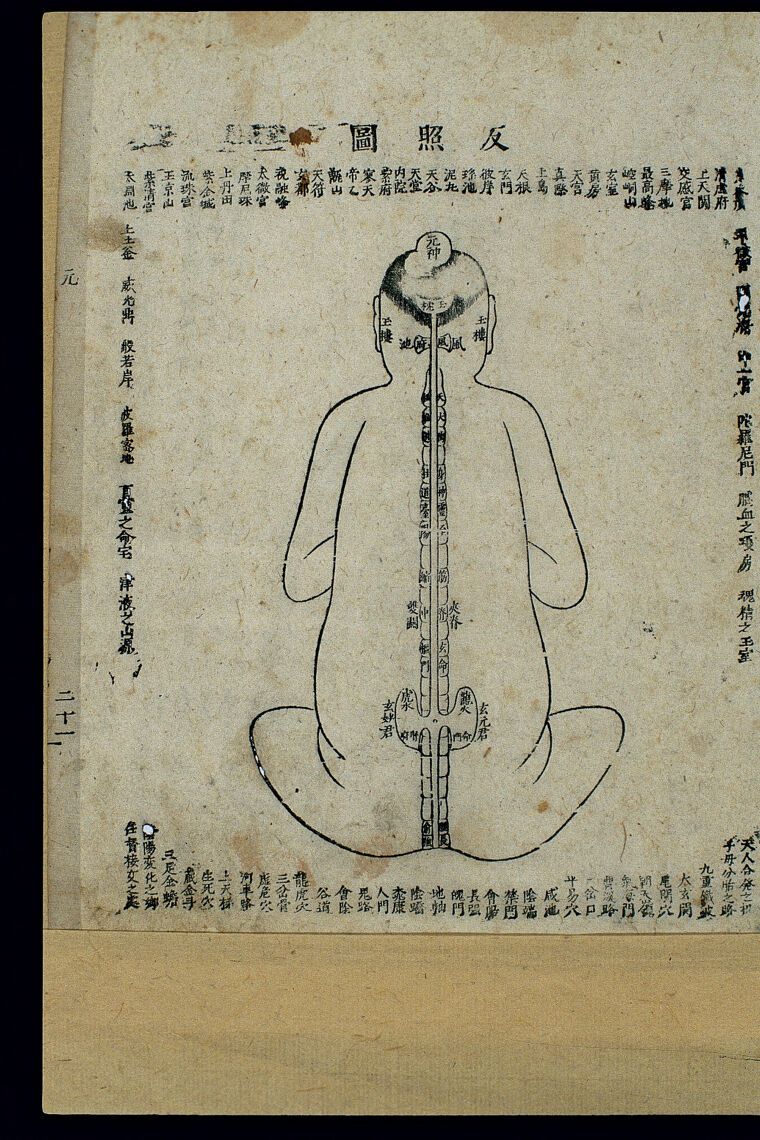
Reflected Illumination, from the Daoist Xingming guizhi, published in 1615. The woodcut makes inner attention visible through the outline of a seated body.
Wellcome Collection, Chinese woodcut: Daoist internal alchemy (2). Public Domain Mark. · Image source ↗ · Public Domain
See references (9)
- The Secret of the Golden Flower, Reader page 47
- The Secret of the Golden Flower, Reader page 48
- The Secret of the Golden Flower, Reader page 49
- The Secret of the Golden Flower, Reader page 50
- The Secret of the Golden Flower, Reader page 51
- The Secret of the Golden Flower, Reader page 52
- The Secret of the Golden Flower, Reader page 53
- The Secret of the Golden Flower, Reader page 54
- The Secret of the Golden Flower, Reader page 55
What does each practice attend to?
The breath gives mindfulness of the body a concrete object in MN 10. In The Secret of the Golden Flower, it helps the practitioner listen inward and settle attention. Cassian’s prayer keeps an appeal to God present, while the Gita brings the wandering mind back to a devotional focus. [1][31][34][4][2]
Steiner’s two books give clear thought a central place. In Initiation and Its Results he distinguishes directing attention from living within an idea. Knowledge of the Higher Worlds develops the practice through definite thoughts and a claimed change in how the student understands daily life. [5][6][23][25]
See references (9)
- Satipaṭṭhāna Sutta, MN 10, opening formula and Body §§ 1–2, translated by Ṭhānissaro Bhikkhu
- Bhagavad Gita 6.26, translated and interpreted by Swami Mukundananda
- John Cassian, Conference X, chapter 10: Of the method of continual prayer
- Initiation and Its Results, printed p. 84, Reader page 82
- Initiation and Its Results, printed p. 85, Reader page 83
- Knowledge of the Higher Worlds and Its Attainment, Reader page 27
- Knowledge of the Higher Worlds and Its Attainment, Reader page 29
- The Secret of the Golden Flower, Reader page 48
- The Secret of the Golden Flower, Reader page 51
In the library

Initiation and Its Results
Reading note
The separately titled account draws on exact passages in the consulted Library edition.

Knowledge of the Higher Worlds and Its Attainment
Reading note
The separately titled account draws on exact passages in the consulted Library edition.
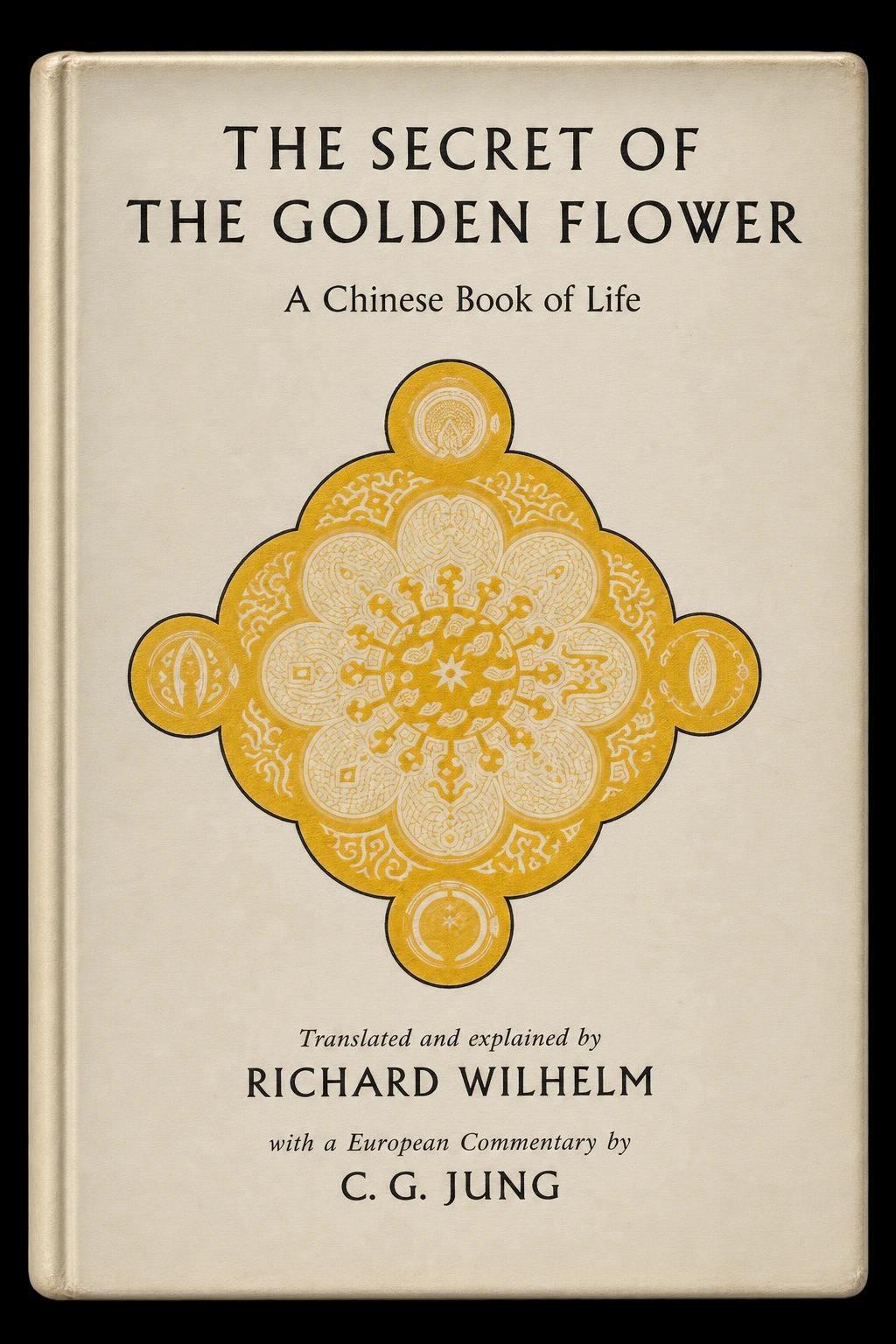
The Secret of the Golden Flower
Reading note
Read the Wilhelm and Baynes edition’s account of stillness, breath and attention.
Sources
See references (39)
- Satipaṭṭhāna Sutta, MN 10, opening formula and Body §§ 1–2, translated by Ṭhānissaro Bhikkhu ↗Early Buddhist discourse traditionally attributed to the Buddha, in Ṭhānissaro Bhikkhu’s translation. The translator’s introduction is distinguished from the discourse. Consulted opening formula, breathing and postures.
- Bhagavad Gita 6.26, translated and interpreted by Swami Mukundananda ↗Bhagavad Gita 6.26. Swami Mukundananda’s devotional translation renders the inward return as a return to God; this interpretive standpoint is identified in the account.
- Bhagavad Gita 6.17, translated by Swami Mukundananda ↗Bhagavad Gita 6.17, translation by Swami Mukundananda. Verse on regulated eating, recreation, work and sleep; not a medical claim adopted by this reference article.
- John Cassian, Conference X, chapter 10: Of the method of continual prayer ↗John Cassian, Conferences, the second conference of Abbot Isaac, chapter 10. Translated by Edgar C. S. Gibson, Nicene and Post-Nicene Fathers, Second Series, volume 11 (1894), reproduced by New Advent.
- Initiation and Its Results, printed p. 84, Reader page 82Rudolf Steiner, Initiation and Its Results: A Sequel to The Way of Initiation, translated by Clifford Bax. First American Edition, 1909. Macoy Publishing and Masonic Supply Co., New York; Max Gysi, London. Claims of clairvoyant perception and subtle organs remain attributed. References identify the exact consulted Library edition.Read this page in Initiation and Its Results ↗
- Initiation and Its Results, printed p. 85, Reader page 83Rudolf Steiner, Initiation and Its Results: A Sequel to The Way of Initiation, translated by Clifford Bax. First American Edition, 1909. Macoy Publishing and Masonic Supply Co., New York; Max Gysi, London. Claims of clairvoyant perception and subtle organs remain attributed. References identify the exact consulted Library edition.Read this page in Initiation and Its Results ↗
- Initiation and Its Results, printed p. 16, Reader page 16Rudolf Steiner, Initiation and Its Results: A Sequel to The Way of Initiation, translated by Clifford Bax. First American Edition, 1909. Macoy Publishing and Masonic Supply Co., New York; Max Gysi, London. Claims of clairvoyant perception and subtle organs remain attributed. References identify the exact consulted Library edition.Read this page in Initiation and Its Results ↗
- Initiation and Its Results, printed p. 17, Reader page 17Rudolf Steiner, Initiation and Its Results: A Sequel to The Way of Initiation, translated by Clifford Bax. First American Edition, 1909. Macoy Publishing and Masonic Supply Co., New York; Max Gysi, London. Claims of clairvoyant perception and subtle organs remain attributed. References identify the exact consulted Library edition.Read this page in Initiation and Its Results ↗
- Initiation and Its Results, printed p. 18, Reader page 18Rudolf Steiner, Initiation and Its Results: A Sequel to The Way of Initiation, translated by Clifford Bax. First American Edition, 1909. Macoy Publishing and Masonic Supply Co., New York; Max Gysi, London. Claims of clairvoyant perception and subtle organs remain attributed. References identify the exact consulted Library edition.Read this page in Initiation and Its Results ↗
- Initiation and Its Results, printed p. 27, Reader page 27Rudolf Steiner, Initiation and Its Results: A Sequel to The Way of Initiation, translated by Clifford Bax. First American Edition, 1909. Macoy Publishing and Masonic Supply Co., New York; Max Gysi, London. Claims of clairvoyant perception and subtle organs remain attributed. References identify the exact consulted Library edition.Read this page in Initiation and Its Results ↗
- Initiation and Its Results, printed p. 28, Reader page 28Rudolf Steiner, Initiation and Its Results: A Sequel to The Way of Initiation, translated by Clifford Bax. First American Edition, 1909. Macoy Publishing and Masonic Supply Co., New York; Max Gysi, London. Claims of clairvoyant perception and subtle organs remain attributed. References identify the exact consulted Library edition.Read this page in Initiation and Its Results ↗
- Initiation and Its Results, printed p. 29, Reader page 29Rudolf Steiner, Initiation and Its Results: A Sequel to The Way of Initiation, translated by Clifford Bax. First American Edition, 1909. Macoy Publishing and Masonic Supply Co., New York; Max Gysi, London. Claims of clairvoyant perception and subtle organs remain attributed. References identify the exact consulted Library edition.Read this page in Initiation and Its Results ↗
- Initiation and Its Results, printed p. 47, Reader page 46Rudolf Steiner, Initiation and Its Results: A Sequel to The Way of Initiation, translated by Clifford Bax. First American Edition, 1909. Macoy Publishing and Masonic Supply Co., New York; Max Gysi, London. Claims of clairvoyant perception and subtle organs remain attributed. References identify the exact consulted Library edition.Read this page in Initiation and Its Results ↗
- Initiation and Its Results, printed p. 48, Reader page 47Rudolf Steiner, Initiation and Its Results: A Sequel to The Way of Initiation, translated by Clifford Bax. First American Edition, 1909. Macoy Publishing and Masonic Supply Co., New York; Max Gysi, London. Claims of clairvoyant perception and subtle organs remain attributed. References identify the exact consulted Library edition.Read this page in Initiation and Its Results ↗
- Initiation and Its Results, printed p. 43, Reader page 42Rudolf Steiner, Initiation and Its Results: A Sequel to The Way of Initiation, translated by Clifford Bax. First American Edition, 1909. Macoy Publishing and Masonic Supply Co., New York; Max Gysi, London. Claims of clairvoyant perception and subtle organs remain attributed. References identify the exact consulted Library edition.Read this page in Initiation and Its Results ↗
- Initiation and Its Results, printed p. 44, Reader page 43Rudolf Steiner, Initiation and Its Results: A Sequel to The Way of Initiation, translated by Clifford Bax. First American Edition, 1909. Macoy Publishing and Masonic Supply Co., New York; Max Gysi, London. Claims of clairvoyant perception and subtle organs remain attributed. References identify the exact consulted Library edition.Read this page in Initiation and Its Results ↗
- Initiation and Its Results, printed p. 45, Reader page 44Rudolf Steiner, Initiation and Its Results: A Sequel to The Way of Initiation, translated by Clifford Bax. First American Edition, 1909. Macoy Publishing and Masonic Supply Co., New York; Max Gysi, London. Claims of clairvoyant perception and subtle organs remain attributed. References identify the exact consulted Library edition.Read this page in Initiation and Its Results ↗
- Initiation and Its Results, printed p. 46, Reader page 45Rudolf Steiner, Initiation and Its Results: A Sequel to The Way of Initiation, translated by Clifford Bax. First American Edition, 1909. Macoy Publishing and Masonic Supply Co., New York; Max Gysi, London. Claims of clairvoyant perception and subtle organs remain attributed. References identify the exact consulted Library edition.Read this page in Initiation and Its Results ↗
- Initiation and Its Results, printed p. 86, Reader page 84Rudolf Steiner, Initiation and Its Results: A Sequel to The Way of Initiation, translated by Clifford Bax. First American Edition, 1909. Macoy Publishing and Masonic Supply Co., New York; Max Gysi, London. Claims of clairvoyant perception and subtle organs remain attributed. References identify the exact consulted Library edition.Read this page in Initiation and Its Results ↗
- Swami Vivekananda, Raja-Yoga, Patanjali’s Yoga Aphorisms, chapter III, aphorisms 1–4 ↗Swami Vivekananda’s translation and explanation of Patañjali’s Yoga Aphorisms III.1–4. Exact chapter and aphorisms in the Complete Works transcription. This is not Ramacharaka’s similarly named Raja Yoga or Mental Development.
- Seated Buddha Amitabha, ca. first half of the 9th century ↗The Metropolitan Museum of Art, accession 1995.256; CC0 image
- Rudolf Steiner Archive: GA 10 publication and translation history ↗Steiner Online Library, Rudolf Steiner Archive, GA 10 bibliography. Used only for publication relationships, not independent confirmation of spiritual claims.
- Knowledge of the Higher Worlds and Its Attainment, Reader page 27Rudolf Steiner, Knowledge of the Higher Worlds and Its Attainment, authorized English translation by G. Metaxa, edited by Harry Collison, Anthroposophic Press, New York City. Exact Library edition IMJ-0513-E001. No publication year is visible on the inspected title page; the repository assigns 1932. Claims of supersensible perception remain attributed to Steiner.Read this page in Knowledge of the Higher Worlds and Its Attainment ↗
- Knowledge of the Higher Worlds and Its Attainment, Reader page 28Rudolf Steiner, Knowledge of the Higher Worlds and Its Attainment, authorized English translation by G. Metaxa, edited by Harry Collison, Anthroposophic Press, New York City. Exact Library edition IMJ-0513-E001. No publication year is visible on the inspected title page; the repository assigns 1932. Claims of supersensible perception remain attributed to Steiner.Read this page in Knowledge of the Higher Worlds and Its Attainment ↗
- Knowledge of the Higher Worlds and Its Attainment, Reader page 29Rudolf Steiner, Knowledge of the Higher Worlds and Its Attainment, authorized English translation by G. Metaxa, edited by Harry Collison, Anthroposophic Press, New York City. Exact Library edition IMJ-0513-E001. No publication year is visible on the inspected title page; the repository assigns 1932. Claims of supersensible perception remain attributed to Steiner.Read this page in Knowledge of the Higher Worlds and Its Attainment ↗
- Knowledge of the Higher Worlds and Its Attainment, Reader page 30Rudolf Steiner, Knowledge of the Higher Worlds and Its Attainment, authorized English translation by G. Metaxa, edited by Harry Collison, Anthroposophic Press, New York City. Exact Library edition IMJ-0513-E001. No publication year is visible on the inspected title page; the repository assigns 1932. Claims of supersensible perception remain attributed to Steiner.Read this page in Knowledge of the Higher Worlds and Its Attainment ↗
- Knowledge of the Higher Worlds and Its Attainment, Reader page 31Rudolf Steiner, Knowledge of the Higher Worlds and Its Attainment, authorized English translation by G. Metaxa, edited by Harry Collison, Anthroposophic Press, New York City. Exact Library edition IMJ-0513-E001. No publication year is visible on the inspected title page; the repository assigns 1932. Claims of supersensible perception remain attributed to Steiner.Read this page in Knowledge of the Higher Worlds and Its Attainment ↗
- Knowledge of the Higher Worlds and Its Attainment, Reader page 223Rudolf Steiner, Knowledge of the Higher Worlds and Its Attainment, authorized English translation by G. Metaxa, edited by Harry Collison, Anthroposophic Press, New York City. Exact Library edition IMJ-0513-E001. No publication year is visible on the inspected title page; the repository assigns 1932. Claims of supersensible perception remain attributed to Steiner.Read this page in Knowledge of the Higher Worlds and Its Attainment ↗
- Knowledge of the Higher Worlds and Its Attainment, Reader page 224Rudolf Steiner, Knowledge of the Higher Worlds and Its Attainment, authorized English translation by G. Metaxa, edited by Harry Collison, Anthroposophic Press, New York City. Exact Library edition IMJ-0513-E001. No publication year is visible on the inspected title page; the repository assigns 1932. Claims of supersensible perception remain attributed to Steiner.Read this page in Knowledge of the Higher Worlds and Its Attainment ↗
- The Secret of the Golden Flower, Reader page 47The Secret of the Golden Flower: A Chinese Book of Life. Chinese text translated and explained by Richard Wilhelm, English translation by Cary F. Baynes, with separate commentary by C. G. Jung. London, Kegan Paul, Trench, Trubner & Co. Lumitheca Library edition IMJ-0596-E001.Read this page in The Secret of the Golden Flower ↗
- The Secret of the Golden Flower, Reader page 48The Secret of the Golden Flower: A Chinese Book of Life. Chinese text translated and explained by Richard Wilhelm, English translation by Cary F. Baynes, with separate commentary by C. G. Jung. London, Kegan Paul, Trench, Trubner & Co. Lumitheca Library edition IMJ-0596-E001.Read this page in The Secret of the Golden Flower ↗
- The Secret of the Golden Flower, Reader page 49The Secret of the Golden Flower: A Chinese Book of Life. Chinese text translated and explained by Richard Wilhelm, English translation by Cary F. Baynes, with separate commentary by C. G. Jung. London, Kegan Paul, Trench, Trubner & Co. Lumitheca Library edition IMJ-0596-E001.Read this page in The Secret of the Golden Flower ↗
- The Secret of the Golden Flower, Reader page 50The Secret of the Golden Flower: A Chinese Book of Life. Chinese text translated and explained by Richard Wilhelm, English translation by Cary F. Baynes, with separate commentary by C. G. Jung. London, Kegan Paul, Trench, Trubner & Co. Lumitheca Library edition IMJ-0596-E001.Read this page in The Secret of the Golden Flower ↗
- The Secret of the Golden Flower, Reader page 51The Secret of the Golden Flower: A Chinese Book of Life. Chinese text translated and explained by Richard Wilhelm, English translation by Cary F. Baynes, with separate commentary by C. G. Jung. London, Kegan Paul, Trench, Trubner & Co. Lumitheca Library edition IMJ-0596-E001.Read this page in The Secret of the Golden Flower ↗
- The Secret of the Golden Flower, Reader page 52The Secret of the Golden Flower: A Chinese Book of Life. Chinese text translated and explained by Richard Wilhelm, English translation by Cary F. Baynes, with separate commentary by C. G. Jung. London, Kegan Paul, Trench, Trubner & Co. Lumitheca Library edition IMJ-0596-E001.Read this page in The Secret of the Golden Flower ↗
- The Secret of the Golden Flower, Reader page 53The Secret of the Golden Flower: A Chinese Book of Life. Chinese text translated and explained by Richard Wilhelm, English translation by Cary F. Baynes, with separate commentary by C. G. Jung. London, Kegan Paul, Trench, Trubner & Co. Lumitheca Library edition IMJ-0596-E001.Read this page in The Secret of the Golden Flower ↗
- The Secret of the Golden Flower, Reader page 54The Secret of the Golden Flower: A Chinese Book of Life. Chinese text translated and explained by Richard Wilhelm, English translation by Cary F. Baynes, with separate commentary by C. G. Jung. London, Kegan Paul, Trench, Trubner & Co. Lumitheca Library edition IMJ-0596-E001.Read this page in The Secret of the Golden Flower ↗
- The Secret of the Golden Flower, Reader page 55The Secret of the Golden Flower: A Chinese Book of Life. Chinese text translated and explained by Richard Wilhelm, English translation by Cary F. Baynes, with separate commentary by C. G. Jung. London, Kegan Paul, Trench, Trubner & Co. Lumitheca Library edition IMJ-0596-E001.Read this page in The Secret of the Golden Flower ↗
- Reflected Illumination ↗Wellcome Collection, Chinese woodcut: Daoist internal alchemy (2). Public Domain Mark.