Kū
Kū is a major akua in Native Hawaiian traditions. Explore his named forms, his relationship with Hina, and his place in Kalākaua’s stories.
In this article
Kū in genealogy, war and fishing
Kū is an akua, or deity, in Native Hawaiian traditions. Some genealogies name Kū and Hina as ancestors or as early arrivals from Kahiki. Kū also appears in forms associated with particular kinds of work and worship. [1]
Kūkaʻilimoku is the form associated with Kamehameha I and chiefly warfare. Kūʻula is honoured in traditions of fishing and offerings of the catch. The two names can lead from a chief’s heiau to a shrine by the shore. [5][2][3]
The Legends and Myths of Hawaii by David Kalākaua
In his introduction to David Kalākaua’s volume, Rollin Mallory Daggett places Kū alongside Kāne and Lono in creation. The chant he reproduces addresses Kū by the name Ku-ka-pao in the book’s spelling. [6][7]
Daggett says that people built shrines for Kūʻula near fishing grounds and offered him the first fish of a catch. On the same page, he describes the image of Kūkaʻilimoku that travelled with Kamehameha in battle. [5]
In the ʻUmi story, a heiau contains images of Kāne, Kū and Lono. At a later ceremony, images of Kū and Lono stand beside Akuapaao. The offering described there is for Akuapaao, the war god named in ʻUmi’s prophecy. [8][9]
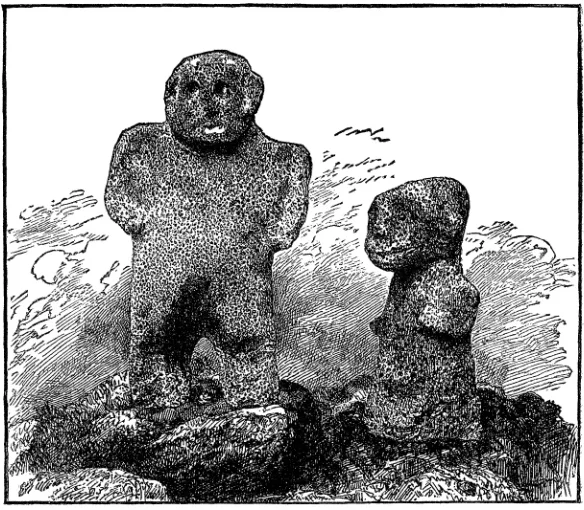
The 1888 edition captions this engraving “Ancient Gods.” It leaves the two individual figures unnamed.
The Legends and Myths of Hawaii, Charles L. Webster & Company, 1888. Cropped from the Library scan. · Image source ↗ · Public Domain
Worship in Hawaiian Antiquities by David Malo
In chapter XXIII of Hawaiian Antiquities, translated by N. B. Emerson, David Malo describes worship shared across the islands and forms of worship specific to a person’s work or standing. He distinguishes prayers and offerings made by commoners from rites performed by chiefs. [3]
From a fishing shrine to chiefly ceremony
Malo’s account of worship tied to particular occupations helps explain Daggett’s description of the first-fish offering. The ʻUmi narrative shows the other setting: Kū appears among the images at a chiefly heiau, where each offering has its occasion and recipient. [5][8][3]
Read further in the library
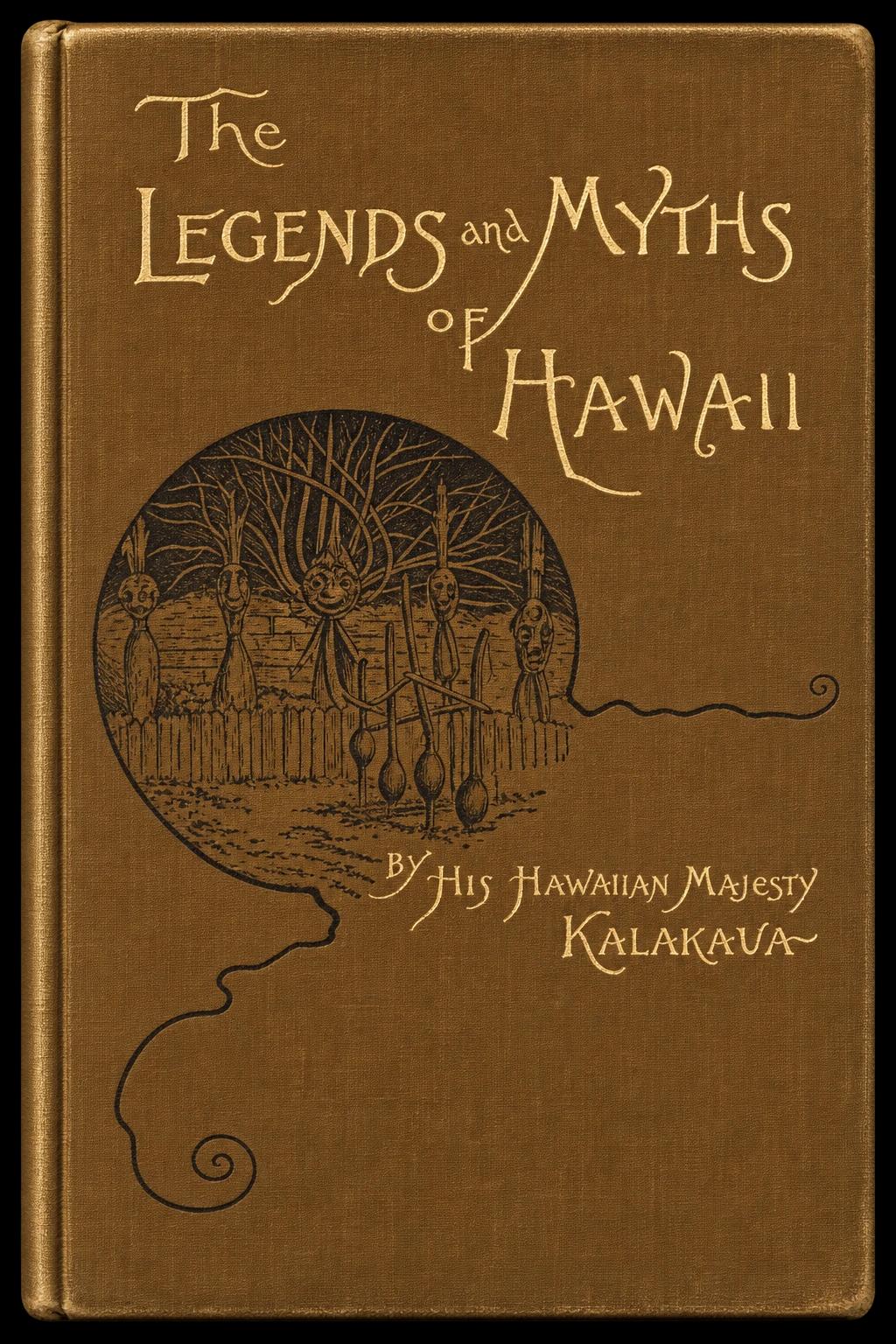
The Legends and Myths of Hawaii
Reading note
The separately titled account draws on exact passages in the consulted Library edition.
Sources
See references (9)
- Kū in Kahoʻiwai ↗Kahoʻiwai, University of Hawaiʻi, bilingual Hawaiian cultural vocabulary and associated sources.Return to text ↑
- Kūkāʻilimoku, Bishop Museum object 07855 ↗Bishop Museum, Hawaiʻi Alive. Feathered image and accompanying account of Kalaniʻōpuʻu, Kamehameha and Puʻukoholā.Return to text ↑
- Hawaiian Antiquities, chapter XXIII, §§ 1–7, printed pp. 112–113 ↗David Malo, Hawaiian Antiquities (Moolelo Hawaii), translated by N. B. Emerson, Hawaiian Gazette, 1903. “The Worship of Idols,” the chapter title in this English translation.Return to text ↑
- Ancient Gods, 1888 engraving ↗The Legends and Myths of Hawaii, Charles L. Webster & Company, 1888. Cropped from the Library scan.
- The Legends and Myths of Hawaii, Reader page 45David Kalākaua, The Legends and Myths of Hawaii, edited with an introduction by Rollin Mallory Daggett, Charles L. Webster & Company, 1888. Exact Library edition IMJ-0646-E001. When the introduction or a signed editorial passage is used, its author is identified in the article.Read this page in The Legends and Myths of Hawaii ↗Return to text ↑
- The Legends and Myths of Hawaii, Reader page 36David Kalākaua, The Legends and Myths of Hawaii, edited with an introduction by Rollin Mallory Daggett, Charles L. Webster & Company, 1888. Exact Library edition IMJ-0646-E001. When the introduction or a signed editorial passage is used, its author is identified in the article.Read this page in The Legends and Myths of Hawaii ↗Return to text ↑
- The Legends and Myths of Hawaii, Reader page 37David Kalākaua, The Legends and Myths of Hawaii, edited with an introduction by Rollin Mallory Daggett, Charles L. Webster & Company, 1888. Exact Library edition IMJ-0646-E001. When the introduction or a signed editorial passage is used, its author is identified in the article.Read this page in The Legends and Myths of Hawaii ↗Return to text ↑
- The Legends and Myths of Hawaii, Reader page 300David Kalākaua, The Legends and Myths of Hawaii, edited with an introduction by Rollin Mallory Daggett, Charles L. Webster & Company, 1888. Exact Library edition IMJ-0646-E001. When the introduction or a signed editorial passage is used, its author is identified in the article.Read this page in The Legends and Myths of Hawaii ↗Return to text ↑
- The Legends and Myths of Hawaii, Reader page 307David Kalākaua, The Legends and Myths of Hawaii, edited with an introduction by Rollin Mallory Daggett, Charles L. Webster & Company, 1888. Exact Library edition IMJ-0646-E001. When the introduction or a signed editorial passage is used, its author is identified in the article.Read this page in The Legends and Myths of Hawaii ↗Return to text ↑