Hungry ghosts
What are hungry ghosts in Buddhism? Explore preta and gaki, Hearn’s incense-eating spirits and a Buddhist text on offerings for the dead.
In this article
What is a hungry ghost?
A hungry ghost is a being whose hunger or thirst cannot be satisfied. In Buddhist cosmology, the state is one of the possible forms of rebirth. Such spirits are called preta in Sanskrit and gaki in Japanese. Some stories make food vanish or burn before it can be eaten. [1][4][5][6][7]
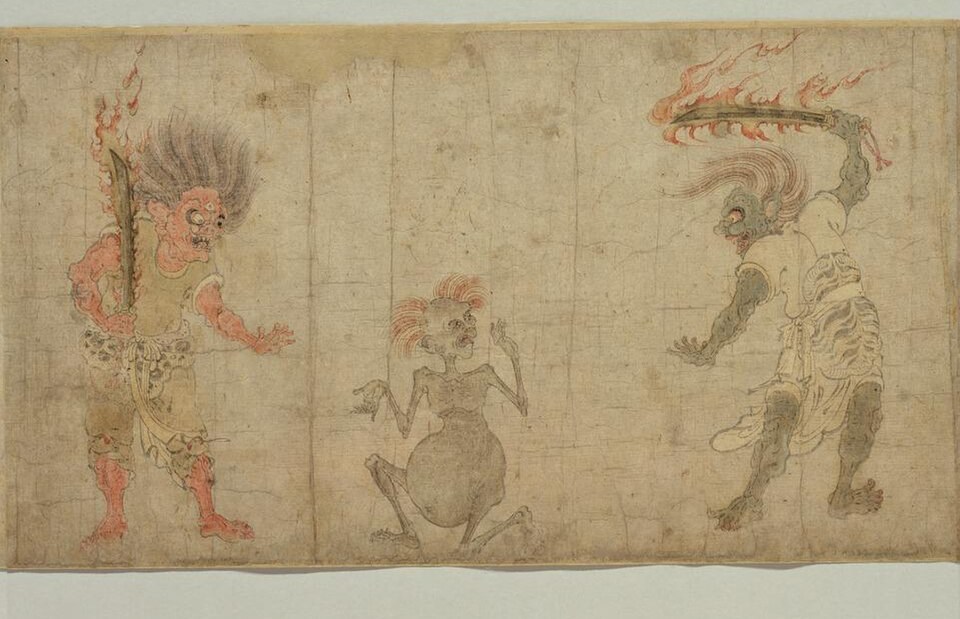
A scene from the Tokyo National Museum’s twelfth-century Hungry Ghosts Scroll. The emaciated figure’s swollen belly makes its suffering visible.
Tokyo National Museum, A-10476. Public domain reproduction via Wikimedia Commons; resized and converted to JPEG. · Image source ↗ · Public Domain
Tirokudda Kanda: offerings for remembered relatives
In the Tirokuḍḍa Kaṇḍa, translated by Thanissaro Bhikkhu, dead relatives gather near former homes and go unremembered at mealtimes. The text commends giving food and drink to the Sangha with a wish for the relatives’ well-being. The relatives rejoice and the donor gains merit. [2]
Hungry ghosts in Sotoshu’s ritual glossary
The Sōtō Zen glossary calls hungry ghosts beings with needs that cannot be satisfied and describes a duty to feed them, particularly when they have no family to make offerings. It also explains why Sōtō ritual manuals changed the name segaki, or feeding hungry ghosts, to sejiki, or food offerings: gaki had been used in discriminatory names. [1]
In Ghostly Japan by Lafcadio Hearn
In the essay Incense, Lafcadio Hearn describes the jiki-kō-ki, spirits who live on incense smoke alone. He places them fourteenth in a list of thirty-six types of gaki. In his source, their former livelihood was making or selling bad incense for profit. [8][4]
Hearn records a proverb in which thirsty ghosts fail to see water. He explains its everyday use as a way to describe someone who cannot see a moral truth. [5]
In his cosmological notes, Hearn lists hungry ghosts as one of six conditions of rebirth linked to karma. His thirty-six types subdivide this one condition. [4][7][9]
From unmet hunger to an act of care
Hearn’s incense sellers show how the form of a punishment can recall a past act. The Tirokuḍḍa Kaṇḍa asks what the living can do now, and makes an offering an act of generosity towards people who have died. [4][2][1][5]
Read further in the library
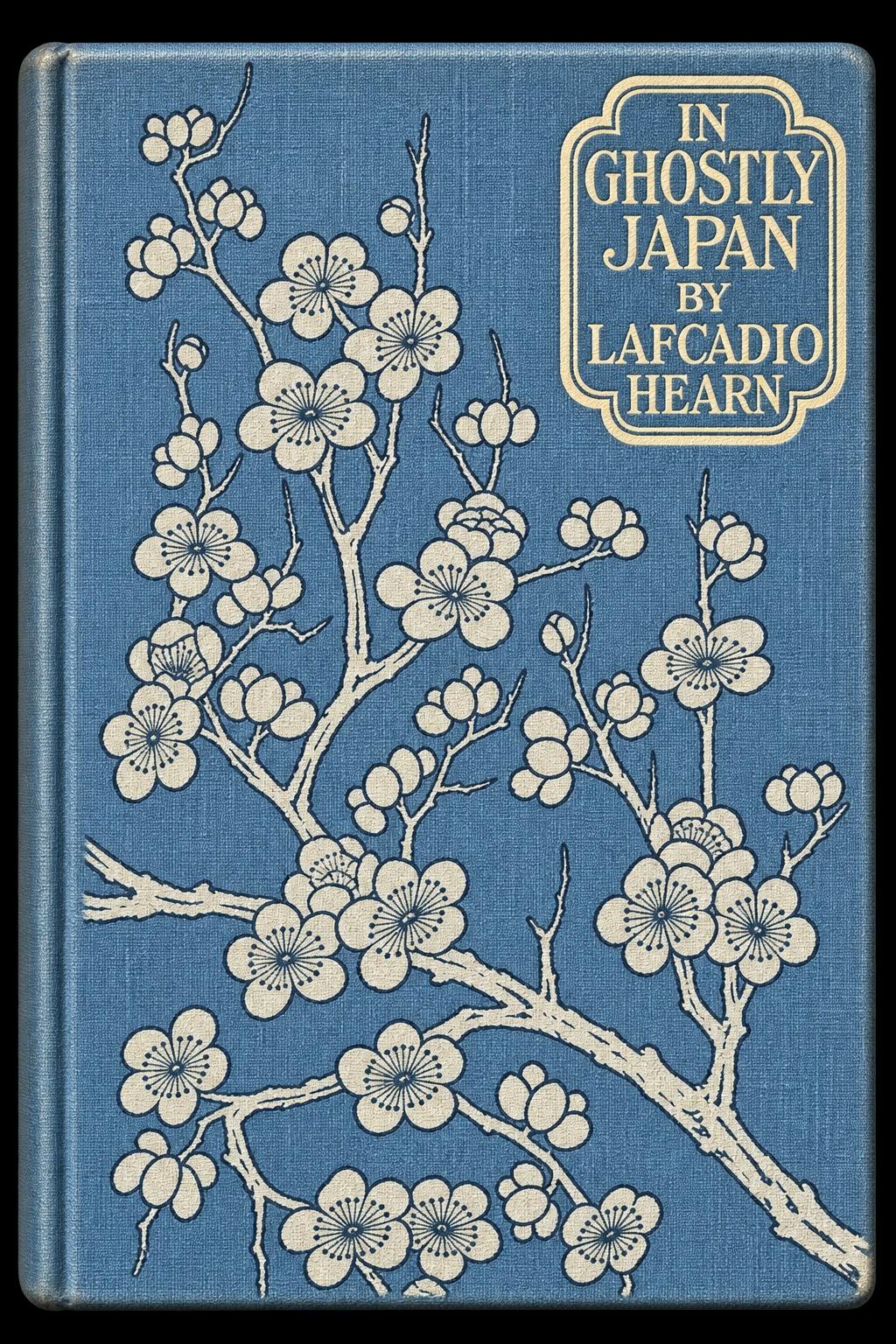
In Ghostly Japan
Reading note
The separately titled account draws on exact passages in the consulted Library edition.
Sources
See references (10)
- Sotoshu glossary: hungry ghosts and the naming of food offerings ↗Sotoshu’s own glossary accompanying Standard Observances of the Soto Zen School. The hungry ghosts entry was directly read; it supplies institutional context, not a uniform definition for every Buddhist tradition.Return to text ↑
- Tirokudda Kanda, Khuddakapatha 7, also Petavatthu 1:5; translated by Thanissaro Bhikkhu ↗Primary Buddhist discourse, complete main passage directly read. Its numbered canonical identity is retained instead of inventing a Library page reference.Return to text ↑
- Unknown artist, Hungry Ghosts Scroll, Tokyo, part 8, late 12th century ↗Tokyo National Museum, A-10476. Public domain reproduction via Wikimedia Commons; resized and converted to JPEG.
- In Ghostly Japan, Reader page 49Lafcadio Hearn, In Ghostly Japan, Little, Brown, and Company, Boston, 1899. Exact consulted Library edition IMJ-0654-E001, with title page visually checked. Persistent PageIDs and current Reader positions are verified from the supplied edition. Embedded stories, translations and quotations are attributed to Hearn’s presentation unless an original source has separately been consulted.Read this page in In Ghostly Japan ↗Return to text ↑
- In Ghostly Japan, Reader page 165Lafcadio Hearn, In Ghostly Japan, Little, Brown, and Company, Boston, 1899. Exact consulted Library edition IMJ-0654-E001, with title page visually checked. Persistent PageIDs and current Reader positions are verified from the supplied edition. Embedded stories, translations and quotations are attributed to Hearn’s presentation unless an original source has separately been consulted.Read this page in In Ghostly Japan ↗Return to text ↑
- In Ghostly Japan, Reader page 96Lafcadio Hearn, In Ghostly Japan, Little, Brown, and Company, Boston, 1899. Exact consulted Library edition IMJ-0654-E001, with title page visually checked. Persistent PageIDs and current Reader positions are verified from the supplied edition. Embedded stories, translations and quotations are attributed to Hearn’s presentation unless an original source has separately been consulted.Read this page in In Ghostly Japan ↗Return to text ↑
- In Ghostly Japan, Reader page 182Lafcadio Hearn, In Ghostly Japan, Little, Brown, and Company, Boston, 1899. Exact consulted Library edition IMJ-0654-E001, with title page visually checked. Persistent PageIDs and current Reader positions are verified from the supplied edition. Embedded stories, translations and quotations are attributed to Hearn’s presentation unless an original source has separately been consulted.Read this page in In Ghostly Japan ↗Return to text ↑
- In Ghostly Japan, Reader page 48Lafcadio Hearn, In Ghostly Japan, Little, Brown, and Company, Boston, 1899. Exact consulted Library edition IMJ-0654-E001, with title page visually checked. Persistent PageIDs and current Reader positions are verified from the supplied edition. Embedded stories, translations and quotations are attributed to Hearn’s presentation unless an original source has separately been consulted.Read this page in In Ghostly Japan ↗Return to text ↑
- In Ghostly Japan, Reader page 183Lafcadio Hearn, In Ghostly Japan, Little, Brown, and Company, Boston, 1899. Exact consulted Library edition IMJ-0654-E001, with title page visually checked. Persistent PageIDs and current Reader positions are verified from the supplied edition. Embedded stories, translations and quotations are attributed to Hearn’s presentation unless an original source has separately been consulted.Read this page in In Ghostly Japan ↗Return to text ↑
- Tokyo National Museum, Scroll of Hungry Ghosts, A-10476, Heian period, 12th century ↗Tokyo National Museum