Holy Oils in Christianity
Learn how the oil of catechumens, sacred chrism and the oil of the sick differ, and how Leadbeater understood their roles in Christian rites.
In this article
What are the three holy oils?
In the Latin Catholic Church, the oil of catechumens prepares candidates for baptism, sacred chrism is used in rites such as confirmation, and the oil of the sick is used to anoint people who are ill. At the Chrism Mass, the bishop blesses the two oils and consecrates the chrism. Their uses differ according to the rite. [1][2][3][14]
Churches keep the oils in vessels suited to their use. The small casket shown here is a chrismatory, a container for sacred oil. [4][2][3]
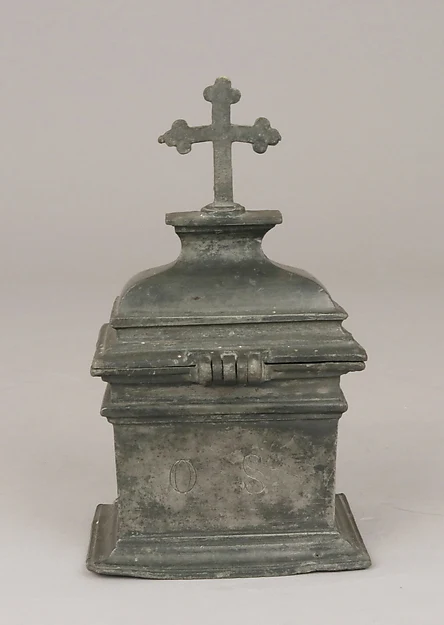
François DuFour’s seventeenth-century holy-oil casket shows how a marked vessel could identify the oil it was intended to hold.
François DuFour, Holy-oil Casket, ca. 1650–80. The Metropolitan Museum of Art, 1990.199.1. · Image source ↗ · CC0
The Science of the Sacraments by Charles W. Leadbeater
Charles W. Leadbeater compares preparing the oils to charging a talisman for a particular purpose. In the baptismal rite he records, the oil of catechumens comes first and is said to help form a shield around the child. He says chrism, applied after the baptism with water, closes the centres opened during the rite. [5][6][7][8]
In Leadbeater’s Liberal Catholic ordination rite, the oil of catechumens is also used to anoint the new priest’s hands. He links it to their future use in the Eucharist. The chapter on Holy Unction gives anointing the sick its own place in serious illness and in preparation for death. [9][10][11][12][13]
See references (9)
- The Science of the Sacraments, printed p. 259, Reader page 271
- The Science of the Sacraments, printed p. 260, Reader page 272
- The Science of the Sacraments, printed p. 263, Reader page 275
- The Science of the Sacraments, printed p. 264, Reader page 276
- The Science of the Sacraments, printed p. 344, Reader page 356
- The Science of the Sacraments, printed p. 345, Reader page 357
- The Science of the Sacraments, printed p. 381, Reader page 394
- The Science of the Sacraments, printed p. 382, Reader page 395
- The Science of the Sacraments, printed p. 383, Reader page 396
How the oils differ at ordination
The Latin Catholic rite uses sacred chrism to anoint a new priest. Leadbeater describes the same setting apart of a priest’s hands using the oil of catechumens. The choice of oil follows the tradition’s understanding of the rite. [9][10][14]
In the library
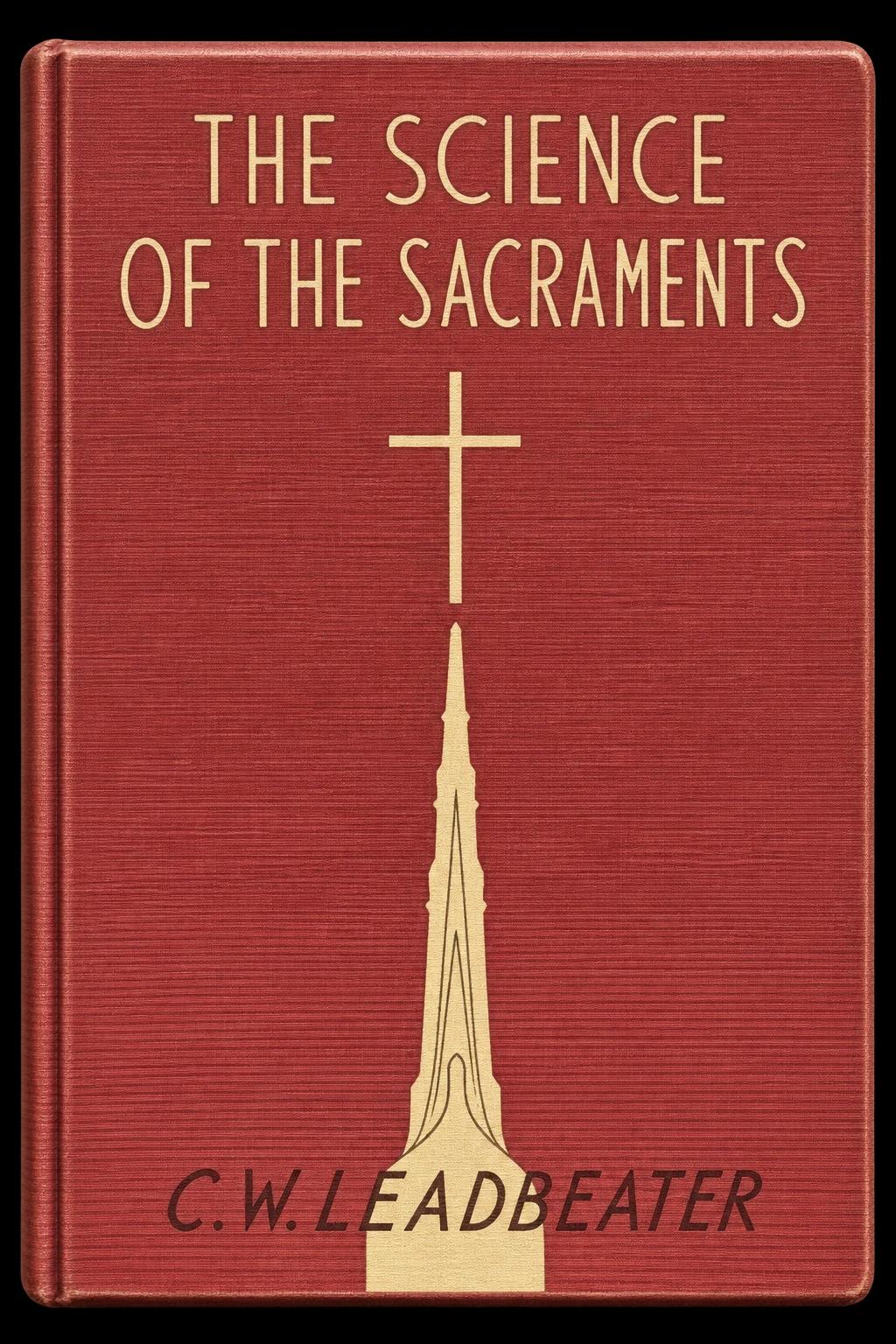
The Science of the Sacraments
Reading note
The separately titled account draws on exact passages in the consulted Library edition.
Sources
See references (14)
- Catechism of the Catholic Church, §§1233–1243 ↗Holy See, Catechism of the Catholic Church, English edition.
- Catechism of the Catholic Church, §§1293–1301 ↗Holy See, Catechism of the Catholic Church, English edition.
- Catechism of the Catholic Church, §§1517–1519 ↗Holy See, Catechism of the Catholic Church, English edition.
- François DuFour, Holy-oil Casket, ca. 1650–80 ↗François DuFour, Holy-oil Casket, ca. 1650–80. The Metropolitan Museum of Art, 1990.199.1.
- The Science of the Sacraments, printed p. 259, Reader page 271Charles W. Leadbeater, The Science of the Sacraments, The St. Alban Press, 1920. Exact Library edition IMJ-0615-E001.Read this page in The Science of the Sacraments ↗
- The Science of the Sacraments, printed p. 260, Reader page 272Charles W. Leadbeater, The Science of the Sacraments, The St. Alban Press, 1920. Exact Library edition IMJ-0615-E001.Read this page in The Science of the Sacraments ↗
- The Science of the Sacraments, printed p. 263, Reader page 275Charles W. Leadbeater, The Science of the Sacraments, The St. Alban Press, 1920. Exact Library edition IMJ-0615-E001.Read this page in The Science of the Sacraments ↗
- The Science of the Sacraments, printed p. 264, Reader page 276Charles W. Leadbeater, The Science of the Sacraments, The St. Alban Press, 1920. Exact Library edition IMJ-0615-E001.Read this page in The Science of the Sacraments ↗
- The Science of the Sacraments, printed p. 344, Reader page 356Charles W. Leadbeater, The Science of the Sacraments, The St. Alban Press, 1920. Exact Library edition IMJ-0615-E001.Read this page in The Science of the Sacraments ↗
- The Science of the Sacraments, printed p. 345, Reader page 357Charles W. Leadbeater, The Science of the Sacraments, The St. Alban Press, 1920. Exact Library edition IMJ-0615-E001.Read this page in The Science of the Sacraments ↗
- The Science of the Sacraments, printed p. 381, Reader page 394Charles W. Leadbeater, The Science of the Sacraments, The St. Alban Press, 1920. Exact Library edition IMJ-0615-E001.Read this page in The Science of the Sacraments ↗
- The Science of the Sacraments, printed p. 382, Reader page 395Charles W. Leadbeater, The Science of the Sacraments, The St. Alban Press, 1920. Exact Library edition IMJ-0615-E001.Read this page in The Science of the Sacraments ↗
- The Science of the Sacraments, printed p. 383, Reader page 396Charles W. Leadbeater, The Science of the Sacraments, The St. Alban Press, 1920. Exact Library edition IMJ-0615-E001.Read this page in The Science of the Sacraments ↗
- Order for the Reception of the Holy Oils ↗United States Conference of Catholic Bishops, Order for the Reception of the Holy Oils, nos. 1 and 6.