Granthis
Granthis are knots in yogic accounts of the subtle body. Follow the three obstacles through Avalon’s descriptions of the lotuses and inner sound.
In this article
Understanding the concept
Granthi means knot. In Tantric yoga, the knots are obstacles in the subtle body that Kuṇḍalinī or the vital breath is said to pass through. The tradition commonly names three for Brahmā, Viṣṇu and Rudra. [2][3][4]
The Serpent Power in Arthur Avalon’s translation
In The Serpent Power, Arthur Avalon discusses three liṅgas associated with the root, heart and brow. He describes the knots as points of obstruction and singles out the triangles at the heart and brow. Opening a door is his image for getting through such a point. [5][2][3]
In the account of Laya Yoga through inner sound, passing the knots is marked by a change in what is heard. Tinkling marks passage through the Brahmā knot. Drums enter the account at later stages, and the fourth stage leads towards soundlessness. [4][6][7]
Kālīcaraṇa also calls an entrance near the Brahma door a knot. This passage refers specifically to the doorway Kuṇḍalinī crosses on the way to Śiva and again on the return. [8][9][10][11]
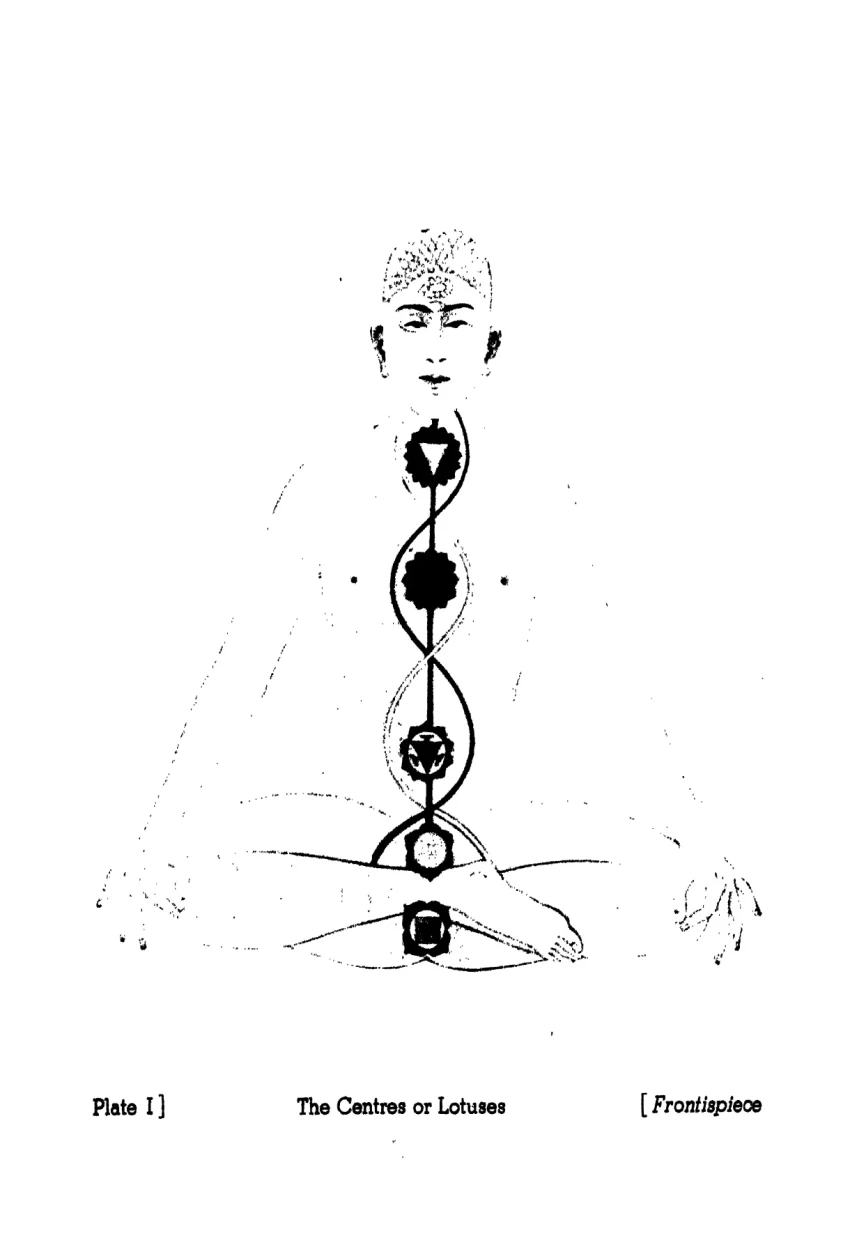
Plate I shows the axis of the lotuses. The knots themselves are described in the text through points of obstruction and passage.
Illustrator unrecorded. The Serpent Power, Plate I. Library facsimile, compared with the 1924 second edition. · Image source ↗ · Public Domain
See references (10)
- The Serpent Power, printed p. 127, Reader page 141
- The Serpent Power, printed p. 138, Reader page 152
- The Serpent Power, printed p. 216, Reader page 229
- The Serpent Power, printed p. 126, Reader page 140
- The Serpent Power, printed p. 221, Reader page 235
- The Serpent Power, printed p. 222, Reader page 236
- The Serpent Power, printed p. 329, Reader page 342
- The Serpent Power, printed p. 330, Reader page 343
- The Serpent Power, printed p. 347, Reader page 360
- The Serpent Power, printed p. 482, Reader page 509
Why the knot’s location depends on the passage
Avalon’s chapter on the lotuses discusses the knots in connection with the root, heart and brow. His account of dissolution also calls Maṇipūra the Brahmā knot. The name has to be read with the sequence in which it appears. [5][2][3][12]
In the library
The Serpent Power
Reading note
Separately attributed primary Library account, cited on exact verified Reader leaves.
Sources
See references (12)
- The Serpent Power, Plate I, Reader page 3Illustrator unrecorded. The Serpent Power, Plate I. Library facsimile, compared with the 1924 second edition.Read this page in The Serpent Power ↗
- The Serpent Power, printed p. 127, Reader page 141Arthur Avalon (Sir John Woodroffe), The Serpent Power, fifth enlarged edition, Ganesh & Co., Madras, 1953. Includes Pūrṇānanda’s Ṣaṭ-cakra-nirūpaṇa, Pādukā-pañcaka and Kālīcaraṇa’s commentary. Exact Library edition IMJ-0608-E001.Read this page in The Serpent Power ↗
- The Serpent Power, printed p. 138, Reader page 152Arthur Avalon (Sir John Woodroffe), The Serpent Power, fifth enlarged edition, Ganesh & Co., Madras, 1953. Includes Pūrṇānanda’s Ṣaṭ-cakra-nirūpaṇa, Pādukā-pañcaka and Kālīcaraṇa’s commentary. Exact Library edition IMJ-0608-E001.Read this page in The Serpent Power ↗
- The Serpent Power, printed p. 216, Reader page 229Arthur Avalon (Sir John Woodroffe), The Serpent Power, fifth enlarged edition, Ganesh & Co., Madras, 1953. Includes Pūrṇānanda’s Ṣaṭ-cakra-nirūpaṇa, Pādukā-pañcaka and Kālīcaraṇa’s commentary. Exact Library edition IMJ-0608-E001.Read this page in The Serpent Power ↗
- The Serpent Power, printed p. 126, Reader page 140Arthur Avalon (Sir John Woodroffe), The Serpent Power, fifth enlarged edition, Ganesh & Co., Madras, 1953. Includes Pūrṇānanda’s Ṣaṭ-cakra-nirūpaṇa, Pādukā-pañcaka and Kālīcaraṇa’s commentary. Exact Library edition IMJ-0608-E001.Read this page in The Serpent Power ↗
- The Serpent Power, printed p. 221, Reader page 235Arthur Avalon (Sir John Woodroffe), The Serpent Power, fifth enlarged edition, Ganesh & Co., Madras, 1953. Includes Pūrṇānanda’s Ṣaṭ-cakra-nirūpaṇa, Pādukā-pañcaka and Kālīcaraṇa’s commentary. Exact Library edition IMJ-0608-E001.Read this page in The Serpent Power ↗
- The Serpent Power, printed p. 222, Reader page 236Arthur Avalon (Sir John Woodroffe), The Serpent Power, fifth enlarged edition, Ganesh & Co., Madras, 1953. Includes Pūrṇānanda’s Ṣaṭ-cakra-nirūpaṇa, Pādukā-pañcaka and Kālīcaraṇa’s commentary. Exact Library edition IMJ-0608-E001.Read this page in The Serpent Power ↗
- The Serpent Power, printed p. 329, Reader page 342Arthur Avalon (Sir John Woodroffe), The Serpent Power, fifth enlarged edition, Ganesh & Co., Madras, 1953. Includes Pūrṇānanda’s Ṣaṭ-cakra-nirūpaṇa, Pādukā-pañcaka and Kālīcaraṇa’s commentary. Exact Library edition IMJ-0608-E001.Read this page in The Serpent Power ↗
- The Serpent Power, printed p. 330, Reader page 343Arthur Avalon (Sir John Woodroffe), The Serpent Power, fifth enlarged edition, Ganesh & Co., Madras, 1953. Includes Pūrṇānanda’s Ṣaṭ-cakra-nirūpaṇa, Pādukā-pañcaka and Kālīcaraṇa’s commentary. Exact Library edition IMJ-0608-E001.Read this page in The Serpent Power ↗
- The Serpent Power, printed p. 347, Reader page 360Arthur Avalon (Sir John Woodroffe), The Serpent Power, fifth enlarged edition, Ganesh & Co., Madras, 1953. Includes Pūrṇānanda’s Ṣaṭ-cakra-nirūpaṇa, Pādukā-pañcaka and Kālīcaraṇa’s commentary. Exact Library edition IMJ-0608-E001.Read this page in The Serpent Power ↗
- The Serpent Power, printed p. 482, Reader page 509Arthur Avalon (Sir John Woodroffe), The Serpent Power, fifth enlarged edition, Ganesh & Co., Madras, 1953. Includes Pūrṇānanda’s Ṣaṭ-cakra-nirūpaṇa, Pādukā-pañcaka and Kālīcaraṇa’s commentary. Exact Library edition IMJ-0608-E001.Read this page in The Serpent Power ↗
- The Serpent Power, printed p. 237, Reader page 251Arthur Avalon (Sir John Woodroffe), The Serpent Power, fifth enlarged edition, Ganesh & Co., Madras, 1953. Includes Pūrṇānanda’s Ṣaṭ-cakra-nirūpaṇa, Pādukā-pañcaka and Kālīcaraṇa’s commentary. Exact Library edition IMJ-0608-E001.Read this page in The Serpent Power ↗