Prāṇa
Prāṇa is a principle of vital activity. Learn how The Serpent Power distinguishes it from physical breath and describes its five chief winds.
In this article
Understanding the concept
Prāṇa is a term for vital activity in Indian traditions. It can mean the life that animates the whole body or one particular activity within it. The narrower use is why prāṇa can name both the vital winds collectively and one of the five chief winds. [2][3][4][5]
The Serpent Power in Arthur Avalon’s translation
Arthur Avalon distinguishes the prāṇa of an individual body from cosmic prāṇa. In the cosmic sense he links it to Brahman as the source of life. In the individual, the same term also names the vital function expressed in breathing. [2][4]
Avalon names five chief winds. He sums up their functions as taking in for prāṇa, expelling for apāna, assimilating for samāna, distributing for vyāna and uttering for udāna. Digestion and speech give concrete examples of the activities he groups under the winds. [4][5][6]
In his account of Laya Yoga, Avalon connects the movement of prāṇa through the central channel with the stilling of mental activity. His plate shows where the channel runs in the subtle-body model. [7][8][9]
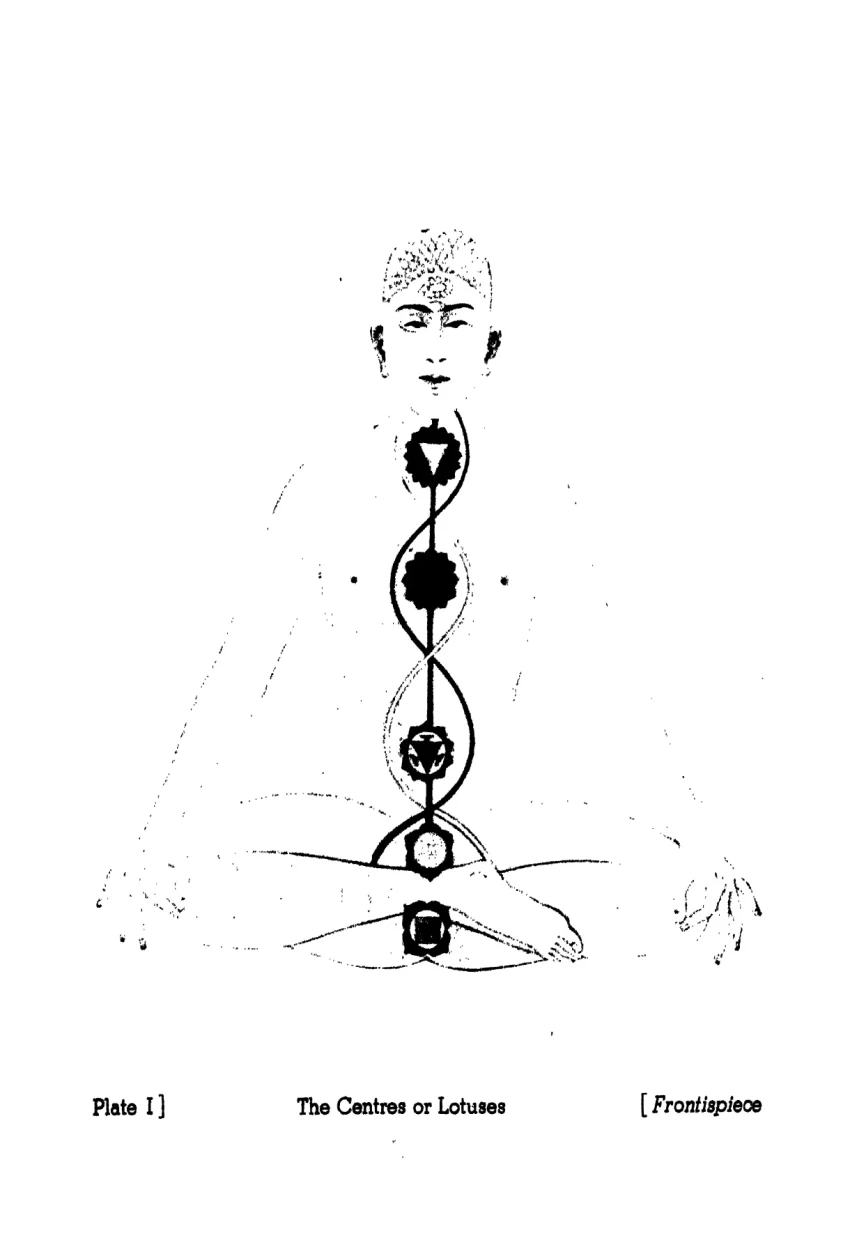
Plate I maps the channels and centres. The five winds are a separate classification of vital functions, including activities said to extend through the whole body.
Illustrator unrecorded. The Serpent Power, Plate I. Library facsimile, compared with the 1924 second edition. · Image source ↗ · Public Domain
See references (7)
- The Serpent Power, printed p. 74, Reader page 89
- The Serpent Power, printed p. 76, Reader page 91
- The Serpent Power, printed p. 77, Reader page 92
- The Serpent Power, printed p. 78, Reader page 93
- The Serpent Power, printed p. 110, Reader page 124
- The Serpent Power, printed p. 216, Reader page 229
- The Serpent Power, printed p. 222, Reader page 236
Vital winds and the channels they travel
The winds describe kinds of activity. The nāḍīs describe routes. Avalon assigns distribution throughout the body to vyāna and gives the central channel, Suṣumṇā, a particular place in the yogic map. [5][6][7][10][8]
In the library
The Serpent Power
Reading note
Separately attributed primary Library account, cited on exact verified Reader leaves.
Sources
See references (10)
- The Serpent Power, Plate I, Reader page 3Illustrator unrecorded. The Serpent Power, Plate I. Library facsimile, compared with the 1924 second edition.Read this page in The Serpent Power ↗
- The Serpent Power, printed p. 74, Reader page 89Arthur Avalon (Sir John Woodroffe), The Serpent Power, fifth enlarged edition, Ganesh & Co., Madras, 1953. Includes Pūrṇānanda’s Ṣaṭ-cakra-nirūpaṇa, Pādukā-pañcaka and Kālīcaraṇa’s commentary. Exact Library edition IMJ-0608-E001.Read this page in The Serpent Power ↗
- The Serpent Power, Reader page 90Arthur Avalon (Sir John Woodroffe), The Serpent Power, fifth enlarged edition, Ganesh & Co., Madras, 1953. Includes Pūrṇānanda’s Ṣaṭ-cakra-nirūpaṇa, Pādukā-pañcaka and Kālīcaraṇa’s commentary. Exact Library edition IMJ-0608-E001.Read this page in The Serpent Power ↗
- The Serpent Power, printed p. 76, Reader page 91Arthur Avalon (Sir John Woodroffe), The Serpent Power, fifth enlarged edition, Ganesh & Co., Madras, 1953. Includes Pūrṇānanda’s Ṣaṭ-cakra-nirūpaṇa, Pādukā-pañcaka and Kālīcaraṇa’s commentary. Exact Library edition IMJ-0608-E001.Read this page in The Serpent Power ↗
- The Serpent Power, printed p. 77, Reader page 92Arthur Avalon (Sir John Woodroffe), The Serpent Power, fifth enlarged edition, Ganesh & Co., Madras, 1953. Includes Pūrṇānanda’s Ṣaṭ-cakra-nirūpaṇa, Pādukā-pañcaka and Kālīcaraṇa’s commentary. Exact Library edition IMJ-0608-E001.Read this page in The Serpent Power ↗
- The Serpent Power, printed p. 78, Reader page 93Arthur Avalon (Sir John Woodroffe), The Serpent Power, fifth enlarged edition, Ganesh & Co., Madras, 1953. Includes Pūrṇānanda’s Ṣaṭ-cakra-nirūpaṇa, Pādukā-pañcaka and Kālīcaraṇa’s commentary. Exact Library edition IMJ-0608-E001.Read this page in The Serpent Power ↗
- The Serpent Power, printed p. 110, Reader page 124Arthur Avalon (Sir John Woodroffe), The Serpent Power, fifth enlarged edition, Ganesh & Co., Madras, 1953. Includes Pūrṇānanda’s Ṣaṭ-cakra-nirūpaṇa, Pādukā-pañcaka and Kālīcaraṇa’s commentary. Exact Library edition IMJ-0608-E001.Read this page in The Serpent Power ↗
- The Serpent Power, printed p. 216, Reader page 229Arthur Avalon (Sir John Woodroffe), The Serpent Power, fifth enlarged edition, Ganesh & Co., Madras, 1953. Includes Pūrṇānanda’s Ṣaṭ-cakra-nirūpaṇa, Pādukā-pañcaka and Kālīcaraṇa’s commentary. Exact Library edition IMJ-0608-E001.Read this page in The Serpent Power ↗
- The Serpent Power, printed p. 222, Reader page 236Arthur Avalon (Sir John Woodroffe), The Serpent Power, fifth enlarged edition, Ganesh & Co., Madras, 1953. Includes Pūrṇānanda’s Ṣaṭ-cakra-nirūpaṇa, Pādukā-pañcaka and Kālīcaraṇa’s commentary. Exact Library edition IMJ-0608-E001.Read this page in The Serpent Power ↗
- The Serpent Power, printed p. 111, Reader page 125Arthur Avalon (Sir John Woodroffe), The Serpent Power, fifth enlarged edition, Ganesh & Co., Madras, 1953. Includes Pūrṇānanda’s Ṣaṭ-cakra-nirūpaṇa, Pādukā-pañcaka and Kālīcaraṇa’s commentary. Exact Library edition IMJ-0608-E001.Read this page in The Serpent Power ↗