Eternal now
What is the eternal now? Boethius, Dowd, Swedenborg and Flammarion offer different accounts of divine eternity, the present and spiritual time.
In this article
What is the eternal now?
The eternal now is a way of relating the present to eternity. For Boethius, God possesses the whole of divine life in a single abiding present. Other writers use the phrase for a present that endures as events change. The distinction turns on whether events are experienced in sequence. [1][2]
Boethius: eternity held whole
In The Consolation of Philosophy V.6, Boethius distinguishes an eternal life from a temporal life that merely has no beginning or end. A being living through time does not possess its entire life together: some events have passed and others have yet to arrive. Divine eternity, in his argument, holds life whole in an abiding present. Nothing has been lost to the past or remains inaccessible in the future. [1]
The distinction helps Boethius explain divine knowledge. What a person calls a future event is present to God’s sight. Boethius uses that idea to ask how divine knowledge can encompass a choice without making the choice necessary. [1]
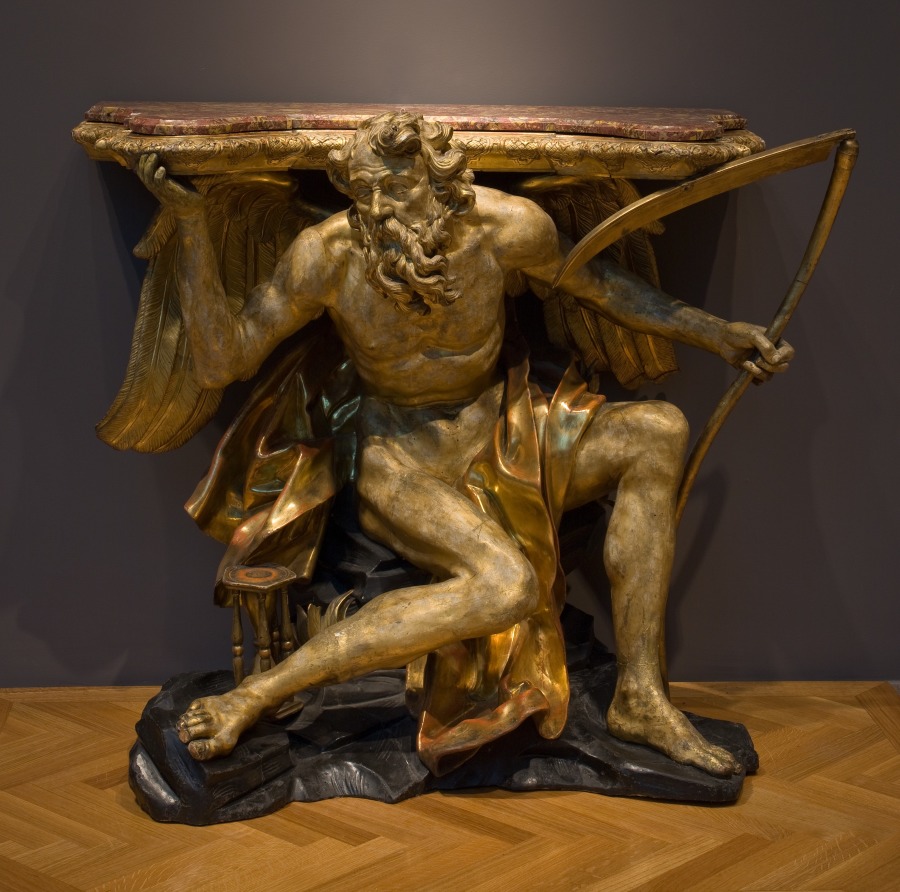
Console table depicting Chronos, or Father Time, Italy, probably Rome, about 1700. The winged figure holds a scythe, with an hourglass at his foot. This personification of passing time offers a visual contrast to Boethius’s account of eternity.
The Cleveland Museum of Art, Elisabeth Severance Prentiss Collection by exchange. 1968.31. CC0. · Image source ↗ · CC0
Evolution of Immortality
Freeman Benjamin Dowd, writing as Rosicruciæ in Evolution of Immortality, introduces the eternal now within an argument that time and energy have no beginning. Time may be divided into past, present and future, yet the present is always available for experience and reflection. The future continually begins without becoming a future that has already arrived; the past is brought forward through what exists now. [3][2]
He joins this account to an assertion that energy has never been inactive. There has never been an empty time in which nothing existed. Differentiation concerns powers and forms within an enduring reality, rather than a first temporal division between existence and absolute absence. The present belongs to his larger argument about the continuity of divine energy. [2][4]
Rosicruciæ’s emphasis falls on an enduring present within which natural changes appear. Boethius distinguishes divine eternity from the succession even of an everlasting world. Their language meets around the problem of presence, but they are asking different questions. One passage cannot be used as a definition silently imposed on the other. [2][1]
Heaven and Its Wonders and Hell
In Heaven and Its Wonders and Hell, Emanuel Swedenborg says that angels understand eternity through infinite state rather than infinite time. They experience changes of love and wisdom instead of measuring life by the revolutions that produce earthly days and years. He nevertheless expressly retains succession and progression in heaven. Leaving earthly time does not make every experience occur at once. [6][7][8]
This difference also affects communication. Swedenborg describes angelic ideas of state becoming natural ideas of time when received by a human mind. A discussion about the sun, days and seasons illustrates how unfamiliar earthly measurement would be to an angel. His account concerns a translation between ways of experiencing and expressing change. [8][9][10]
Elsewhere the book describes spirits staying in an intermediate world for varying periods and heavenly people becoming younger through continuing development. Such passages retain sequence and the language of duration. They should be read beside the chapter on time, rather than removed to make the book describe one timeless instant. Swedenborg’s infinite state offers a distinct account alongside the abiding divine present discussed by Boethius and the enduring present described by Rosicruciæ. [13][11][12][1][2]
See references (10)
- Boethius, The Consolation of Philosophy, V.6
- Evolution of Immortality, printed p. 11, Reader page 8
- Heaven and Its Wonders and Hell, printed p. 121, Reader page 128
- Heaven and Its Wonders and Hell, printed p. 122, Reader page 129
- Heaven and Its Wonders and Hell, printed p. 123, Reader page 130
- Heaven and Its Wonders and Hell, printed p. 124, Reader page 131
- Heaven and Its Wonders and Hell, printed p. 125, Reader page 132
- Heaven and Its Wonders and Hell, printed p. 353, Reader page 360
- Heaven and Its Wonders and Hell, printed p. 354, Reader page 361
- Heaven and Its Wonders and Hell, printed p. 367, Reader page 374
Lumen by Camille Flammarion
Camille Flammarion’s Lumen approaches the eternal present through a distant observer receiving light. Quaerens likens a ray to a courier bringing old news; Lumen sharpens the comparison into the appearance of a world itself. What is past at its place of origin is present to the observer who is receiving it. The first step of the argument therefore concerns the relation between an event and its later appearance. [14][15]
The third conversation extends this relation into a metaphysics of permanence. An event leaves its original location, yet is said to remain present elsewhere through its continuing luminous projection. The dialogue imagines the whole history of a world distributed through space at distances corresponding to different moments. Its eternal present does not mean that every ordinary observer sees everything at once. [16][17]
For an unlimited divine observer, Lumen proposes that these dispersed histories can be seen together. He then adds a second account of knowledge: the present contains the consequences of the past and the beginnings of the future. Divine understanding could therefore comprehend both from the relations between them. This causal argument extends beyond the image of an eye receiving old light. [17][18]
The conclusion returns to the claim that every event is imperishable and the past is always present. Its force is both personal and cosmic: former lives could be encountered again from the required standpoint. The book moves from delayed appearance to an enduring universal record and divine knowledge. Those steps form its philosophical construction, rather than a single observation demonstrating the whole account. [18][19]
Four meanings of presence
Boethius asks how God can know a whole history in one present. Flammarion imagines a history whose earlier events remain visible to distant observers. Dowd places change within a present that never ends, while Swedenborg’s angels experience it as a succession of states. The difference is whether the account concerns what can be known, what continues to exist or how change is experienced. [3][2][1][6][7][8][13][11][12][14][15][16][17][18]
See references (14)
- Boethius, The Consolation of Philosophy, V.6
- Evolution of Immortality, printed p. 11, Reader page 8
- Evolution of Immortality, printed p. 10, Reader page 7
- Heaven and Its Wonders and Hell, printed p. 121, Reader page 128
- Heaven and Its Wonders and Hell, printed p. 122, Reader page 129
- Heaven and Its Wonders and Hell, printed p. 123, Reader page 130
- Heaven and Its Wonders and Hell, printed p. 353, Reader page 360
- Heaven and Its Wonders and Hell, printed p. 354, Reader page 361
- Heaven and Its Wonders and Hell, printed p. 367, Reader page 374
- Lumen, Reader page 44
- Lumen, Reader page 45
- Lumen, Reader page 132
- Lumen, Reader page 133
- Lumen, Reader page 134
Read further in the library
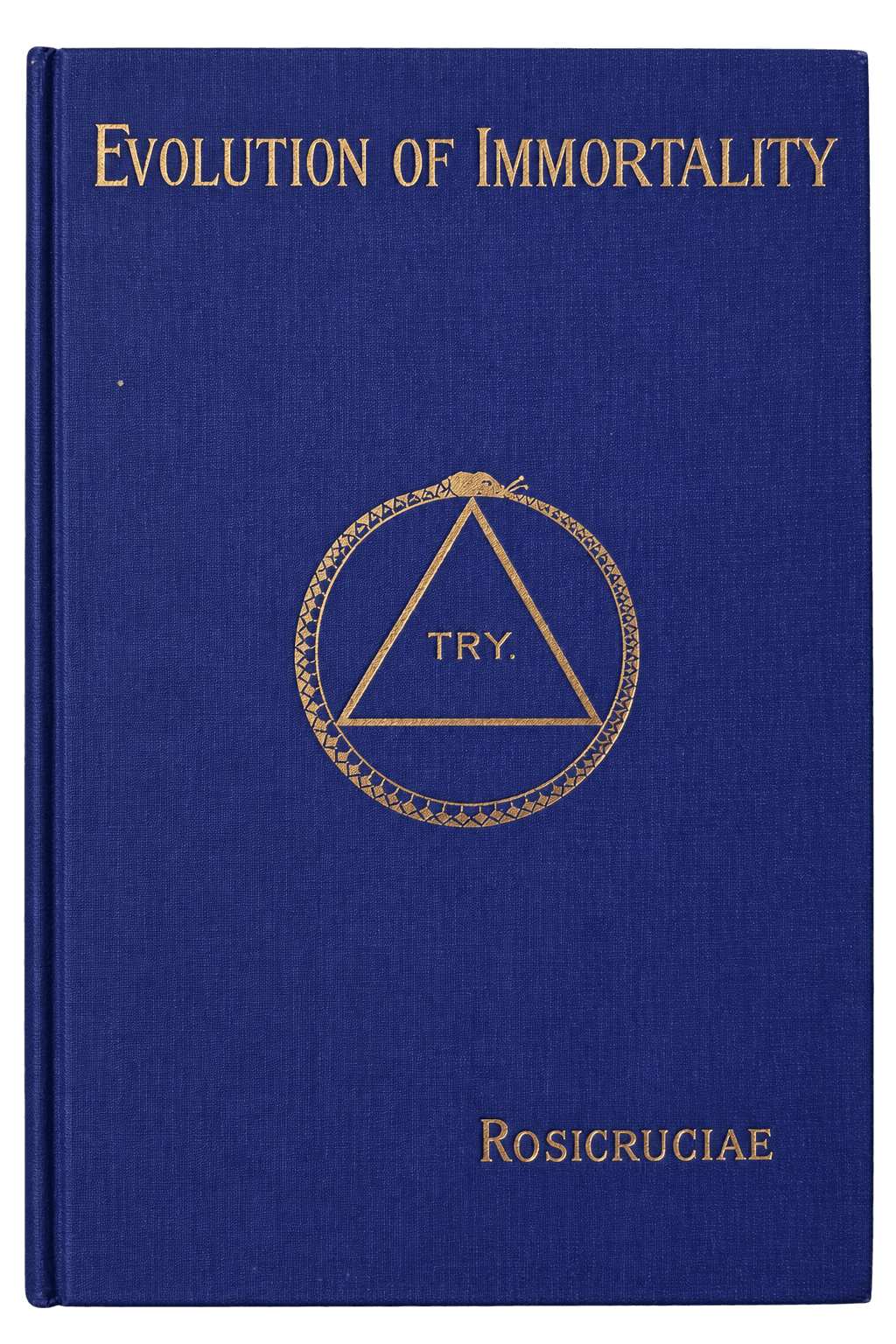
Evolution of Immortality
Reading note
An eternal present within an argument for the continuity of time, energy and natural change.

Heaven and Its Wonders and Hell
Reading note
Eternity is understood as infinite state while succession and spiritual change continue.
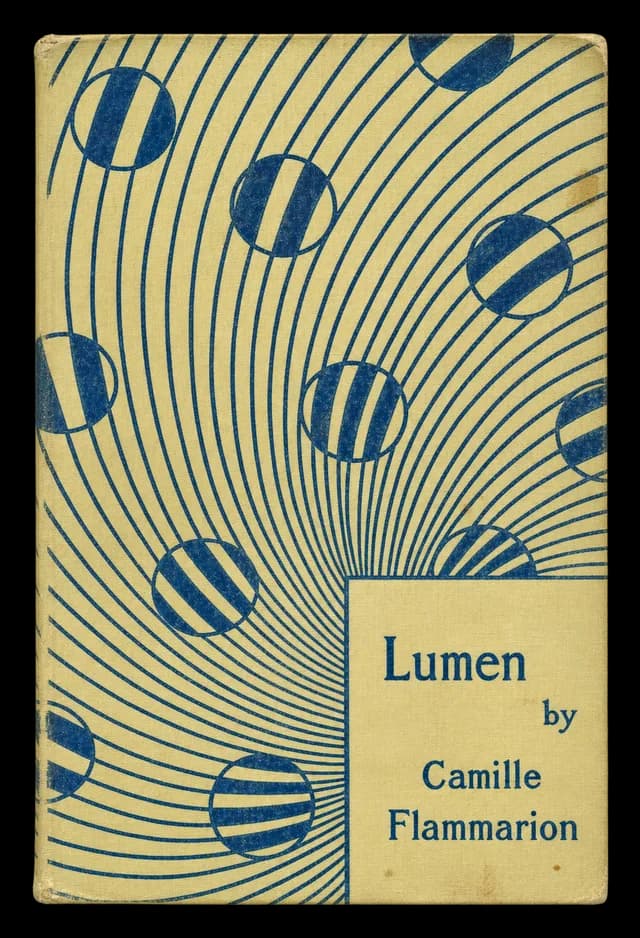
Lumen
Reading note
The separately titled account draws on exact passages in the consulted Library edition.
Sources
See references (19)
- Boethius, The Consolation of Philosophy, V.6 ↗Boethius, The Consolation of Philosophy, translated by H. R. James, Elliot Stock, London, 1897; Project Gutenberg.Return to text ↑
- Evolution of Immortality, printed p. 11, Reader page 8Rosicruciæ (catalogued as Freeman Benjamin Dowd), Evolution of Immortality. Eulian Publishing Company, Salem, 1900.Read this page in Evolution of Immortality ↗Return to text ↑
- Evolution of Immortality, printed p. 10, Reader page 7Rosicruciæ (catalogued as Freeman Benjamin Dowd), Evolution of Immortality. Eulian Publishing Company, Salem, 1900.Read this page in Evolution of Immortality ↗Return to text ↑
- Evolution of Immortality, printed p. 12, Reader page 9Rosicruciæ (catalogued as Freeman Benjamin Dowd), Evolution of Immortality. Eulian Publishing Company, Salem, 1900.Read this page in Evolution of Immortality ↗Return to text ↑
- Console Table Depicting Chronos, or Father Time, c. 1700 ↗Console Table Depicting Chronos, or Father Time, c. 1700. Italy, probably Rome, late 17th-early 18th Century. Painted and gilded wood, marble top; overall: 95.3 x 107.3 x 62.9 cm (37 1/2 x 42 1/4 x 24 3/4 in.). The Cleveland Museum of Art, Elisabeth Severance Prentiss Collection by exchange, 1968.31. CC0 open-access image.
- Heaven and Its Wonders and Hell, printed p. 121, Reader page 128Emanuel Swedenborg, Heaven and Its Wonders and Hell, translated by J. C. Ager. The American Swedenborg Printing and Publishing Society, New York, 1916. Original Latin work first published in 1758.Read this page in Heaven and Its Wonders and Hell ↗Return to text ↑
- Heaven and Its Wonders and Hell, printed p. 122, Reader page 129Emanuel Swedenborg, Heaven and Its Wonders and Hell, translated by J. C. Ager. The American Swedenborg Printing and Publishing Society, New York, 1916. Original Latin work first published in 1758.Read this page in Heaven and Its Wonders and Hell ↗Return to text ↑
- Heaven and Its Wonders and Hell, printed p. 123, Reader page 130Emanuel Swedenborg, Heaven and Its Wonders and Hell, translated by J. C. Ager. The American Swedenborg Printing and Publishing Society, New York, 1916. Original Latin work first published in 1758.Read this page in Heaven and Its Wonders and Hell ↗Return to text ↑
- Heaven and Its Wonders and Hell, printed p. 124, Reader page 131Emanuel Swedenborg, Heaven and Its Wonders and Hell, translated by J. C. Ager. The American Swedenborg Printing and Publishing Society, New York, 1916. Original Latin work first published in 1758.Read this page in Heaven and Its Wonders and Hell ↗Return to text ↑
- Heaven and Its Wonders and Hell, printed p. 125, Reader page 132Emanuel Swedenborg, Heaven and Its Wonders and Hell, translated by J. C. Ager. The American Swedenborg Printing and Publishing Society, New York, 1916. Original Latin work first published in 1758.Read this page in Heaven and Its Wonders and Hell ↗Return to text ↑
- Heaven and Its Wonders and Hell, printed p. 353, Reader page 360Emanuel Swedenborg, Heaven and Its Wonders and Hell, translated by J. C. Ager. The American Swedenborg Printing and Publishing Society, New York, 1916. Original Latin work first published in 1758.Read this page in Heaven and Its Wonders and Hell ↗Return to text ↑
- Heaven and Its Wonders and Hell, printed p. 354, Reader page 361Emanuel Swedenborg, Heaven and Its Wonders and Hell, translated by J. C. Ager. The American Swedenborg Printing and Publishing Society, New York, 1916. Original Latin work first published in 1758.Read this page in Heaven and Its Wonders and Hell ↗Return to text ↑
- Heaven and Its Wonders and Hell, printed p. 367, Reader page 374Emanuel Swedenborg, Heaven and Its Wonders and Hell, translated by J. C. Ager. The American Swedenborg Printing and Publishing Society, New York, 1916. Original Latin work first published in 1758.Read this page in Heaven and Its Wonders and Hell ↗Return to text ↑
- Lumen, Reader page 44Camille Flammarion, Lumen, authorised English translation by A. A. M. and R. M., Dodd, Mead and Company, New York, 1897. Exact selected Library edition IMJ-0398-E001. Lumen and Quaerens are speakers in the dialogue; claims made by the narrator are attributed to this text. Original PageIDs and current Reader positions are verified separately from printed pagination.Read this page in Lumen ↗Return to text ↑
- Lumen, Reader page 45Camille Flammarion, Lumen, authorised English translation by A. A. M. and R. M., Dodd, Mead and Company, New York, 1897. Exact selected Library edition IMJ-0398-E001. Lumen and Quaerens are speakers in the dialogue; claims made by the narrator are attributed to this text. Original PageIDs and current Reader positions are verified separately from printed pagination.Read this page in Lumen ↗Return to text ↑
- Lumen, Reader page 132Camille Flammarion, Lumen, authorised English translation by A. A. M. and R. M., Dodd, Mead and Company, New York, 1897. Exact selected Library edition IMJ-0398-E001. Lumen and Quaerens are speakers in the dialogue; claims made by the narrator are attributed to this text. Original PageIDs and current Reader positions are verified separately from printed pagination.Read this page in Lumen ↗Return to text ↑
- Lumen, Reader page 133Camille Flammarion, Lumen, authorised English translation by A. A. M. and R. M., Dodd, Mead and Company, New York, 1897. Exact selected Library edition IMJ-0398-E001. Lumen and Quaerens are speakers in the dialogue; claims made by the narrator are attributed to this text. Original PageIDs and current Reader positions are verified separately from printed pagination.Read this page in Lumen ↗Return to text ↑
- Lumen, Reader page 134Camille Flammarion, Lumen, authorised English translation by A. A. M. and R. M., Dodd, Mead and Company, New York, 1897. Exact selected Library edition IMJ-0398-E001. Lumen and Quaerens are speakers in the dialogue; claims made by the narrator are attributed to this text. Original PageIDs and current Reader positions are verified separately from printed pagination.Read this page in Lumen ↗Return to text ↑
- Lumen, Reader page 228Camille Flammarion, Lumen, authorised English translation by A. A. M. and R. M., Dodd, Mead and Company, New York, 1897. Exact selected Library edition IMJ-0398-E001. Lumen and Quaerens are speakers in the dialogue; claims made by the narrator are attributed to this text. Original PageIDs and current Reader positions are verified separately from printed pagination.Read this page in Lumen ↗Return to text ↑