Astra
An astra is a weapon of extraordinary power in Indian epic. Read how Rama receives celestial arms and how Arjuna gains Shiva’s Pāśupata.
In this article
What is an astra?
An astra is a weapon of extraordinary power in Indian epic, granted by a deity or taught by a teacher. The stories often give an astra a presence of its own. It may appear beside a hero, speak and promise to come when summoned. [3][4][5][6][1]
The celestial arms in Griffith’s Ramayana
In Book I, Canto XXIX of Ralph T. H. Griffith’s Ramayana, Vishwamitra names powers associated with rain, fire, sleep and illusion. After the sage passes on his knowledge, the arms appear and speak to Rama as attendants ready to serve. [1]
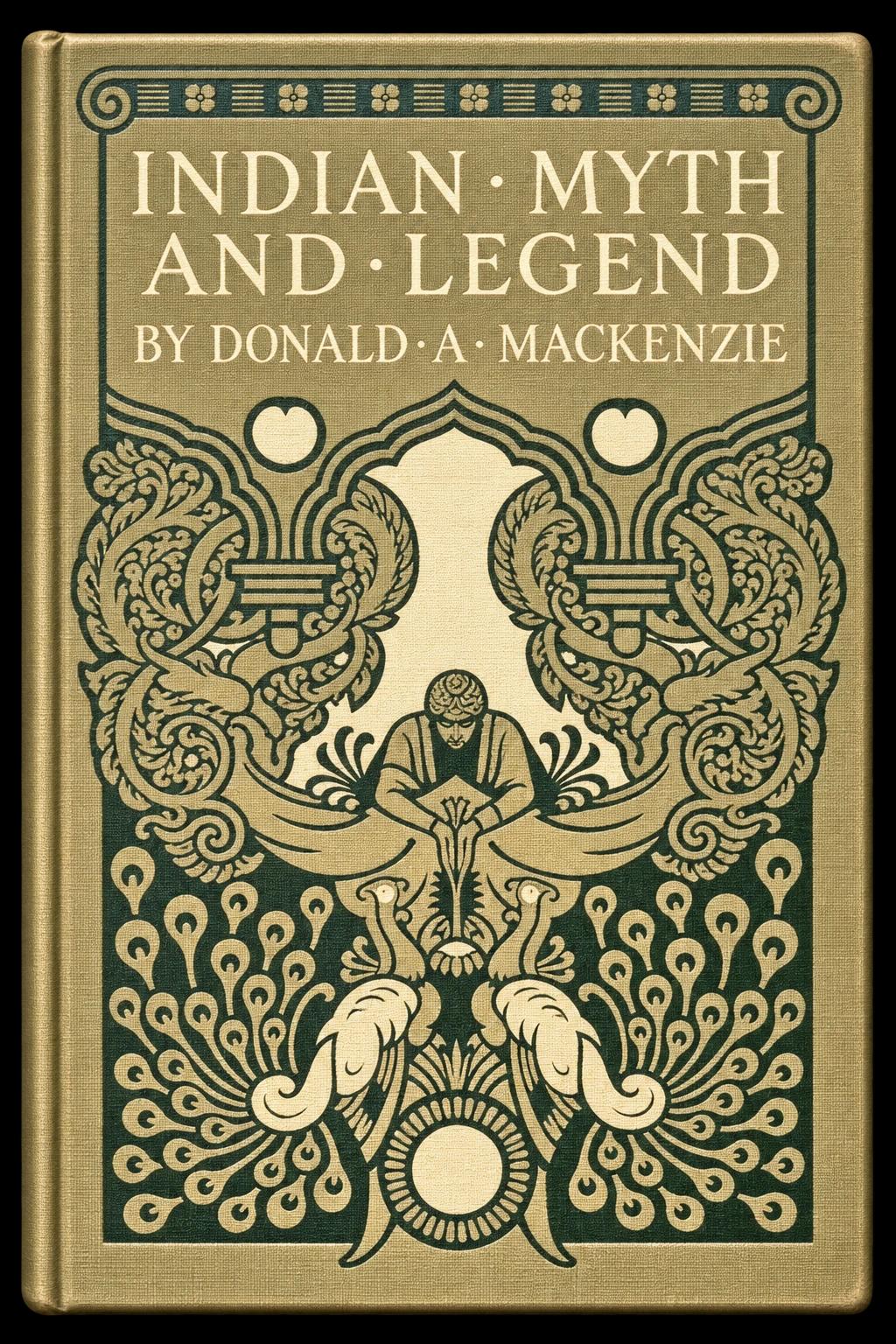
Indian Myth and Legend by Donald A. Mackenzie
In Indian Myth and Legend, Donald A. Mackenzie describes a public display of Arjuna’s training. His weapons produce fire, water, wind and clouds in turn. A further weapon makes these effects vanish. [3]
During exile Arjuna meets Shiva in the form of a hunter. He recognises him when the garland he offered to Shiva appears on the hunter. Shiva grants the Pāśupata, whose spirit stands beside Arjuna. Other gods bring gifts, and he continues training in Indra’s city. [4][5]
Vishwamitra’s gift to Rama follows a similar pattern. The arms appear with clasped hands and pledge their service. Mackenzie next brings them into the story when the hermitage’s sacrifice comes under threat. [6]
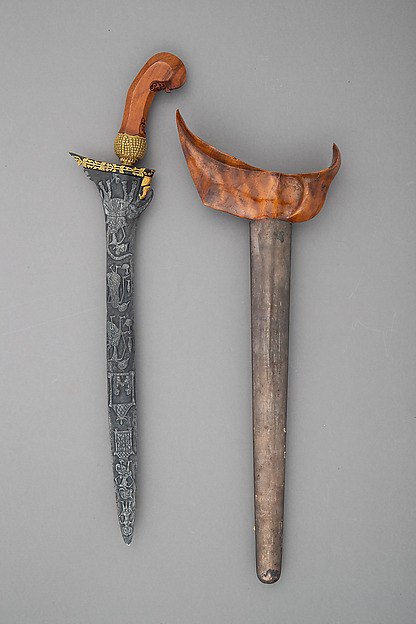
The Met tentatively identifies scenes on this Javanese kris with the tale of Arjuna meeting Shiva in hunter form.
The Metropolitan Museum of Art, Edward C. Moore Collection, Bequest of Edward C. Moore, 1891, 91.1.899a, b. Open Access CC0. JPEG derivative. · Image source ↗ · CC0
A gift and the knowledge to command it
Griffith dwells on the different powers the sage passes to Rama. Mackenzie quickly brings the arms back into the story. Arjuna’s encounter with Shiva adds a second route to the gift, in which recognising the giver precedes receiving the power. [6][1][4][5]
Read further in the library
Indian Myth and Legend
Reading note
The separately titled account draws on exact passages in the consulted Library edition.
Sources
See references (6)
- Ramayana, Book I, Canto XXIX, translated by Ralph T. H. Griffith ↗Complete canto, The Celestial Arms. Griffith’s canto numbering is retained.Return to text ↑
- Kris with Sheath, 18th–19th century ↗The Metropolitan Museum of Art, Edward C. Moore Collection, Bequest of Edward C. Moore, 1891, 91.1.899a, b. Open Access CC0. JPEG derivative.
- Indian Myth and Legend, Reader page 272Donald A. Mackenzie, Indian Myth and Legend, Gresham Publishing Company Limited, London, undated consulted impression. Library edition IMJ-0649-E001. Persistent PageIDs and current Reader positions verified against the supplied PDF and cached Reader manifest. Embedded translations are Mackenzie’s presentation unless a separately consulted primary text is named.Read this page in Indian Myth and Legend ↗Return to text ↑
- Indian Myth and Legend, Reader page 341Donald A. Mackenzie, Indian Myth and Legend, Gresham Publishing Company Limited, London, undated consulted impression. Library edition IMJ-0649-E001. Persistent PageIDs and current Reader positions verified against the supplied PDF and cached Reader manifest. Embedded translations are Mackenzie’s presentation unless a separately consulted primary text is named.Read this page in Indian Myth and Legend ↗Return to text ↑
- Indian Myth and Legend, Reader page 342Donald A. Mackenzie, Indian Myth and Legend, Gresham Publishing Company Limited, London, undated consulted impression. Library edition IMJ-0649-E001. Persistent PageIDs and current Reader positions verified against the supplied PDF and cached Reader manifest. Embedded translations are Mackenzie’s presentation unless a separately consulted primary text is named.Read this page in Indian Myth and Legend ↗Return to text ↑
- Indian Myth and Legend, Reader page 472Donald A. Mackenzie, Indian Myth and Legend, Gresham Publishing Company Limited, London, undated consulted impression. Library edition IMJ-0649-E001. Persistent PageIDs and current Reader positions verified against the supplied PDF and cached Reader manifest. Embedded translations are Mackenzie’s presentation unless a separately consulted primary text is named.Read this page in Indian Myth and Legend ↗Return to text ↑