Aeon of Horus
The Aeon of Horus is the age Crowley identifies with Thelema. Compare his accounts of the aeons of Isis, Osiris and Horus and the role of The Book of the Law.
In this article
What is the Aeon of Horus?
The Aeon of Horus is the age Aleister Crowley associates with The Book of the Law and the emergence of Thelema. In his account, Horus the Child follows Isis the Mother and Osiris the Father. Crowley uses their names to represent different religious principles in a modern theory of history. [1][4][5][6][3]
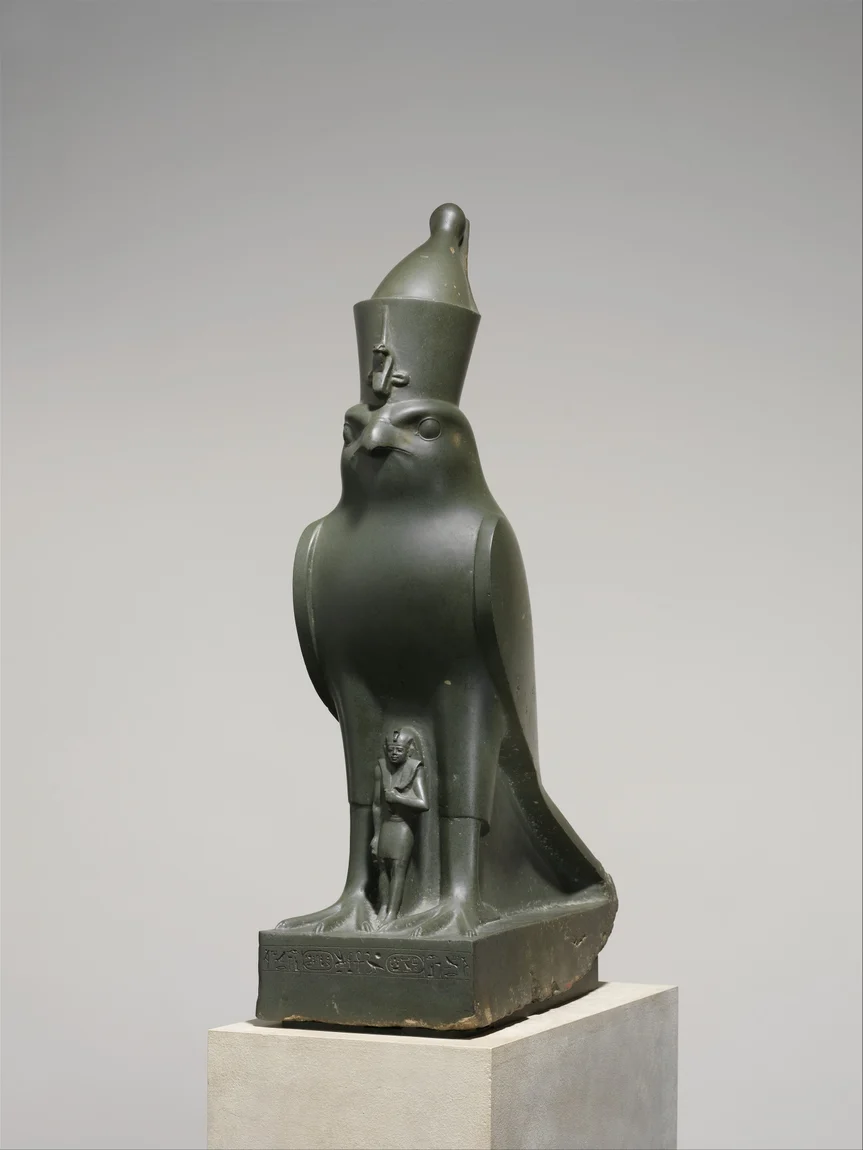
Horus in falcon form shelters Nectanebo II in an ancient Egyptian statue. Crowley drew on Egyptian divine names for his modern theory of religious history.
The Metropolitan Museum of Art, Rogers Fund, 1934. Open Access. · Image source ↗ · Public Domain
The Equinox of the Gods by Aleister Crowley
In The Equinox of the Gods, Aleister Crowley associates Isis with material life, Osiris with suffering and death, and Horus with the possibility of joining material and spiritual life. He makes that change an obligation of his own work and presents earlier religions through his argument for Thelema. [1]
Magick Without Tears by Aleister Crowley
In Magick Without Tears, Crowley associates Isis with the mother, Osiris with descent and the father, and Horus with the child. He takes the last of these as a reason to give the individual’s will a different kind of authority. His letters on morality ask what that leaves a person responsible for doing. [4][7][8][5][6]
Crowley also asks how an order devoted to individual initiation can act more widely. He makes the coming of the Aeon part of his answer, giving the order a historical purpose as well as a role in training its students. [9][10][11][12]
See references (9)
- Magick Without Tears, Reader page 199
- Magick Without Tears, Reader page 229
- Magick Without Tears, Reader page 230
- Magick Without Tears, Reader page 202
- Magick Without Tears, Reader page 203
- Magick Without Tears, Reader page 304
- Magick Without Tears, Reader page 306
- Magick Without Tears, Reader page 307
- Magick Without Tears, Reader page 309
How Crowley reads the voice of Ra-Hoor-Khuit
Ra-Hoor-Khuit speaks in the third chapter of The Book of the Law. Crowley treats that voice as the sign of a new age. The Equinox of the Gods argues for the change in religious terms, while the letters ask what it means for conduct and for the work of his order. [1][2][4][5][6][12]
Read further in the library
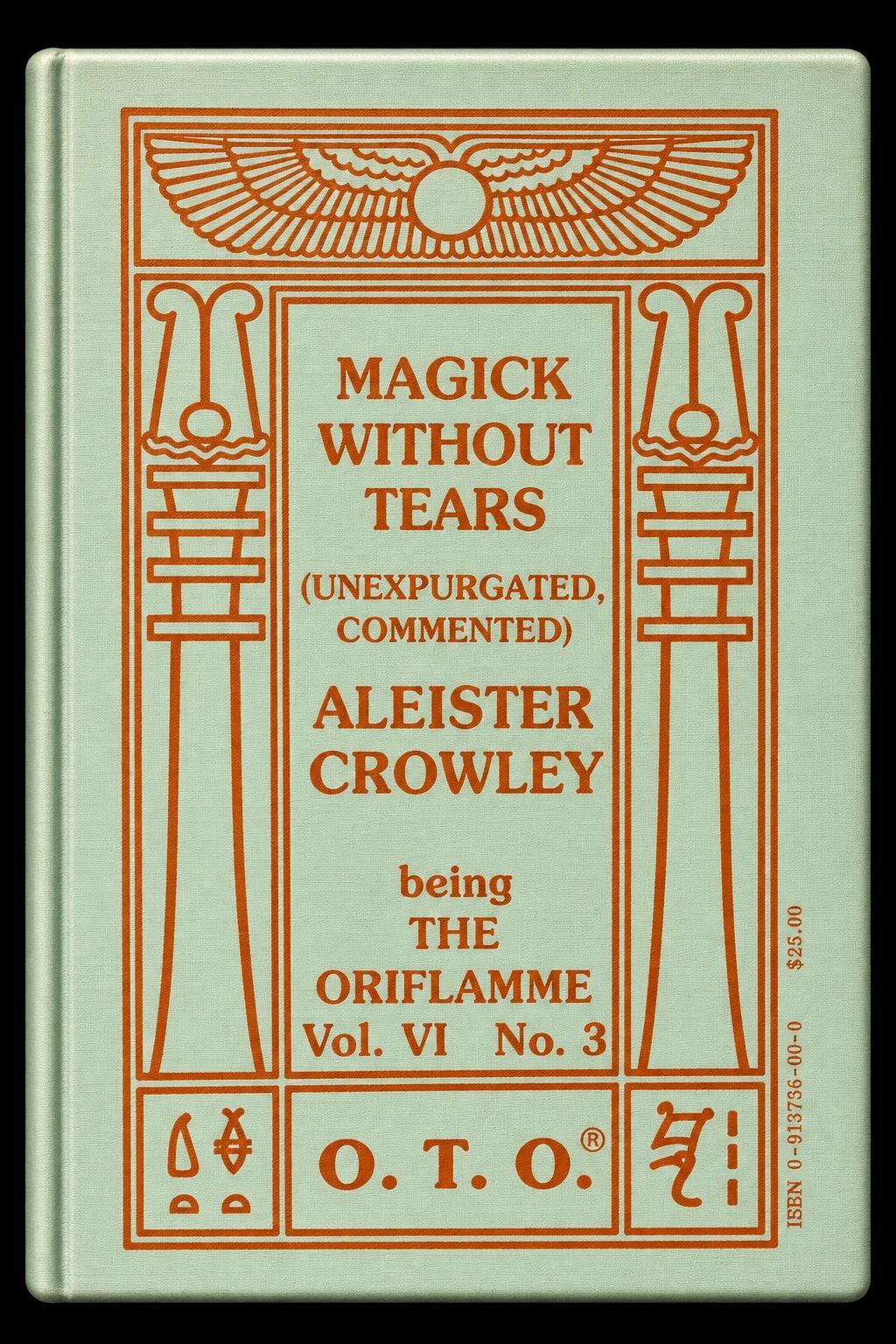
Magick Without Tears
Reading note
The separately titled account draws on exact passages in the consulted Library edition.
Sources
See references (12)
- The Equinox of the Gods, chapter VIII, “Summary of the Case” ↗Aleister Crowley, The Equinox of the Gods, 1936. Hermetic Library transcription.Return to text ↑
- The Book of the Law, III.1–3, III.39–40 ↗Aleister Crowley, Liber AL vel Legis, chapter III. Luminist Archives transcription.Return to text ↑
- Statue of Horus as a falcon protecting King Nectanebo II, 360–343 BCE ↗The Metropolitan Museum of Art, Rogers Fund, 1934. Open Access image, photograph by Anna-Marie Kellen.Return to text ↑
- Magick Without Tears, Reader page 199Aleister Crowley, Magick Without Tears, undated digital Library edition IMJ-0641-E001. Links use the current Library Reader sequence.Read this page in Magick Without Tears ↗Return to text ↑
- Magick Without Tears, Reader page 229Aleister Crowley, Magick Without Tears, undated digital Library edition IMJ-0641-E001. Links use the current Library Reader sequence.Read this page in Magick Without Tears ↗Return to text ↑
- Magick Without Tears, Reader page 230Aleister Crowley, Magick Without Tears, undated digital Library edition IMJ-0641-E001. Links use the current Library Reader sequence.Read this page in Magick Without Tears ↗Return to text ↑
- Magick Without Tears, Reader page 202Aleister Crowley, Magick Without Tears, undated digital Library edition IMJ-0641-E001. Links use the current Library Reader sequence.Read this page in Magick Without Tears ↗Return to text ↑
- Magick Without Tears, Reader page 203Aleister Crowley, Magick Without Tears, undated digital Library edition IMJ-0641-E001. Links use the current Library Reader sequence.Read this page in Magick Without Tears ↗Return to text ↑
- Magick Without Tears, Reader page 304Aleister Crowley, Magick Without Tears, undated digital Library edition IMJ-0641-E001. Links use the current Library Reader sequence.Read this page in Magick Without Tears ↗Return to text ↑
- Magick Without Tears, Reader page 306Aleister Crowley, Magick Without Tears, undated digital Library edition IMJ-0641-E001. Links use the current Library Reader sequence.Read this page in Magick Without Tears ↗Return to text ↑
- Magick Without Tears, Reader page 307Aleister Crowley, Magick Without Tears, undated digital Library edition IMJ-0641-E001. Links use the current Library Reader sequence.Read this page in Magick Without Tears ↗Return to text ↑
- Magick Without Tears, Reader page 309Aleister Crowley, Magick Without Tears, undated digital Library edition IMJ-0641-E001. Links use the current Library Reader sequence.Read this page in Magick Without Tears ↗Return to text ↑