Discover historical illustrations by subject, artist and book.
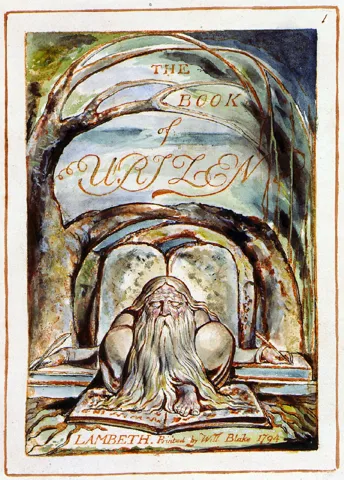
Creation and rebellion in Blake’s illuminated plates.
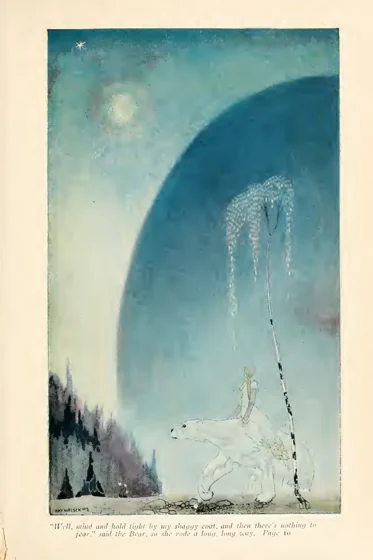
Norwegian fairy tales illustrated by Kay Nielsen.
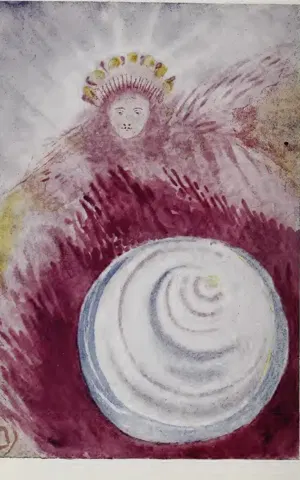
Four colour drawings from a 1908 Gnostic text.
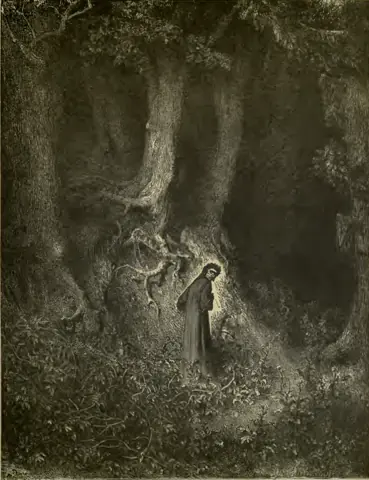
From the dark wood to Paradise with Gustave Doré.
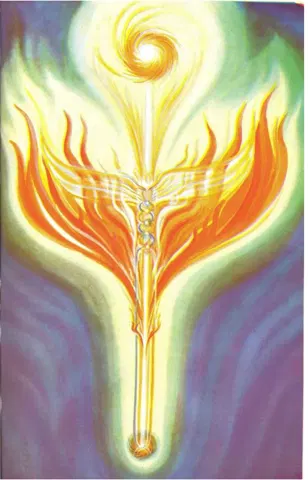
Ethelwynne Quail’s visions of the spirit world.
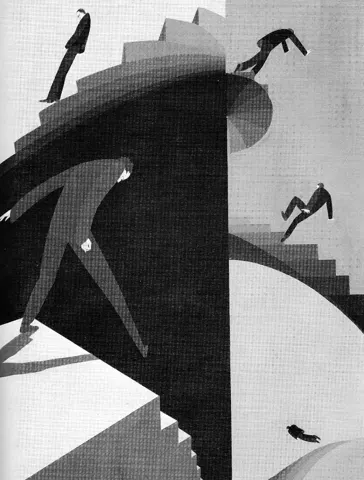
Art Deco studies of fear by John Vassos.
30 illustrations
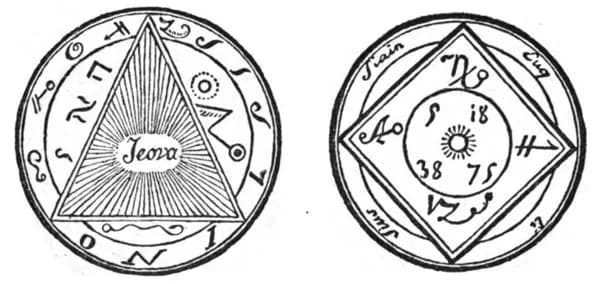
A radiant triangle inscribed Jeova fills one circular design; a square and central solar form organise the other.
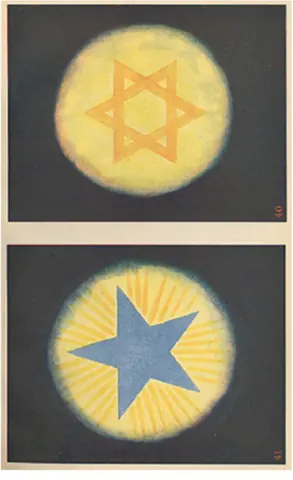
Interlaced triangles and a five-pointed star give two different conceptions of divine order a geometric form.
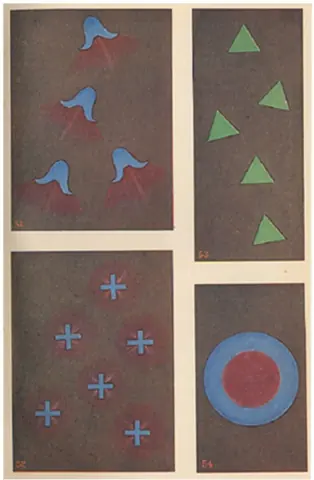
Four dark panels contain blue curved forms with red trails, green triangles, blue crosses and a blue ring around a red centre.
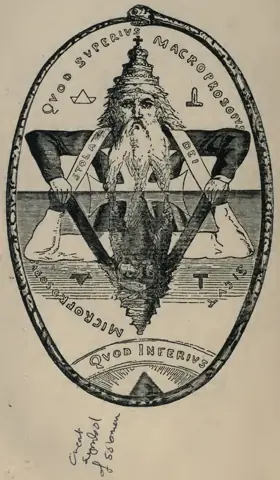
A crowned, bearded figure is reflected upside down across a horizontal division within a serpent-shaped oval.
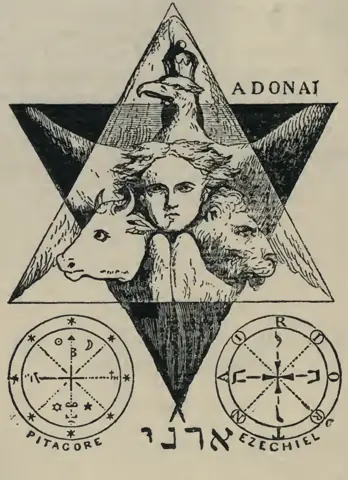
A six-pointed arrangement of triangles surrounds a human face, an eagle, a bull and a lion.
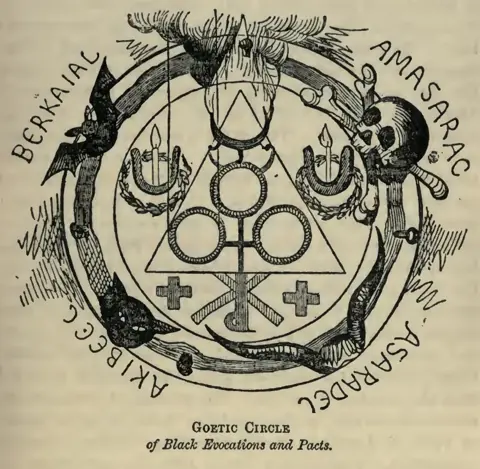
A circular design encloses a triangle, three small rings, crosses and a central sign.
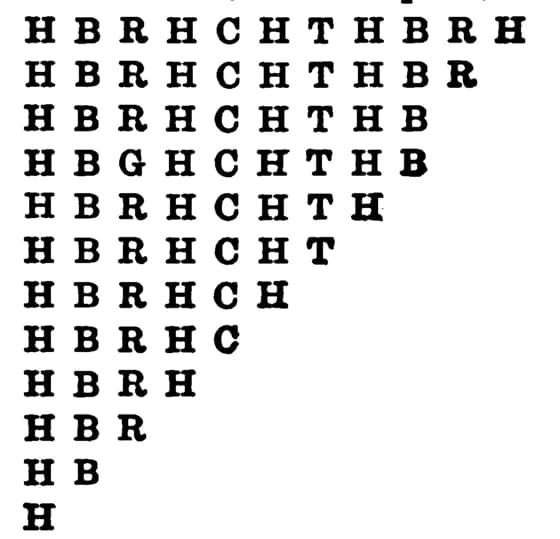
Rows beginning with the same letters become shorter until only one character remains.
A crowned, bearded figure is mirrored upside down inside an oval serpent border.
Alternating rays radiate from a dark central field containing a pale triangle and a bold letter-like form.
A dark circular serpent surrounds three intersecting circles crossed by an upright triangle.
Rows of round devices contain curls, triangles, crosses and repeated hooked marks.
A table pairs spirit names with Hebrew forms and numbered references above a large ceremonial circle.
A small triangle occupies the centre of a great circular sunburst.
Lines descend from the Logos through its three aspects towards the Lord of the World, the Buddha, Bodhisattva and Mahachohan.
Two interlocking triangles form a six-pointed star inside a circle.
Four letters H and two letters O are distributed through the points of interlocking triangles.
A series of nested triangles rises within a dotted circle.
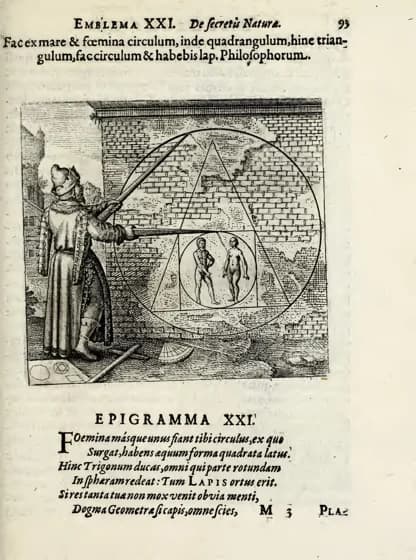
A robed geometer uses long compasses against a brick wall covered with nested shapes.
Four circular designs are marked with Saturn’s planetary sign.
A standing figure extends both arms inside a circle, square and large triangle.
An inscribed circular boundary encloses a triangle, two candles and a small burning vessel.
A rectangular mirror filled with concentric rings stands between two tall candles above an inverted triangle.
Rows of compact symbols are paired with names of metals, salts, liquids and laboratory processes.
Straight lines form triangles, squares and crossing chords within two circular fields.
Small labelled leaves extend from a tall central trunk through several linked levels.
An inverted triangle and a large central syllable occupy a ring of dark petals.
Two interlocking triangles enclose a dark central region with a small white animal.
A large pale downward-pointing triangle fills the centre of a dark petalled ring.
Rows of triangles, crosses, circles, letter-like strokes and other signs cover the comparison plate.
A dark triangle encloses a small eye above a larger eye set within a radiating star.
 27 plates
 22 plates
 4 plates
 24 plates
 10 plates
 10 plates