Japanese Yōkai: Kitsune, Kappa and Tengu
Identify three Japanese yōkai through Hiroshige’s foxfires, two netsuke and named tales. See what changes between artworks, shrines and stories.
In this article
Compare three museum objects
Open a picture to see how its visual clues fit the story or setting.
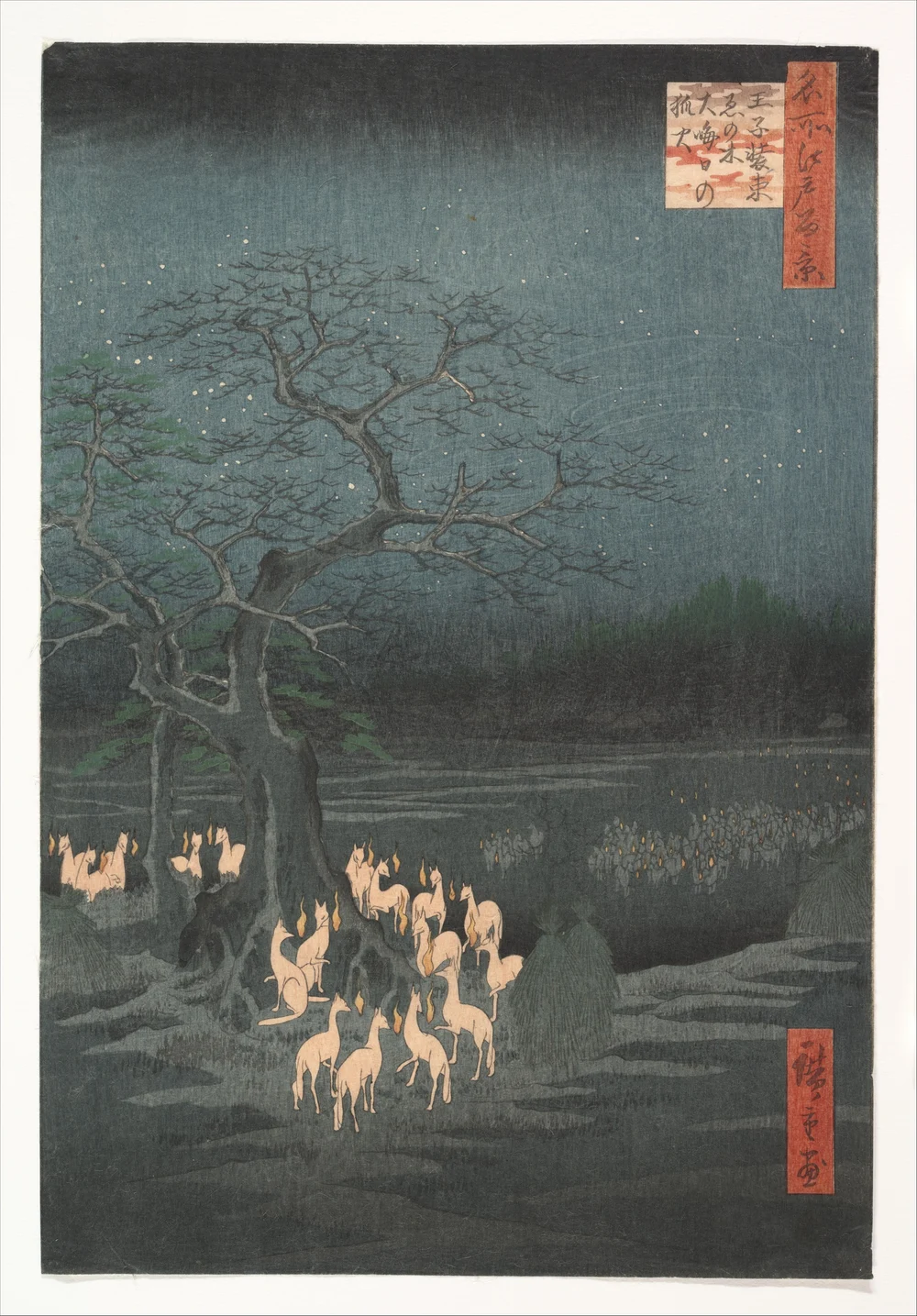 KitsuneFoxes at ŌjiLook for the flames and the New Year gathering.
Editions and records
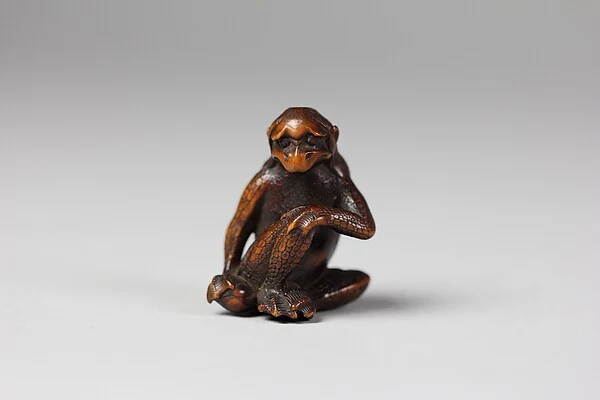 KappaEdo-period netsukeThe museum identification adds context the carving cannot supply.
Editions and records
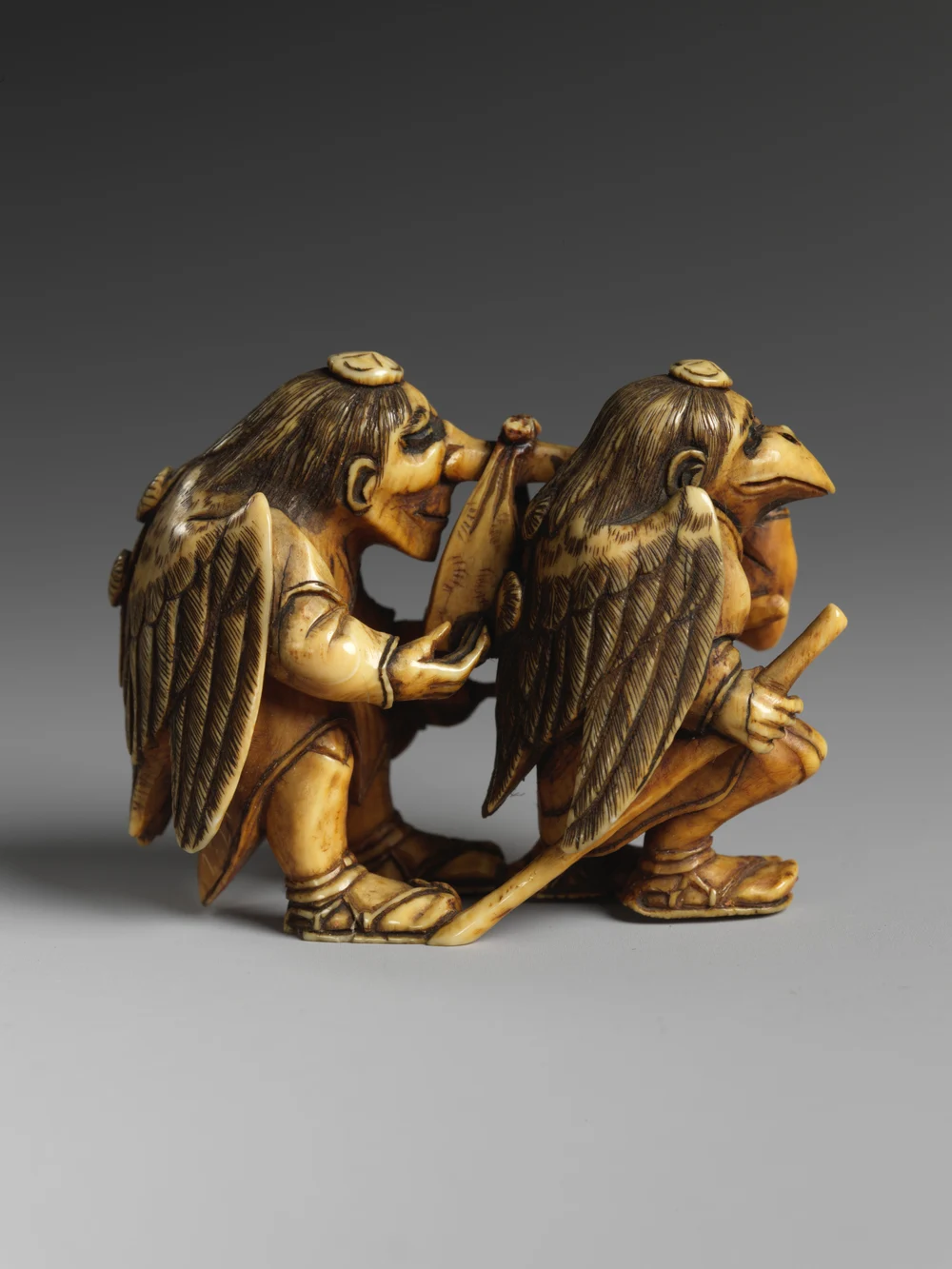 TenguWinged parcel carriersWings and birdlike forms belong to one strand of tengu imagery.
Editions and records
What is a yōkai?
Yōkai is a broad label used for uncanny beings and phenomena in Japan. It can help you find traditional pictures and stories, but an identification still takes a name, a scene or a record. In Sekien’s printed picture books an image comes with a name. In a small carving, much of the setting can disappear. Those are different conditions for recognising a figure. [1][3][4]
Use the three cards as a way into the evidence. A fox’s body or flames, a named river encounter and a birdlike carving all give different kinds of clues. Once you have a possible identification, check the caption or the story that accompanies it. [2][5][4]
Kitsune: follow the fox and the setting
In Hiroshige’s ca. 1857 print, foxes gather on New Year’s Eve at the Changing Tree in Ōji. The fires and the group matter as much as the outlines of individual animals. The Met catalogue identifies the scene through the gathering and its connection with the nearby Inari shrine. The fox serves as a messenger in that setting. [2]
In Davis’s Death-Stone retelling, a fox can pass as a person at court. The narrative withholds the shape by which a viewer might recognise it. Compare that particular story with the print, where the foxes appear openly as animals and go together towards a shrine. [7][2]
Hiroshige, New Year’s Eve Foxfires at the Changing Tree, Ōji, ca. 1857. Follow the procession from the front of the print towards the tree.
The Metropolitan Museum of Art, Rogers Fund, 1925. · Image source ↗ · Public Domain
Kappa: what the river tells you
Yanagita’s tale 58 places the encounter at a pool where a horse has been brought to cool off. Something tries to pull the horse into the water, but the horse drags it back to the stable. When a hand gives away its hiding place, the household can intervene. The creature is identified by name in the tale. A river and a horse supply clues the carving cannot show. [5][3]
The Met’s eighteenth-century netsuke identifies its figure as a kappa. Start with that identification and compare the compact carved pose to the length of the scene in the tale. The image and the tale represent different ways of making a being recognisable. An image without a water setting can still be labelled kappa when reliable catalogue evidence supports it. [3][5]
Netsuke of a Kappa, Japan, 18th century. Compare the museum identification with the river setting in Yanagita’s story.
The Metropolitan Museum of Art, Gift of Mrs. Russell Sage, 1910. · Image source ↗ · Public Domain
See references (2)
Tengu: beaks, wings and long noses
The Met traces a change in tengu imagery from features of birds of prey to exaggerated human noses. Its two parcel carriers retain wings. At Mount Takao, the temple describes both a crow-beaked figure and a long-nosed one. The two forms share a place and a religious role even though their faces differ. [4][6]
Hearn’s Story of a Tengu starts with a kite being mistreated. Later the tengu offers to recreate an assembly at Vulture Peak. The change from bird to speaking figure and the convincing display are part of that story’s evidence. The object’s wings suggest a family of images, while Hearn’s title and plot identify the being in his account. [8][9][4]
Two Mythical Creatures (Tengu) Carrying a Parcel, Japan, second half of the 19th century.
The Metropolitan Museum of Art, Edward C. Moore Collection, Bequest of Edward C. Moore, 1891. · Image source ↗ · Public Domain
How to tell the three apart
Ask what sort of clue you have. A museum label can identify an isolated kappa. A place and an annual gathering can explain the foxfires in a print. A beak or a long nose becomes stronger evidence for a tengu when the scene includes a mountain temple or other known imagery. Preserve the identification that the account itself makes. [2][3][4][6][5]
Read further in the library
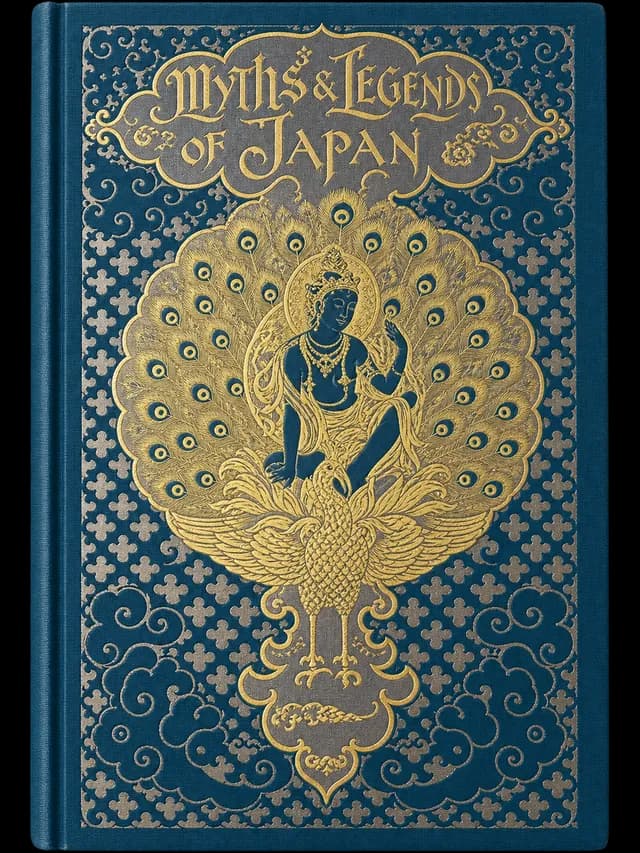
Myths and Legends of Japan
Reading note
Davis’s Death-Stone retelling preserves one named fox story.
In Ghostly Japan
Reading note
Hearn’s original pages identify the bird and the scene it recreates.
Sources
See references (9)
- Toriyama Sekien’s illustrated yōkai ↗National Diet Library, digital exhibition introducing Sekien’s printed picture books.Return to text ↑
- Hiroshige · New Year’s Eve Foxfires at the Changing Tree, Ōji ↗The Metropolitan Museum of Art, ca. 1857, catalogue and image.Return to text ↑
- Netsuke of a Kappa ↗The Metropolitan Museum of Art, Edo period, 18th century.Return to text ↑
- Two Mythical Creatures (Tengu) Carrying a Parcel ↗The Metropolitan Museum of Art, Meiji period, second half of the 19th century.Return to text ↑
- Yanagita Kunio · Tōno Monogatari, tale 58 ↗Yanagita Kunio, Tōno Monogatari (1910), Aozora Bunko transcription, tale 58.Return to text ↑
- Tengu at Mount Takao ↗Takao-san Yakuō-in, the temple’s description of its two tengu forms.Return to text ↑
- Myths and Legends of Japan, The Death-Stone, printed p. 96, Reader page 108F. Hadland Davis. Original research quotation and its historical verification retained; current Reader target mapped locally.Return to text ↑
Examine the original Library page
she resumed her original shape, that of a fox
Open the original page in Myths and Legends of Japan ↗Scan leaf 126 · F. Hadland Davis; illustrated by Evelyn Paul
- In Ghostly Japan, Reader page 204Lafcadio Hearn, In Ghostly Japan, Little, Brown, and Company, Boston, 1899. Exact consulted Library edition IMJ-0654-E001, with title page visually checked. Persistent PageIDs and current Reader positions are verified from the supplied edition. Embedded stories, translations and quotations are attributed to Hearn’s presentation unless an original source has separately been consulted.Read this page in In Ghostly Japan ↗Return to text ↑
- In Ghostly Japan, Reader page 207Lafcadio Hearn, In Ghostly Japan, Little, Brown, and Company, Boston, 1899. Exact consulted Library edition IMJ-0654-E001, with title page visually checked. Persistent PageIDs and current Reader positions are verified from the supplied edition. Embedded stories, translations and quotations are attributed to Hearn’s presentation unless an original source has separately been consulted.Read this page in In Ghostly Japan ↗Return to text ↑