Tengu
Tengu are mountain beings in Japanese folklore and religion. Explore Hearn’s story of a sacred vision and the crow-beaked and long-nosed tengu of Mount Takao.
In this article
What is a tengu?
Tengu are mountain beings in Japanese folklore and religion, often shown with wings, a beak or a long nose. A tale may give a tengu the power to transform or make an illusion. At Mount Takao, the temple honours tengu as messengers and protectors. [3][1][4][5][6][7][8]
Tengu in Yakuo-in’s Mount Takao account
Takao-san Yakuō-in presents tengu as messengers of deities and buddhas who protect the virtuous and chastise wrongdoing. Two figures outside the Izuna Gongen-dō illustrate the distinction it draws: a smaller crow-beaked tengu still in training and a long-nosed one likened to an experienced mountain ascetic, or yamabushi. [1]
In Ghostly Japan by Lafcadio Hearn
In Lafcadio Hearn’s Story of a Tengu, a priest rescues a kite from boys who are tormenting it. A monk who identifies himself as the bird offers a reward. The priest asks to see the Buddha teach at Vulture Peak. The tengu says he can recreate the assembly from memory. [3][4][5][6]
The tengu warns the priest against praying or bowing during the display. The spectacle is so convincing that the priest forgets and bows. The scene vanishes. The tengu returns with a broken wing, saying a guardian of the teaching punished him for deceiving a devout person. [6][9][7][8]
Hearn introduces the tale as a story told in the Jikkunshō and adapted for a Noh play. The tengu’s reward turns on a familiar problem in a story about performance: what happens when the person watching believes the scene is real? [3][4][6][7][8]
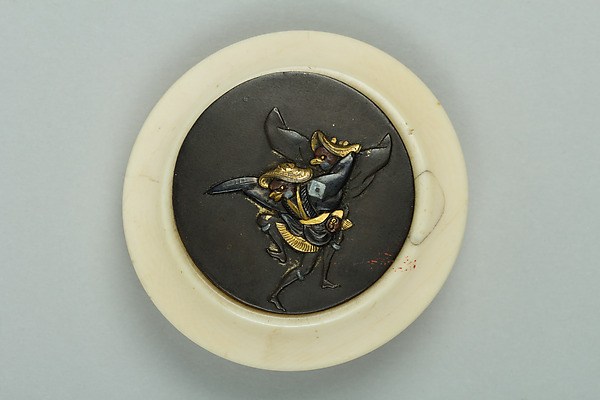
Two tengu dance in a nineteenth-century Japanese netsuke in the Metropolitan Museum of Art.
The Metropolitan Museum of Art, Edward C. Moore Collection, Bequest of Edward C. Moore, 1891, 91.1.936. Open Access CC0; resized and converted to JPEG. · Image source ↗ · CC0
The mountain messenger and the maker of visions
Mount Takao’s account explains the different faces of its two tengu through religious training and service. In Hearn’s story, a kite and a monk turn out to be the same being. What gives the tengu away is what he can do. [6][8][1][3][4][5]
Read further in the library
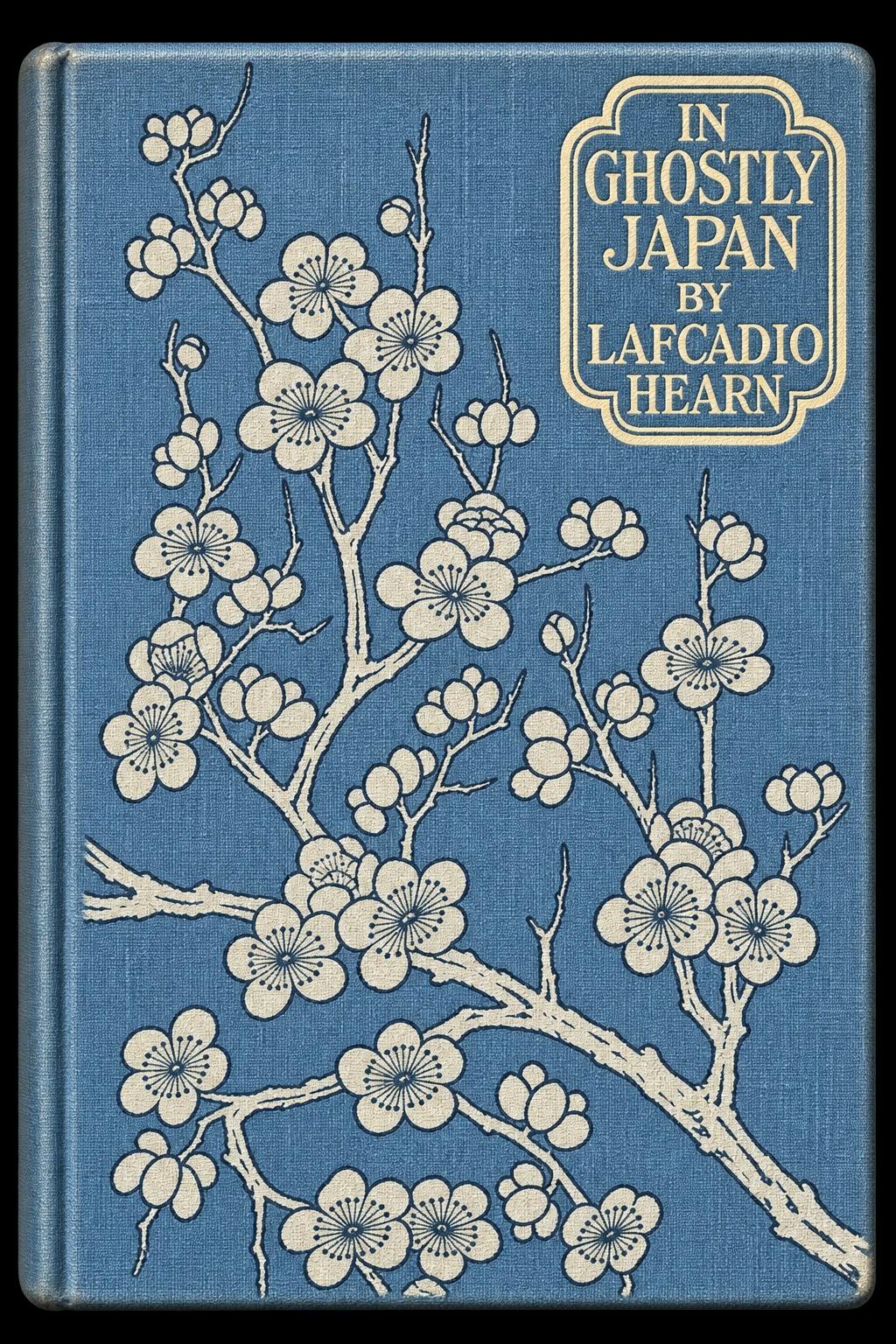
In Ghostly Japan
Reading note
The separately titled account draws on exact passages in the consulted Library edition.
Sources
See references (9)
- Takao-san Yakuo-in: The Tengu of Mount Takao ↗The temple’s own account of tengu as messengers and protectors, directly read. It describes Mount Takao’s devotional setting rather than prescribing one meaning for every tengu tale.Return to text ↑
- Unidentified Japanese artist, Netsuke of Two Tengu Dancing, 19th century ↗The Metropolitan Museum of Art, Edward C. Moore Collection, Bequest of Edward C. Moore, 1891, 91.1.936. Open Access CC0; resized and converted to JPEG.
- In Ghostly Japan, Reader page 204Lafcadio Hearn, In Ghostly Japan, Little, Brown, and Company, Boston, 1899. Exact consulted Library edition IMJ-0654-E001, with title page visually checked. Persistent PageIDs and current Reader positions are verified from the supplied edition. Embedded stories, translations and quotations are attributed to Hearn’s presentation unless an original source has separately been consulted.Read this page in In Ghostly Japan ↗Return to text ↑
- In Ghostly Japan, Reader page 205Lafcadio Hearn, In Ghostly Japan, Little, Brown, and Company, Boston, 1899. Exact consulted Library edition IMJ-0654-E001, with title page visually checked. Persistent PageIDs and current Reader positions are verified from the supplied edition. Embedded stories, translations and quotations are attributed to Hearn’s presentation unless an original source has separately been consulted.Read this page in In Ghostly Japan ↗Return to text ↑
- In Ghostly Japan, Reader page 206Lafcadio Hearn, In Ghostly Japan, Little, Brown, and Company, Boston, 1899. Exact consulted Library edition IMJ-0654-E001, with title page visually checked. Persistent PageIDs and current Reader positions are verified from the supplied edition. Embedded stories, translations and quotations are attributed to Hearn’s presentation unless an original source has separately been consulted.Read this page in In Ghostly Japan ↗Return to text ↑
- In Ghostly Japan, Reader page 207Lafcadio Hearn, In Ghostly Japan, Little, Brown, and Company, Boston, 1899. Exact consulted Library edition IMJ-0654-E001, with title page visually checked. Persistent PageIDs and current Reader positions are verified from the supplied edition. Embedded stories, translations and quotations are attributed to Hearn’s presentation unless an original source has separately been consulted.Read this page in In Ghostly Japan ↗Return to text ↑
- In Ghostly Japan, Reader page 209Lafcadio Hearn, In Ghostly Japan, Little, Brown, and Company, Boston, 1899. Exact consulted Library edition IMJ-0654-E001, with title page visually checked. Persistent PageIDs and current Reader positions are verified from the supplied edition. Embedded stories, translations and quotations are attributed to Hearn’s presentation unless an original source has separately been consulted.Read this page in In Ghostly Japan ↗Return to text ↑
- In Ghostly Japan, Reader page 210Lafcadio Hearn, In Ghostly Japan, Little, Brown, and Company, Boston, 1899. Exact consulted Library edition IMJ-0654-E001, with title page visually checked. Persistent PageIDs and current Reader positions are verified from the supplied edition. Embedded stories, translations and quotations are attributed to Hearn’s presentation unless an original source has separately been consulted.Read this page in In Ghostly Japan ↗Return to text ↑
- In Ghostly Japan, Reader page 208Lafcadio Hearn, In Ghostly Japan, Little, Brown, and Company, Boston, 1899. Exact consulted Library edition IMJ-0654-E001, with title page visually checked. Persistent PageIDs and current Reader positions are verified from the supplied edition. Embedded stories, translations and quotations are attributed to Hearn’s presentation unless an original source has separately been consulted.Read this page in In Ghostly Japan ↗Return to text ↑