Bodily disintegration and reunion
In Lumen, an imagined being can fall apart and reunite through will. Compare Flammarion’s Orionic organism with J. S. M. Ward’s temporary astral form.
In this article
Understanding bodily disintegration and reunion
In Camille Flammarion’s Lumen, a living body can scatter into its constituent parts and be brought together again. Disintegration can follow fatigue, annoyance or discord. The remaining centre then directs the parts back into place. [2][3][4][5][6]
Lumen by Camille Flammarion
In Lumen, Camille Flammarion imagines beings near Orion whose bodies branch like candelabra or tall saguaro cacti. One moves its branches and comes apart. The narrator says the personal existence of the whole ends at that moment, but a directing cerebral molecule remains. [7][8][2][3][4][6]
The dialogue compares bodily parts to provinces with some self-government under a common authority. Quaerens calls this arrangement republican, and Lumen stresses that it is governed by law. The analogy gives the smaller centres a part in the life of the organism. [4][5][6]
The cerebral molecule can draw the others back like a magnet attracting filings. The act may begin with a wish. Such reunions can recur over a lifetime, including after an involuntary loss of coordination. [6][3][14]
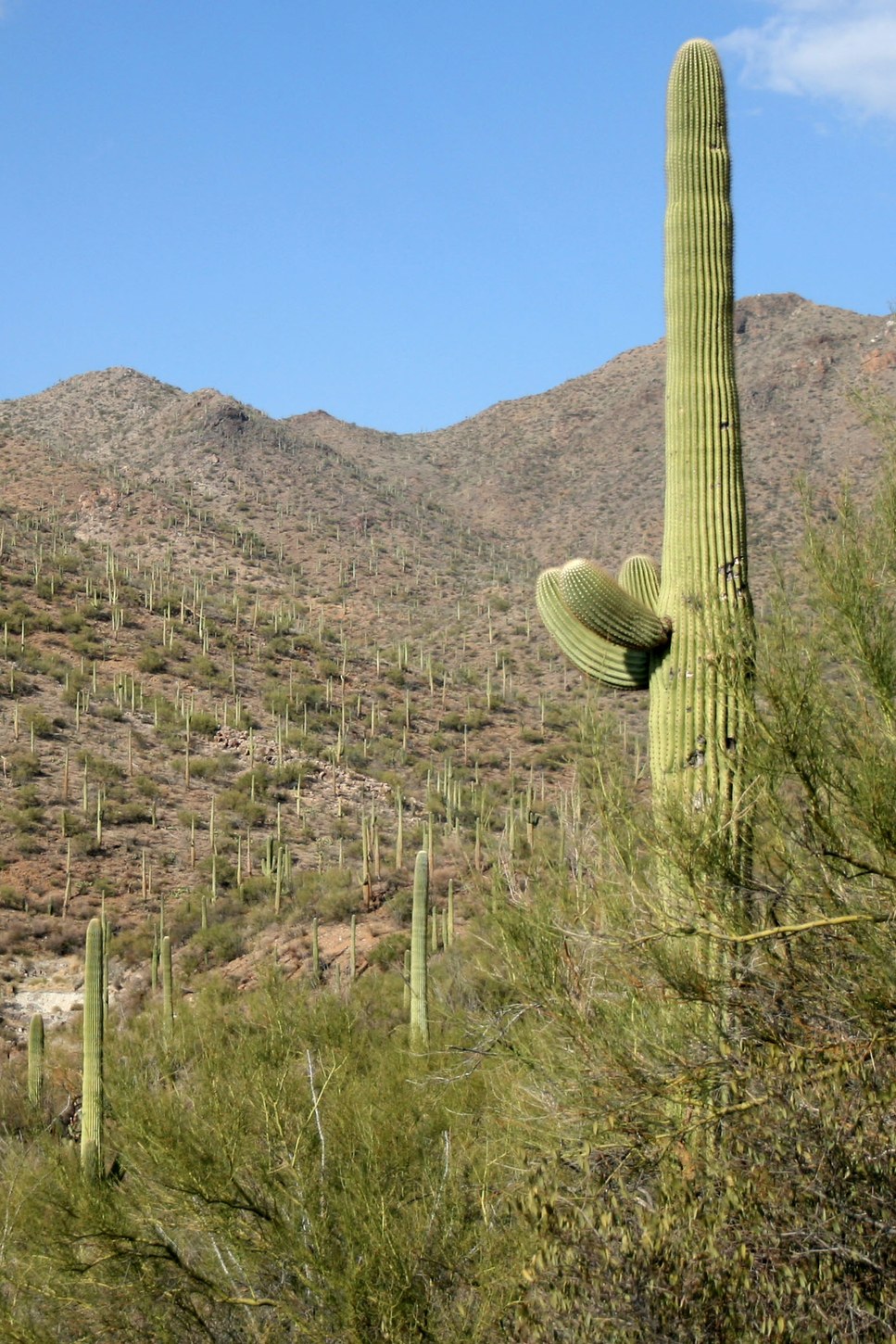
Saguaro cactus, photographed by Todd M. Edgar for the National Park Service. Flammarion likens the Orionic beings’ tall, branched shape to the plant he calls Cereus giganteus.
NPS Photo / Todd M. Edgar. · Image source ↗ · Public Domain
A Subaltern in Spirit Land by J. S. M. Ward
In A Subaltern in Spirit Land, J. S. M. Ward’s H. J. L. says he must make a temporary covering in order to visit after his earlier astral body dissolved. The account distinguishes the continuing person, the spiritual form and a covering that can be made or left behind. [9][10][11][12][13]
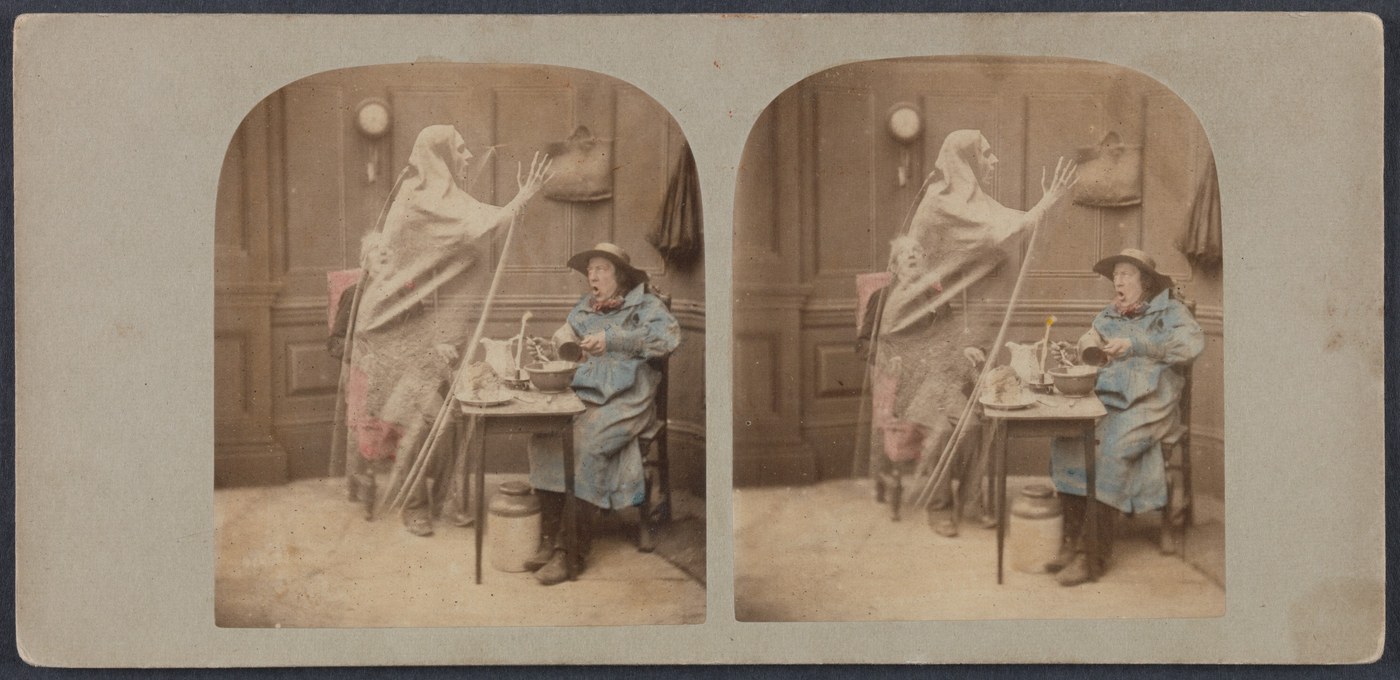
The Ghost in the Stereoscope (ca. 1856), published by the London Stereoscopic Company. The photograph stages a translucent apparition.
The Metropolitan Museum of Art. Gift of Weston J. Naef, in memory of Kathleen W. Naef and Weston J. Naef Sr., 1982. Accession 1982.1182.1284. Public Domain (CC0). · Image source ↗ · CC0
See references (5)
Reuniting a body and making a temporary form
Flammarion reunites the constituent parts of the same organism. Ward’s character makes a covering suited to an encounter after leaving an earlier body. Both stories let a person persist through a change of form while giving the new form a different origin. [9][10][11][12][13][3][4][6]
See references (8)
- Lumen, Reader page 206
- Lumen, Reader page 207
- Lumen, Reader page 209
- A Subaltern in Spirit Land, printed p. 6, Reader page 21
- A Subaltern in Spirit Land, printed p. 34, Reader page 49
- A Subaltern in Spirit Land, printed p. 35, Reader page 50
- A Subaltern in Spirit Land, printed p. 42, Reader page 57
- A Subaltern in Spirit Land, printed p. 43, Reader page 58
Read further in the library

Lumen
Reading note
The separately titled account draws on exact passages in the consulted Library edition.
A Subaltern in Spirit Land: A Sequel to Gone West
Reading note
Separately attributed comparison with exact previously researched Library passages.
Sources
See references (14)
- The Ghost in the Stereoscope, ca. 1856 ↗The Metropolitan Museum of Art. Gift of Weston J. Naef, in memory of Kathleen W. Naef and Weston J. Naef Sr., 1982. Accession 1982.1182.1284. Public Domain (CC0).
- Lumen, Reader page 205Camille Flammarion, Lumen, authorised English translation by A. A. M. and R. M., Dodd, Mead and Company, New York, 1897. Exact selected Library edition IMJ-0398-E001. Lumen and Quaerens are speakers in the dialogue; claims made by the narrator are attributed to this text. Original PageIDs and current Reader positions are verified separately from printed pagination.Read this page in Lumen ↗Return to text ↑
- Lumen, Reader page 206Camille Flammarion, Lumen, authorised English translation by A. A. M. and R. M., Dodd, Mead and Company, New York, 1897. Exact selected Library edition IMJ-0398-E001. Lumen and Quaerens are speakers in the dialogue; claims made by the narrator are attributed to this text. Original PageIDs and current Reader positions are verified separately from printed pagination.Read this page in Lumen ↗Return to text ↑
- Lumen, Reader page 207Camille Flammarion, Lumen, authorised English translation by A. A. M. and R. M., Dodd, Mead and Company, New York, 1897. Exact selected Library edition IMJ-0398-E001. Lumen and Quaerens are speakers in the dialogue; claims made by the narrator are attributed to this text. Original PageIDs and current Reader positions are verified separately from printed pagination.Read this page in Lumen ↗Return to text ↑
- Lumen, Reader page 208Camille Flammarion, Lumen, authorised English translation by A. A. M. and R. M., Dodd, Mead and Company, New York, 1897. Exact selected Library edition IMJ-0398-E001. Lumen and Quaerens are speakers in the dialogue; claims made by the narrator are attributed to this text. Original PageIDs and current Reader positions are verified separately from printed pagination.Read this page in Lumen ↗Return to text ↑
- Lumen, Reader page 209Camille Flammarion, Lumen, authorised English translation by A. A. M. and R. M., Dodd, Mead and Company, New York, 1897. Exact selected Library edition IMJ-0398-E001. Lumen and Quaerens are speakers in the dialogue; claims made by the narrator are attributed to this text. Original PageIDs and current Reader positions are verified separately from printed pagination.Read this page in Lumen ↗Return to text ↑
- Lumen, Reader page 203Camille Flammarion, Lumen, authorised English translation by A. A. M. and R. M., Dodd, Mead and Company, New York, 1897. Exact selected Library edition IMJ-0398-E001. Lumen and Quaerens are speakers in the dialogue; claims made by the narrator are attributed to this text. Original PageIDs and current Reader positions are verified separately from printed pagination.Read this page in Lumen ↗Return to text ↑
- Lumen, Reader page 204Camille Flammarion, Lumen, authorised English translation by A. A. M. and R. M., Dodd, Mead and Company, New York, 1897. Exact selected Library edition IMJ-0398-E001. Lumen and Quaerens are speakers in the dialogue; claims made by the narrator are attributed to this text. Original PageIDs and current Reader positions are verified separately from printed pagination.Read this page in Lumen ↗Return to text ↑
- A Subaltern in Spirit Land, printed p. 6, Reader page 21J. S. M. Ward, A Subaltern in Spirit Land: A Sequel to Gone West, William Rider & Son, 1920.Read this page in A Subaltern in Spirit Land: A Sequel to Gone West ↗Return to text ↑
- A Subaltern in Spirit Land, printed p. 34, Reader page 49J. S. M. Ward, A Subaltern in Spirit Land: A Sequel to Gone West, William Rider & Son, 1920.Read this page in A Subaltern in Spirit Land: A Sequel to Gone West ↗Return to text ↑
- A Subaltern in Spirit Land, printed p. 35, Reader page 50J. S. M. Ward, A Subaltern in Spirit Land: A Sequel to Gone West, William Rider & Son, 1920.Read this page in A Subaltern in Spirit Land: A Sequel to Gone West ↗Return to text ↑
- A Subaltern in Spirit Land, printed p. 42, Reader page 57J. S. M. Ward, A Subaltern in Spirit Land: A Sequel to Gone West, William Rider & Son, 1920.Read this page in A Subaltern in Spirit Land: A Sequel to Gone West ↗Return to text ↑
- A Subaltern in Spirit Land, printed p. 43, Reader page 58J. S. M. Ward, A Subaltern in Spirit Land: A Sequel to Gone West, William Rider & Son, 1920.Read this page in A Subaltern in Spirit Land: A Sequel to Gone West ↗Return to text ↑
- Saguaro cactus, Saguaro National Park, 2011, National Park Service ↗NPS Photo / Todd M. Edgar.Return to text ↑