Varuna
Varuna is a Vedic god of cosmic order, wrongdoing and the waters. Read hymns of forgiveness and binding, and see the noose in historical art.
In this article
Who is Varuna?
Varuna is a Vedic god associated with cosmic order, truth and the power to hold people to account. One hymn asks him to release a worshipper from wrongdoing. Another calls on his snares to catch a liar. Epic literature also gives him a court beneath the sea. [1][2][3][4][5]
See references (5)
Varuna in Rigveda 7.86
Rigveda 7.86 opens with Varuna setting heaven and earth apart. In Ralph T. H. Griffith’s translation, the speaker then asks what has estranged him from the god and seeks release from wrongs inherited from his ancestors and wrongs of his own. [1]
Verse 6 names conditions that can lead to wrongdoing, including thoughtlessness, wine, dice and anger. The speaker closes by asking for wisdom and well-being in work and rest. [1]
Varuna in Atharvaveda 4.16
In Maurice Bloomfield’s translation of Atharvaveda 4.16, Varuna is present even when two people conspire in secret. Thousand-eyed spies watch the earth. The hymn asks that his snares catch the person who speaks falsely and let the truthful person go. Its closing verses direct the binding at a particular opponent. [2]
Indian Myth and Legend by Donald A. Mackenzie
In Indian Myth and Legend, Donald A. Mackenzie puts Varuna’s knowledge of hidden acts alongside his regulation of the sun, stars, winds and rivers. He contrasts some prayers for Varuna’s mercy with prayers for prosperity addressed to Indra. [6][7][8]
On printed page 27 (Library Reader page 88), Mackenzie labels the passage about Varuna’s watchers and snares Rigveda IV.16. Its wording corresponds to Atharvaveda 4.16, especially verses 4–6. [7][2]
Mackenzie considers Varuna alongside Mitra and traces how he thinks Varuna became a god of the ocean. The epic passage he recounts has a court beneath the sea, with pale walls, jewel-like trees and a throne Varuna shares with his queen. [8][9][10][4][5]
See references (8)
- Atharvaveda 4.16, verses 1–9, translated by Maurice Bloomfield, Sacred Books of the East 42 (1897)
- Indian Myth and Legend, Reader page 92
- Indian Myth and Legend, Reader page 122
- Indian Myth and Legend, Reader page 86
- Indian Myth and Legend, Reader page 88
- Indian Myth and Legend, Reader page 89
- Indian Myth and Legend, Reader page 90
- Indian Myth and Legend, Reader page 91
Varuna in historical art
In the Met’s sandstone image from the sixth to eighth century, Varuna carries a looped noose. He is seated on a bird the museum identifies as a swan. The figure gives a visible form to the binding imagery used in the Atharvaveda. [3]
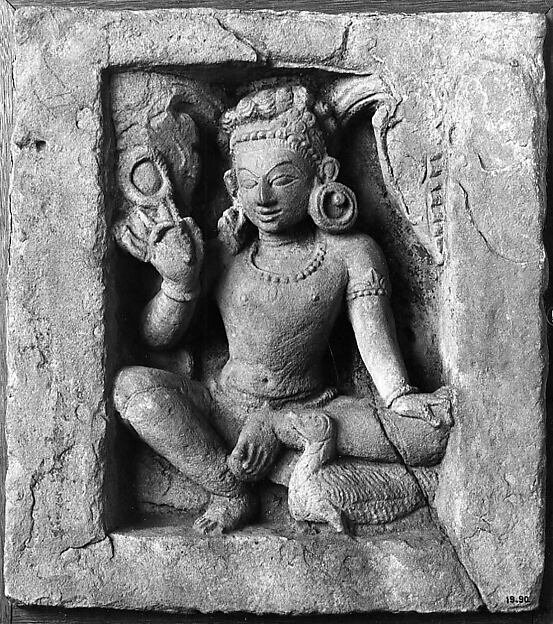
Varuna raises his noose while riding a swan in this sandstone carving from India, sixth to eighth century.
The Metropolitan Museum of Art, Rogers Fund, 1919, 19.90. Open Access CC0; resized and converted to JPEG. · Image source ↗ · CC0
Binding and release
The speaker in the Rigveda seeks release from his own wrongdoing. The speaker in the Atharvaveda asks Varuna to bind someone who speaks falsely. The two hymns address the same power from opposite positions. [7][1][2][5][3]
See references (5)
Read further in the library
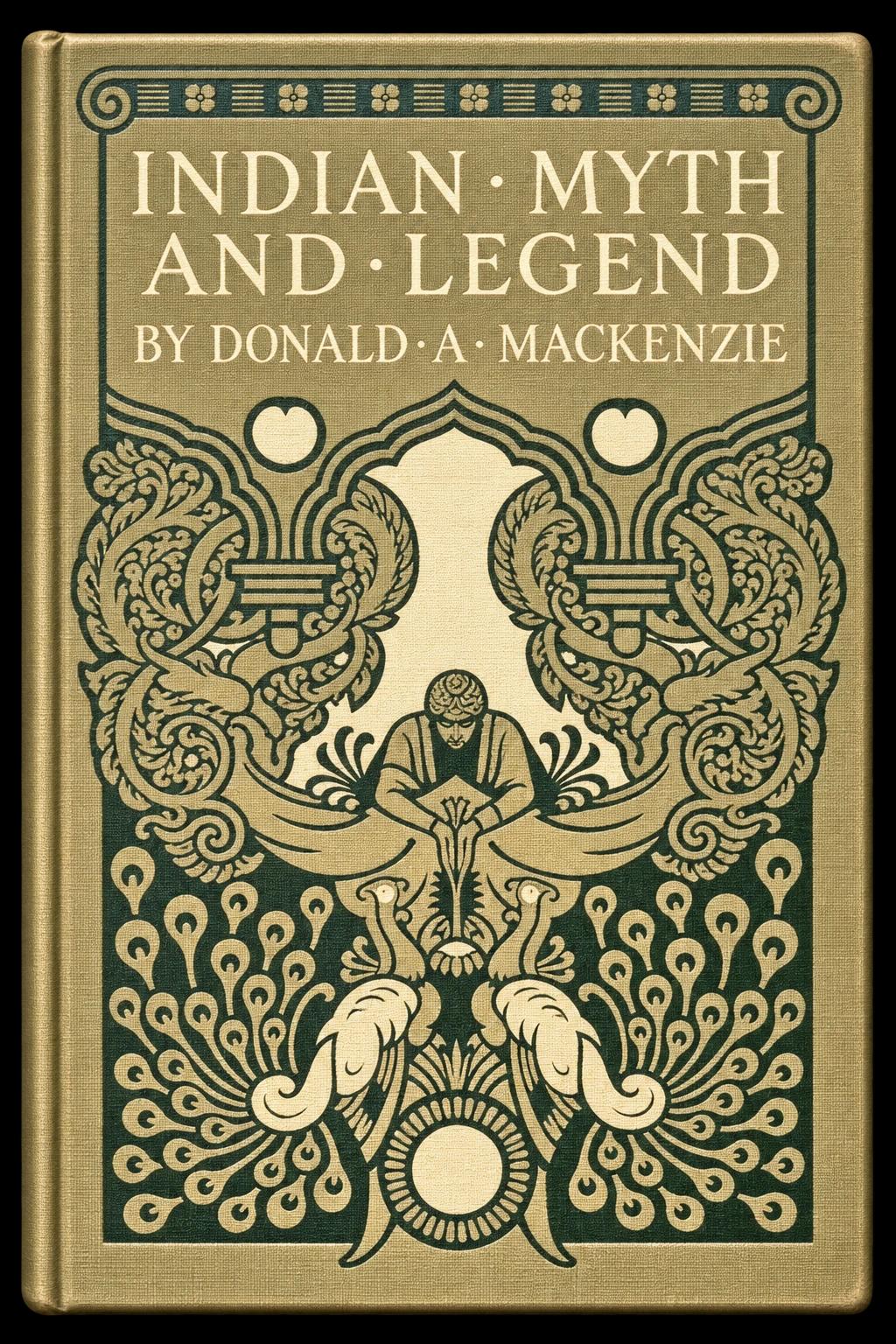
Indian Myth and Legend
Reading note
The separately titled account draws on exact passages in the consulted Library edition.
Sources
See references (10)
- Rigveda 7.86, verses 1–8, translated by Ralph T. H. Griffith ↗Primary hymn, complete eight verses directly read. Historical English wording is attributed to Griffith; this is not a claim to have consulted all Varuna hymns. Cached locally as primary-rv-7-86.html.Return to text ↑
- Atharvaveda 4.16, verses 1–9, translated by Maurice Bloomfield, Sacred Books of the East 42 (1897) ↗Only hymn IV.16, all nine verses, directly read in this electronic transcription of Bloomfield’s anthology. Verses 4–6 identify the thousand-eyed watchers and snares. Do not claim the entire anthology was read. Cached as primary-bloomfield-av.html.Return to text ↑
- Varuna Holding a Noose and Riding a Swan, 6th–8th century ↗The Metropolitan Museum of Art, Rogers Fund, 1919, 19.90. Open Access CC0; resized and converted to JPEG.Return to text ↑
- Indian Myth and Legend, Reader page 92Donald A. Mackenzie, Indian Myth and Legend, Gresham Publishing Company Limited, London, undated consulted impression. Library edition IMJ-0649-E001. Persistent PageIDs and current Reader positions verified against the supplied PDF and cached Reader manifest. Embedded translations are Mackenzie’s presentation unless a separately consulted primary text is named.Read this page in Indian Myth and Legend ↗Return to text ↑
- Indian Myth and Legend, Reader page 122Donald A. Mackenzie, Indian Myth and Legend, Gresham Publishing Company Limited, London, undated consulted impression. Library edition IMJ-0649-E001. Persistent PageIDs and current Reader positions verified against the supplied PDF and cached Reader manifest. Embedded translations are Mackenzie’s presentation unless a separately consulted primary text is named.Read this page in Indian Myth and Legend ↗Return to text ↑
- Indian Myth and Legend, Reader page 86Donald A. Mackenzie, Indian Myth and Legend, Gresham Publishing Company Limited, London, undated consulted impression. Library edition IMJ-0649-E001. Persistent PageIDs and current Reader positions verified against the supplied PDF and cached Reader manifest. Embedded translations are Mackenzie’s presentation unless a separately consulted primary text is named.Read this page in Indian Myth and Legend ↗Return to text ↑
- Indian Myth and Legend, Reader page 88Donald A. Mackenzie, Indian Myth and Legend, Gresham Publishing Company Limited, London, undated consulted impression. Library edition IMJ-0649-E001. Persistent PageIDs and current Reader positions verified against the supplied PDF and cached Reader manifest. Embedded translations are Mackenzie’s presentation unless a separately consulted primary text is named.Read this page in Indian Myth and Legend ↗Return to text ↑
- Indian Myth and Legend, Reader page 89Donald A. Mackenzie, Indian Myth and Legend, Gresham Publishing Company Limited, London, undated consulted impression. Library edition IMJ-0649-E001. Persistent PageIDs and current Reader positions verified against the supplied PDF and cached Reader manifest. Embedded translations are Mackenzie’s presentation unless a separately consulted primary text is named.Read this page in Indian Myth and Legend ↗Return to text ↑
- Indian Myth and Legend, Reader page 90Donald A. Mackenzie, Indian Myth and Legend, Gresham Publishing Company Limited, London, undated consulted impression. Library edition IMJ-0649-E001. Persistent PageIDs and current Reader positions verified against the supplied PDF and cached Reader manifest. Embedded translations are Mackenzie’s presentation unless a separately consulted primary text is named.Read this page in Indian Myth and Legend ↗Return to text ↑
- Indian Myth and Legend, Reader page 91Donald A. Mackenzie, Indian Myth and Legend, Gresham Publishing Company Limited, London, undated consulted impression. Library edition IMJ-0649-E001. Persistent PageIDs and current Reader positions verified against the supplied PDF and cached Reader manifest. Embedded translations are Mackenzie’s presentation unless a separately consulted primary text is named.Read this page in Indian Myth and Legend ↗Return to text ↑