The Ten Sefirot on the Tree of Life in Kabbalah
Explore the ten sefirot on a labelled Tree of Life. Learn how they are counted and how Jewish, Christian and Hermetic sources use the diagram.
In this article
Read the names and their positions
This diagram follows the enumeration that includes Keter. Compare it with the manuscript and printed Trees lower on the page.
Find the ten sefirot on the Tree of Life
Choose a name to read its English gloss and an association from the sources. The lines show the three columns of this arrangement.
- Keter · Crown
- The crown at the head of this arrangement. Keter is counted here, following the enumeration that leaves Daʿat outside the ten.
- Chokhmah · Wisdom
- Patach Eliyahu associates wisdom with the brain and thought.
- Binah · Understanding
- The same discourse places understanding in the heart, pairing it with wisdom.
- Chesed · Lovingkindness
- Kindness or generosity. Patach Eliyahu pictures it as the right arm.
- Gevurah · Strength
- Strength with associations of judgment and restraint. Patach Eliyahu pictures it as the left arm.
- Tiferet · Beauty
- The body or torso in the discourse’s imagery. It occupies the middle of the arrangement here.
- Netzach · Endurance
- Also rendered victory. Patach Eliyahu identifies Netzach and Hod together with the two legs.
- Hod · Splendour
- Also rendered majesty. Its position here sits across from Netzach.
- Yesod · Foundation
- Patach Eliyahu connects the foundation with the sign of the covenant.
- Malkhut · Kingship
- The lowest position in this diagram. The same discourse pictures Malkhut as the mouth and links it to Oral Torah.
What does the Tree of Life show?
In Kabbalah, a Tree of Life is a diagram of the relationships among the ten sefirot, the powers or qualities through which Kabbalists describe divine life and how it appears in the world. Some historical diagrams give them branches and a trunk. Others arrange them in circles linked by lines. [1][2]
Sefer Yetzirah opens with ten sefirot and twenty-two Hebrew letters. The familiar named diagram took shape later. The Ilanot Project’s catalogue shows the variety of ways Kabbalists mapped the relationships among the sefirot. [1][2]
In the Jewish sources cited here, a sefirah is one of the ten qualities or emanations through which Kabbalists describe divine action and its relationship to the world. The singular is sefirah and the plural is sefirot. Sefer Yetzirah insists on the number ten. Tikkunei Zohar gives readers another way into the subject by imagining the sefirot in relation to the human body. The diagram above uses the familiar ten-name arrangement with Keter at the top. [22][23][26]
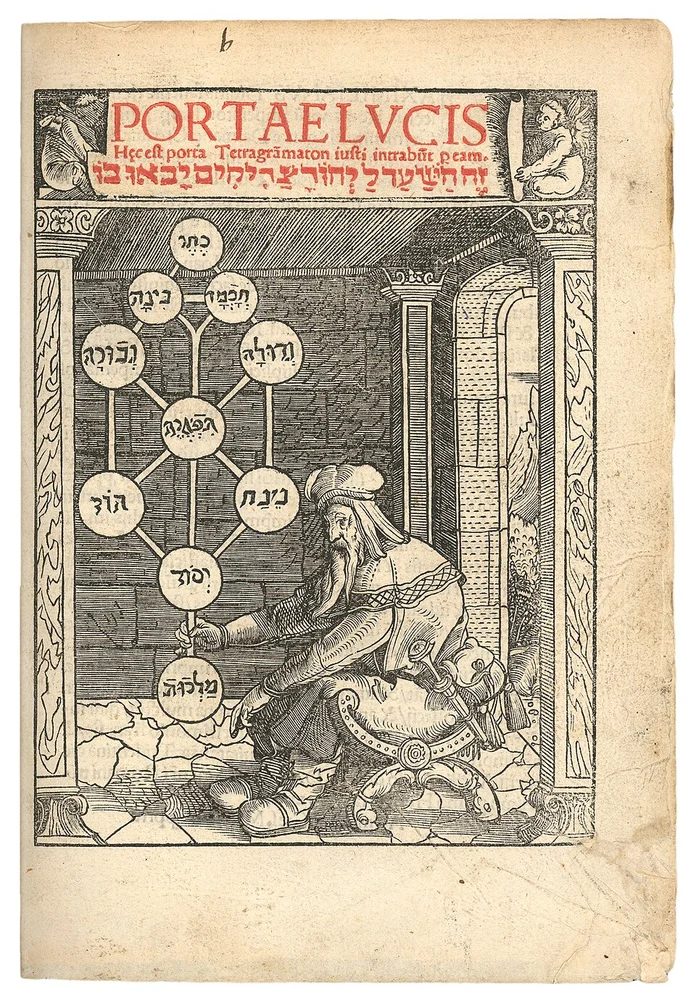
A tree of the sefirot on the title page of the Latin Porta Lucis, 1516. The woodcut is one historical way to arrange the ten on a trunk and branches.
Joseph Gikatilla, Porta Lucis, abridged Latin translation by Paulus Ricius (Johann Miller, Augsburg, 1516). University Library of Nijmegen, via Wikimedia Commons. · Image source ↗ · Public Domain
How to read the ten names
In the familiar arrangement, Keter is above Chokhmah and Binah. Beneath them come Chesed, Gevurah and Tiferet, then Netzach, Hod and Yesod, with Malkhut below. The chart pairs the Hebrew names with concise English glosses. Those words are a way to enter the source. It is worth reading the images and relationships the source gives the names before carrying a gloss from one tradition into another. [23][26][25]
Patach Eliyahu gives several of the terms bodily images. It associates Chesed and Gevurah with the right and left arms, Tiferet with the body, and Netzach and Hod with the legs. Later in the same description it speaks of Yesod in connection with the covenant and Malkhut as the mouth, connected with Oral Torah. These pairings belong to this discourse. They bring the relationships into view without assigning an independent divine being to each name. [23][24][26]
Why some diagrams show Daʿat
Daʿat means knowledge. A diagram may show its position while treating it differently from the ten named positions. Chabad’s account contrasts Moses Cordovero’s enumeration, which counts Keter and leaves Daʿat outside the count, with cases in the Lurianic tradition where Daʿat is counted and Keter is left outside the enumeration. Which term is counted depends on the system and the aspect being described. The ten-number rule remains the point of departure. [25][22]
How historical Trees of Life differ
A historical ilan can be much more than a set of circles. In the Cretan parchment now at the Vatican, the medallions contain names and associations, and the spaces around them carry longer commentary. The catalogue records a 1451 colophon on the verso and describes how the scribe treats position and connecting channels as part of the reading. British Library Or 6996 collects diagrams with several subjects, including the ten sefirot and divine configurations. [27][28][2]
Compare those records with the first image here. It comes from Paulus Ricius’s Latin edition of a work by the Jewish kabbalist Joseph Gikatilla. Its tree literally branches. The second image, by the Jesuit Athanasius Kircher, places labelled circles along a path network. These are two specific printed receptions. The Hebrew manuscript evidence helps place them in a longer, varied history of drawing and reading such relationships. [3][16][27]
Magick Without Tears by Aleister Crowley
In Magick Without Tears, Aleister Crowley uses the ten sefirot and twenty-two paths to organise correspondences. Knowing where an idea belongs helps a reader recall other associations. He also urges readers to compile a personal dictionary of numbers. [9][10][11][12]
A later letter compares this work to learning an alphabet. You learn signs separately until you can read their relationships. The notes in the digital edition discuss redrawn diagrams, giving context to the figures that accompany that letter. [13][14][15]
Book 4 by Aleister Crowley, appendix V
In appendix V of Book 4, Aleister Crowley uses a numbered key to align columns of Hebrew letters, planets and other symbols. The appendix identifies the tables as selections from 777 with additions. [8]
The painted tree in The Goat-Foot God
In Dion Fortune’s The Goat-Foot God, Hugh sees a green tree on the eastern chapel wall. It has ten coloured fruits: three groups of three and one lower down. A stone pedestal below it appears to have been enclosed by the old altar. [4][5]
When Hugh returns in the dark, he remembers Jelkes explaining the tree in terms of heaven, earth and the worlds between. The tree is on the wall above the altar site, and the zodiac is underfoot. Hugh comes to know both by moving through the room. [6][7]
The Kingdom of the Gods by Geoffrey Hodson
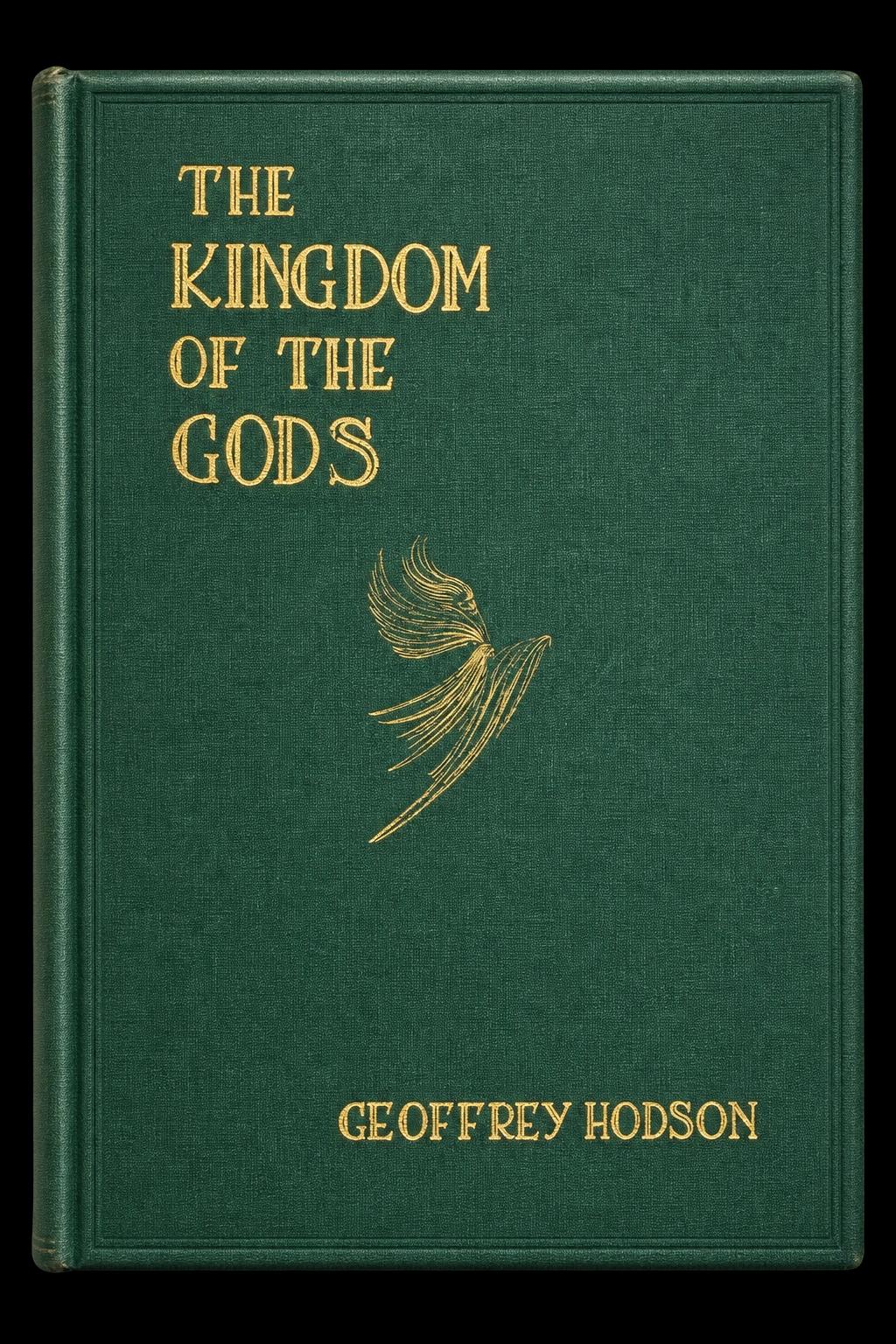
In The Kingdom of the Gods, Geoffrey Hodson assigns the same positions to four worlds. Divine names belong to Atziluth, archangels to Briah, and angelic hosts to Yetzirah. In Assiah, the physical world, he assigns planets and elements. [17][18]
Hodson describes Keter, the Crown, as the first concentration of limitless light. In his row for Tiferet he includes the spiritual Sun, the Malachim and Michael. The table brings Jewish, Christian and Theosophical terms into one set of correspondences. [19][20][21]
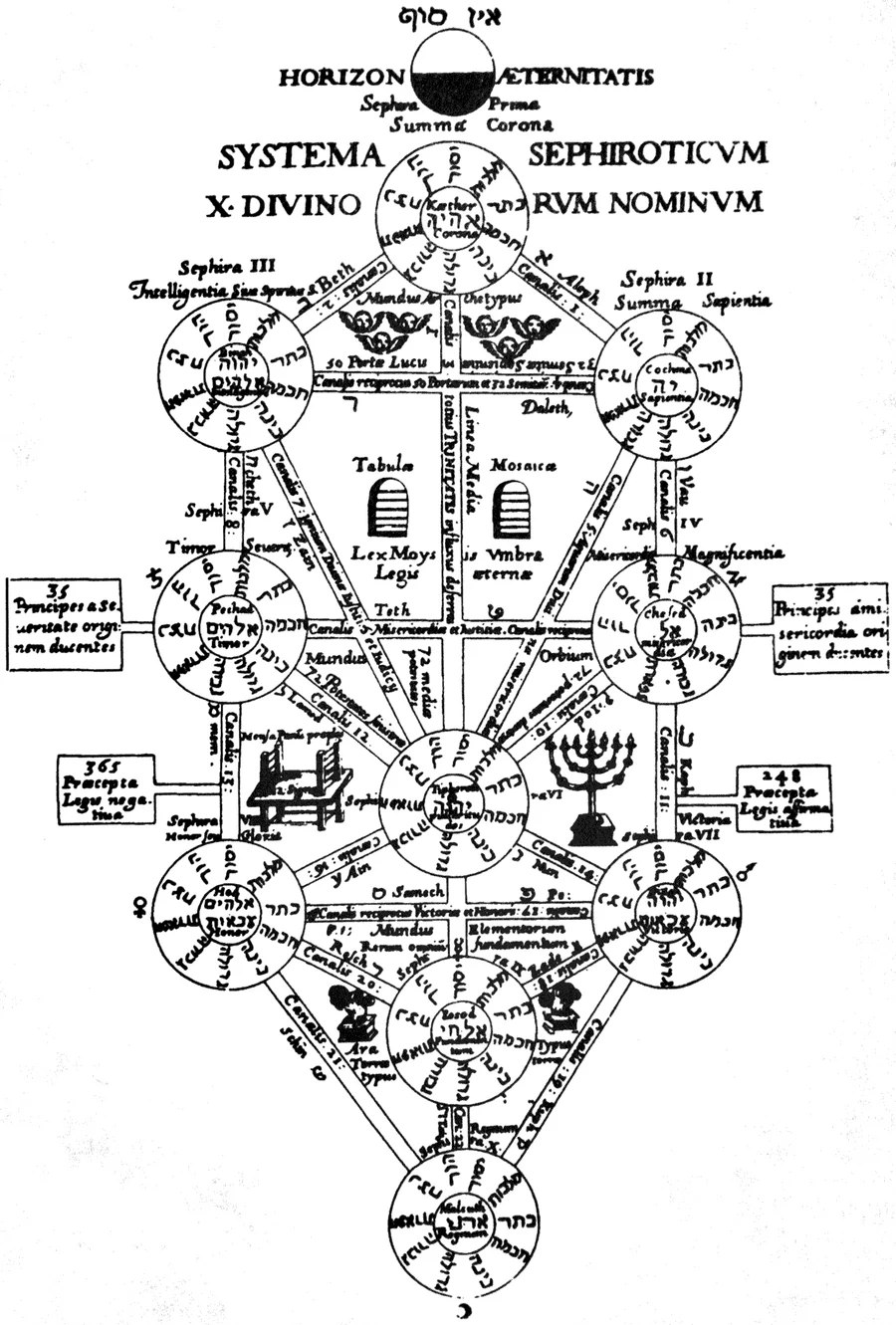
Athanasius Kircher’s seventeenth-century Tree is an example of Christian Kabbalah. Hodson, writing in a different Theosophical context, gives the same named positions additional correspondences.
Athanasius Kircher, Oedipus Aegyptiacus. Photograph released into the public domain by Fuzzypeg via Wikimedia Commons. · Image source ↗ · Public Domain
A chapel painting, a memory aid and a table
Historical Jewish diagrams vary in form and use. Fortune makes her tree part of a chapel Hugh has to interpret. Crowley uses it to teach readers where related ideas belong, while Hodson’s table assigns a different kind of being or influence to each world. The same ten positions let each writer organise something different. [2][4][5][6][8][9][10][12][13][14][17][18][20][21]
Read the old titles and settings before comparing the tables. The Latin Porta Lucis and Kircher’s engraving belong to different moments of Christian reception. Crowley’s numerical key, Fortune’s fictional chapel and Hodson’s four-world table then use the vocabulary for distinct modern purposes. To compare them accurately, pick one term such as Tiferet, read its bodily image in Patach Eliyahu, then follow Hodson’s explicitly labelled table. [23][3][16][8][4][18]
See references (17)
- The Ilanot Project, Kabbalistic diagrams
- Tree of the sefirot on the title page of Porta Lucis
- The Goat-Foot God, Reader page 172
- The Goat-Foot God, Reader page 173
- The Goat-Foot God, Reader page 239
- Book 4, appendix V, principal Qabalistic correspondences, tables I–IV
- Magick Without Tears, Reader page 34
- Magick Without Tears, Reader page 35
- Magick Without Tears, Reader page 37
- Magick Without Tears, Reader page 264
- Magick Without Tears, Reader page 265
- Athanasius Kircher, Tree of Sephiroth, Oedipus Aegyptiacus (1652)
- The Kingdom of the Gods, Reader page 129
- The Kingdom of the Gods, Reader page 130
- The Kingdom of the Gods, Reader page 142
- The Kingdom of the Gods, Reader page 143
- Tikkunei Zohar 17a · Patach Eliyahu
Read further in the library
The Goat-Foot God
Reading note
The separately titled account draws on exact passages in the consulted Library edition.
Magick Without Tears
Reading note
The separately titled account draws on exact passages in the consulted Library edition.
The Kingdom of the Gods
Reading note
The separately titled account draws on exact passages in the consulted Library edition.
Sources
See references (28)
- Sefer Yetzirah, chapter 1 ↗Sefer Yetzirah, chapter 1, Sefaria parallel texts and translations.Return to text ↑
- The Ilanot Project, Kabbalistic diagrams ↗Ilanot Project, University of Haifa, research on historical Kabbalistic diagrams and manuscripts.Return to text ↑
- Tree of the sefirot on the title page of Porta Lucis ↗Joseph Gikatilla, Porta Lucis, abridged Latin translation by Paulus Ricius (Johann Miller, Augsburg, 1516). University Library of Nijmegen, via Wikimedia Commons.Return to text ↑
- The Goat-Foot God, Reader page 172Dion Fortune, The Goat-Foot God. Undated digital Library edition IMJ-0643-E001. Numbered references use the Library Reader sequence.Read this page in The Goat-Foot God ↗Return to text ↑
- The Goat-Foot God, Reader page 173Dion Fortune, The Goat-Foot God. Undated digital Library edition IMJ-0643-E001. Numbered references use the Library Reader sequence.Read this page in The Goat-Foot God ↗Return to text ↑
- The Goat-Foot God, Reader page 239Dion Fortune, The Goat-Foot God. Undated digital Library edition IMJ-0643-E001. Numbered references use the Library Reader sequence.Read this page in The Goat-Foot God ↗Return to text ↑
- The Goat-Foot God, Reader page 240Dion Fortune, The Goat-Foot God. Undated digital Library edition IMJ-0643-E001. Numbered references use the Library Reader sequence.Read this page in The Goat-Foot God ↗Return to text ↑
- Book 4, appendix V, principal Qabalistic correspondences, tables I–IV ↗Aleister Crowley, Book 4, appendix V. Tables reprinted with additions from 777. Hermetic Library transcription.Return to text ↑
- Magick Without Tears, Reader page 34Aleister Crowley, Magick Without Tears, undated digital Library edition IMJ-0641-E001. Links use the current Library Reader sequence.Read this page in Magick Without Tears ↗Return to text ↑
- Magick Without Tears, Reader page 35Aleister Crowley, Magick Without Tears, undated digital Library edition IMJ-0641-E001. Links use the current Library Reader sequence.Read this page in Magick Without Tears ↗Return to text ↑
- Magick Without Tears, Reader page 36Aleister Crowley, Magick Without Tears, undated digital Library edition IMJ-0641-E001. Links use the current Library Reader sequence.Read this page in Magick Without Tears ↗Return to text ↑
- Magick Without Tears, Reader page 37Aleister Crowley, Magick Without Tears, undated digital Library edition IMJ-0641-E001. Links use the current Library Reader sequence.Read this page in Magick Without Tears ↗Return to text ↑
- Magick Without Tears, Reader page 264Aleister Crowley, Magick Without Tears, undated digital Library edition IMJ-0641-E001. Links use the current Library Reader sequence.Read this page in Magick Without Tears ↗Return to text ↑
- Magick Without Tears, Reader page 265Aleister Crowley, Magick Without Tears, undated digital Library edition IMJ-0641-E001. Links use the current Library Reader sequence.Read this page in Magick Without Tears ↗Return to text ↑
- Magick Without Tears, Reader page 266Aleister Crowley, Magick Without Tears, undated digital Library edition IMJ-0641-E001. Links use the current Library Reader sequence.Read this page in Magick Without Tears ↗Return to text ↑
- Athanasius Kircher, Tree of Sephiroth, Oedipus Aegyptiacus (1652) ↗Athanasius Kircher, Oedipus Aegyptiacus. Photograph released into the public domain by Fuzzypeg via Wikimedia Commons.Return to text ↑
- The Kingdom of the Gods, Reader page 129Geoffrey Hodson, The Kingdom of the Gods, Theosophical Publishing House, first published 1952, thirteenth reprint 2007. Lumitheca Library edition IMJ-0606-E001.Read this page in The Kingdom of the Gods ↗Return to text ↑
- The Kingdom of the Gods, Reader page 130Geoffrey Hodson, The Kingdom of the Gods, Theosophical Publishing House, first published 1952, thirteenth reprint 2007. Lumitheca Library edition IMJ-0606-E001.Read this page in The Kingdom of the Gods ↗Return to text ↑
- The Kingdom of the Gods, Reader page 131Geoffrey Hodson, The Kingdom of the Gods, Theosophical Publishing House, first published 1952, thirteenth reprint 2007. Lumitheca Library edition IMJ-0606-E001.Read this page in The Kingdom of the Gods ↗Return to text ↑
- The Kingdom of the Gods, Reader page 142Geoffrey Hodson, The Kingdom of the Gods, Theosophical Publishing House, first published 1952, thirteenth reprint 2007. Lumitheca Library edition IMJ-0606-E001.Read this page in The Kingdom of the Gods ↗Return to text ↑
- The Kingdom of the Gods, Reader page 143Geoffrey Hodson, The Kingdom of the Gods, Theosophical Publishing House, first published 1952, thirteenth reprint 2007. Lumitheca Library edition IMJ-0606-E001.Read this page in The Kingdom of the Gods ↗Return to text ↑
- Sefer Yetzirah 1:4 · The count of ten ↗Gra version of Sefer Yetzirah, Hebrew and Aryeh Kaplan’s translation at Sefaria.Return to text ↑
- Tikkunei Zohar 17a · Patach Eliyahu ↗The introductory discourse at folio 17a, Aramaic and English at Sefaria.Return to text ↑
- Patach Eliyahu · Avraham Sutton’s translation ↗Chabad presentation of the text, translation and context for its recitation.Return to text ↑
- Two Systems of Ten Sefirot · Counting Keter or Daʿat ↗Chabad discussion of Moses Cordovero and Isaac Luria, with specific textual references.Return to text ↑
- The Sefirot · A Jewish explanation of the terms ↗Chabad explanation of the qualities and alternate enumerations.Return to text ↑
- Kabbalistic parchment · Vatican, Vat. ebr. 530 III, verso ↗Maps of God, the University of Haifa’s Ilanot Project, describing the 1451 Cretan manuscript.Return to text ↑
- Kabbalistic diagrams · British Library Or 6996 ↗British Library Archives and Manuscripts catalogue.Return to text ↑