Thyrsus
The thyrsus is the staff of Dionysus and his followers. See how ancient art depicts it and how Arundale later used the name in his account of Kundalini.
In this article
Understanding the concept
A thyrsus, also spelled thyrsos, is the staff carried by Dionysus and his followers in Greek and Roman imagery. Ivy, fennel or other plants can mark it out. Later writers also used the name for objects with other meanings. [1][2]
Dionysus and the maenads in ancient art
A Hellenistic limestone statuette from Cyprus shows Dionysos holding a thyrsos. An earlier Greek silver ring shows a dancing maenad holding a sword and a thyrsos. The Metropolitan Museum identifies the staff on the ring as a fennel stalk topped with ivy. [1][2]
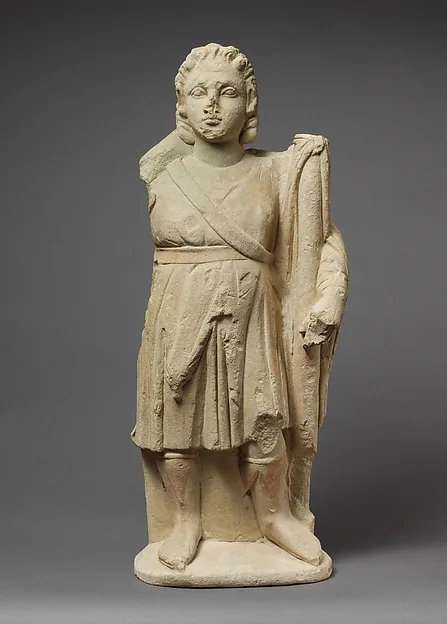
Dionysos holding a thyrsos, Cypriot limestone statuette, 310–30 BCE. The Metropolitan Museum of Art.
The Metropolitan Museum of Art. The Cesnola Collection, Purchased by subscription, 1874–76. Public Domain, CC0. Resized and converted to WebP without crop or recolouring. · Image source ↗ · CC0
Kundalini: An Occult Experience by George S. Arundale
George S. Arundale uses the name Thyrsus for a white metal cylinder in a report about the stirring of Kundalini. He compares the object to a ruler and describes its supposed attraction to the Fire by analogy with a magnet and iron. [3][4]
Arundale connects the instrument with India, Egypt and Greece. That history is part of his interpretation of the experience. He also places its use with people he considers already familiar with Kundalini. [3][5][4]
The ancient staff and the later name
Ancient objects establish the thyrsus as part of Dionysian imagery and show how it could be depicted. Arundale’s reported metal cylinder has a different material and a role in his own system. The shared name is the point of contact between them. [1][2][3][4]
See references (4)
- Limestone statuette of Dionysos holding a thyrsos, 310–30 BCE, Metropolitan Museum of Art, object 242297
- Silver ring with a dancing maenad and thyrsos, late fifth or early fourth century BCE, Metropolitan Museum of Art, object 253729
- Kundalini: An Occult Experience, printed p. 91, Reader page 93
- Kundalini: An Occult Experience, printed p. 92, Reader page 94
Read further in the library
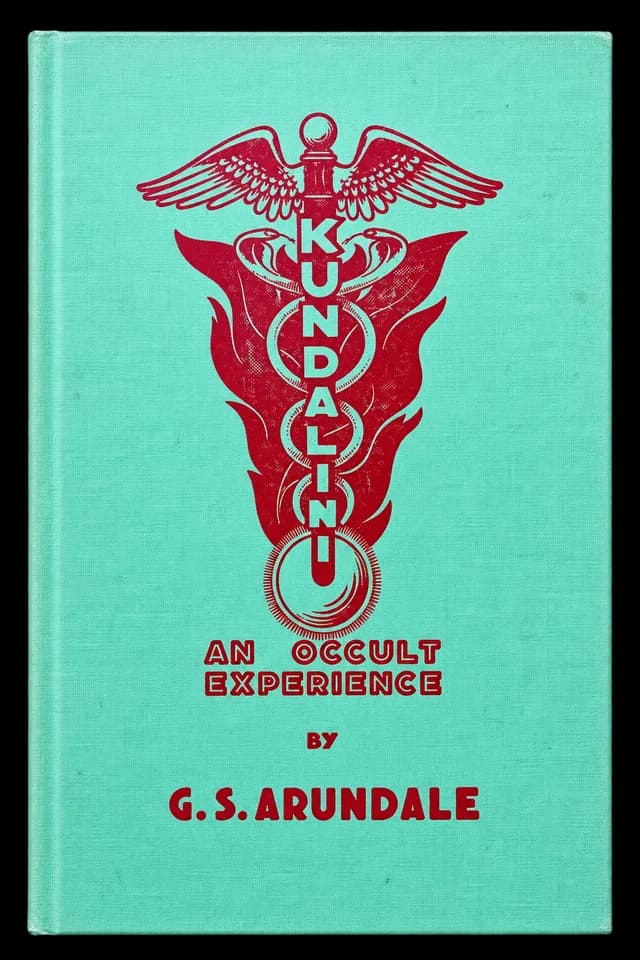
Kundalini: An Occult Experience
Reading note
The separately titled account draws on exact passages in the consulted Library edition.
Sources
See references (5)
- Limestone statuette of Dionysos holding a thyrsos, 310–30 BCE, Metropolitan Museum of Art, object 242297 ↗Metropolitan Museum of Art, Cypriot, Hellenistic. Collection catalogue and public-domain image metadata checked.Return to text ↑
- Silver ring with a dancing maenad and thyrsos, late fifth or early fourth century BCE, Metropolitan Museum of Art, object 253729 ↗The Met identifies the thyrsos as a fennel stalk topped with ivy in its description of the maenad.Return to text ↑
- Kundalini: An Occult Experience, printed p. 91, Reader page 93George S. Arundale, Kundalini: An Occult Experience, The Theosophical Publishing House, Adyar, Madras, India, 1938. Consulted Library edition IMJ-0227-E001.Read this page in Kundalini: An Occult Experience ↗Return to text ↑
- Kundalini: An Occult Experience, printed p. 92, Reader page 94George S. Arundale, Kundalini: An Occult Experience, The Theosophical Publishing House, Adyar, Madras, India, 1938. Consulted Library edition IMJ-0227-E001.Read this page in Kundalini: An Occult Experience ↗Return to text ↑
- Kundalini: An Occult Experience, printed p. xvi, Reader page 12George S. Arundale, Kundalini: An Occult Experience, The Theosophical Publishing House, Adyar, Madras, India, 1938. Consulted Library edition IMJ-0227-E001.Read this page in Kundalini: An Occult Experience ↗Return to text ↑